Best Sanders for Removing Paint from Wood (5 Picks)
Affiliate disclosure: As an Amazon Associate, WoodyMan Reviews earns from qualifying purchases. If you buy through links on this page, we may earn a commission at no extra cost to you. How this works.
Short answer: for stripping paint from furniture, doors, and trim, the Bosch GET75-6N is the pick - turbo mode chews through paint layers, then the same tool switches to random-orbit mode and leaves a stain-ready surface. Use a belt sander for thick paint on big flat panels, a mouse sander for profiles and corners - and if the piece has carvings, more than three paint layers, or any chance of pre-1978 lead paint, reach for a chemical stripper instead.
This guide is about paint on furniture, interior trim, doors, and millwork - the indoor, detail-heavy end of paint removal. For house siding, decks, and bulk exterior stripping, we keep a separate guide: best sanders for exterior paint removal. The two jobs reward different tools, and pretending one list covers both is how people end up stripping a Victorian door with a siding tool.
We earn a small commission from the Amazon links below, at no extra cost to you - see our affiliate disclosure.
First: should you even sand it?
The lead rule is not optional. Paint applied before 1978 may contain lead, and dry-sanding it turns it into exactly the dust you must not breathe or spread. A test swab costs a few dollars; if it's positive, use a wet chemical method or an EPA RRP-certified contractor - not any sander on this page.
The 5 best sanders for paint removal
| Sander | Best for | Woody Rating | |
|---|---|---|---|
| 1. Bosch GET75-6N | Strip fast, finish stain-ready - one tool | 9.2/10 [Editor's Choice] | Check price |
| 2. Makita 9903 (belt) | Thick paint on doors & big flat panels | 9.0/10 | Check price |
| 3. Wagner PaintEater | Many layers where finish quality doesn't matter | 8.6/10 | Check price |
| 4. Bosch ROS20VSC | Budget all-rounder - furniture-scale jobs | 8.5/10 | Check price |
| 5. BLACK+DECKER BDEMS600 | Corners, edges & the spots discs can't reach | 8.2/10 | Check price |
1. Bosch GET75-6N - Editor's Choice
Best for: furniture and door refinishers who want one tool that removes paint and leaves a surface ready for stain or new paint.
Paint removal has a dirty secret: getting the paint off is half the job - getting the scratches from getting the paint off out is the other half. The GET75-6N solves both with a mode switch. Turbo (forced-eccentric) mode with a 60-grit disc strips paint at a rate owners compare to a belt sander; regular random-orbit mode with 120-180 then erases the evidence. 7.5 amps, 6" discs, and real dust extraction with a vac attached - which matters double when what you're making airborne is old paint. It's the most money on this list, and worth it if refinishing is a hobby rather than a one-off.
| Pros | Cons |
|---|---|
| ✅ Strips like a belt sander, finishes like an orbital | ❌ Priciest pick here |
| ✅ Strong dust pickup with a vac - key for paint | ❌ 5.7 lb - tiring on vertical faces |
| ✅ 6" discs clear paint fast | ❌ Turbo mode can dish softwood if you linger |
2. Makita 9903 - Thick Paint on Flat Panels
Best for: solid doors, tabletops, wide shelving - big flat real estate under stubborn paint.
On a genuinely flat surface, nothing beats a belt: the 9903's 8.8-amp motor and 3x21" belt turn a six-layer door into bare wood in minutes, and its variable speed lets you back off before heat gums the paint into the abrasive (the classic paint-sanding failure - slower is often faster). Auto-tracking keeps the belt centered while your attention is on the edge you're trying not to round over. Its limits are the shape of the tool: it needs run-out room, so stiles, rails, and anything narrower than the platen are better served by the orbitals. Pair with 40-60 grit belts for removal, then hand the surface to a random orbital for finishing - a belt-scratched surface is not paint-ready, let alone stain-ready.
| Pros | Cons |
|---|---|
| ✅ Fastest removal on truly flat surfaces | ❌ Wrong tool for anything narrow or profiled |
| ✅ Variable speed prevents heat-gumming | ❌ Leaves linear scratches - needs a finish pass after |
| ✅ Auto-tracking; cheap standard belts |
3. Wagner PaintEater - Bulk Layers, Rough Surfaces
Best for: paint removal where the surface underneath is getting repainted, not stained - shed doors, garage shelving, fence gates, workbenches.
The PaintEater is a single-purpose machine: a 3,200-RPM spinning fiber-mesh disc that eats layered, flaking, weathered paint faster than any sandpaper-based tool near its price - it's our siding pick in the exterior guide, and the same appetite works on rough indoor-adjacent jobs. The honest trade: its open-web disc leaves a scratched, slightly wavy surface that's fine under primer and paint but unacceptable under stain or clear finish. Know which job you're doing before you buy it. Discs last a long time and shrug off the paint-clogging that kills sandpaper on thick layers.
| Pros | Cons |
|---|---|
| ✅ Devours multi-layer, flaking paint | ❌ Surface it leaves is paint-grade, never stain-grade |
| ✅ Disc doesn't clog like sandpaper on gummy layers | ❌ One-trick tool - no finishing ability at all |
| ✅ Cheap for what it replaces | ❌ Aggressive - easy to bite into soft wood |
4. Bosch ROS20VSC - Best Budget
Best for: furniture-scale paint removal on a budget - dressers, chairs, small tables - where patience is cheaper than a second tool.
A 2.5-amp, 5" random orbital is not the fastest way through paint, and pretending otherwise sells you the wrong expectations: with 60-grit discs the ROS20VSC clears a dresser top in maybe fifteen minutes, not five. What it gives you for the patience is control - variable speed, minimal gouging risk, a dust canister that actually works - and a genuinely finish-capable tool once the paint's gone, one you'll keep using long after this project (our budget favorite for exactly that reason). Buy discs in bulk; paint kills them quickly at low grits. For the technique of taking off paint without chewing through veneer underneath, see how to sand furniture without stripping it.
| Pros | Cons |
|---|---|
| ✅ Cheap, controllable, hard to ruin wood with | ❌ Slow on more than 2-3 layers |
| ✅ Doubles as your finishing sander after | ❌ Discs clog fast on gummy paint - buy plenty |
| ✅ Working dust collection |
5. BLACK+DECKER BDEMS600 - Corners & Details
Best for: where the discs can't go - inside corners of panel doors, window muntins, chair legs, the last inch against a stile.
Every disc- and belt-based tool on this list shares a blind spot: a 90° inside corner. The BDEMS600 mouse sander's pointed pad lives there. On paint jobs it's the mop-up crew - you'll strip 90% of a panel door with the GET75-6N or belt sander and finish the corners and moulding edges with this, choking up on the three-position grip for control. Keep pressure light: paint plus low grit plus a vibrating pad generates heat fast, and melted paint welds itself to the abrasive. For deep profile work, though, respect the flowchart - a stripper preserves crisp detail a sander inevitably softens; compare the detail sander category if you need more reach options.
| Pros | Cons |
|---|---|
| ✅ Reaches the corners every other pick misses | ❌ Slow - a finishing/detail tool, not a stripper |
| ✅ Under $40 completes the kit | ❌ Pads clog and heat up quickly on paint |
| ✅ Detail-finger attachment for muntins |
Grits, dust, and not wrecking the wood
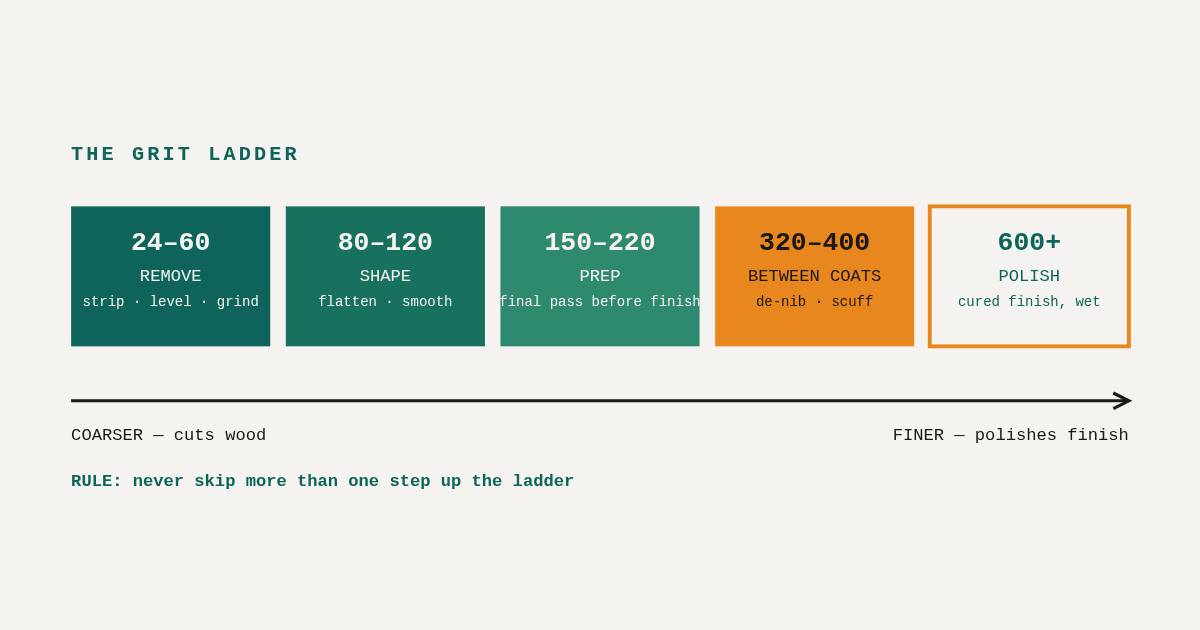
The grit path for paint: start at 60 (80 if the paint's thin or you're near veneer), clear the color, then climb 100 → 150 → 180 before refinishing. Starting at 36-40 is tempting and usually regretted - deep scratches in furniture-grade wood take longer to remove than the paint did. Full logic in our sandpaper grit chart and what grit removes paint.
Dust discipline matters more here than any other sanding job. Even lead-free old paint is a cocktail you don't want to breathe. Sander connected to a vacuum, P100 or at minimum N95 respirator, and sand outdoors or seal the room. The tools with real extraction (GET75-6N, ROS20VSC) earn their keep in cleanup time alone.
Watch for veneer. Mid-century and older furniture is often veneered - 0.6mm of good wood over something cheaper. An aggressive tool goes through it in one careless pass, and there's no undo. Edge of a panel showing layers? Treat the whole surface as veneer and stay gentle.
Frequently asked questions
What's the fastest sander for removing paint from wood? On flat panels, a belt sander with 40-60 grit; across mixed furniture surfaces, the GET75-6N's turbo mode is nearly as fast and far more forgiving. On many-layered rough work where finish doesn't matter, the PaintEater outruns both.
Can I use an orbital sander to remove paint? Yes - it's just slower. A 5" random orbital with 60-grit discs handles one to three layers on furniture fine. Beyond that, layer count beats motor size: use a chemical stripper for the bulk and the orbital for the final skim.
How do I know if paint has lead in it? If the piece (or house) predates 1978, assume it might. Instant test swabs from the hardware store give a yes/no in seconds. Positive → no dry sanding, period: wet-strip it, use a lead-rated stripper, or hire an EPA RRP-certified pro.
Sander vs chemical stripper - which is better? Neither, universally. Flat + few layers + lead-free = sander (faster, no chemicals). Carved, profiled, many layers, or lead = stripper (preserves detail, controls dust). Big refinishing jobs usually use both in sequence.
Why does my sandpaper gum up instantly on paint? Heat. Latex paint especially melts before it abrades: too much pressure, too high a speed, or too fine a grit and it smears into the abrasive. Slow the sander down, lighten your grip, drop a grit - and let the disc cool between passes.
Verdict
For furniture, doors, and trim, the Bosch GET75-6N is the answer that covers the most jobs - strip in turbo, finish in orbit, one purchase. Add the Makita 9903 if your work skews toward big flat slabs, or start with the ROS20VSC if the budget says so and the projects are dresser-sized. The BDEMS600 finishes every corner the others start. And before any of them touch old paint: two dollars of lead swab, every time.