Best Sanders for Woodworking: One of Each Type, Ranked
Affiliate disclosure: As an Amazon Associate, WoodyMan Reviews earns from qualifying purchases. If you buy through links on this page, we may earn a commission at no extra cost to you. How this works.

"Best sander for woodworking" is a bit of a trick question, because woodworking uses four different kinds of sander for four different jobs - and buying one when you needed another is the most common mistake. Here's the map:
- Random orbital - the do-everything finisher. Round pad that spins and wanders, so it leaves no swirl marks. If you buy one sander, buy this.
- Belt sander - the heavy remover. Fast, aggressive flattening and stock removal; too coarse for finishing.
- Sheet (finishing) sander - flat rectangular pad that gets into square corners and runs on cheap cut sandpaper. For light finishing and edges.
- Detail sander - pointed pad for spindles, carving, tight corners, and moulding a round pad can't reach.
Below is the best pick in each category (plus a couple of standouts), so you can build the right kit instead of guessing. If you want the deeper how-each-works background, our wood sanders hub covers it.
We earn a small commission from the Amazon links below, at no extra cost to you - see our affiliate disclosure.
The 6 best sanders for woodworking
| Sander | Type / Best for | Woody Rating | |
|---|---|---|---|
| 1. Bosch ROS20VSC | Random orbital - best overall | 9.3/10 [Editor's Choice] | Check price |
| 2. Makita 9903 | Belt - fast stock removal | 9.0/10 | Check price |
| 3. DEWALT DWE6411K | Sheet - corners & fine finish | 8.8/10 | Check price |
| 4. Bosch GET75-6N | Big/aggressive random orbital | 8.7/10 | Check price |
| 5. BLACK+DECKER BDEMS600 | Detail - tight spots | 8.5/10 | Check price |
| 6. WEN 6301 | Best budget | 8.0/10 | Check price |
1. Bosch ROS20VSC - Best Overall (Random Orbital)
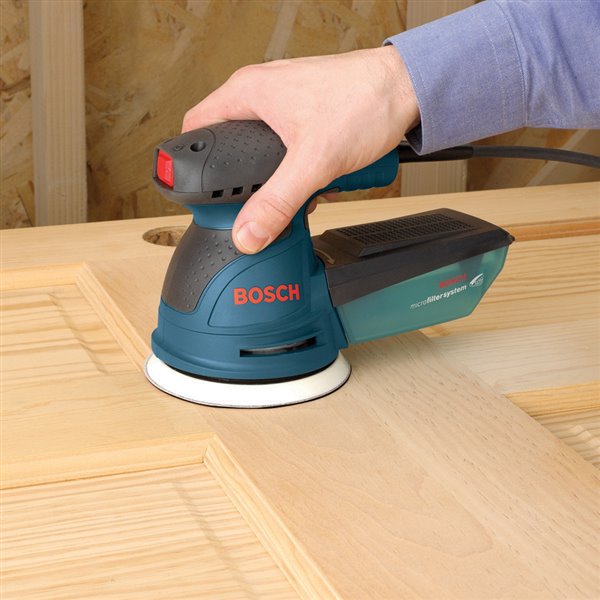
Best for: the one sander most woodworkers should own first - smoothing, finishing, and between-coats work.
If you buy a single sander for woodworking, make it a 5" random orbital, and the ROS20VSC is the value benchmark. The random-orbit action leaves no repeating swirl pattern, so surfaces take stain and finish cleanly; variable speed lets you slow down for veneer and delicate edges; and the hook-and-loop discs change in seconds. Bosch's microfilter canister captures fine dust genuinely well, and it's comfortable enough for long sessions. It removes material more slowly than a belt sander and can't reach a corner, but for 80% of woodworking sanding - flattening glue-ups, smoothing to finish, knocking back between coats - it's the right tool. The everyday workhorse.
| Pros | Cons |
|---|---|
| ✅ Swirl-free finish, variable speed | ❌ Slower removal than a belt sander |
| ✅ Great dust collection | ❌ Round pad can't reach corners |
| ✅ Quick disc changes; comfortable | |
| ✅ Best all-round value |
2. Makita 9903 - Fast Stock Removal (Belt)
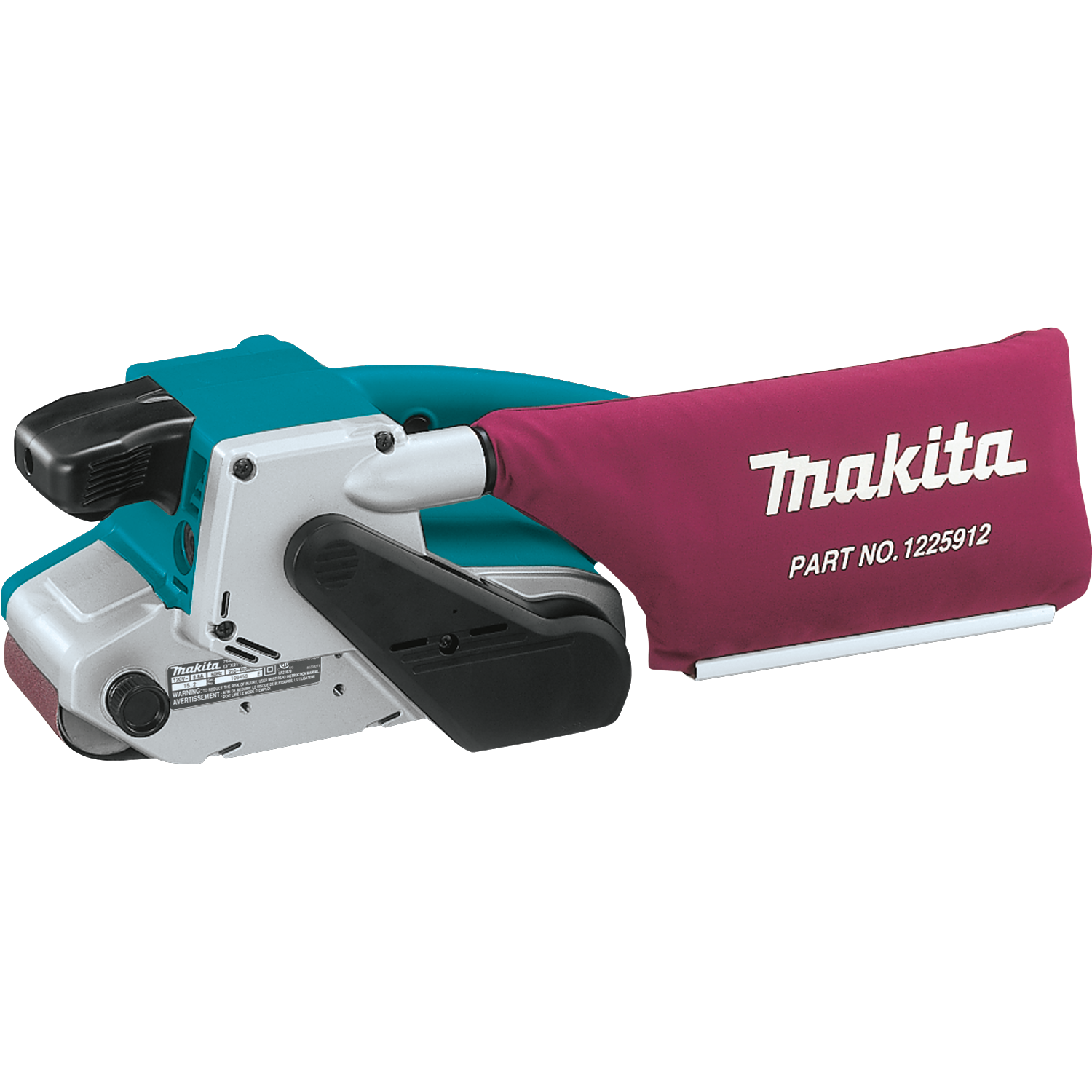
Best for: flattening rough stock and glue-ups fast, and leveling large surfaces.
When you need to remove material - flatten a cupped board, level a panel glue-up, take down a lot of thickness - the random orbital is too slow and you want a belt sander. The Makita 9903 is a smooth, controllable 3"×21" with variable speed and notably low noise for its class, so it's less likely to gouge than cheaper belt sanders. Its flat platen levels surfaces quickly and it tracks well. It leaves scratches too coarse to finish over, so it's always a first step - follow it with the random orbital - but for turning rough lumber into flat stock, nothing here is faster. See where belt and orbital diverge in our belt vs orbital explainer.
| Pros | Cons |
|---|---|
| ✅ Fast flattening and stock removal | ❌ Too coarse to finish with |
| ✅ Variable speed, smooth for a belt | ❌ Can gouge if you're careless |
| ✅ Flat platen, tracks well |
3. DEWALT DWE6411K - Corners & Fine Finish (Sheet)
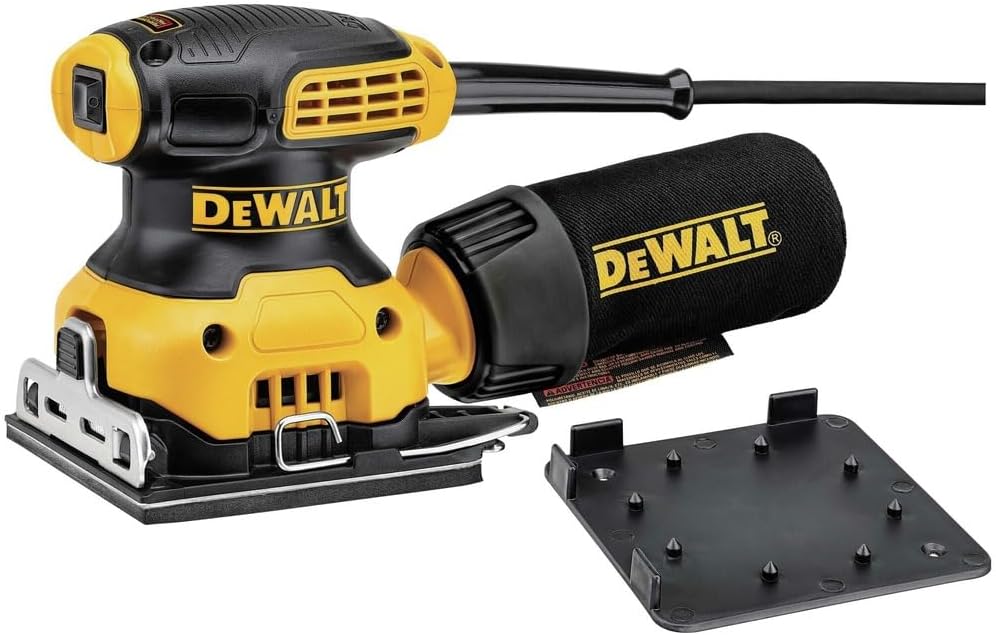
Best for: getting into square inside corners and light finishing on a budget of consumables.
The random orbital's round pad can't reach into a corner or flush against a raised edge - that's the sheet sander's job. The DWE6411K is a strong 1/4-sheet finishing sander: a rectangular pad that gets right into corners, and it runs on cheap standard sandpaper you cut yourself (or hook-and-loop if you prefer). A separate counterweight keeps vibration low, so it's comfortable for detailed finishing. It removes material slowly (it's a finisher, not a shaper) and can leave faint swirls under stain if you rush the grits, but for corners, edges, and low-cost finish sanding it earns its spot. Full field in our best sheet sanders guide.
| Pros | Cons |
|---|---|
| ✅ Square pad reaches corners/edges | ❌ Slow removal - finishing only |
| ✅ Runs on cheap cut sandpaper | ❌ Can swirl under stain if rushed |
| ✅ Low vibration, comfortable |
4. Bosch GET75-6N - Big, Aggressive Random Orbital
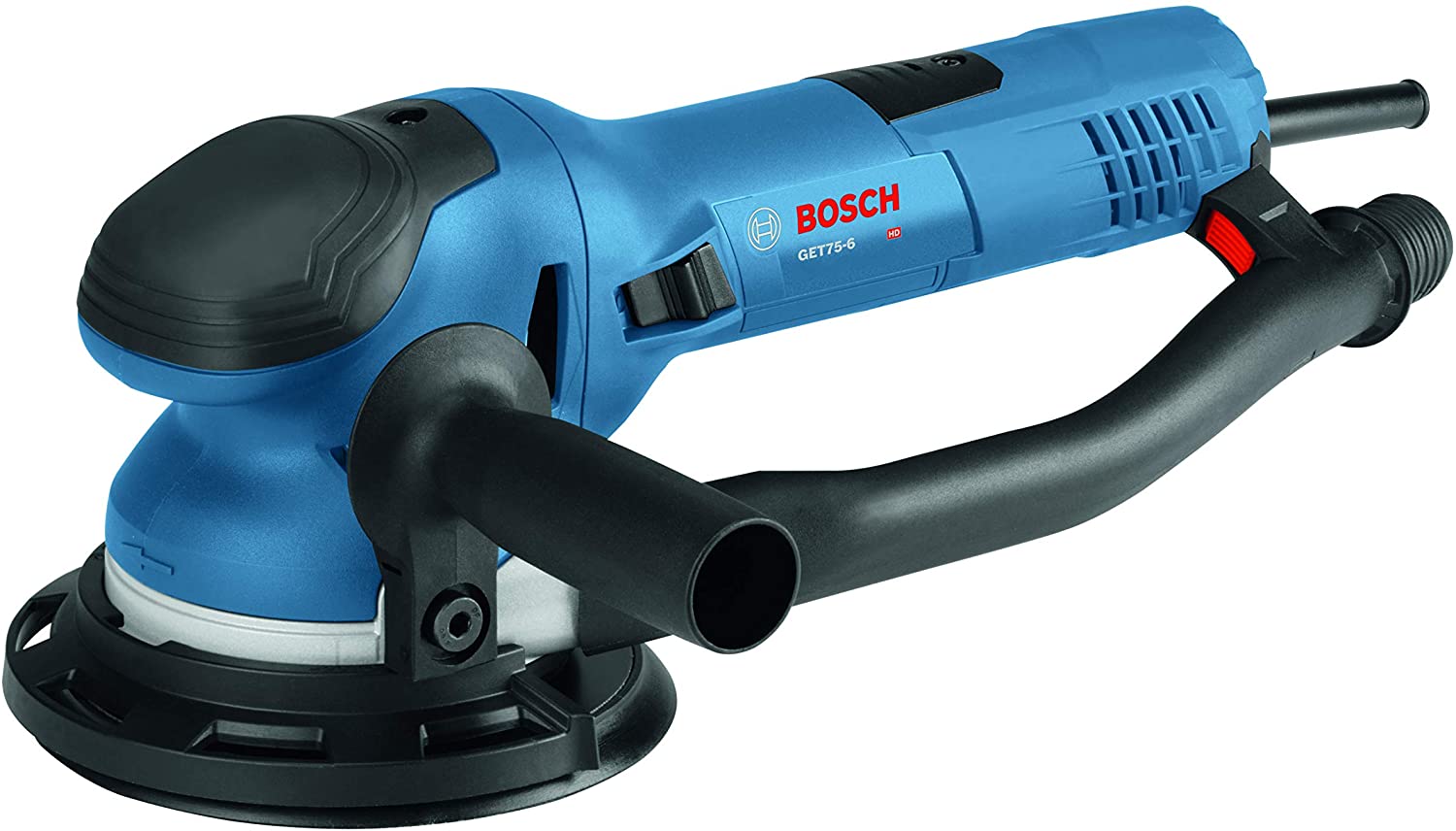
Best for: large surfaces and anyone who wants one tool that both hogs and finishes.
If your work runs to big panels, tabletops, and slabs, the GET75-6N is a 6" random orbital with a trick: a dual-mode switch between an aggressive "turbo" mode that removes material almost like a belt sander and a fine random-orbit mode for finishing. That means one tool can flatten and finish a big surface, and the larger 6" pad covers ground fast. It's heavier and pricier than the ROS20VSC and overkill for small work, but for a woodworker who tackles large surfaces it can replace both a belt and a finish sander. A genuine workhorse for slab and tabletop makers.
| Pros | Cons |
|---|---|
| ✅ Dual-mode: hogs AND finishes | ❌ Heavy; overkill for small work |
| ✅ Big 6" pad covers area fast | ❌ Pricier than a 5" ROS |
| ✅ Great for slabs and tabletops |
5. BLACK+DECKER BDEMS600 - Tight Spots (Detail)
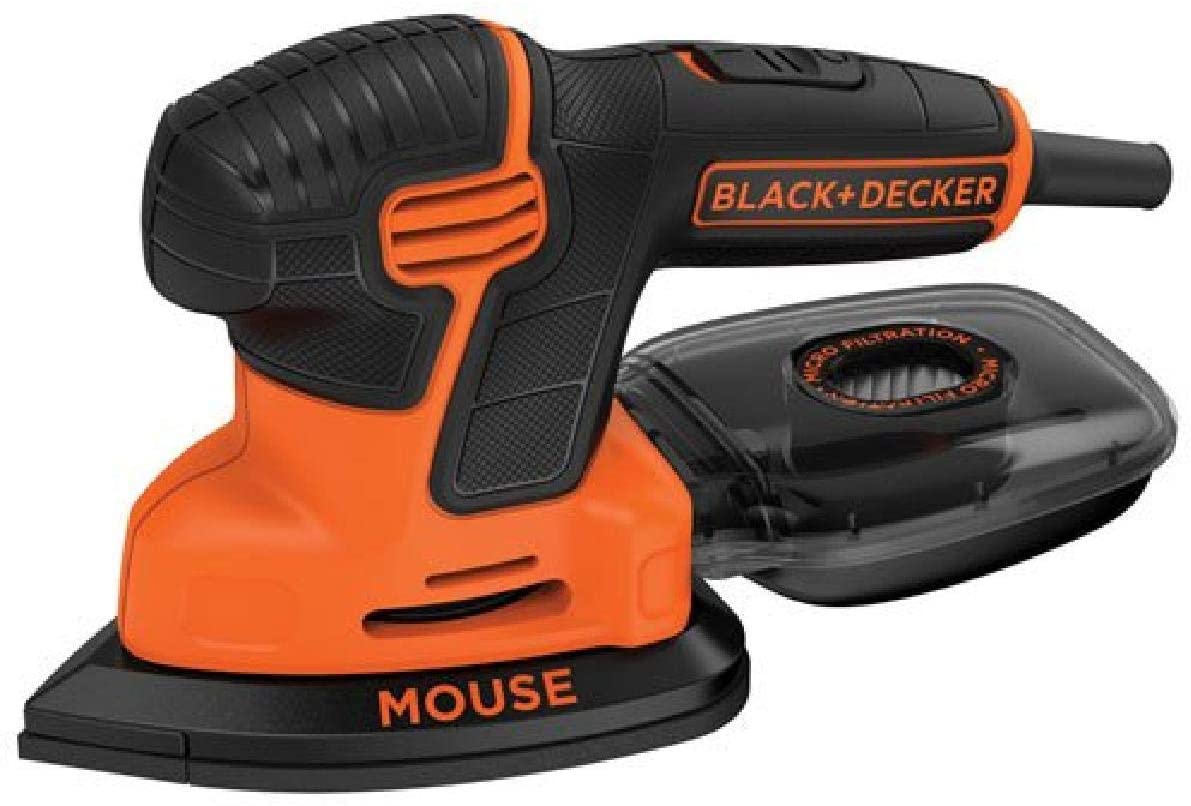
Best for: the corners, spindles, moulding, and carving no flat sander can reach.
Every kit needs a detail sander for the places a big pad can't go - the inside corner of a frame, between spindles, along a moulded profile. The BDEMS600's pointed teardrop pad does exactly that, and the included finger attachment squeezes into slots and slats. It's light, cheap, and its three-position grip handles both detail and small flat areas. Dust collection is modest and it's not for large surfaces, but as the "reach the tight spot" tool alongside your random orbital, it's the inexpensive classic. It anchors our best mouse sanders and detail sanders guides.
| Pros | Cons |
|---|---|
| ✅ Reaches corners, spindles, moulding | ❌ Not for large flat areas |
| ✅ Finger attachment for slots | ❌ Modest dust collection |
| ✅ Light, cheap, versatile grip |
6. WEN 6301 - Best Budget
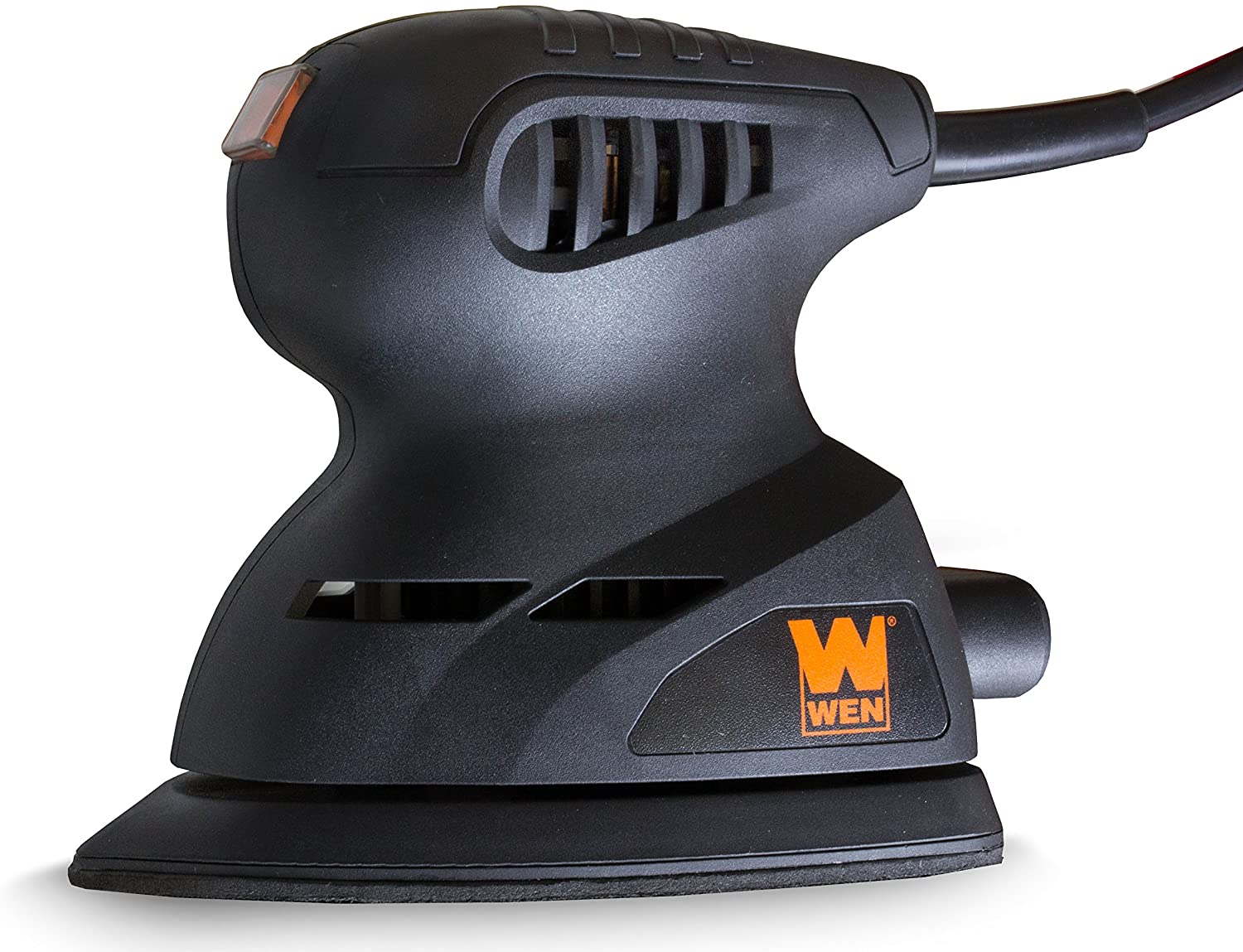
Best for: the tightest budget, or a first taste of powered detail sanding.
If you just want an inexpensive powered sander to start with, the WEN 6301 detail sander does light finishing and reaches into detail areas for very little money. Its pointed pad handles corners and moulding, the 1-amp motor is fine for light passes, and at two pounds it's easy to control. It's underpowered for real stock removal and its dust port is basic, but as a cheap way into powered sanding - or a second detail tool - it's honest value. Pair it with a random orbital when you're ready to do more.
| Pros | Cons |
|---|---|
| ✅ Very cheap; reaches detail areas | ❌ Underpowered for stock removal |
| ✅ Light and easy to control | ❌ Basic dust collection |
| ✅ Good first powered sander |
How to choose sanders for woodworking
Start with a random orbital
If you own no sander, buy a 5" random orbital first - it does the widest range of woodworking sanding (flattening, smoothing, finishing) with no swirl marks. Everything else fills a gap around it.
Add tools as jobs demand
- Doing lots of rough stock flattening? Add a belt sander.
- Working cabinets, frames, corners? Add a sheet sander.
- Spindles, carving, moulding? Add a detail sander.
- Big slabs and tabletops? A 6" dual-mode orbital (GET75-6N) can cover both flattening and finishing.
Dust collection isn't optional
Wood dust is a health hazard and a finish-wrecker. Prioritize sanders with a real canister or, better, a shop-vac port - and wear a mask. Good dust control also makes the abrasive last longer.
Grit progression
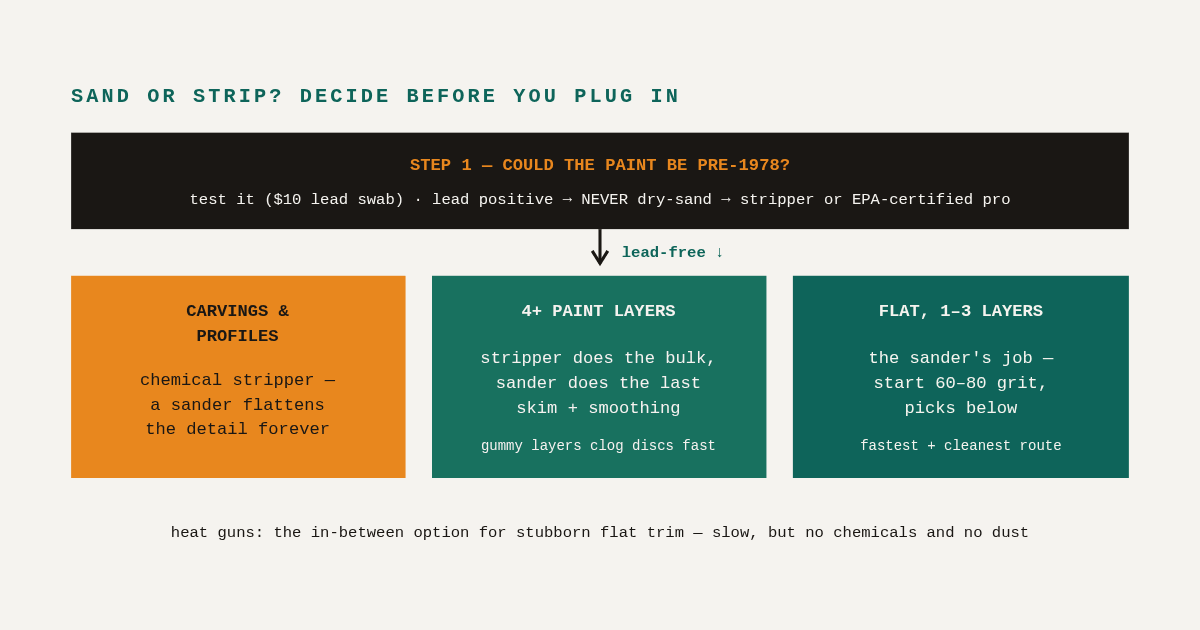
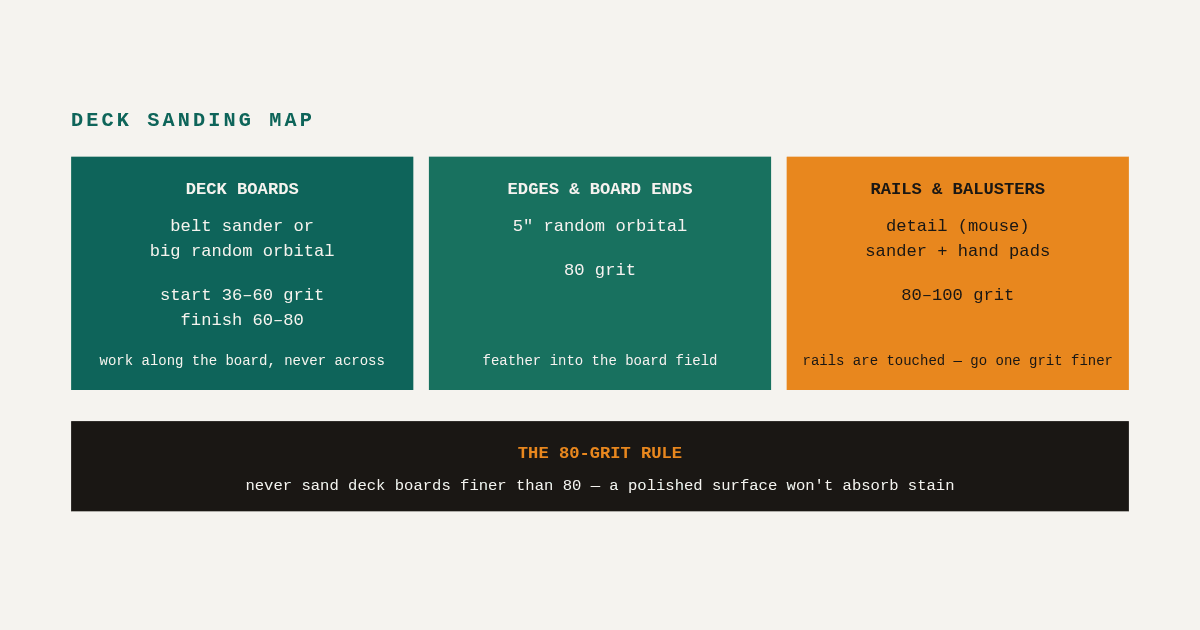
Don't skip grits. A typical run is 80 → 120 → 180 → 220, each grit removing the last one's scratches. Rushing from coarse to fine leaves scratches that only appear once you apply finish.
Frequently Asked Questions
What is the best all-around sander for woodworking?
A 5" random orbital sander like the Bosch ROS20VSC. It handles the widest range of woodworking tasks - flattening, smoothing, and finishing - and leaves no swirl marks, which is why it's the sander to buy first.
Do I need more than one sander?
For serious woodworking, usually yes. A random orbital covers most work, but a belt sander (fast removal), a sheet sander (corners/finishing), and a detail sander (tight spots) each do a job the others can't. Build the kit as your projects demand.
Random orbital or sheet sander for woodworking?
A random orbital for open surfaces and swirl-free finishing; a sheet sander for square corners, edges, and cheap-consumable finishing. Many woodworkers own both. See the full comparison in our best sheet sanders guide.
What grit should I sand wood to before finishing?
For most furniture, sand up to 180-220 grit before finishing - higher for hardwoods taking a clear finish, a bit lower (150-180) for surfaces that will be painted. Don't skip grits, and always finish with the grain.
More in the sanders cluster
Explore each type in depth: the wood sanders hub, best sheet sanders, mouse and detail sanders, sanders for furniture, and sanders for doors.