Best Sanders for Doors: 5 Picks for Faces, Panels, and Edges
Affiliate disclosure: As an Amazon Associate, WoodyMan Reviews earns from qualifying purchases. If you buy through links on this page, we may earn a commission at no extra cost to you. How this works.

Sanding a door is really two jobs, and no single sander does both perfectly:
- The flat faces - the big open field of a slab door or the flat rails and stiles of a panel door. Here you want a random orbital for a swirl-free finish, or a belt sander when you're stripping old paint fast.
- The detail - the recessed panels, the moulded sticking around them, and the profiled edges of a raised-panel door. A flat pad can't reach into those, so you need a detail/mouse sander or an oscillating tool with a triangle head.
Which sander is "best for doors" depends on which of those you're doing most. The five below cover every zone of a door, from a fresh paint-grade finish to trimming a door that's sticking in its frame. If you're new to how these tools differ, our wood sanders hub maps the whole family.
We earn a small commission from the Amazon links below, at no extra cost to you - see our affiliate disclosure.
The 5 best sanders for doors
| Sander | Best for | Woody Rating | |
|---|---|---|---|
| 1. Bosch ROS20VSC 5" Random Orbital | Best overall - flat faces, swirl-free | 9.2/10 [Editor's Choice] | Check price |
| 2. BLACK+DECKER BDEMS600 Mouse | Best for panels & moulding | 8.8/10 | Check price |
| 3. DEWALT DWE315K Oscillating | Tightest raised-panel corners | 8.6/10 | Check price |
| 4. Makita 9903 Belt Sander | Fast stripping & sticking edges | 8.5/10 | Check price |
| 5. WEN 6301 Detail Sander | Best budget detail | 8.0/10 | Check price |
1. Bosch ROS20VSC 5" Random Orbital - Editor's Choice
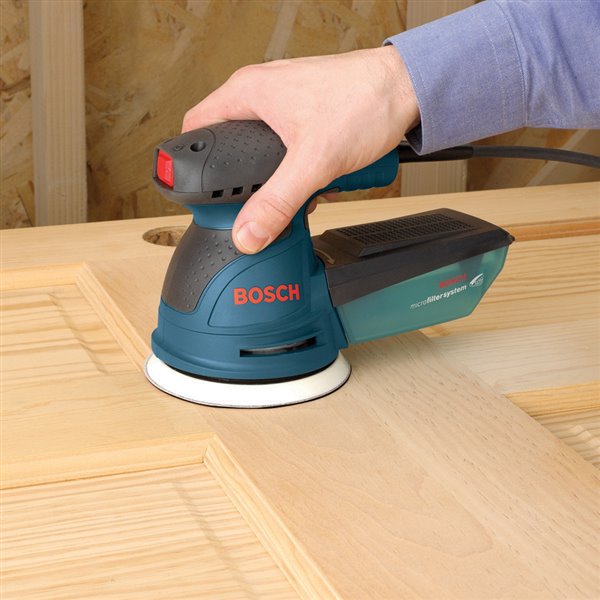
Best for: the flat faces of slab and panel doors, and paint-grade finishes where swirl marks would show.
For the big flat areas of a door - the whole face of a slab, or the rails and stiles of a panel door - a random orbital is the right tool, and the ROS20VSC is the one to own. Its random orbit action (spin plus wander) means it doesn't cut repeating swirl patterns the way a fixed orbital does, so the surface takes paint or stain cleanly with no telegraphing. Variable speed lets you slow down for controlled work near edges, the hook-and-loop discs swap in seconds, and Bosch's microfilter canister actually captures fine dust - which matters when you're sanding a door indoors. It won't reach into recessed panels, but for everything flat on a door, it's the finish benchmark. See how it compares to belt sanding in our belt vs orbital explainer.
| Pros | Cons |
|---|---|
| ✅ Swirl-free finish on flat faces | ❌ Round pad can't reach panel recesses |
| ✅ Variable speed + quick disc changes | ❌ Corded |
| ✅ Genuinely good dust collection | |
| ✅ Comfortable for long sessions |
2. BLACK+DECKER BDEMS600 Mouse - Best for Panels & Moulding
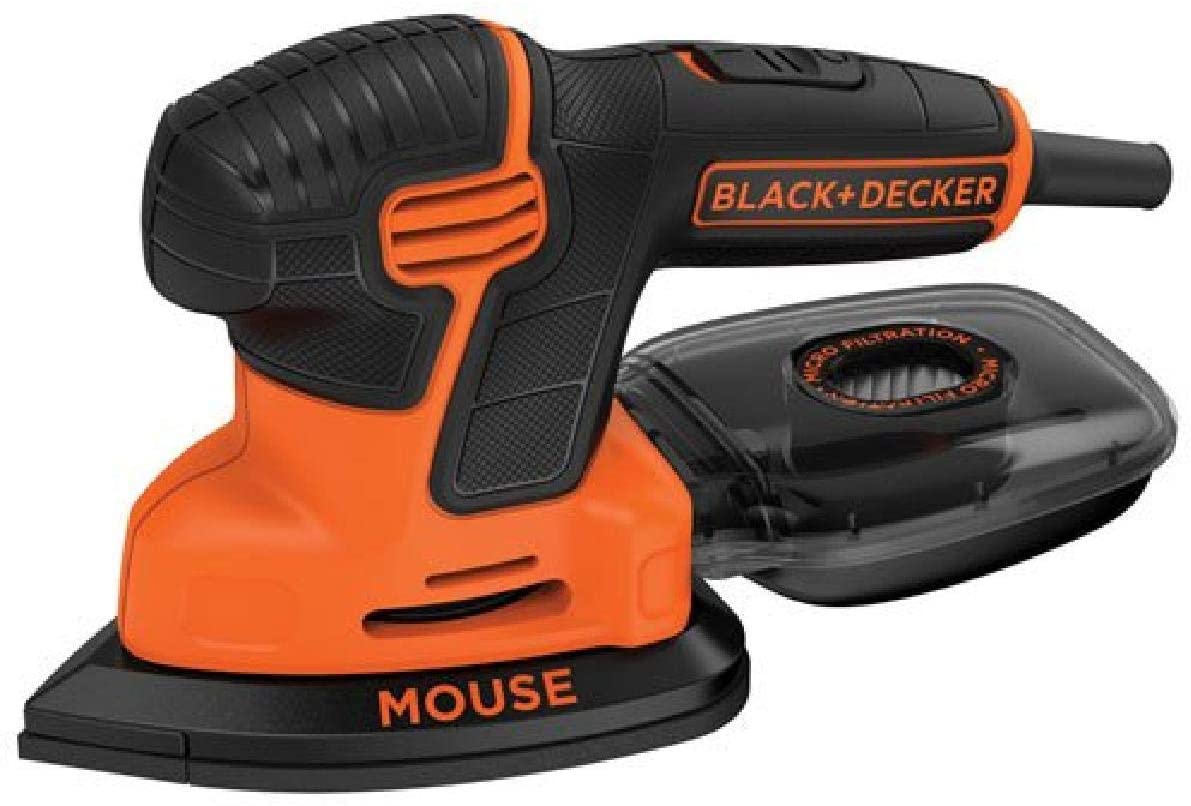
Best for: the recessed panels and moulded sticking a round pad can't touch.
A raised-panel or shaker door has flat fields and recessed panels framed by moulding - and that's where a random orbital stops being useful. The BDEMS600's teardrop pad points into those recesses and follows the moulded profile, and the included finger attachment gets into the narrow reveal where the panel meets the frame. It's light, cheap, and the three-position grip lets you work flat or up on the tip. Dust collection is modest (pair it with a vac indoors), but for detailing the parts of a panel door the big sander leaves behind, it's the natural partner. It anchors our best mouse sanders guide.
| Pros | Cons |
|---|---|
| ✅ Reaches panel recesses & moulding | ❌ Small onboard dust cup |
| ✅ Finger attachment for tight reveals | ❌ Not for large flat areas |
| ✅ Light, cheap, easy paper changes |
3. DEWALT DWE315K Oscillating - Tightest Raised-Panel Corners
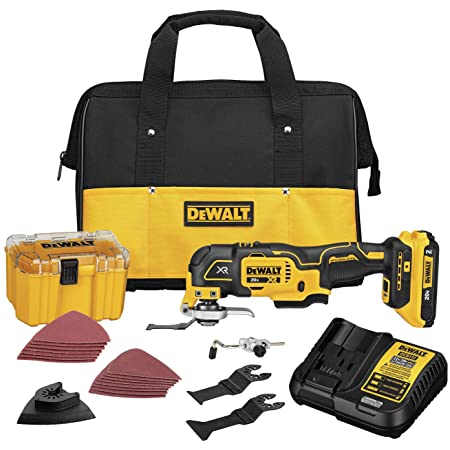
Best for: the true inside corners where a panel meets its frame - and trimming or scraping jobs around the door.
Where a raised panel meets the sticking, there's a genuine 90° inside corner that even a teardrop pad's tip leaves untouched. An oscillating multi-tool with a triangular sanding head gets flush into it, and the DWE315K is a solid, versatile one. The variable-speed trigger drives a big accessory kit, so the same tool that sands the corner also flush-cuts a bit of trim, scrapes old paint from a hinge mortise, or trims the bottom of a door casing. As a general sander it's less refined than a dedicated pad tool - it's for spot work, not whole faces - but nothing else reaches a true inside corner as cleanly. More on where oscillating fits in our detail sander guide.
| Pros | Cons |
|---|---|
| ✅ Only tool that gets a true 90° corner | ❌ Not for large flat sanding |
| ✅ Also cuts, scrapes, trims casing | ❌ Triangle head is spot-work sized |
| ✅ Variable speed, big accessory kit |
4. Makita 9903 Belt Sander - Fast Stripping & Sticking Edges
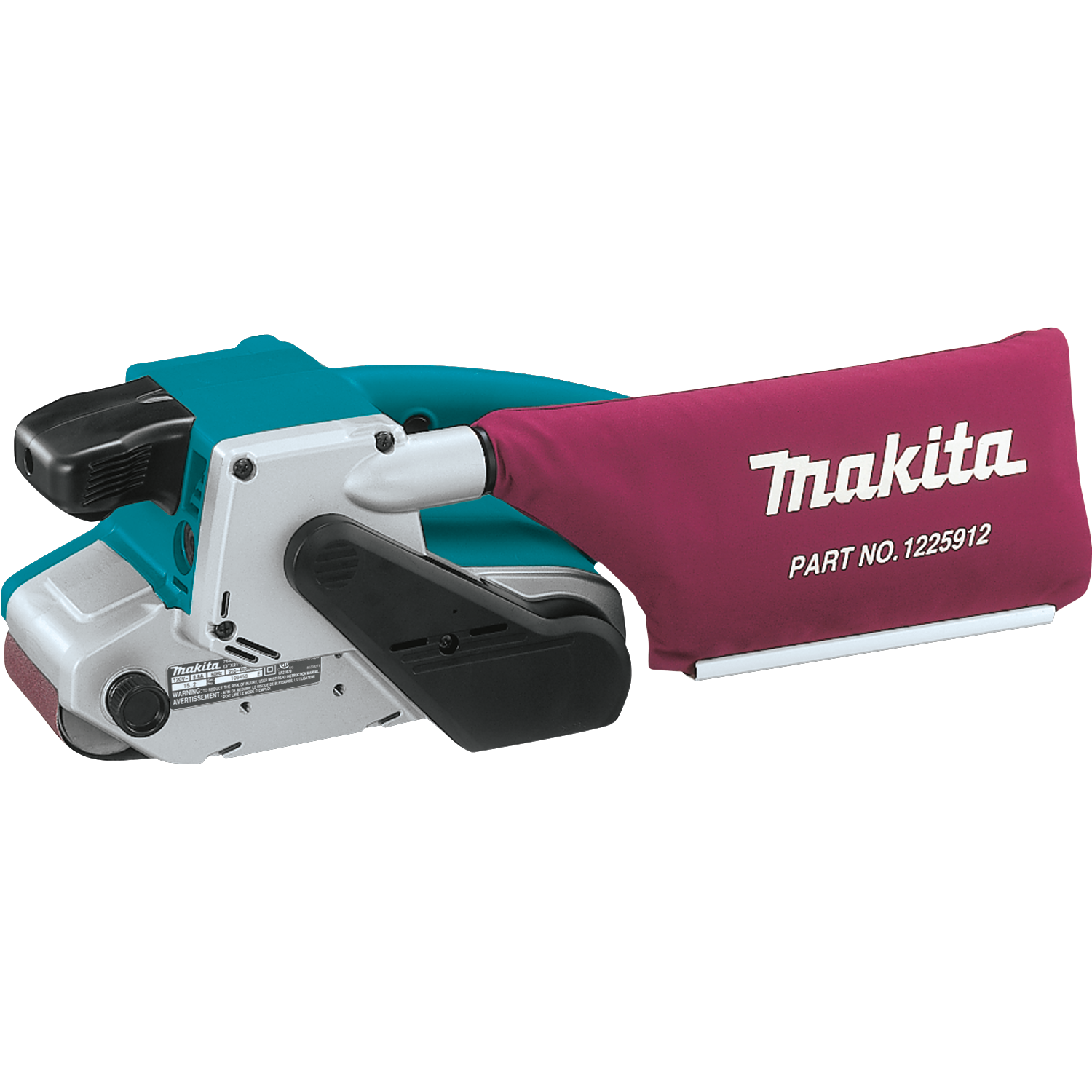
Best for: stripping old paint fast, and shaving the edge of a door that sticks in its frame.
When a door has years of paint to remove, or it's binding in the jamb and needs its edge taken down, a random orbital is too slow - you want a belt sander. The Makita 9903 is a smooth, controllable 3"×21" that hogs material quickly, and its variable speed plus low noise make it manageable where belt sanders are usually brutish. Its flat platen is ideal for running down a door's long edge to fix a sticking door, and it strips a painted slab in a fraction of the time. Follow it with the random orbital before finishing - a belt leaves scratches too coarse to paint over. Big caution: if the door might have lead paint (pre-1978), don't power-sand it dry; see the RRP-safe methods in our exterior paint removal guide.
| Pros | Cons |
|---|---|
| ✅ Strips paint & trims edges fast | ❌ Too aggressive for finish passes |
| ✅ Variable speed, smooth for a belt | ❌ Never dry-sand possible lead paint |
| ✅ Flat platen ideal for door edges |
5. WEN 6301 Detail Sander - Best Budget Detail
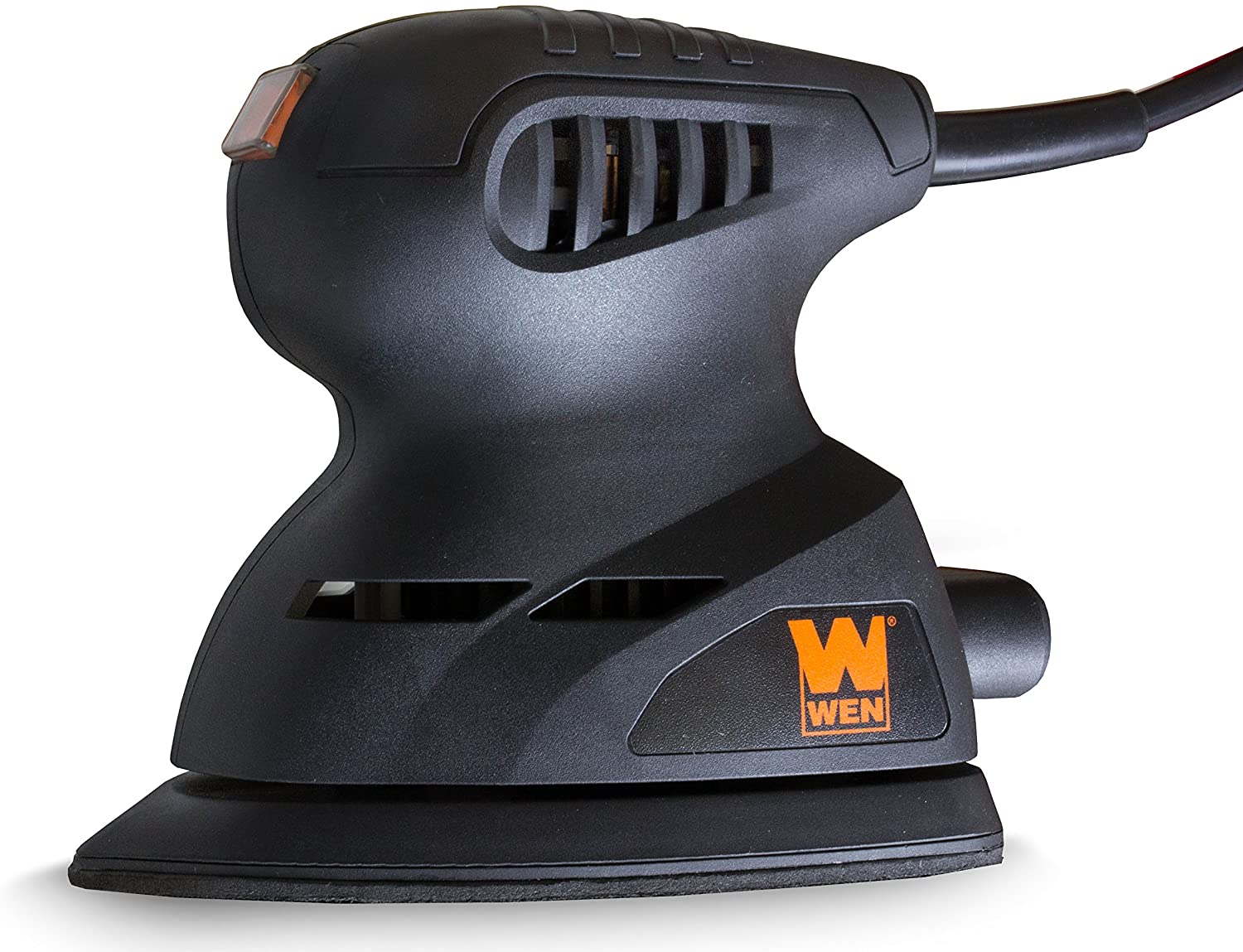
Best for: occasional panel-door detailing on the tightest budget.
If you only detail a door now and then and don't want to spend much, the WEN 6301 does the mouse-sander job for less. Its pointed pad reaches into panel recesses and along moulding, the 1-amp motor is enough for light finish sanding, and at two pounds it's easy to hold up on a door for a while. It's less powerful and less refined than the BLACK+DECKER, and the dust port is basic, but for a homeowner sanding one or two doors it's honest value. Pair it with any random orbital for the flat areas.
| Pros | Cons |
|---|---|
| ✅ Cheapest way to reach detail areas | ❌ Low power - light passes only |
| ✅ Light and easy to hold on a door | ❌ Basic dust collection |
| ✅ Pointed pad for panels/moulding |
How to choose a sander for your doors
Match the sander to the door style
- Flush / slab doors are all flat - a random orbital does the whole job.
- Raised-panel / shaker doors mix flat rails and stiles with recessed panels and moulding - you'll want a random orbital plus a detail or oscillating sander for the recesses.
- Stripping heavy old paint or fixing a sticking door calls for a belt sander first, then a random orbital to refine.
Grit progression for doors
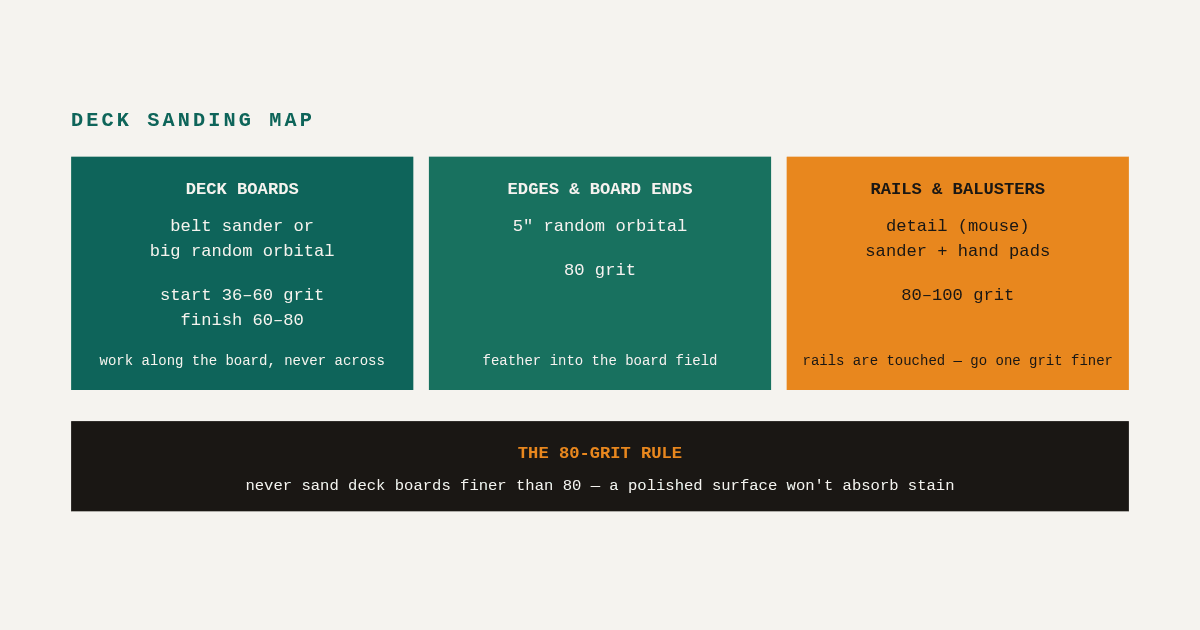
For repainting, start around 120 grit to knock back the old finish, then 180-220 for a smooth paint-ready surface. Going to stain? Work up to 220 and don't skip grits, or scratches will show. Always finish sanding with the grain on the flat faces.
Dust control matters more indoors
Interior doors are usually sanded inside the house, so dust collection isn't optional. Choose sanders with a canister or, better, a shop-vac port - the Bosch's microfilter is a standout here.
Lead-paint warning
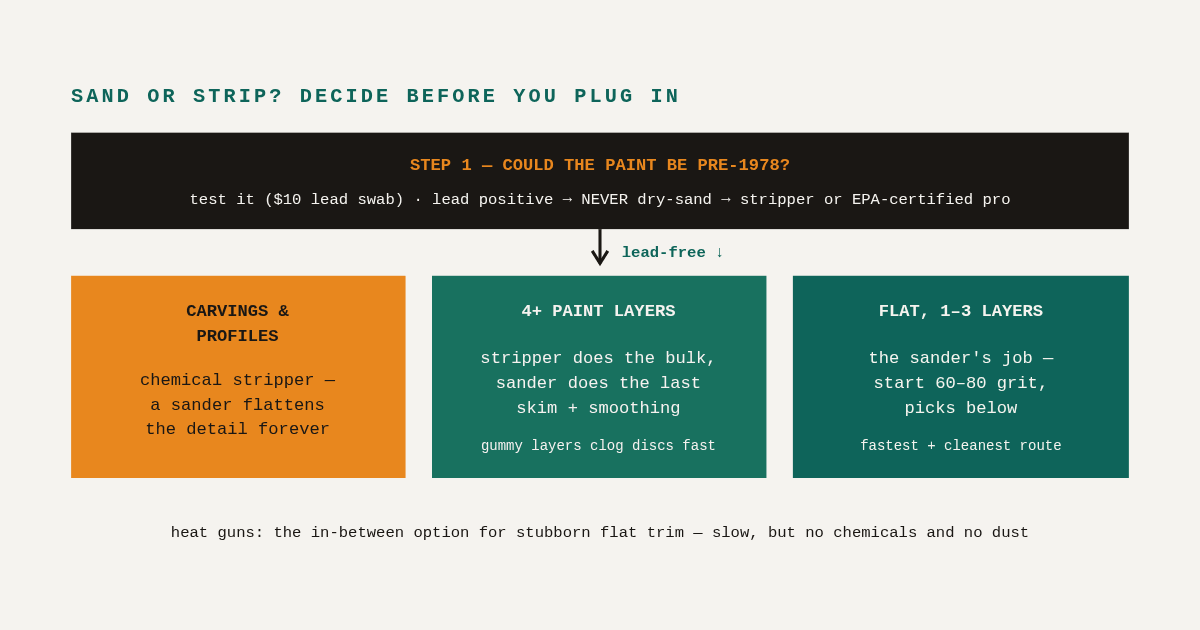
Homes built before 1978 may have lead paint. Do not dry power-sand it - that spreads toxic dust. Use chemical strippers or wet-sanding and follow EPA RRP practices, or hire a certified pro.
Frequently Asked Questions
What's the best sander for a flush (slab) door?
A 5" random orbital like the Bosch ROS20VSC. A slab door is one big flat surface, and a random orbital gives a fast, swirl-free, paint-ready finish across the whole face.
How do I sand a raised-panel door?
Use two tools: a random orbital for the flat rails and stiles, and a detail/mouse sander (or an oscillating tool) for the recessed panels and the moulded sticking around them. The flat sander can't reach the recesses, and the detail sander is too small for the flat areas.
Can I use a sander to fix a door that sticks?
Yes - a belt sander run along the binding edge takes it down quickly and evenly. Mark where it rubs, remove a little, and re-hang to check. Finish the edge smooth and reseal or repaint bare wood so it doesn't absorb moisture and swell again.
What grit should I use to sand a door for painting?
Start at about 120 grit to dull the old finish and level imperfections, then 180-220 for a smooth surface that holds paint well. Wipe off all dust before priming.
More in the sanders cluster
Doors are one job in the wider sanding world. Compare tools in the wood sanders hub, go deeper on mouse sanders and detail sanders for panel work, size up a general-purpose sander for woodworking, or grab a flat-finishing sheet sander.