6 Best Sanders for Exterior Paint Removal (And the Right Grits)
Affiliate disclosure: As an Amazon Associate, WoodyMan Reviews earns from qualifying purchases. If you buy through links on this page, we may earn a commission at no extra cost to you. How this works.
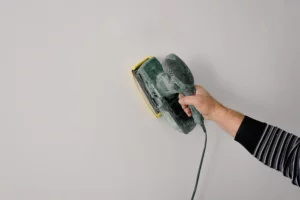
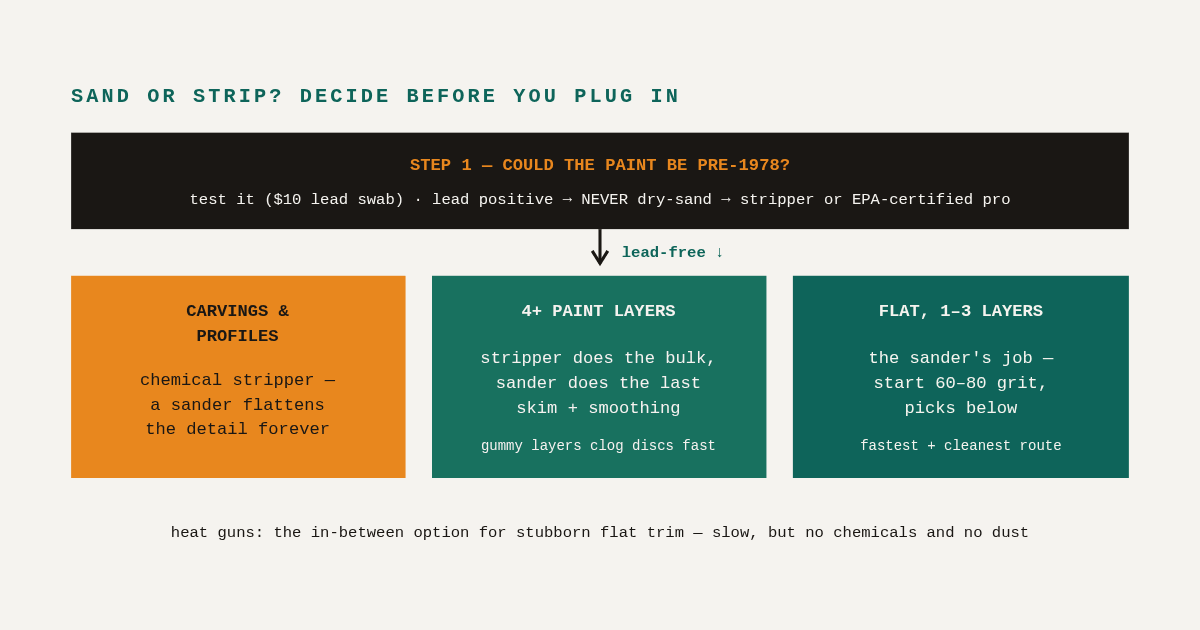
Sanding off exterior paint is really two different jobs. Bulk removal - getting thick, failing paint off siding, deck boards, or trim - wants a belt sander or a purpose-built paint remover disc. Surface prep - feathering edges and smoothing bare wood so new paint bonds - wants a random orbital. Buy for the wrong stage and you'll either crawl (orbital on thick paint) or gouge (belt sander used as a finisher).
One thing before any tool advice: if your building predates 1978, test for lead before you sand. Lead test kits are cheap; sanding lead paint without HEPA containment poisons your soil and your family, and hiring an RRP-certified contractor is the right call. Everything below assumes you've cleared that hurdle.
We earn a small commission from the Amazon links below, at no extra cost to you - see our affiliate disclosure.
The 6 best sanders for exterior paint removal
| Sander | Best for | Woody Rating | |
|---|---|---|---|
| 1. Makita 9903 (belt) | Bulk removal on flat boards - the workhorse | 9.4/10 [Editor's Choice] | Check price |
| 2. Wagner PaintEater | Purpose-built for peeling siding | 8.9/10 | Check price |
| 3. Bosch GET75-6N | Strip + finish with one machine | 8.8/10 | Check price |
| 4. Metabo HPT SB8V2 (belt) | Belt-sander power on a budget | 8.5/10 | Check price |
| 5. DEWALT DCW210B (cordless) | Ladder and scaffold work - no cord | 8.4/10 | Check price |
| 6. Makita BO5041 | The finishing pass before primer | 8.3/10 | Check price |
1. Makita 9903 - Editor's Choice for Bulk Removal
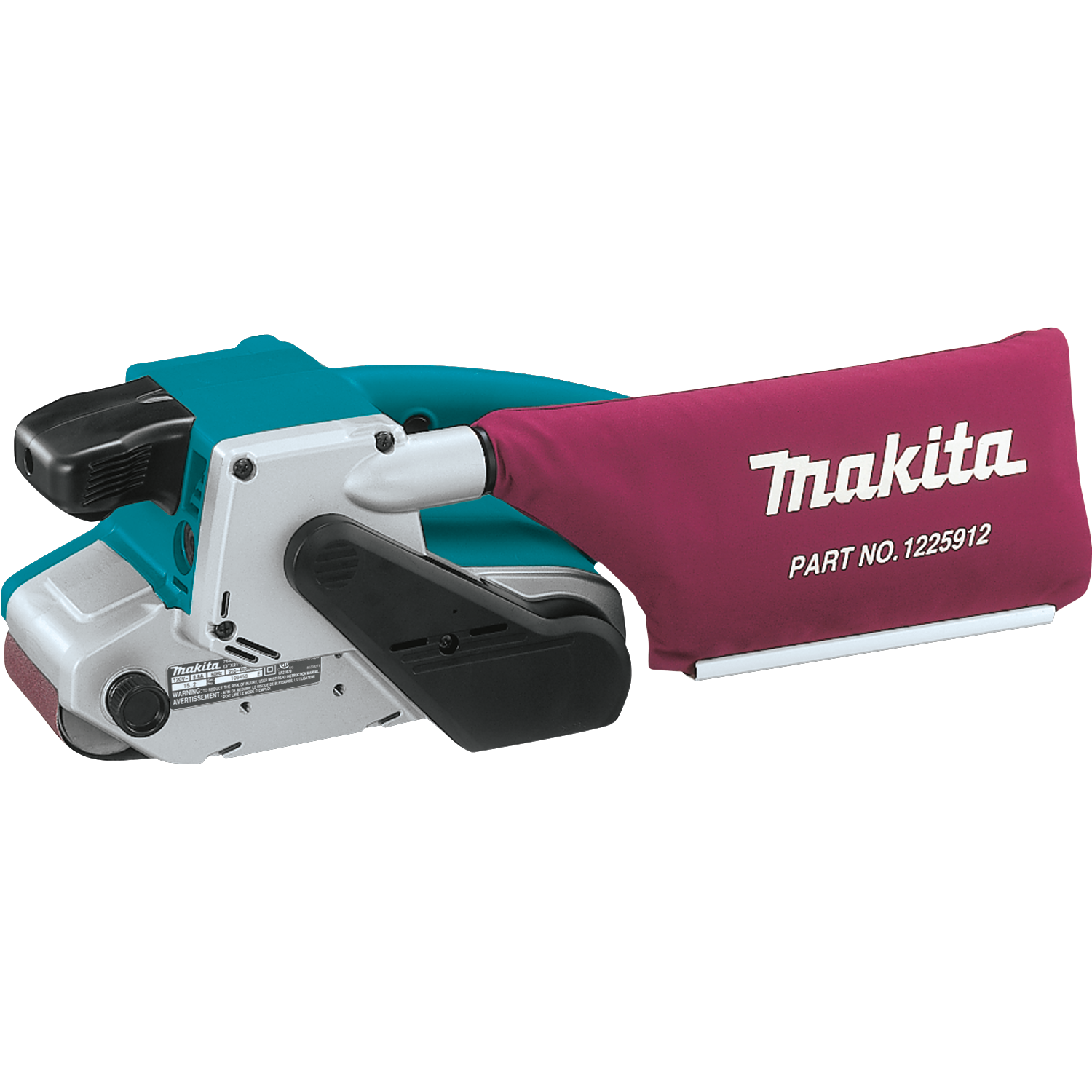
Best for: stripping paint off anything flat - deck boards, fascia, flat siding, doors laid across sawhorses.
The 9903 has been the reference 3x21" belt sander for two decades and nothing in its class has dethroned it. The 8.8-amp motor holds its speed under load - the thing cheap belt sanders can't do, and exactly what matters when 40-grit meets three layers of alkyd. Variable speed (690-1,440 ft/min) lets you slow down near edges, the auto-tracking system keeps the belt centered without fiddling, and at 85 dB it's remarkably civilized for a belt sander. With a zirconia 40- or 60-grit belt it clears paint about as fast as anything short of chemical stripping - see belt vs orbital for why this stage belongs to a belt machine.
| Pros | Cons |
|---|---|
| ✅ Holds belt speed under heavy load | ❌ 9.5 lbs - tiring on vertical surfaces |
| ✅ Auto-tracking belt, no adjustment fiddling | ❌ Overkill if you only prep small patches |
| ✅ Quiet (85 dB) for its class | |
| ✅ Variable speed for edge control |
2. Wagner PaintEater - Purpose-Built for Siding
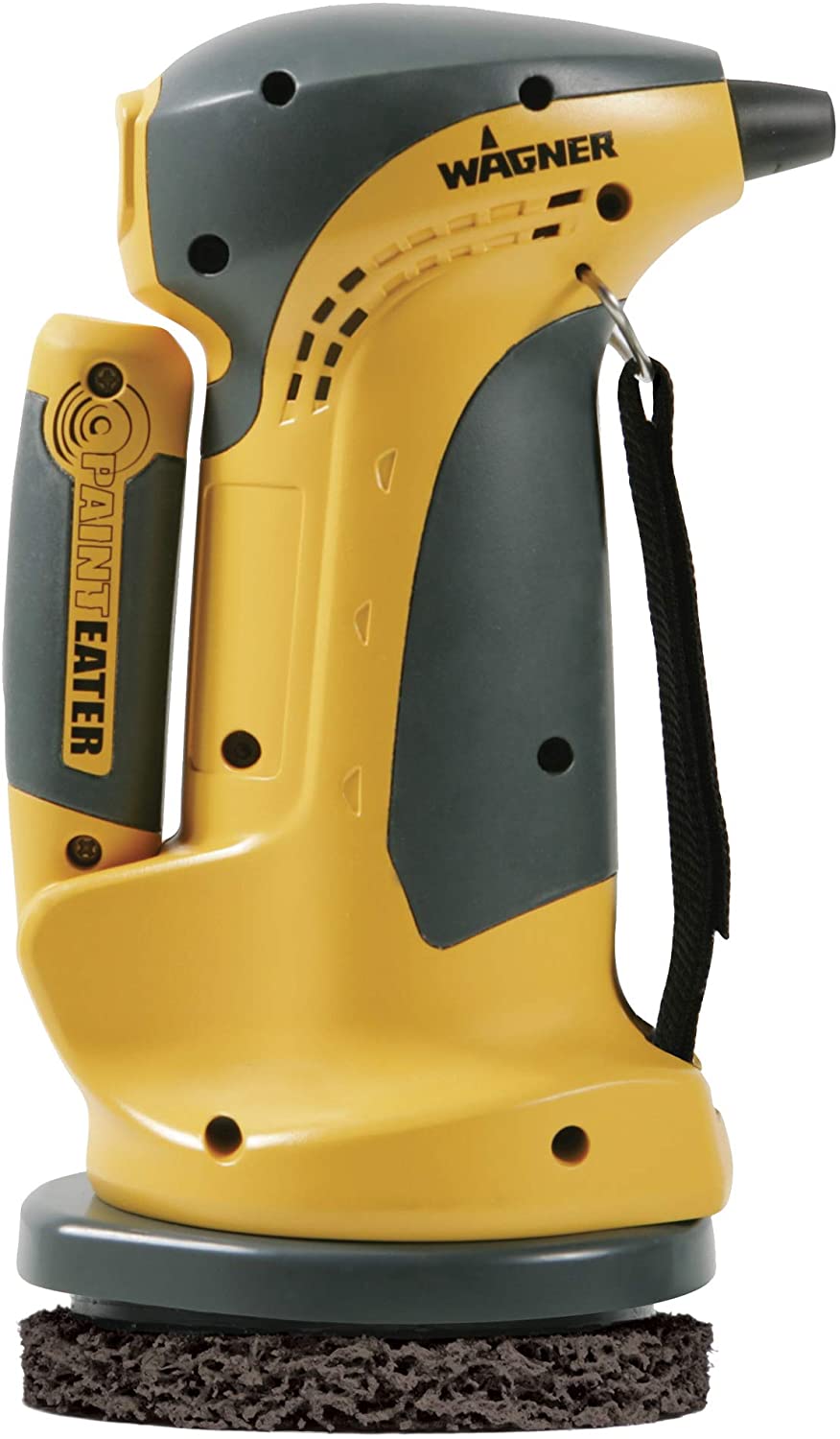
Best for: peeling, blistered paint on clapboard and shingle siding - the one tool here designed for nothing else.
The PaintEater isn't a sander in the sandpaper sense: it spins a 4½" open-web fiber disc that shreds failing paint without loading up - the death of conventional abrasives on gummy exterior paint. The disc flexes over clapboard edges and cupped boards instead of flattening them, takes paint down to sound wood, and feathers the transition in the same pass. It won't give you a finish-ready surface (follow with an orbital) and the discs are a consumable you'll rebuy, but for the specific misery of a whole peeling wall, nothing else at this price touches it.
| Pros | Cons |
|---|---|
| ✅ Fiber disc doesn't clog on gummy paint | ❌ Leaves a rough surface - needs a finish pass |
| ✅ Flexes over clapboard without gouging flats | ❌ Replacement discs are an ongoing cost |
| ✅ One- or two-handed grip options |
3. Bosch GET75-6N - Strip and Finish with One Tool
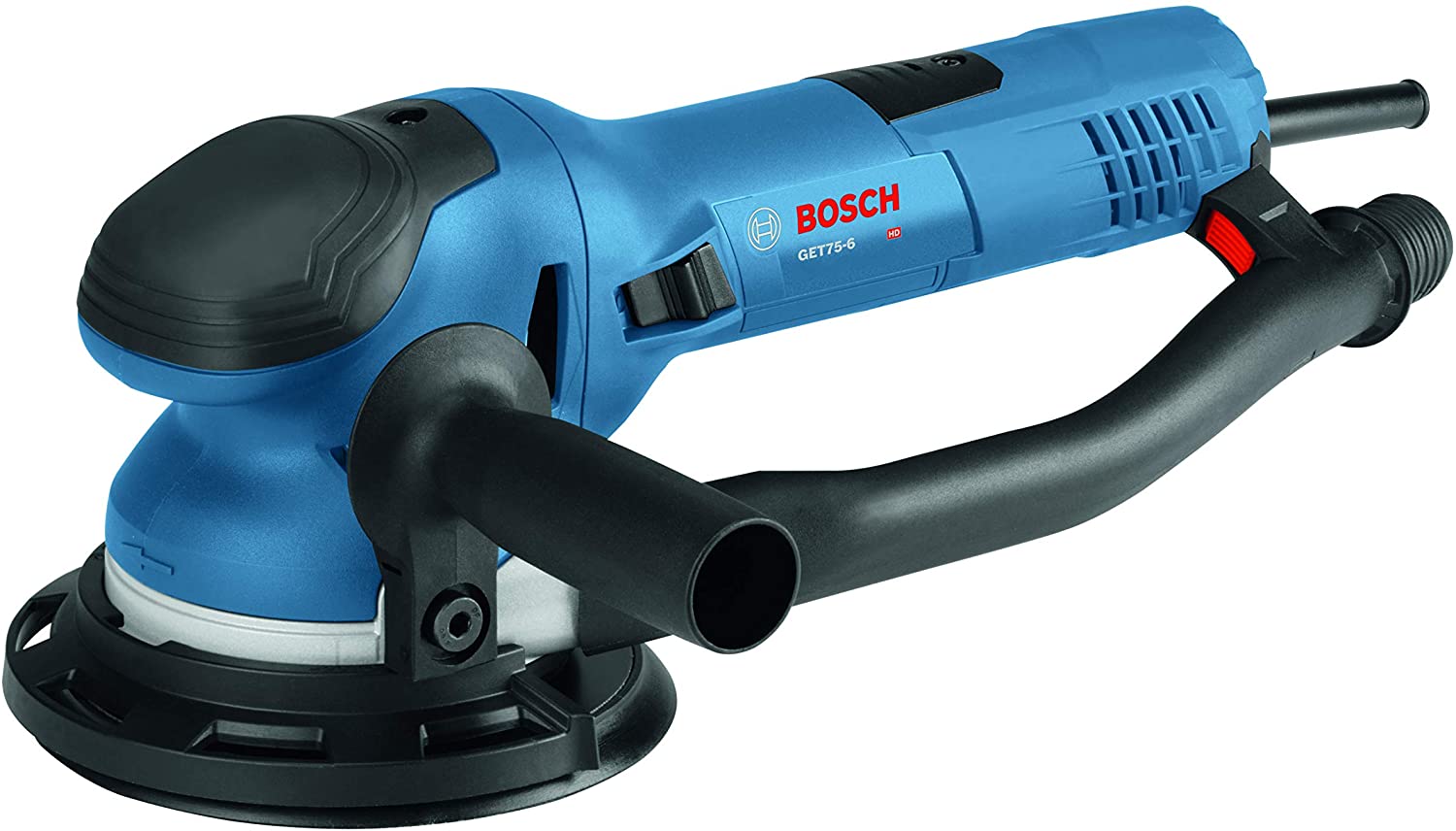
Best for: anyone who wants a single machine for the whole job - and the closest thing here to a pro refinishing rig.
The GET75-6N is a 7.5-amp, 6-inch random orbital with a second personality: flip it to turbo mode and the pad drives in a forced eccentric-orbit action that removes stock around five times faster - genuinely usable for paint removal, not just marketing. Flip back to random-orbit mode and it's a swirl-free finisher. Add excellent vacuum-port dust extraction (you want that with old paint) and a front handle for two-handed control, and this is the "buy once" answer. It costs accordingly, and at 15" long it's a handful on ladders.
| Pros | Cons |
|---|---|
| ✅ Turbo mode ≈ 5× stock removal, then finish mode | ❌ Premium price |
| ✅ Best dust extraction on this list | ❌ Big and heavy for overhead work |
| ✅ 6" pad covers ground fast |
4. Metabo HPT SB8V2 - Budget Belt Power
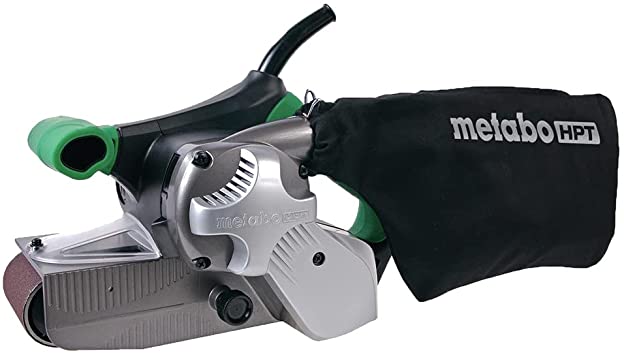
Best for: the same bulk-removal jobs as the Makita, at a noticeably lower price.
The SB8V2 (the old Hitachi design) actually out-spec's the Makita on paper: 9 amps and up to 1,475 ft/min in the same 3x21" format, with variable speed and a clear tracking window that lets you watch the belt line up on the work - genuinely useful when you're sneaking up on trim. Vibration control and long-term durability are a notch below the 9903, and the left-side dust bag brushes a right-hander's forearm, which is why it's the value pick rather than the champion. But for a homeowner stripping one deck and one fence, that's a very good trade.
| Pros | Cons |
|---|---|
| ✅ 9-amp motor, cheapest real belt power here | ❌ Dust bag placement annoys right-handers |
| ✅ Tracking window - see the belt on the work | ❌ More vibration than the Makita |
| ✅ Variable speed |
5. DEWALT DCW210B - Best on a Ladder
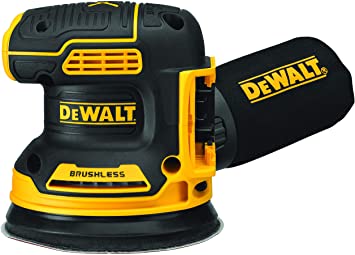
Best for: second-story trim, soffits, window casings - anywhere a cord is a hazard and a wall outlet is a fantasy.
A cordless 5" random orbital with a brushless motor, 8,000-12,000 OPM variable speed, and a low-profile body that keeps your hand close to the surface for control. On 20V 5Ah packs (tool-only - you're buying into DEWALT's battery platform or already on it) it runs long enough to matter, and the freedom on a ladder is worth more than any spec. It's a prep-and-feather tool, not a bulk stripper: with 60-grit discs it erases stubborn patches and smooths what the chemical stripper or PaintEater left behind, but thick intact paint will bog it down.
| Pros | Cons |
|---|---|
| ✅ No cord on ladders/scaffolds - safer and faster | ❌ Battery and charger sold separately |
| ✅ Brushless motor, real variable speed | ❌ Not a bulk-removal tool |
| ✅ Low-profile, one-hand control |
6. Makita BO5041 - The Finishing Pass
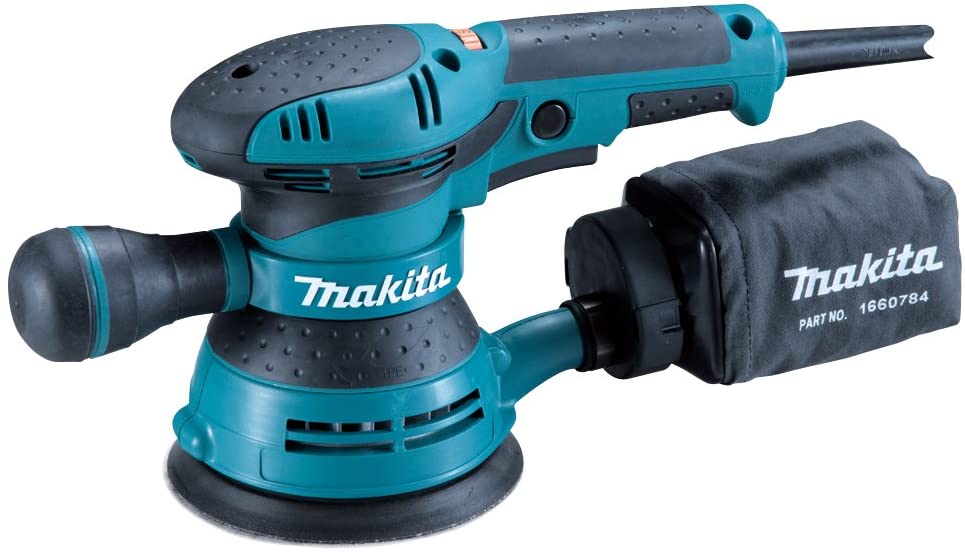
Best for: the last stage - turning stripped, rough wood into a surface primer will actually bond to.
A 3-amp 5" random orbital with two features that earn its spot over commodity orbitals: variable speed from 4,000 to 12,000 OPM (slow for feathering paint edges without burning through, fast for smoothing), and a removable front handle so you can drive it two-handed on vertical siding. The pad action is properly swirl-free, which matters more than people think - swirls telegraph straight through exterior paint in low sun. If your bulk removal is chemical (see the deck paint remover guide), this plus a scraper may be the only sander you need.
| Pros | Cons |
|---|---|
| ✅ 4,000-12,000 OPM range - feather without burning | ❌ Dust bag is mediocre; use a vacuum |
| ✅ Front handle for two-handed vertical work | ❌ Corded - plan the extension lead |
| ✅ Swirl-free finish under paint |
Buying guide: matching the sander to the job
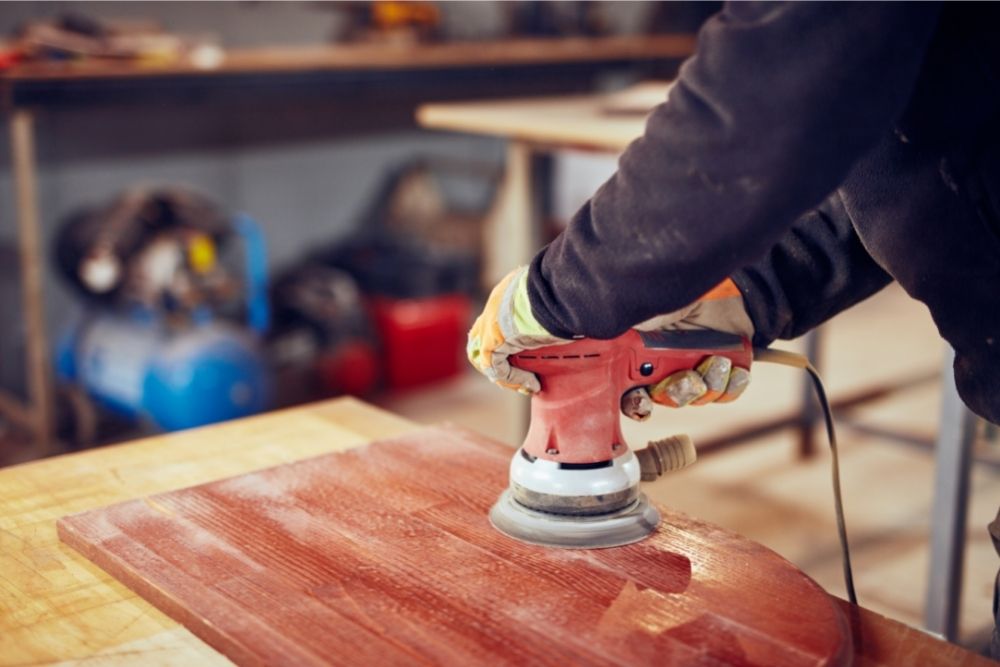
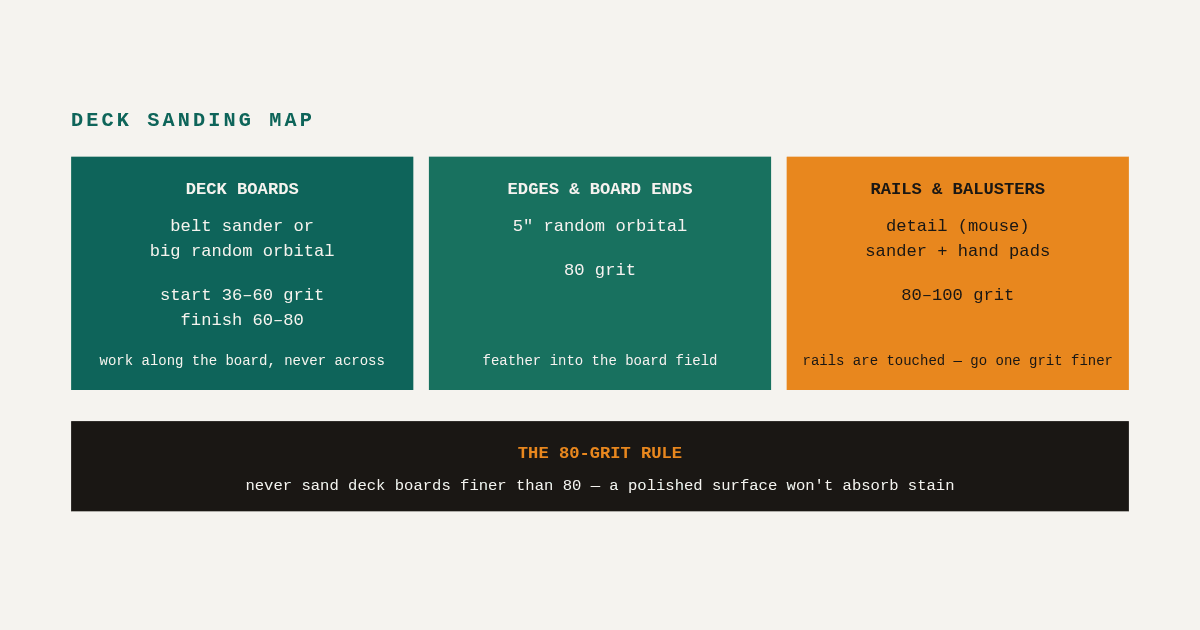
Think in two stages. Bulk removal (belt sander or PaintEater, 36-60 grit) and prep (random orbital, 80-120 grit). One tool rarely does both well - the Bosch's dual mode is the exception, and you pay for it.
Grit and abrasive matter as much as the tool. Old paint kills cheap aluminum-oxide abrasive in minutes. Zirconia or ceramic belts and discs cost more per sheet and far less per square foot of stripped paint.
Dust collection is non-negotiable outdoors too. Paint dust drifts into gardens, pools and neighbors' yards. Use the vacuum port where the tool has one; a cheap HEPA-rated shop-vac transforms the job.
Heat is the enemy. Paint that gums instead of powders means too much speed or pressure - the abrasive is melting the paint. Slow the tool down (this is why variable speed appears on every pick above) and let the grit cut.
Combine with chemistry on heavy buildup. On many layers, a chemical stripper for the bulk plus a sander for the feathering beats either alone - the full workflow is in our deck paint remover guide. For the whole sander landscape beyond paint work, start at the sanders hub.
Frequently Asked Questions
Can I use an orbital sander to remove exterior paint?
Yes, for thin or already-failing paint and for feathering edges - use 60-80 grit and keep the pad flat and moving. For thick, well-bonded paint an orbital is the slow road: the random action that makes it swirl-free also caps how aggressively it cuts. That stage wants a belt sander or the PaintEater.
What grit sandpaper removes paint fastest?
36-40 grit for bulk stripping on a belt sander, 60 on an orbital. Anything coarser than 36 leaves gouges deeper than the paint you removed. Work back up through 80 then 100-120 before priming - primer needs some tooth, so exterior wood shouldn't be polished past ~120.
How do I know if my paint is lead-based?
Assume anything painted before 1978 might be, and test - instant swab kits (3M LeadCheck is the common one) cost a few dollars. If it's positive, stop: dry-sanding lead paint is exactly the wrong move. Use an RRP-certified contractor, or at minimum HEPA-shrouded equipment and full containment per EPA guidance.
Belt sander or heat gun for exterior paint?
Belt sander for flat, open boards where speed wins. Heat gun for mouldings, window profiles and detail work where an abrasive would erase the profile. On lead paint, neither - heat guns above ~1,100°F volatilize lead. Most whole-house jobs end up using scraper + sander on the field and heat or chemical on the details.
Why does my sandpaper clog up immediately?
The paint is melting, not cutting: too much pressure, too much speed, or paint that's simply too soft (latex in the sun). Slow down, lighten up, and switch to an open-coat or non-loading abrasive - or do that section chemically. On the PaintEater, clogging is the sign the disc is worn out.