7 Best Paint Removers for a Wood Deck: Paint vs Stain, Sorted
Affiliate disclosure: As an Amazon Associate, WoodyMan Reviews earns from qualifying purchases. If you buy through links on this page, we may earn a commission at no extra cost to you. How this works.
Before you buy anything, answer one question: is your deck coated in paint or stain? They come off with completely different chemistry, and most bad results come from using the wrong type. Solid paint (and polyurethane, and multiple stubborn layers) needs a solvent gel remover you scrape off. Old deck stain - semi-transparent or weathered - comes off far cheaper and faster with an alkaline deck stripper you pressure-wash off, followed by a brightener to neutralize.
This list covers both, with the strongest verified pick in each lane. Every product below was checked as in stock and buyable this month; the discontinued Woodrich and DeckGeneral strippers from the old version of this guide are gone.
We earn a small commission from the Amazon links below, at no extra cost to you - see our affiliate disclosure.
The 7 best deck paint and stain removers
| Remover | Best for | Woody Rating | |
|---|---|---|---|
| 1. Dumond Smart Strip Advanced | Real paint, many layers - safest heavy-hitter | 9.5/10 [Editor's Choice] | Check price |
| 2. Restore-A-Deck Stain Stripper | Old deck stain - best value per sq ft | 9.2/10 | Check price |
| 3. DEFY Exterior Stain Stripper | Semi-transparent stains, ready to spray | 8.8/10 | Check price |
| 4. #1 Deck Stain Stripper | Weathered stain, no mixing | 8.6/10 | Check price |
| 5. Citristrip Stripping Gel | Railings, spindles, spot work | 8.5/10 | Check price |
| 6. Sunnyside Multi-Strip ADVANCED | Up to 15 layers, epoxy and urethane | 8.3/10 | Check price |
| 7. MAX Strip Paint & Varnish | Gentlest formula - indoor-adjacent areas | 8.0/10 | Check price |
1. Dumond Smart Strip Advanced - Editor's Choice for Paint
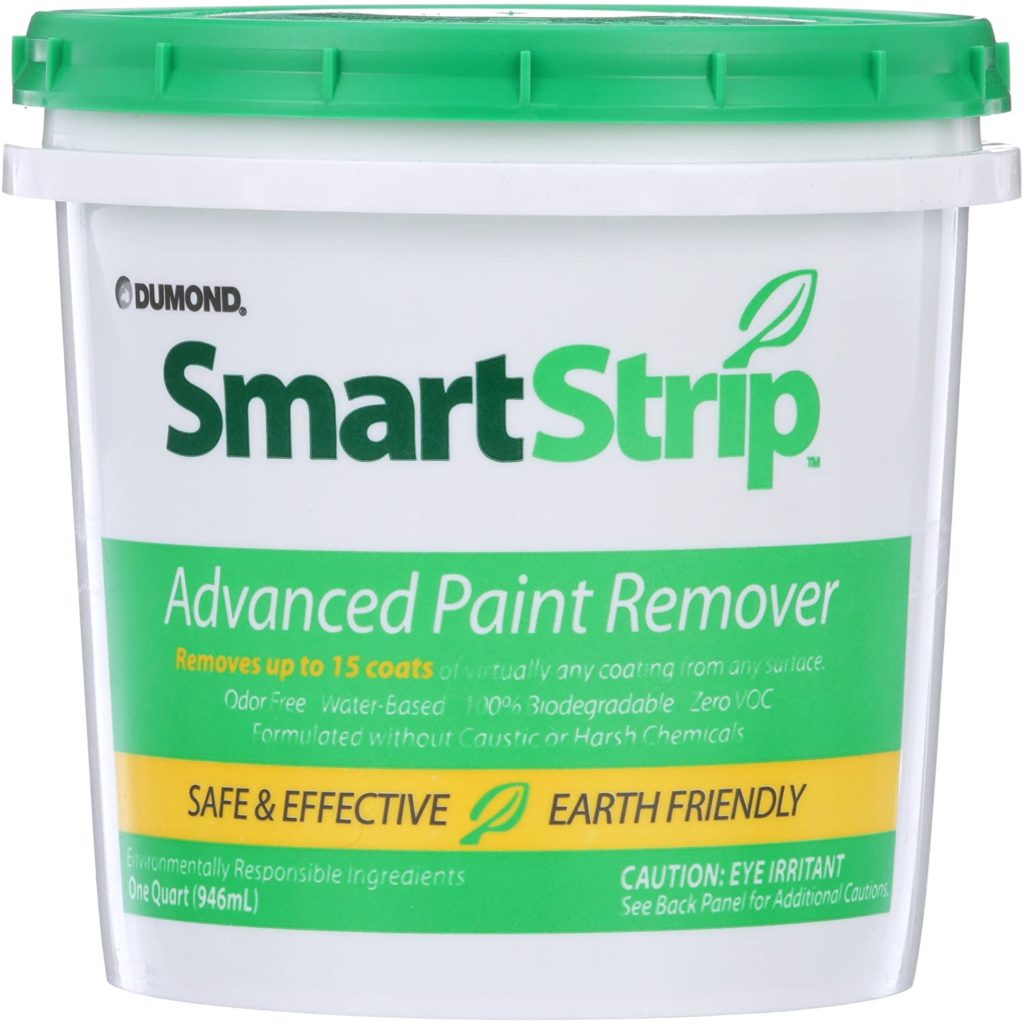
Best for: a deck that's actually painted - especially older homes where the bottom layers might be lead paint.
Smart Strip is the rare remover that's both genuinely strong and genuinely safe: water-based, no methylene chloride, no NMP, virtually odorless, and rated to take off up to 15 layers in one application - including lead-based paint, which is why pros use it on pre-1978 housing. The method is patience, not muscle: trowel it on thick, let it dwell 3-24 hours (longer for more layers), then the whole paint stack scrapes off in sheets. No neutralizer needed afterward, just a water rinse. The only real knock is price per square foot, which is why it's our paint pick rather than our stain pick - using this on ordinary weathered stain is overkill.
| Pros | Cons |
|---|---|
| ✅ Removes up to 15 layers, incl. lead paint protocols | ❌ Priciest option per sq ft |
| ✅ No methylene chloride / NMP, near-odorless | ❌ Long dwell time - plan around weather |
| ✅ Water cleanup, no neutralizer step |
2. Restore-A-Deck Stain Stripper - Best Value for Stain
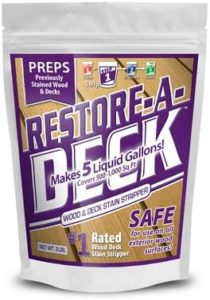
Best for: stripping failing semi-transparent or weathered stain off a whole deck without spending a fortune.
This is a powder concentrate: one tub mixes into up to 5 gallons of stripper, covering a full-size deck (500-1,000 sq ft depending on how stubborn the coating is) for less than most competitors charge per single gallon. Mix, pump-spray on, keep it wet 15-20 minutes, pressure-wash off. It's the deck-restoration community's default for a reason. Two rules: it's for penetrating stains and clear coats - not solid paint - and like every alkaline stripper it darkens the wood, so follow with a brightener (Restore-A-Deck sells a matching one) before re-staining with something like an oil-based deck stain.
| Pros | Cons |
|---|---|
| ✅ Cheapest per square foot on this list | ❌ Won't touch solid paint or polyurethane |
| ✅ Mix only what you need - powder keeps | ❌ Needs the brightener/neutralizer step |
| ✅ 15-20 min dwell, pressure-wash off |
3. DEFY Exterior Wood Stain Stripper - Easiest Stain Strip
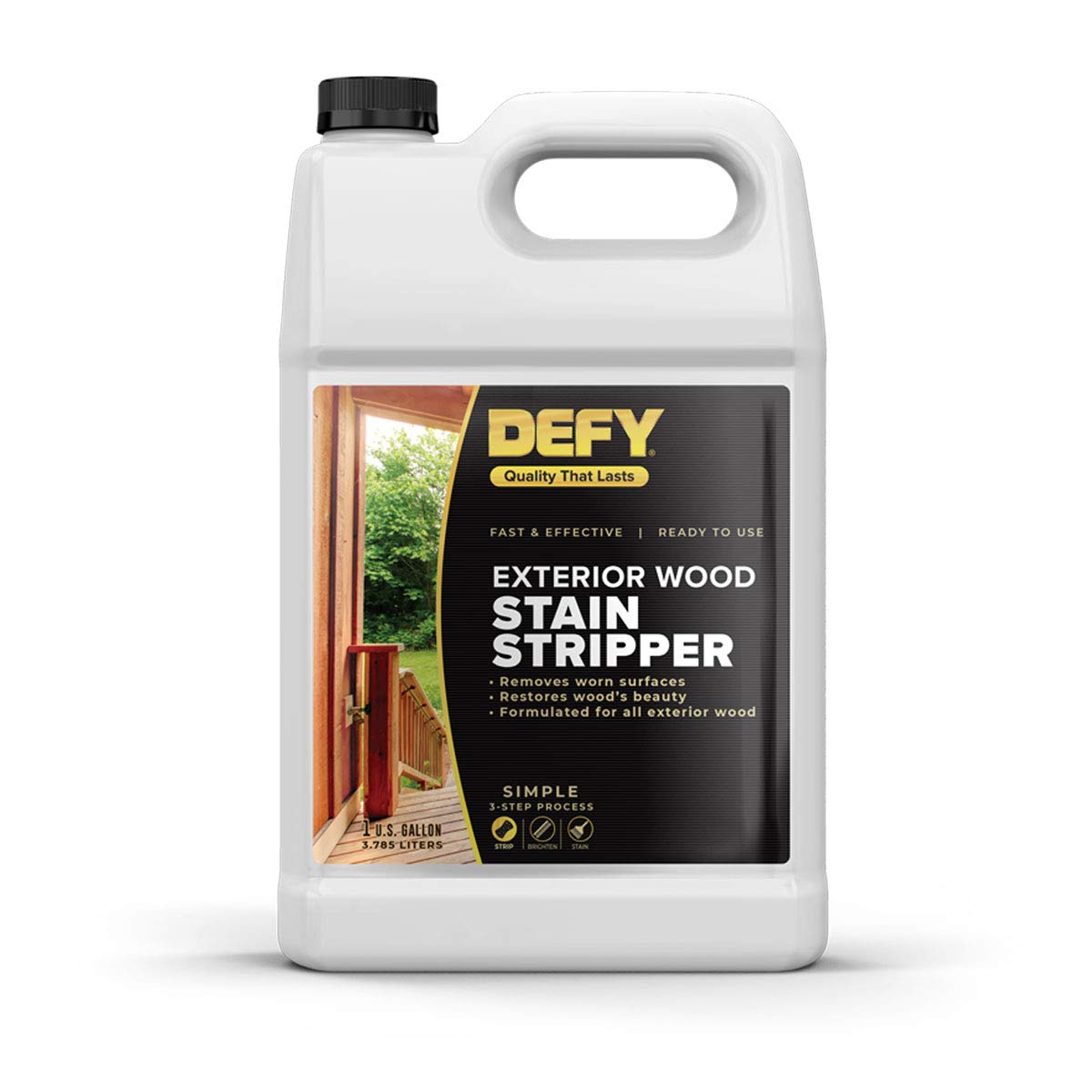
Best for: taking off weathered or semi-transparent stain with zero mixing - open, spray, dwell, rinse.
DEFY's stripper comes ready to use: load a pump sprayer, coat the deck, keep it wet for 20-30 minutes, then pressure-wash. Along with the old stain it lifts gray weathering, dirt and mildew in the same pass, which is most of the "wow" in before/after photos. Coverage runs about 100-150 sq ft per gallon, so budget two to three gallons for an average deck - dearer than mixing Restore-A-Deck powder, cheaper than any paint-grade gel. Same caveats as every hydroxide stripper: not for solid stains or paint, keep it off plants, and brighten afterward.
| Pros | Cons |
|---|---|
| ✅ Ready to use - no mixing step | ❌ Not for solid stains or paint |
| ✅ Lifts gray weathering and mildew too | ❌ 2-3 gallons for an average deck |
| ✅ 30-minute job start to rinse |
4. #1 Deck Wood Stain Stripper - Weathered-Stain Workhorse
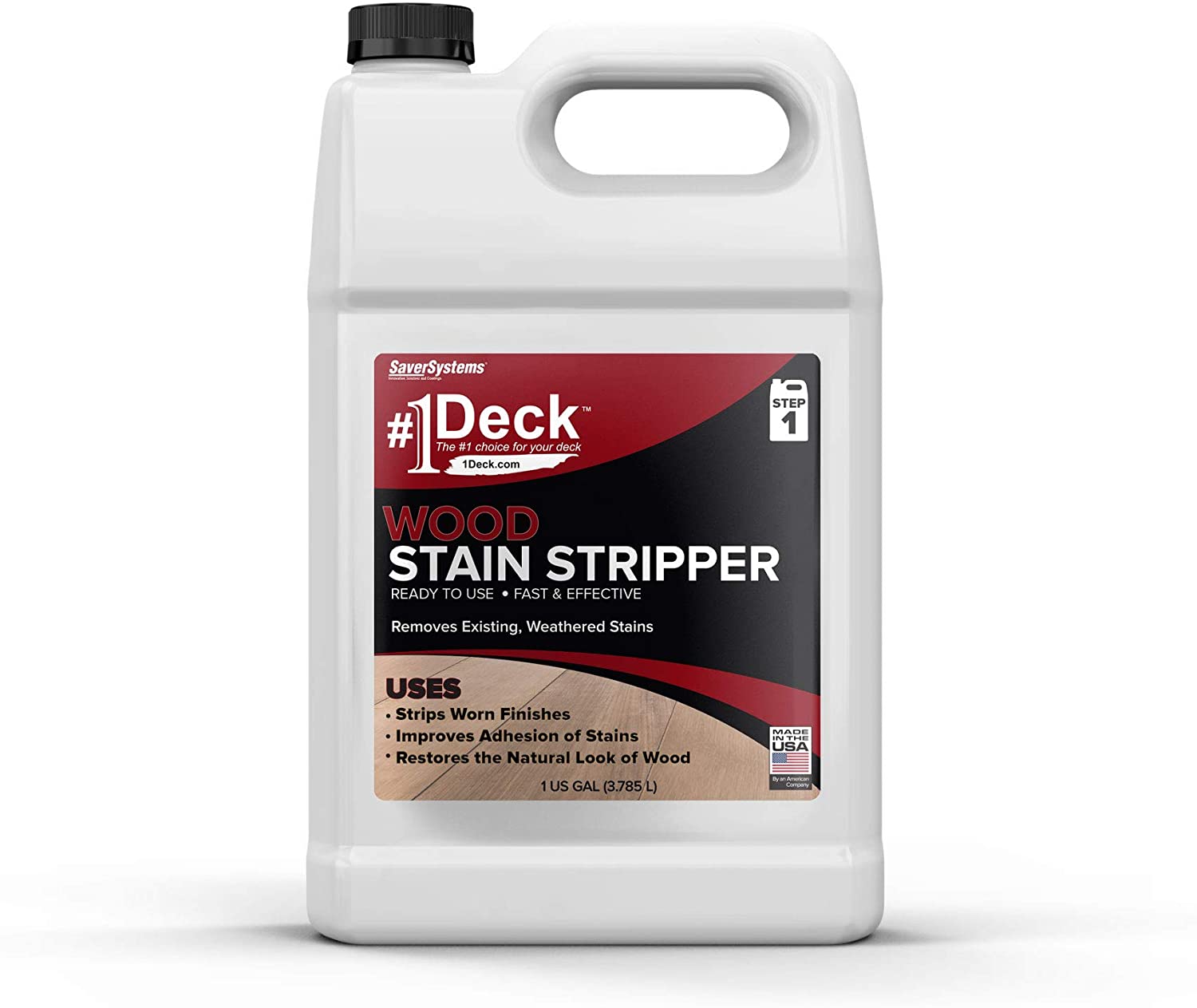
Best for: single-coat semi-transparent stain that's years past its prime.
Functionally DEFY's closest rival: ready to use, pump-spray on, 15-30 minutes of dwell, pressure-wash off, roughly 100-150 sq ft per gallon. It excels on old penetrating stains and sealers and improves adhesion for whatever goes on next. It struggles where all alkaline strippers struggle - multiple coats or solid color - and works best applied on a cloudy day so it doesn't dry on the boards mid-dwell (misting with water buys time). Pair it with the same brand's brightener for the two-step restore.
| Pros | Cons |
|---|---|
| ✅ Ready to use, quick dwell | ❌ Weak on multiple coats |
| ✅ Preps surface for re-staining | ❌ Must stay wet - awkward in hot sun |
| ✅ Also sold in 2.5-gal size for big decks |
5. Citristrip Stripping Gel - Best for Railings & Spot Work
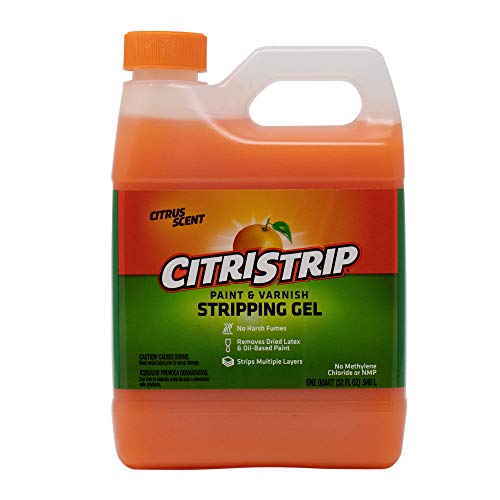
Best for: the fiddly parts - railings, spindles, posts, benches - and small painted areas where a whole-deck stripper is overkill.
Citristrip is the most famous consumer paint stripper in America for good reasons: the thick gel clings to vertical surfaces, it stays active up to 24 hours, it smells like oranges instead of a chemistry accident, and it handles latex, oil paint, varnish, polyurethane and shellac. On a horizontal deck field it's slow and expensive - that's not its job. But for the vertical woodwork around the deck, nothing on this list is easier to control. Give it 30 minutes to several hours depending on layers, scrape, and wash down.
| Pros | Cons |
|---|---|
| ✅ Gel clings to spindles and verticals | ❌ Too slow/costly for whole deck floors |
| ✅ Stays wet and working up to 24 hrs | ❌ Quart size - buy several for big jobs |
| ✅ No methylene chloride; citrus scent |
6. Sunnyside Multi-Strip ADVANCED - Most Layers
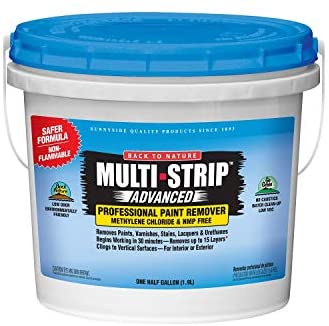
Best for: the deck that's been painted over and over - and coatings other strippers bounce off, like epoxy and urethane.
Multi-Strip ADVANCED is Sunnyside's methylene-chloride-free heavy gel, rated for up to 15 layers of oil or water-based paint in one application. It clings to vertical and detailed surfaces, stays wet long enough to chew through the full stack, and then everything comes off with a scraper. Budget real dwell time (30 minutes to several hours) and real scraping labor - nothing that removes 15 layers is effortless - but as a paint-grade alternative to Smart Strip at a lower price, it's the one to beat. Quart linked; it's also sold by the gallon.
| Pros | Cons |
|---|---|
| ✅ Up to 15 layers; tackles epoxy/urethane | ❌ Scraping is genuine labor |
| ✅ Clings to vertical/detailed surfaces | ❌ Slower than alkaline strippers on stain |
| ✅ No methylene chloride, low odor |
7. MAX Strip Paint & Varnish Stripper - Gentlest Formula
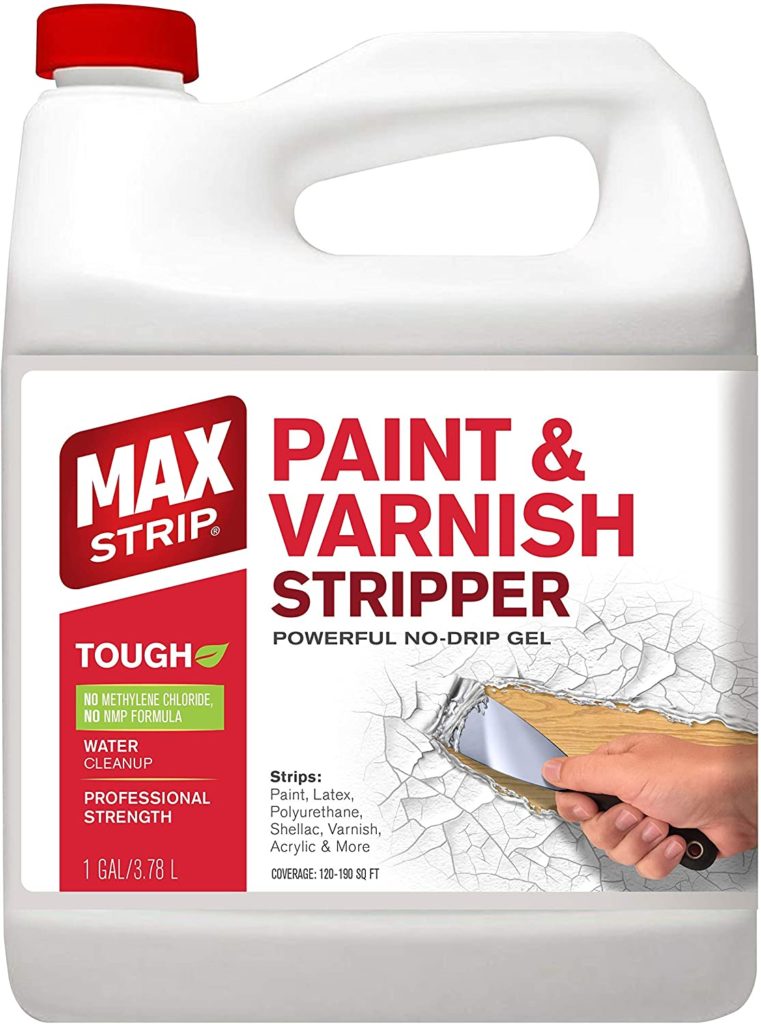
Best for: paint removal where safety trumps speed - enclosed porches, deck areas near doors and windows, households with kids and pets underfoot.
MAX Strip is free of methylene chloride, NMP and caustics, skin-safe by stripper standards, and mild enough to use in poorly ventilated spots where stronger products are off-limits. It removes latex, oil paint, varnish and polyurethane - just more slowly: expect to keep it wet for hours (cover with plastic sheeting to extend the working time) and to re-apply on thick paint stacks. Think of it as the trade: the least hazardous formula on this list, paid for in patience.
| Pros | Cons |
|---|---|
| ✅ Safest chemistry here - no MC, NMP or caustic | ❌ Slowest worker on this list |
| ✅ Fine for enclosed/indoor-adjacent areas | ❌ Thick paint needs multiple applications |
| ✅ Water cleanup |
How to choose: paint remover vs deck stripper
Identify your coating first. Scrape a hidden corner: if an opaque film peels up and you can't see grain through the coating, that's paint or solid stain - use a solvent gel (Smart Strip, Sunnyside, MAX Strip). If the color is in the wood and it's fading rather than peeling, that's penetrating stain - use an alkaline stripper (Restore-A-Deck, DEFY, #1 Deck) at a fraction of the cost.
Plan the neutralizing step. Alkaline strippers leave the wood dark and high-pH. A wood brightener (oxalic/citric acid) restores color and brings the surface back to a pH new stain can bond to. Skipping it is the most common cause of "the new stain failed in a year."
Protect what's around the deck. Even the biodegradable products will scorch plant leaves at full strength. Water plants before and after, tarp what you can't move, and rinse overspray immediately.
Expect some sanding anyway. Strippers do the bulk removal; edges, grooves and stubborn patches almost always need abrasive follow-up. That's a whole topic of its own - see our guide to sanders for exterior paint removal, and for flat boards specifically, belt vs orbital explains which machine to reach for.
Frequently Asked Questions
How do I get paint off a wood deck?
Four stages: clear and sweep the deck; apply the right remover for the coating (gel for paint, alkaline stripper for stain) and let it dwell as directed; scrape or pressure-wash off the sludge; then neutralize/brighten and let the wood dry fully before refinishing. Weather matters more than people expect - you need a dry window that covers the whole dwell time, and cloudy is better than hot sun, which dries strippers before they finish working.
What's the fastest way to strip a deck?
For stain: an alkaline stripper plus a pressure washer - a full deck can be stripped in an afternoon. For paint: there is no fast way, only the choice between chemical dwell time (gel removers) and abrasive labor (a purpose-chosen sander). Most painted decks go quickest with a chemical strip followed by a light sand.
Can I just pressure-wash the old finish off?
Pressure alone will remove failing stain - along with a layer of wood. High pressure on softwood decking leaves fuzzy, furred grain and lap marks that show through the new finish. Use the chemical to do the separating and keep the washer under ~1,500 PSI with a fan tip as the rinse step, not the removal step.
Do I need to neutralize after stripping?
After an alkaline (hydroxide) deck stripper: yes, always - follow with an oxalic or citric acid brightener. After water-based gel removers like Smart Strip or MAX Strip: no neutralizer needed, just a thorough rinse. The product label is the tiebreaker.
Can I paint over old oil-based paint instead of stripping?
If the old paint is sound (not peeling), yes: de-gloss by sanding, clean with a TSP solution, prime with a bonding primer, then top-coat. But on a deck floor, coating over failing paint just schedules the next failure - horizontal surfaces take too much water and traffic for shortcuts to hold. Strip the field boards; over-coat only sound vertical trim.