Best Wood Polish for Floors: 5 Picks That Actually Restore Shine
Affiliate disclosure: As an Amazon Associate, WoodyMan Reviews earns from qualifying purchases. If you buy through links on this page, we may earn a commission at no extra cost to you. How this works.
"Wood floor polish" covers three very different products, and using the wrong one is how floors end up cloudy. Acrylic polishes (Weiman, Bona, Quick Shine) lay down a thin sacrificial gloss layer that hides micro-scratches and takes the daily abuse instead of your finish - they last months and re-coat easily. Polyurethane restorers (Rejuvenate Professional) bond semi-permanently to the existing finish, filling scratches for a year or more, but they're much less forgiving to apply and to remove. Color revivers (Howard Restor-A-Finish) aren't a mop-on product at all - they're a wipe-on solvent treatment for faded or water-marked spots. The five picks below cover all three jobs.
One rule before any of them: these products are for floors with an intact factory or site-applied finish (polyurethane, aluminum-oxide prefinished, etc.). On waxed, oiled, or bare wood they'll blotch or peel, and no polish fixes a finish that's worn through to raw wood - that's a sanding and refinishing job. Test any polish in a closet corner first.
We earn a small commission from the Amazon links below, at no extra cost to you - see our affiliate disclosure.
The 5 best wood floor polishes
| Polish | Best for | Woody Rating | |
|---|---|---|---|
| 1. Weiman Wood Floor Polish & Restorer | Best all-round polish for finished hardwood | 9.3/10 [Editor's Choice] | Check price |
| 2. Rejuvenate Professional Restorer | Deepest scratch filling, longest-lasting shine | 9.0/10 | Check price |
| 3. Bona Hardwood Floor Polish | The floor-pro brand, easiest to maintain | 8.8/10 | Check price |
| 4. Quick Shine Multi-Surface Finish | Best value - wood, laminate, LVP, and tile | 8.5/10 | Check price |
| 5. Howard Restor-A-Finish | Faded spots, water rings, sun-bleached boards | 8.2/10 | Check price |
1. Weiman Wood Floor Polish & Restorer - Editor's Choice
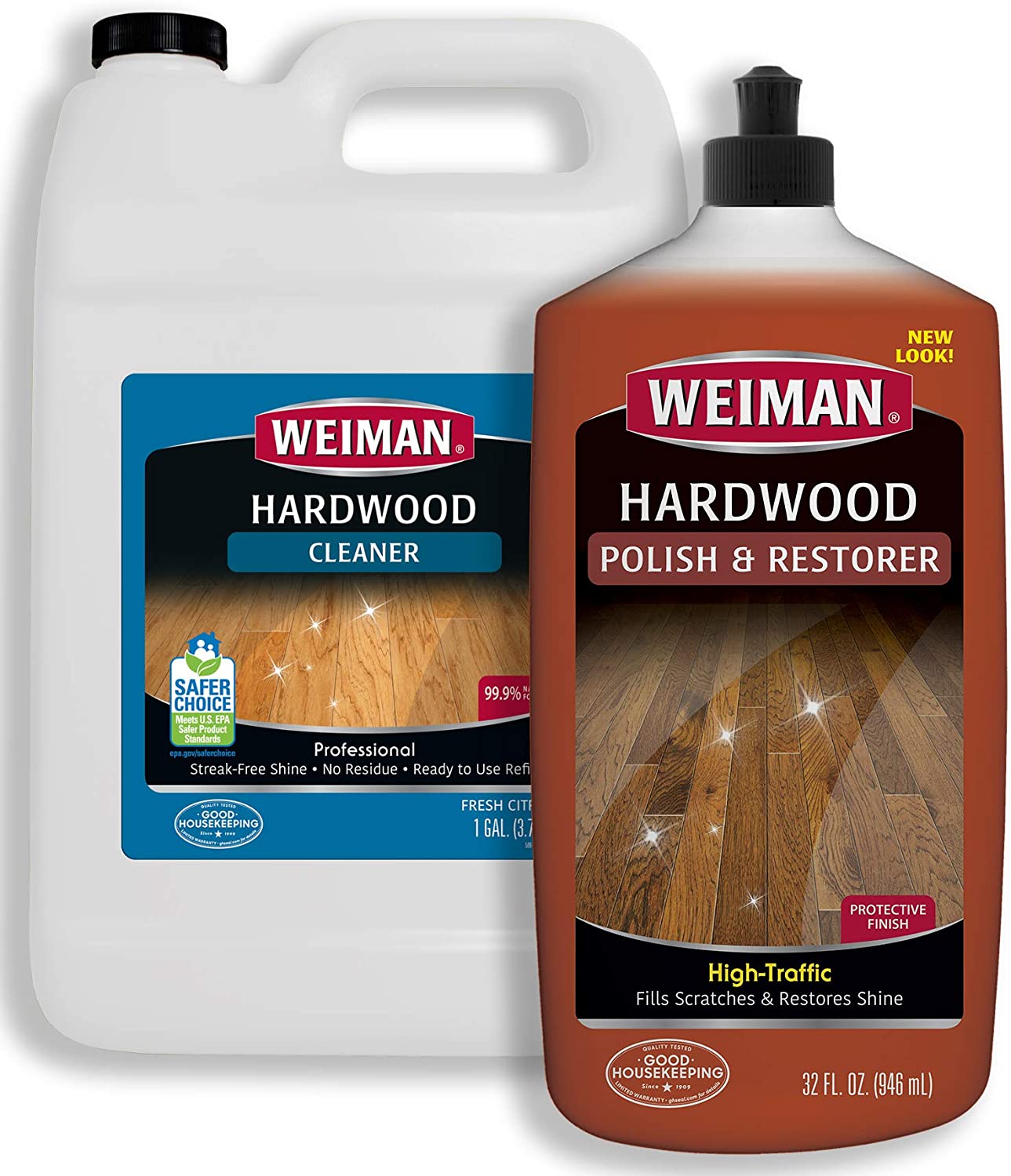
Best for: the standard case - a finished hardwood floor that's gone dull in the traffic lanes and shows fine scratches.
Weiman's high-traffic formula is the polish we'd hand to most people because it hits the middle of every trade-off: it fills micro-scratches noticeably better than the budget options, dries in about 30 minutes, and leaves a natural satin sheen rather than a plasticky gloss, so partial touch-ups of hallways and kitchens blend into the surrounding floor instead of announcing themselves. A 32 oz bottle covers roughly 500 square feet, application is squirt-and-spread with a flat microfiber mop, and it re-coats without stripping. Like every acrylic polish it's sacrificial - expect to refresh high-traffic areas every 3-6 months - and it won't fix gouges or finish worn to bare wood.
| Pros | Cons |
|---|---|
| ✅ Natural satin sheen - touch-ups blend well | ❌ Needs re-coating every 3-6 months in traffic lanes |
| ✅ Genuine micro-scratch filling | ❌ Satin look, if you want mirror gloss, pick Bona/Rejuvenate |
| ✅ 30-minute dry, no sticky residue | |
| ✅ Safe for all polyurethane-finished and engineered floors |
2. Rejuvenate Professional - The Semi-Permanent Option
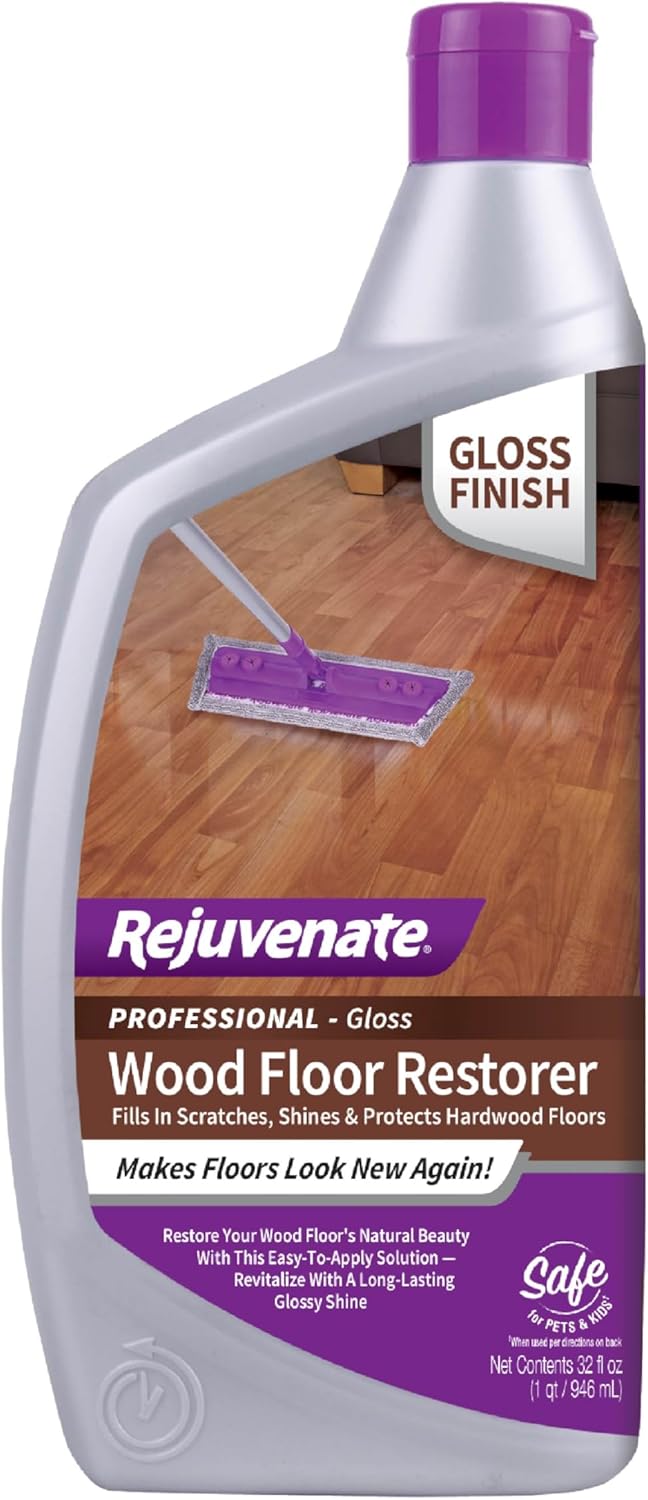
Best for: genuinely scratched-up floors you want to fix once and forget for a year, not maintain quarterly.
Rejuvenate Professional is a different chemistry from the rest of this list: a water-based polyurethane that bonds to your existing finish rather than sitting on top of it. That's why it out-fills every acrylic polish here - scratches and minor dents genuinely disappear - and why one mop-on application (525 sq ft per 32 oz bottle, high-gloss or satin) lasts about a year even in kitchens. The trade-off is commitment: you must apply it evenly in one pass with their microfiber applicator, working wet edges, because lap marks cure in place, and if you ever want it off, it's a chemical stripper job rather than a wash. Prep matters too - the floor needs a real cleaning first, or you're sealing dirt in.
| Pros | Cons |
|---|---|
| ✅ Fills scratches better than any acrylic polish | ❌ Unforgiving application - lap marks are permanent |
| ✅ Lasts ~1 year vs months for regular polish | ❌ Removal requires a chemical stripper |
| ✅ One-hour walk-on dry time | |
| ✅ High-gloss or satin finish options |
3. Bona Hardwood Floor Polish - The Pro Standard
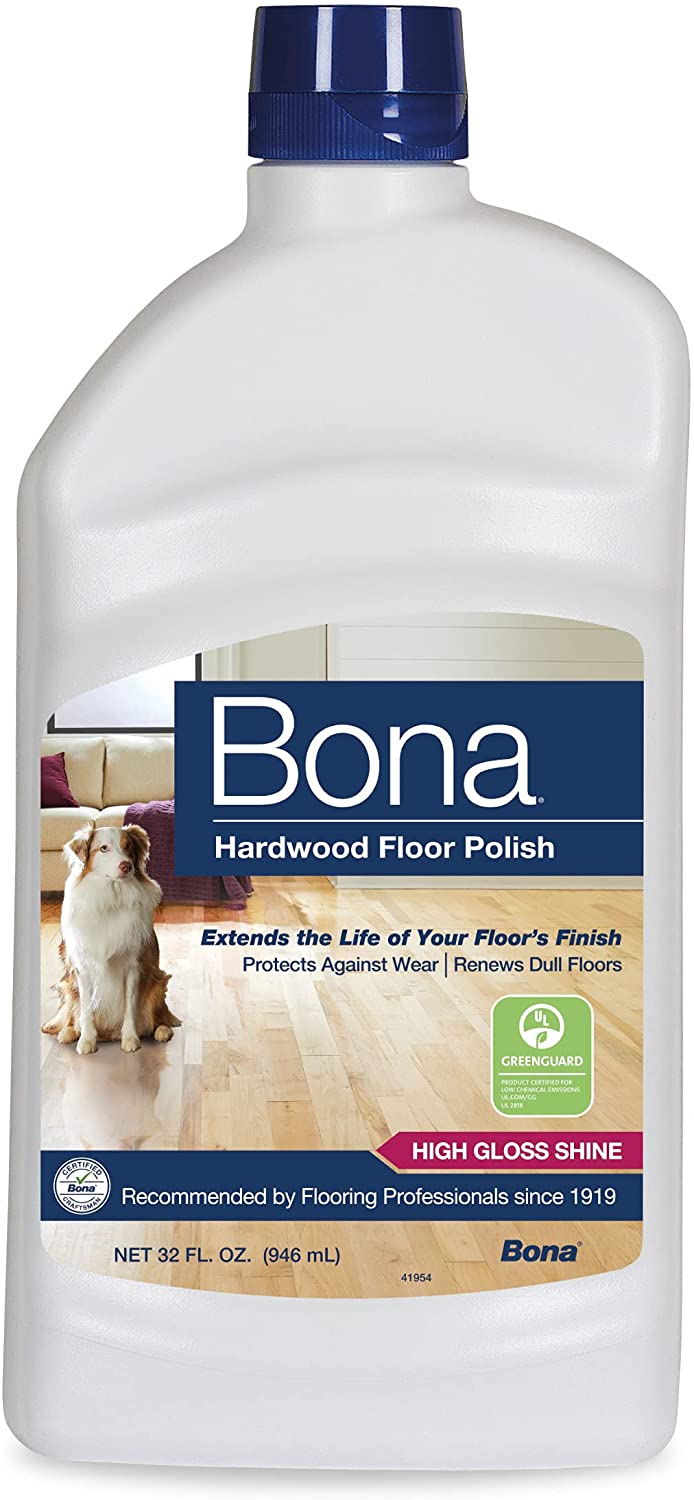
Best for: anyone already in the Bona cleaning ecosystem, and floors where easy future maintenance matters more than maximum fill.
Bona is the brand floor refinishers actually use, and its polish behaves accordingly: a GREENGUARD GOLD certified, water-based urethane-acrylic that levels itself better than anything else here, dries clear without yellowing, and covers 500 sq ft per 32 oz bottle. It deliberately fills less aggressively than Rejuvenate - Bona's system is designed so polish layers stay removable with their Polish Remover, keeping you out of buildup trouble after years of re-coats. That makes it the safest long-term choice: shine now, no regrets when the floor eventually needs a professional re-coat (refinishers hate mystery acrylic buildup). Available in high-gloss and low-gloss; the low-gloss is the safer match for modern matte-finished floors.
| Pros | Cons |
|---|---|
| ✅ Self-levels - hardest polish to mess up | ❌ Lighter scratch filling than Weiman or Rejuvenate |
| ✅ Removable with Bona's remover - no buildup dead end | ❌ Costs more per square foot than Quick Shine |
| ✅ GREENGUARD GOLD, very low odor | |
| ✅ High-gloss and low-gloss versions |
4. Quick Shine Multi-Surface - Best Value
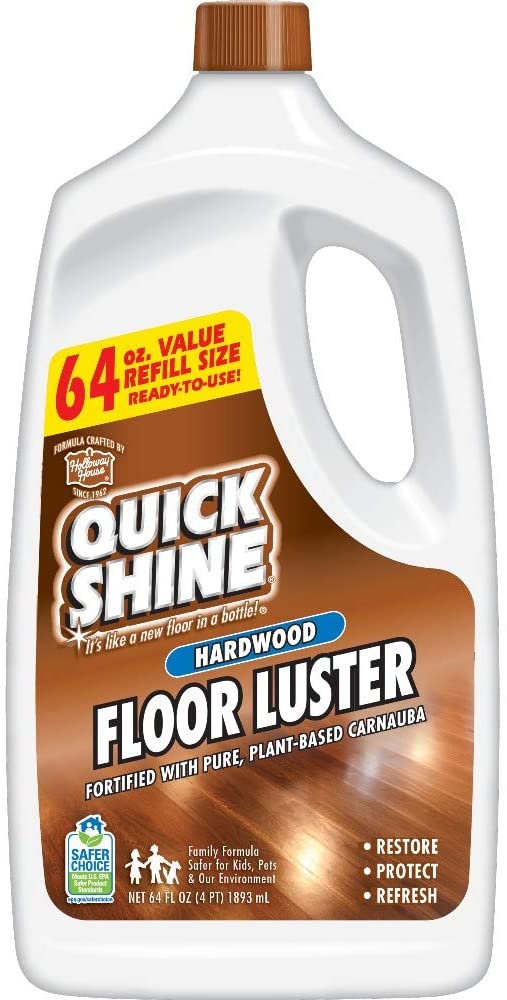
Best for: houses with mixed flooring - hardwood plus laminate, luxury vinyl, or tile - and anyone polishing a lot of square footage on a budget.
Quick Shine's plant-derived carnauba formula is an EPA Safer Choice product that goes on any sealed hard floor, which is its killer feature: one 64 oz jug handles the oak living room, the laminate hallway, and the LVP kitchen without switching products. Application is the easiest of the group - squirt directly on the floor, spread with a damp flat mop, walk on it in about an hour - and the 64-ounce size costs less per square foot than anything else on this list. The gloss layer is thinner and softer than Weiman's, so high-traffic lanes want a refresh every 2-4 months, and skipping the matching cleaner before application is the classic cause of the streaks some users report.
| Pros | Cons |
|---|---|
| ✅ Works on wood, laminate, LVP/LVT, tile, and stone | ❌ Thinner layer - more frequent re-coats |
| ✅ Cheapest per square foot (64 oz jug) | ❌ Streaks if applied over an unclean floor |
| ✅ EPA Safer Choice, pH neutral, no PFAS | |
| ✅ Easiest application of the group |
5. Howard Restor-A-Finish - For Faded and Marked Spots
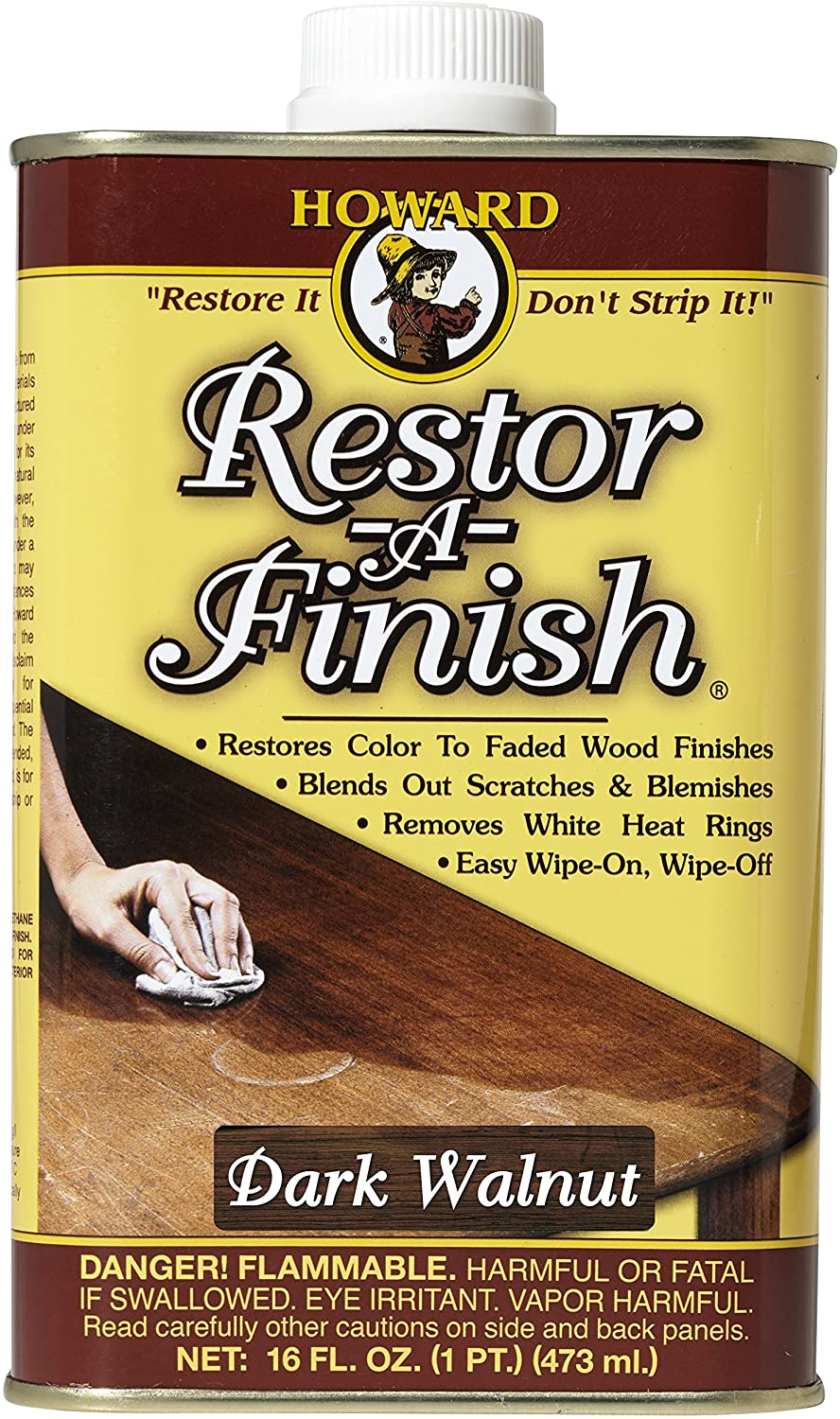
Best for: sun-faded patches, white water rings, and scuffed board edges - color repair, not overall shine.
Restor-A-Finish solves the problem the mop-on polishes can't touch: color loss. It's a solvent-based reviver that penetrates the existing lacquer or varnish and restores pigment and luster in one wipe-on, wipe-off pass - white heat and water rings, sun bleaching by the patio door, and grey-worn board edges genuinely come back. It comes in nine wood tones (pick one slightly lighter than your floor), and a 16 oz can goes a long way because you're spot-treating, not coating rooms. Know what it isn't: it adds no protective layer, so pair it with a polish from picks 1-4, use real ventilation (it's solvent-heavy), and keep it off floors finished with water-based polyurethane in the last few years - it works best on older, oxidized finishes. We use the same trick on furniture in our cabinet cleaner guide.
| Pros | Cons |
|---|---|
| ✅ Actually fixes fade, water rings, and color wear | ❌ No protective layer - not a polish substitute |
| ✅ Nine tones match nearly any floor | ❌ Strong solvent smell; needs ventilation |
| ✅ Wipe on, wipe off - no cure time |
Buying guide: polish, restorer, or reviver?
Start with what your floor needs. Dull but sound finish → acrylic polish (Weiman, Bona, Quick Shine). Visible scratches everywhere → polyurethane restorer (Rejuvenate). Faded color or water rings in spots → Restor-A-Finish, then polish over it. Finish worn through to grey or bare wood → none of these; the floor needs sanding and refinishing, and polish would just gloss the damage.
Clean first, always. Every streak-and-haze complaint about these products traces back to polishing over dirt or old cleaner residue. Vacuum, then wash with a matching hardwood cleaner - a floor cleaning machine makes the prep fast - and let it dry fully before polishing. A robot vacuum between polishes extends the life of every coat by keeping grit off the floor.
Mind buildup. Acrylic polish layers accumulate. Every 1-2 years, or when the floor starts looking cloudy, strip back with the brand's remover (or ammonia solution for generic acrylics) before re-coating. This is also why refinishers ask if you've used "orange-bottle" products - if a professional re-coat is in your future, Bona's removable system is the safe bet.
Matte floors need matte products. Modern floors increasingly ship with ultra-matte finishes; a high-gloss polish on those looks like a repair gone wrong. Use low-gloss/satin versions (Bona low-gloss, Rejuvenate satin), and test in a closet.
If your floor is past saving and you're weighing paint instead, see our best paint for wooden floors guide.
Frequently Asked Questions
How often should I polish hardwood floors?
Every 2-4 months in high-traffic areas and every 6 months or so elsewhere for acrylic polishes; about once a year for a polyurethane restorer like Rejuvenate. If water still beads on the surface and the sheen is even, you can wait.
Can I use these polishes on engineered hardwood or laminate?
Engineered hardwood with a polyurethane or aluminum-oxide finish: yes, all of the mop-on picks work. Laminate and luxury vinyl: use Quick Shine's multi-surface formula (or Bona's multi-surface line) - standard hardwood polish can haze on plastic-surfaced floors.
Why did my floor turn cloudy after polishing?
Three usual causes: polishing over dirt or cleaner residue, layering polish onto old polish buildup, or using an acrylic polish on a waxed/oiled floor. The fix is stripping with the brand's polish remover, cleaning properly, and re-applying one thin coat.
Is polish the same as wax?
No. Paste wax is for old-school waxed floors and needs buffing; modern acrylic and urethane polishes are for polyurethane-finished floors and dry to shine on their own. Never wax a poly-finished floor - nothing (including polish) sticks to wax afterwards.
Will polish fix deep scratches and gouges?
No. Polishes fill micro-scratches; Rejuvenate fills slightly deeper ones. Gouges through the stain need a repair marker or filler first, and finish worn to bare wood needs refinishing - start with our wood sanders guide if you're doing it yourself.
Related reading
A freshly polished floor can be slick underfoot - if that includes a staircase, see how to make wood stairs non-slip. Keeping floors clean between polishes? Compare wood floor cleaner machines.