5 Best Wood Floor Cleaner Machines: And the Steam Mop Warning
Affiliate disclosure: As an Amazon Associate, WoodyMan Reviews earns from qualifying purchases. If you buy through links on this page, we may earn a commission at no extra cost to you. How this works.
The rule for cleaning wood floors is simple and brutal: water is the enemy, and time is how it wins. Any machine that leaves standing moisture on hardwood - even sealed hardwood - is pushing water toward seams and micro-gaps in the finish, where it swells boards and clouds finishes. The machines below earn their spots by managing water, not just by scrubbing: they meter it out, scrub with it, and pull it back off the floor before it can soak in.
That's also why this update removes a category our old list included: steam mops. Flooring and finish manufacturers (Bona, Bruce, and the NWFA among them) advise against steam on wood, because pressurized hot vapor is exceptionally good at driving moisture through finish - many warranties specifically exclude steam damage. Steam is wonderful on tile. Keep it off your hardwood.
We earn a small commission from the Amazon links below, at no extra cost to you - see our affiliate disclosure.
The 5 best wood floor cleaner machines
| Machine | Best for | Woody Rating | |
|---|---|---|---|
| 1. Tineco Floor One S5 | Best overall - vacuums and washes in one pass | 9.3/10 [Editor's Choice] | Check price |
| 2. Bissell CrossWave HF3 | Wet-dry value - homes with pets and kids | 8.9/10 | Check price |
| 3. Bissell SpinWave 2039A | Gentlest powered clean for delicate finishes | 8.7/10 | Check price |
| 4. Hoover FloorMate Deluxe | Deep scrubbing power, corded, cheap | 8.4/10 | Check price |
| 5. Bona Premium Spray Mop | The non-electric answer most floors actually need | 8.2/10 | Check price |
1. Tineco Floor One S5 - Editor's Choice
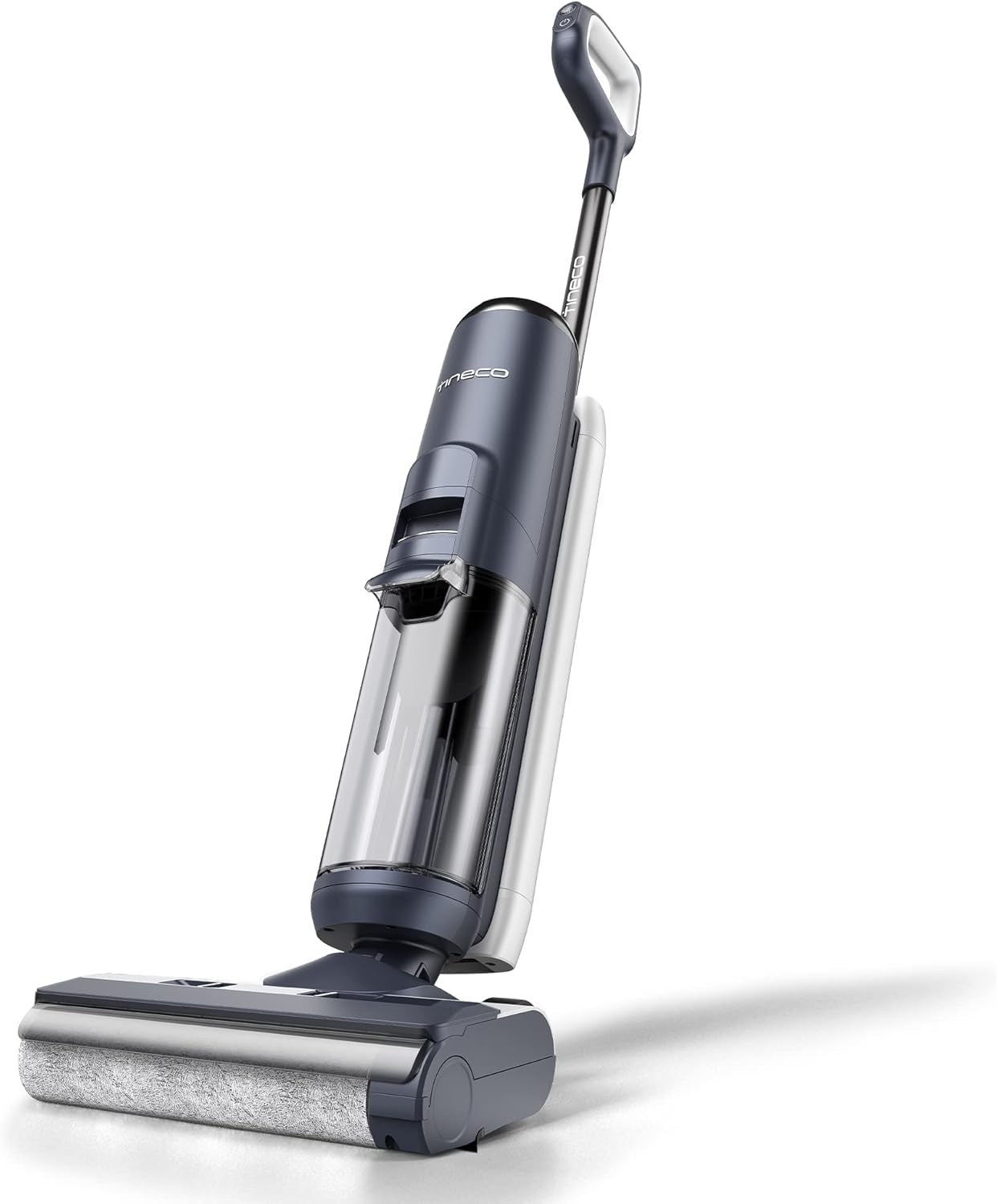
Best for: anyone replacing the vacuum-then-mop ritual with one machine and one pass.
The S5 is the matured version of the S3 that topped our old list, and the upgrades land where wood floors care: a bigger clean-water tank, and Tineco's iLoop sensor that meters water and suction to the mess it actually detects - dry crumbs get suction, a dried juice splash gets more water and slower passes, clean floor gets almost nothing. That automatic stinginess with water is precisely what you want over hardwood, and the squeegee-plus-suction pickup leaves boards dry within a minute or two. Separate clean and dirty tanks mean you never mop with gray water, and the self-clean cycle keeps the roller from souring in the closet. It's cordless (roughly a 35-minute runtime - a full main floor), and its real cost of ownership is consumables: replacement rollers and filters are a genuine line item.
| Pros | Cons |
|---|---|
| ✅ Sensor meters water - minimal moisture left on wood | ❌ Rollers/filters are ongoing costs |
| ✅ Vacuums and washes in one pass | ❌ ~35 min runtime caps very large homes |
| ✅ Always-fresh-water dual tanks + self-clean cycle |
2. Bissell CrossWave HF3 - Wet-Dry Value
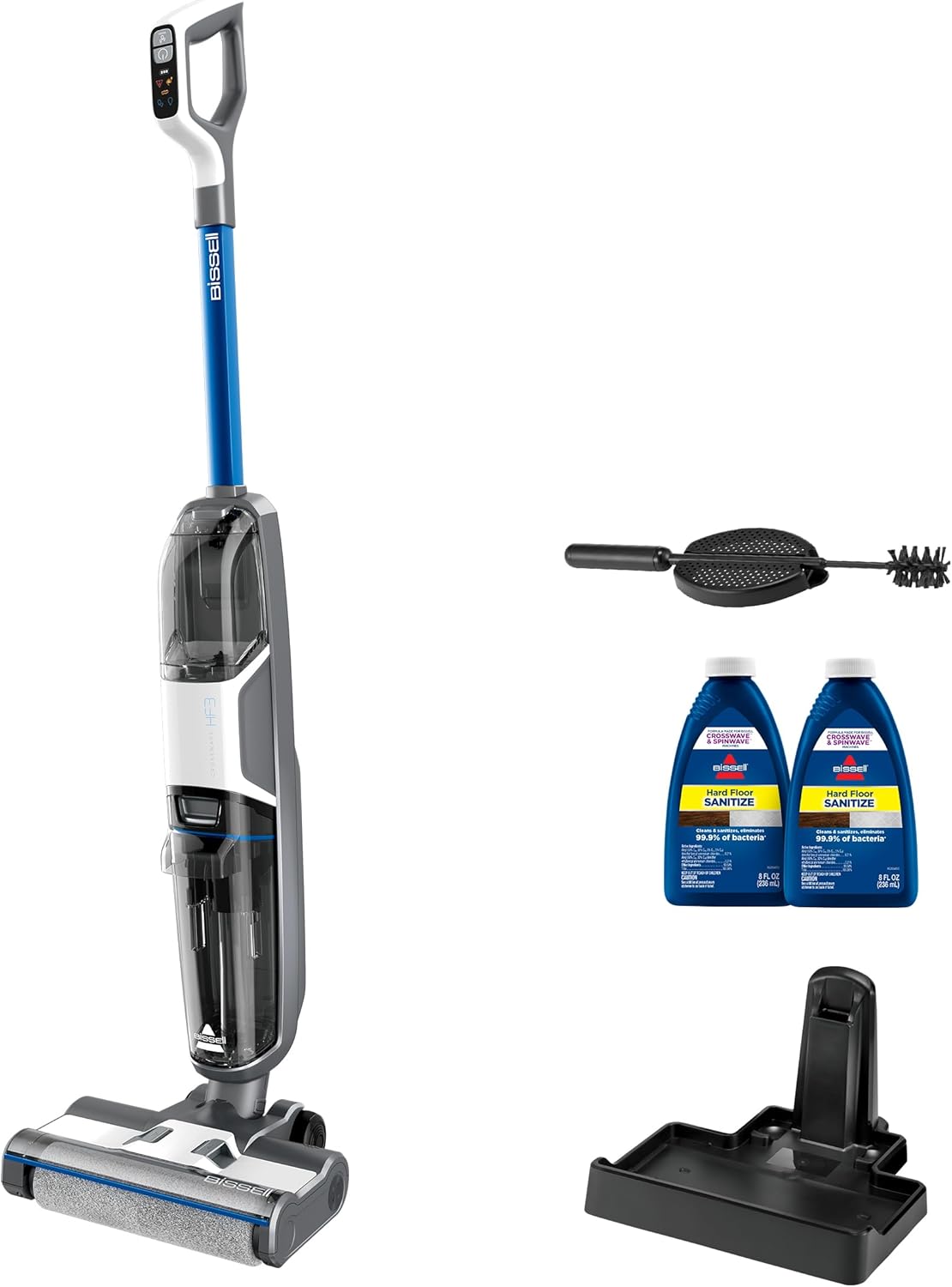
Best for: pet and kid households that want the vacuum-and-wash workflow at a friendlier price.
The HF3 does the same fundamental job as the Tineco - vacuum debris and wash the floor in the same forward pass - with less sensor intelligence and a lower price. It's rated for all sealed hard floors, runs about 25 quiet cordless minutes per charge, and its two-tank system keeps the wash water clean. Where it earns its keep is exactly where multi-surface households suffer: cereal-and-milk incidents, muddy paw trails, the daily kitchen perimeter. You control water flow rather than a sensor doing it, so the hardwood discipline is on you - use the low setting on wood and it dries fast. Bissell's pad/brush consumables are cheap and everywhere, which matters more than spec sheets over a machine's lifetime.
| Pros | Cons |
|---|---|
| ✅ One-pass vacuum + wash at a value price | ❌ No auto water metering - mind the dial on wood |
| ✅ Quiet, cordless, ~25 min per charge | ❌ Slightly less pickup than the Tineco |
| ✅ Cheap, widely available consumables |
3. Bissell SpinWave 2039A - Gentlest Powered Clean
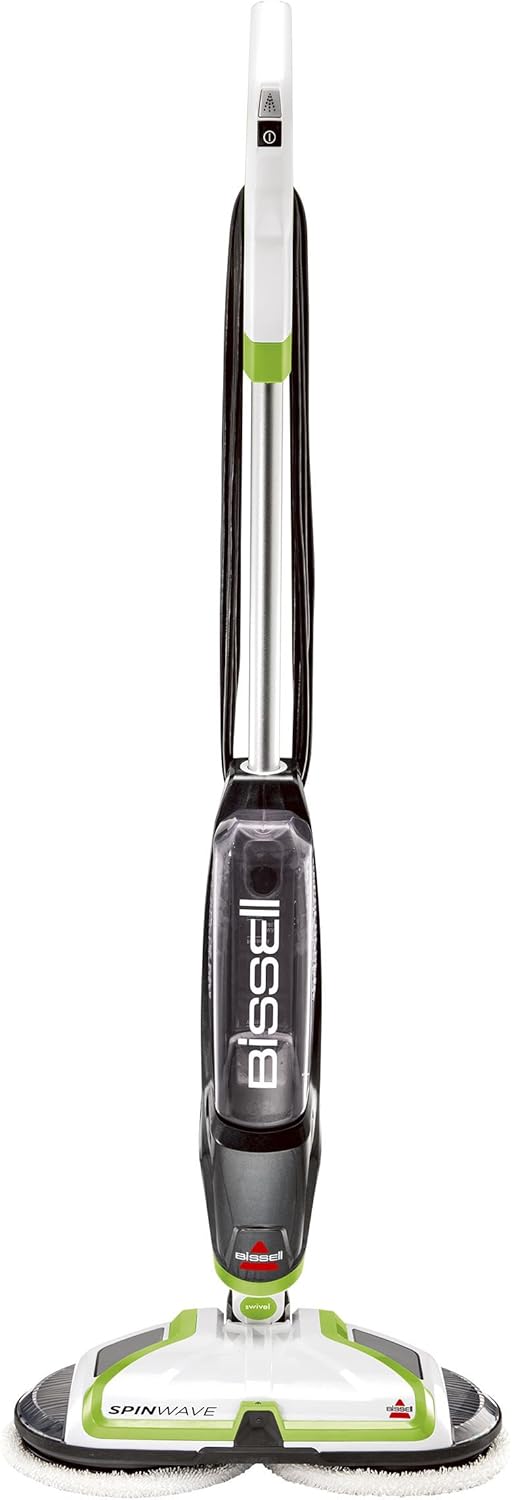
Best for: delicate, older, or oiled finishes - powered scrubbing with the least aggressive touch and the least water.
The SpinWave is a different species from the wet-dry vacs: two counter-rotating microfiber pads do the scrubbing while an on-demand trigger sprays solution only when you ask for it. No suction, no rush of water - just powered elbow grease through pads that are machine-washable and finish-safe. That makes it the right machine for floors you're protective of: site-finished older hardwood, wax or oil finishes (with the right solution), or any floor where the wet-dry vacs feel like more moisture than you want. It's corded, light (under 10 lbs), and cheap to own. The trade: it doesn't vacuum, so it's a second step after sweeping, and pickup of the dirty solution relies on the pads themselves - work in sections and swap pads on big floors.
| Pros | Cons |
|---|---|
| ✅ Trigger-controlled spray - you decide every drop | ❌ Doesn't vacuum; sweep first |
| ✅ Soft pads safe for delicate finishes | ❌ Dirty solution stays in the pads - swap them often |
| ✅ Washable pads, lowest running cost of the powered picks |
4. Hoover FloorMate Deluxe - The Deep Scrubber
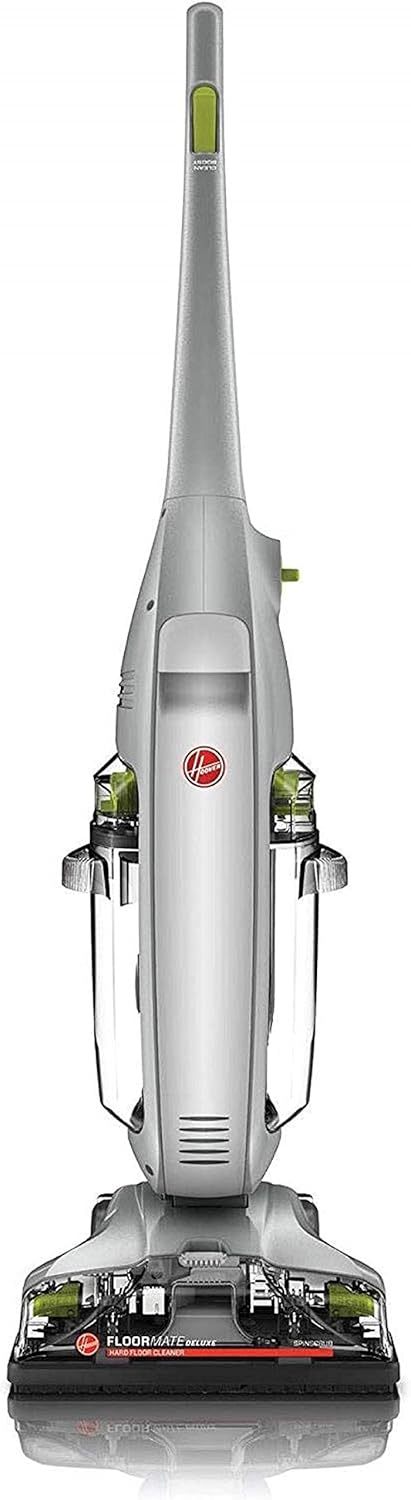
Best for: periodic deep cleans of neglected or high-traffic sealed floors - the most scrub per dollar here.
The FloorMate is the old-school answer, and for the twice-a-season deep clean it's still the strongest scrubber on this list: counter-rotating SpinScrub brushes (firmer than any microfiber pad), separate wash and dry modes, and dual tanks. Wash mode lays down solution and scrubs; dry mode runs the suction squeegee and pulls the water back up - used as designed, boards are walkably dry quickly. It's corded, a bit heavy, and nobody would call it nimble; but it costs a fraction of the cordless wet-dry vacs and pulls grime out of textured and worn finishes they skate over. For weekly maintenance it's overkill - pair it with the Bona below and use the Hoover when the floor has actually earned it.
| Pros | Cons |
|---|---|
| ✅ Real brush scrubbing - best deep clean here | ❌ Corded and bulky |
| ✅ Dedicated dry mode recovers the water | ❌ Too much machine for weekly touch-ups |
| ✅ Cheapest powered wash-and-dry workflow |
5. Bona Premium Spray Mop - The Honest Baseline
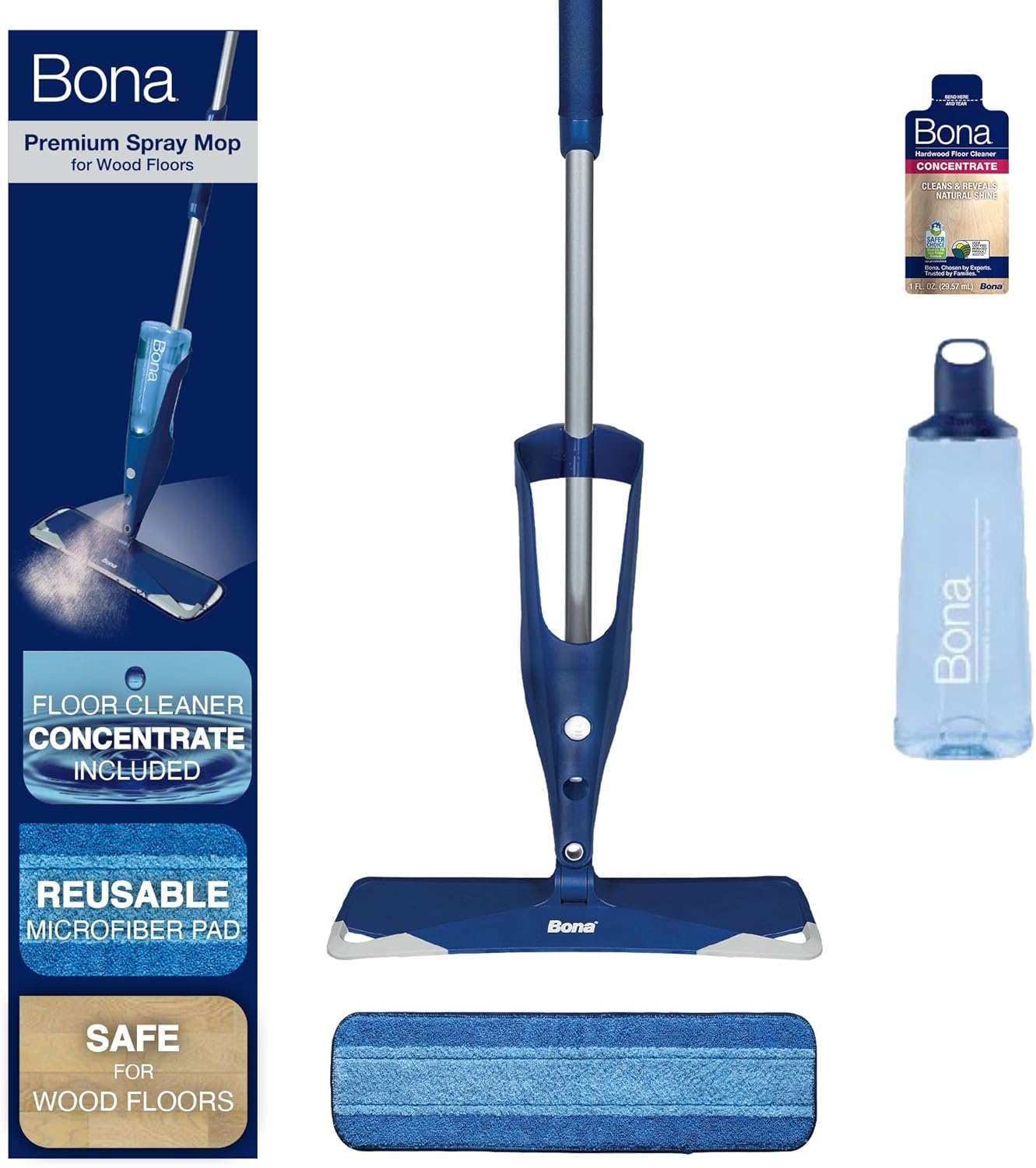
Best for: most floors, most weeks - and the answer to "do I actually need a machine?"
Here's the uncomfortable truth under this whole category: a well-maintained sealed wood floor's weekly needs are a sweep and a barely-damp microfiber pass with a pH-neutral cleaner, and this is the best-executed version of exactly that. Bona's spray mop pairs a refillable cartridge of the industry-standard hardwood cleaner (pH-neutral, residue-free - the stuff floor finishers actually recommend) with a wide head, washable microfiber pads, and rubberized corners that don't chew baseboards. No battery, no tank to sour, nothing to break. It can't scrub out ground-in grime and it won't vacuum - that's what picks 1-4 are for - but as the every-week workhorse that keeps the finish alive between machine sessions, it's unbeatable per dollar. (Cabinet-height version of this philosophy: our wood cleaner for cabinets guide.)
| Pros | Cons |
|---|---|
| ✅ Finisher-approved pH-neutral chemistry | ❌ No scrubbing power for neglected floors |
| ✅ Nothing to charge, break, or descale | ❌ Cartridge refills are proprietary (though refillable) |
| ✅ Washable pads; lowest lifetime cost on this list |
Buying guide: cleaning wood floors without hurting them
Know your finish first. Modern polyurethane-sealed floors tolerate every machine above. Site-finished older floors, wax, and oiled finishes want the gentle end (SpinWave, Bona with the appropriate solution) and specifically compatible cleaners - polyurethane cleaner strips wax. If water beads on your floor, the seal is working; if it soaks in and darkens the wood, stop - no machine is safe until the floor is refinished.
Less water, always. The ranking above is substantially a ranking of water discipline. Whatever you buy: low-flow settings on wood, never let solution pool, and if a machine leaves visible wetness five minutes later, you're using too much.
pH-neutral cleaner only. Vinegar (acidic) dulls finishes over time; ammonia and alkaline "all-purpose" cleaners haze them; oil soaps leave residue that fights recoating later. Hardwood-specific, pH-neutral solutions cost a few dollars more and are the cheapest finish insurance there is.
Machines clean; they don't restore. A cleaner machine removes dirt. Dull, scratched, or gray floors need polish or refinishing, not more washing - that's covered in our wood polish for floors guide, and for painted floors, the floor paint guide. Robot-vacuum households: the dry-debris half of this job automates well - see the best Roombas for hardwood.
The two-tool answer is usually right. A Bona for weekly passes plus one powered machine (whichever matches your mess profile above) covers a wood-floored home completely for less than most people spend on a single flagship vac.
Frequently Asked Questions
Are wet-dry vacuum mops safe for hardwood floors?
On sealed hardwood in good condition, yes - the good ones (Tineco, Bissell HF3) apply modest water and immediately recover it, leaving the floor dry within minutes. Use the low-moisture setting, keep the machine moving, and don't hover over one spot spraying. On unsealed, waxed, or worn-through finishes, no powered wet machine is safe.
Why shouldn't I use a steam mop on wood floors?
Steam forces hot moisture into exactly the places liquid water can't easily reach - finish micro-cracks, board seams, and worn spots - where it swells wood fibers, whitens finish, and can cause cupping. Most flooring and finish manufacturers advise against it, and many warranties exclude steam damage explicitly. Save the steam mop for tile and stone.
How often should wood floors be machine-cleaned?
Weekly for dry debris (sweep, vacuum, or robot), damp-clean every one to two weeks in trafficked areas, and a deep scrub (FloorMate-style) a few times a year or when the damp pad comes up filthy. More washing than that mostly means more water exposure, not more cleanliness.
Can I put vinegar or my own solution in these machines?
Don't. Vinegar's acidity dulls polyurethane over time, and homemade mixes can foam, clog, or void warranties on tank machines. All five picks run happily on hardwood-rated pH-neutral solutions - Bona's works in the tank machines too, and Bissell and Tineco sell wood-specific formulas.