Best Gas Chainsaws: 5 Picks From Firewood to Felling
Affiliate disclosure: As an Amazon Associate, WoodyMan Reviews earns from qualifying purchases. If you buy through links on this page, we may earn a commission at no extra cost to you. How this works.
Gas is still the right call when the work is real - dropping trees, processing a season of firewood, all-day cutting where a battery pack would tap out and cost a fortune to swap. What separates a good buy from a bad one is matching engine displacement (cc) and bar length to the wood you actually cut, then paying for a brand with a dealer network so parts and service exist when you need them. Buy too much saw and you're carrying weight you'll never use; buy a no-name saw and you'll fight it every start.
The five below run from a pro-grade 20-inch firewood machine down to a compact 14-inch saw, so you can buy for your property and budget without overspending. All are true gas saws; if you'd rather go cordless or want the whole power-source comparison, see our best homeowner chainsaw guide, and for the compact end specifically, best small gas chainsaw.
We earn a small commission from the Amazon links below, at no extra cost to you - see our affiliate disclosure.
The 5 best gas chainsaws
| Gas Chainsaw | Best for | Woody Rating | |
|---|---|---|---|
| 1. Husqvarna 455 Rancher 20" | Best overall - firewood & felling | 9.4/10 [Editor's Choice] | Check price |
| 2. Echo CS-590 Timber Wolf 20" | Best pro-grade value | 9.1/10 | Check price |
| 3. Poulan Pro PR4218 18" | Best budget mid-size | 8.6/10 | Check price |
| 4. Husqvarna 130 16" | Best entry-level brand-name gas | 8.5/10 | Check price |
| 5. Echo CS-310 14" | Best compact - build quality | 8.4/10 | Check price |
1. Husqvarna 455 Rancher 20" - Editor's Choice
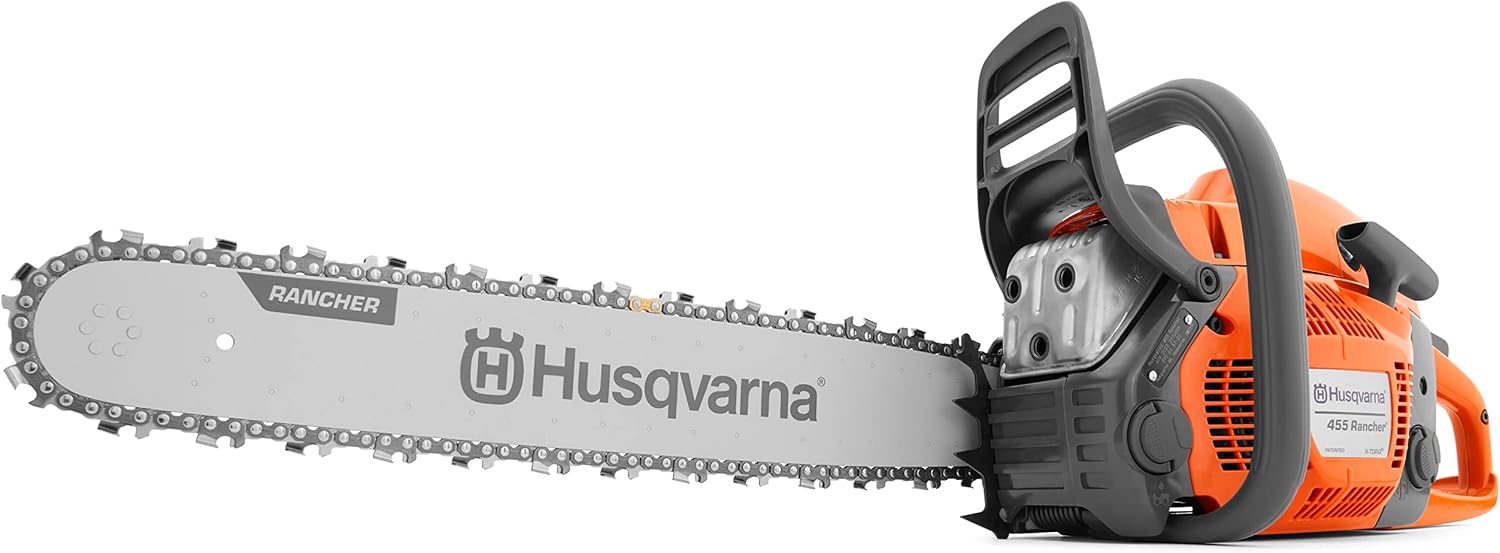
Best for: landowners, wood-burning households, and anyone regularly dropping and bucking real trees.
The 455 Rancher has been the go-to landowner saw for two decades because it sits right on the line between homeowner and professional. A 55.5cc X-Torq engine makes about 3.5 hp through a 20-inch bar - enough to pull through hardwood a smaller saw bogs down in and process a full season of firewood without straining. X-Torq cuts fuel use and emissions, LowVib dampening makes long sessions bearable, and the side-mounted chain tensioner and combined choke/stop make it manageable for a capable homeowner. Parts and service exist in every farm town. It's the heaviest saw here at ~13 lbs before fuel, and it demands the usual gas upkeep (mixed fuel, carb care) - but for serious cutting, it's the one to own.
| Pros | Cons |
|---|---|
| ✅ 3.5 hp pulls a 20" bar through hardwood | ❌ Heavy for occasional/light users |
| ✅ X-Torq efficiency + LowVib for long days | ❌ Gas upkeep: mix, carb, winterizing |
| ✅ Side-mounted tensioner; easy service | |
| ✅ Ubiquitous parts and dealer network |
2. Echo CS-590 Timber Wolf 20" - Best Pro-Grade Value
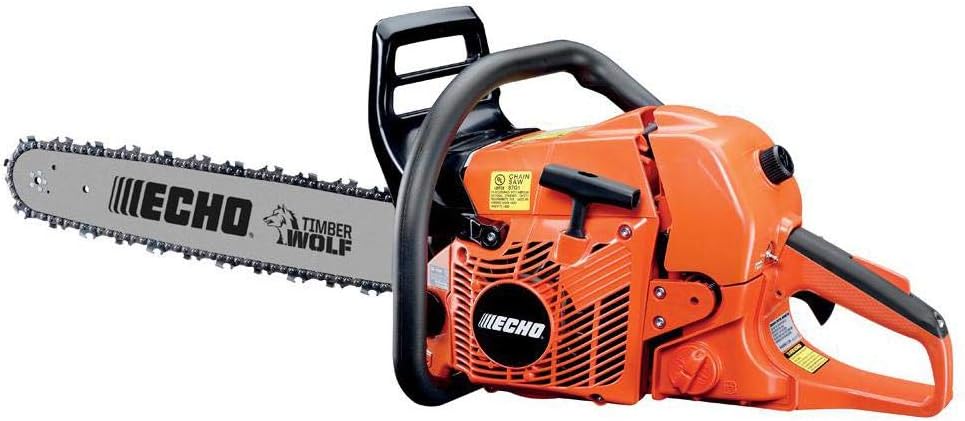
Best for: the buyer who wants near-professional cutting power and Echo's build reputation without the pro price tag.
The CS-590 Timber Wolf is Echo's farm-and-ranch workhorse, and it punches above its price. A 59.8cc engine - bigger than the 455 Rancher's - drives a 20-inch bar with serious authority for felling and heavy bucking, and Echo backs it with a long consumer warranty and a reputation for engines that just keep running. A digital ignition delivers easy, consistent starts, the automatic clutch-driven oiler keeps the chain fed, and a heavy-duty air filtration system suits dusty, all-day work. It's a stout saw (comparable weight to the Rancher), and like any big gas saw it's loud and needs mixed fuel - but for the money, few saws give you this much displacement and durability. It's the value champion of the serious end.
| Pros | Cons |
|---|---|
| ✅ 59.8cc - big power for the price | ❌ Heavy; loud like any big gas saw |
| ✅ Echo durability + long consumer warranty | ❌ Mixed-fuel and carb maintenance |
| ✅ Digital ignition = easy, reliable starts | |
| ✅ Heavy-duty air filtration for all-day use |
3. Poulan Pro PR4218 18" - Best Budget Mid-Size
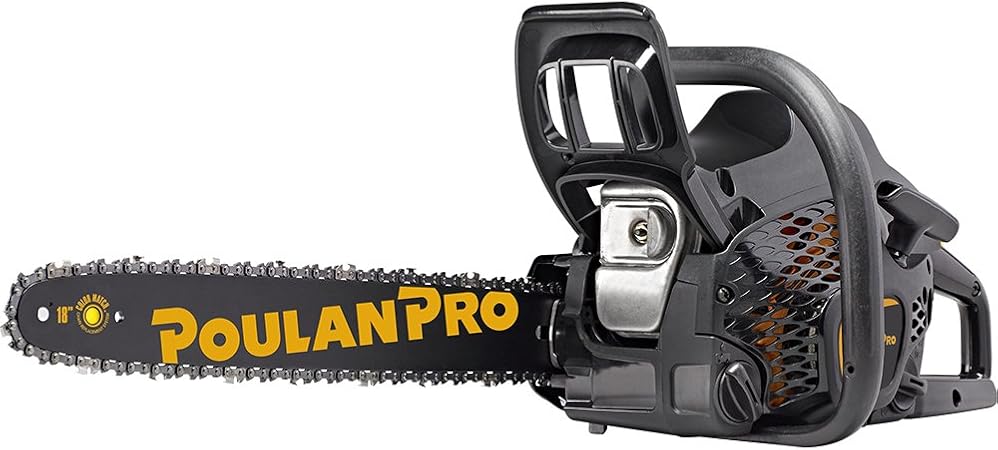
Best for: occasional firewood and storm cleanup on a budget, where you want an 18-inch bar without spending pro money.
The PR4218 is the sensible budget pick for mid-size cutting. Its 42cc OxyPower engine drives an 18-inch bar - enough reach for most firewood rounds and downed limbs - while using less fuel and producing lower emissions than older two-strokes its size. It's noticeably lighter and cheaper than the 455 or CS-590, has an automatic oiler and a spring-assisted pull for easier starts, and it typically ships with a carry case and a spare chain, which adds real value. It's not a felling saw for big hardwood and its plastic-heavy build isn't pro-grade, but for a homeowner who cuts a few cords a year and cleans up after storms, it does the job for a fraction of the price.
| Pros | Cons |
|---|---|
| ✅ 18" reach at a budget price | ❌ Not for heavy felling in big hardwood |
| ✅ OxyPower efficiency; lighter than the big saws | ❌ Plastic-heavy, homeowner-grade build |
| ✅ Often includes case + spare chain | |
| ✅ Spring-assisted starting |
4. Husqvarna 130 16" - Best Entry-Level Brand Name
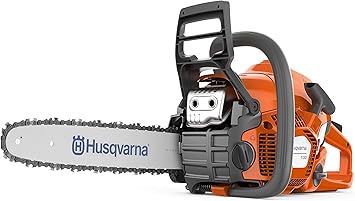
Best for: the homeowner who wants real dealer-backed gas reliability at the category's lowest serious price.
The 130 is the cheapest gas saw from a manufacturer with an actual dealer network that starts predictably and lasts - the same pick that tops our small gas chainsaw guide. A 38cc X-Torq engine drives a 16-inch bar through everything a suburban lot produces: storm limbs, small felling, modest firewood. At around 10.3 lbs it's light enough that the saw isn't the workout, Air Injection keeps the filter clean between services, and the combined choke/stop makes cold starts beginner-friendly. It won't hurry through a 20-inch oak, and the build is budget-grade Husqvarna rather than pro - but at this price, a saw that simply runs year after year is the whole point.
| Pros | Cons |
|---|---|
| ✅ Cheapest dealer-backed gas saw worth owning | ❌ 38cc - slows in big hardwood |
| ✅ Light (10.3 lbs), beginner-friendly starts | ❌ Budget-grade build, not pro |
| ✅ Air Injection = fewer filter cleanings | |
| ✅ Handles typical suburban-lot work |
5. Echo CS-310 14" - Best Compact
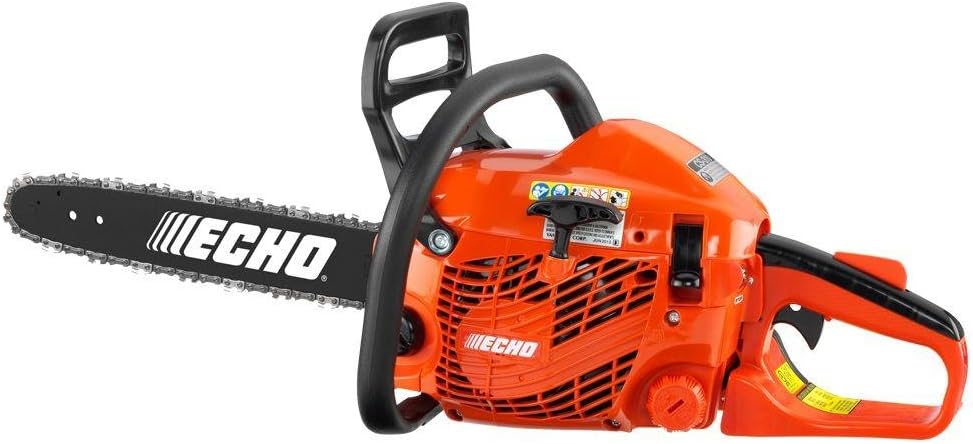
Best for: limbing, pruning, and small firewood where you want a light saw that's built better than its size suggests.
The CS-310 is the compact saw for people who value quality over raw size. Its 30.5cc engine and 14-inch bar make it light and maneuverable - ideal for limbing, pruning, and cutting small rounds - but it carries Echo's professional-grade build and reliability, so it starts easily, idles cleanly, and outlasts cheaper compacts. A tool-less air filter and clutch-driven auto-oiler keep maintenance simple, and it's a genuinely pleasant saw to handle for a couple hours of yard work. It's not for felling or heavy firewood - that's what the 20-inch saws above are for - but as the light, dependable saw you actually reach for on ordinary days, it's excellent.
| Pros | Cons |
|---|---|
| ✅ Light, nimble - great for limbing/pruning | ❌ 30.5cc - not for felling or big firewood |
| ✅ Echo pro-grade build in a compact saw | ❌ Short 14" bar limits reach |
| ✅ Easy starts, tool-less air filter | |
| ✅ Reliable everyday-use saw |
Buying guide: sizing a gas chainsaw
Match cc and bar to the wood. Bar length should run about 2 inches longer than the diameter you typically cut - not the biggest you can afford. 14-16" (30-40cc) handles limbing, pruning, and small firewood; 18" (42-50cc) covers most firewood and small felling; 20"+ (55cc and up) is for serious felling and heavy hardwood. An oversized saw is just weight and fuel you don't use.
Buy a brand with a dealer network. The single best predictor of a good long-term experience is being able to get parts, chains, and service. Husqvarna and Echo (and Stihl at the dealer) all clear that bar; the no-name saws that flood marketplaces don't, which is why they've been dropped from this list.
Respect the gas-saw maintenance rhythm. Mixed fuel (typically 50:1), regular air-filter cleaning, bar-oil top-ups, and chain sharpening are the price of gas power. The biggest real-world killer is stale fuel - run the carb dry or use stabilized ethanol-free fuel for storage, or you'll fight a no-start every spring.
A sharp chain beats raw power. A dull chain is slower, smokier, and more dangerous (it forces you to push, which invites kickback) than any horsepower deficit. Learn to touch up with a file every tank or two.
Gear up - every time. Chainsaw injuries are severe. An inertia chain brake, chaps, gloves, hearing protection, and a helmet with a face screen are not optional. If you're cutting to heat your home, our best log burner guide covers the stove side of the equation.
Frequently Asked Questions
What size gas chainsaw do I need?
For pruning and small firewood, a 14-16" saw (30-40cc). For general firewood and small felling, an 18" saw (42-50cc). For serious felling and big hardwood, 20"+ (55cc and up). Buy a bar about 2 inches longer than your typical cut diameter - bigger isn't better if you don't need the reach.
Is gas or battery better for a chainsaw?
Gas wins for all-day cutting, heavy felling, and value at higher power; battery wins for starting ease, low noise, and zero fuel maintenance on lighter, occasional work. Most people who "need gas" need it for firewood volume or big trees. Our homeowner chainsaw guide compares power sources directly.
Do I have to mix oil into the gas?
Yes - nearly all gas chainsaws use two-stroke engines that run a gas-and-oil mix (commonly 50:1). Bar-and-chain oil is separate and lubricates the chain. Pre-mixed ethanol-free canned fuel costs more but eliminates the stale-fuel starting problems that plague occasional users.
Why won't my gas chainsaw start after storage?
Almost always stale fuel gumming the carburetor. Ethanol in pump gas degrades in weeks to months. Prevent it by running the carb dry before storage or using stabilized ethanol-free fuel; if it's already gummed, the carb usually needs cleaning or a rebuild kit.
How often should I sharpen the chain?
Roughly every tank of fuel under regular use, and immediately after any contact with dirt or metal, which dulls a chain instantly. Signs you're overdue: fine powder instead of chips, having to push the saw, and crooked cuts. A quick file touch-up beats grinding the chain down at a shop.