Best Log Burners & Wood Stoves: 5 Picks by Fuel Type
Affiliate disclosure: As an Amazon Associate, WoodyMan Reviews earns from qualifying purchases. If you buy through links on this page, we may earn a commission at no extra cost to you. How this works.
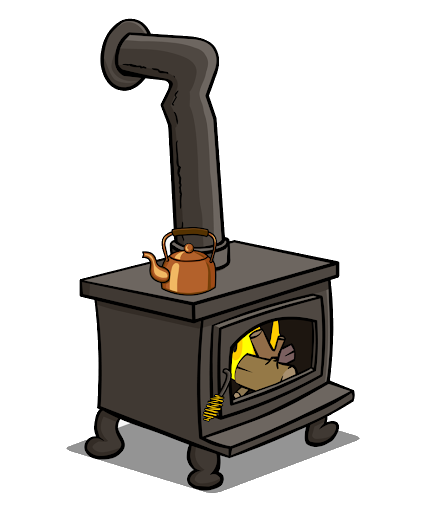
"Log burner" covers four genuinely different appliances, and the right one depends far more on your house and chimney situation than on any spec on the box. A true wood stove (steel or cast iron) needs a proper Class-A chimney or flue and rewards you with the cheapest heat once you have firewood. A pellet stove burns compressed pellets, runs a thermostat and a hopper, and vents more simply - but it needs electricity to run the auger and blower. An electric stove is a space heater with a flame effect: no chimney, no fuel, no real heating economy, just plug-in ambiance. And a portable tent stove heats cabins, tiny homes, and canvas shelters where a full install makes no sense.
The picks below cover all four, with the two proper wood stoves - the ones most people searching "log burner" actually want - leading. One reality check before you buy any wood or pellet unit: installation (hearth pad, wall clearances, Class-A chimney) usually costs more than the stove and is not a job to freelance. Size the stove to the room, too - an oversized stove run choked-down all winter smolders, creosotes the flue, and is a chimney-fire risk.
We earn a small commission from the Amazon links below, at no extra cost to you - see our affiliate disclosure.
The 5 best log burners
| Log Burner | Best for | Woody Rating | |
|---|---|---|---|
| 1. Ashley Hearth AW1120E-P (wood) | Best overall - real heat, EPA-clean, fair price | 9.3/10 [Editor's Choice] | Check price |
| 2. US Stove US1269E (cast iron) | Cabins and small spaces on a budget | 8.7/10 | Check price |
| 3. Comfortbilt HP22 (pellet) | Set-and-forget thermostat heat | 8.6/10 | Check price |
| 4. Duraflame DFI-5010 (electric) | Ambiance and zone heat, no chimney | 8.3/10 | Check price |
| 5. Winnerwell Nomad (portable) | Cabins, tiny homes, and hot tents | 8.1/10 | Check price |
1. Ashley Hearth AW1120E-P - Editor's Choice
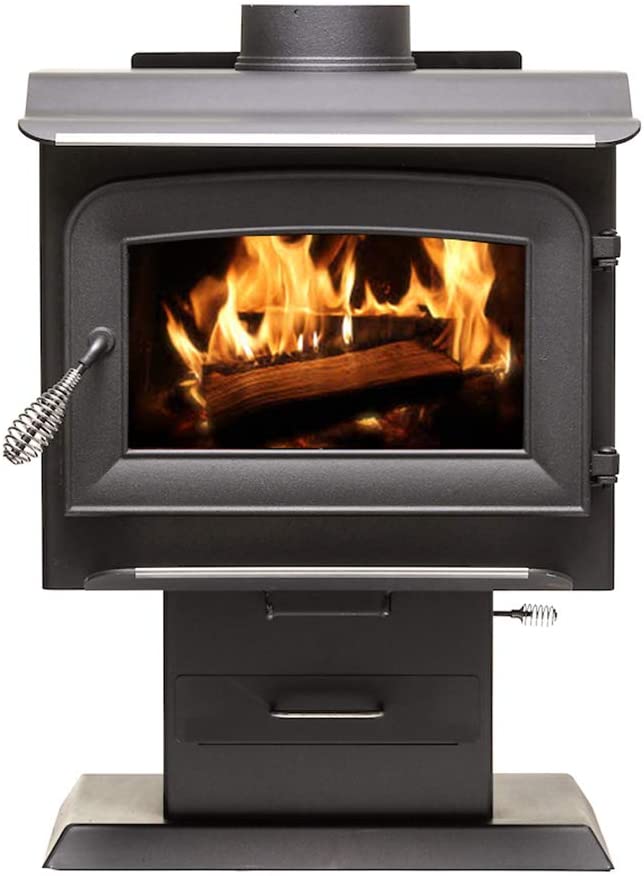
Best for: the person who wants a real, clean-burning wood stove for a room or small house without paying boutique-brand prices.
This is the stove most people searching "log burner" are actually after: a plate-steel firebox that puts out 68,000 BTU, heats up to 1,200 sq ft, takes 18-inch logs, and - critically - meets the EPA's stringent 2020 Step 2 emissions standard, so it burns cleaner and more efficiently than the older stoves it replaces. The secondary-combustion design (a rear air inlet feeds three ignition tubes above the fire) reburns smoke for more heat per log and less creosote in your flue. The pedestal base and ceramic-glass door look right in a living room, and the big ash pan makes cleanup a weekly chore rather than a daily one. It's a genuine heating appliance, so budget for professional installation and a Class-A chimney; the stove itself is the affordable part.
| Pros | Cons |
|---|---|
| ✅ 68,000 BTU heats a real 1,200 sq ft | ❌ Needs a proper Class-A chimney install |
| ✅ EPA 2020 Step 2 - clean, efficient burn | ❌ Steel radiates heat fast but holds it less than cast iron |
| ✅ Takes 18" logs; large ash pan | |
| ✅ Secondary combustion = more heat, less creosote |
2. US Stove US1269E - Best Budget Cast Iron
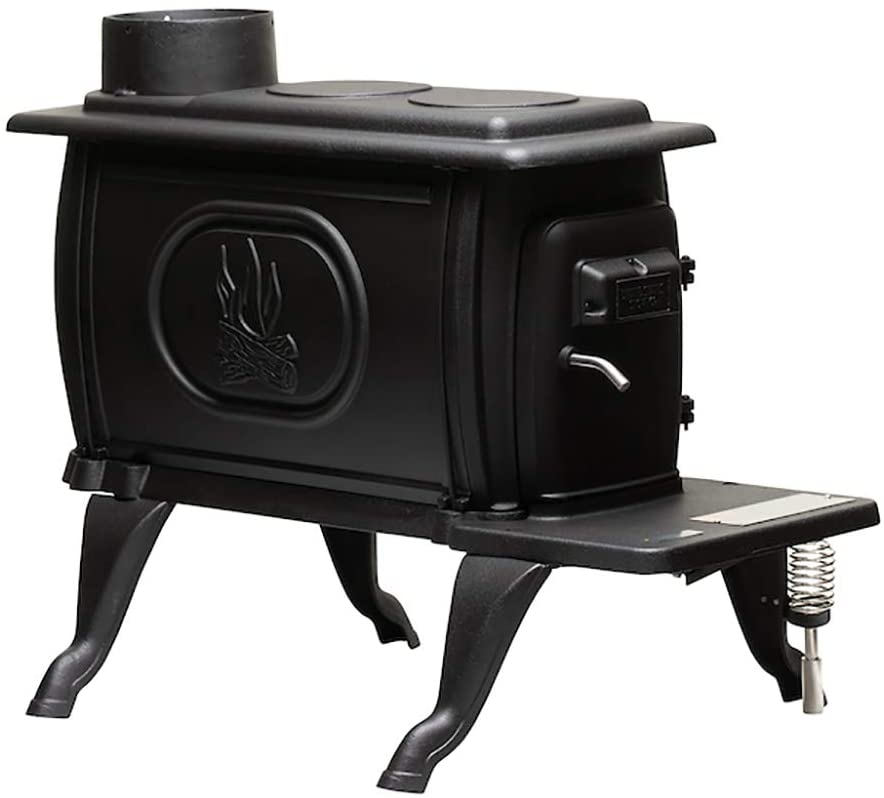
Best for: cabins, workshops, and small spaces where you want cast-iron heat retention and a cook surface for the least money.
The US1269E is the classic little cast-iron stove - the "cabin stove" look - brought up to a modern 2020 EPA certification. It's rated 54,000 BTU for up to 900 sq ft, takes 19-inch logs, and has a cast-iron cooktop, so you can heat soup or a kettle off the same fire. Cast iron is the real draw here: it takes longer to warm up than steel but keeps radiating heat well after the fire dies down, which suits an overnight cabin burn. The cool-touch safety handle is a nice touch. Two caveats matter: at 900 sq ft it's a small-space stove, not a whole-house furnace, and it is not approved for mobile or modular homes - check that against your situation before buying.
| Pros | Cons |
|---|---|
| ✅ Cast iron holds and radiates heat after burnout | ❌ Not approved for mobile/modular homes |
| ✅ Integrated cooktop | ❌ 900 sq ft - a small-space stove |
| ✅ 2020 EPA certified, UL listed | |
| ✅ Cheapest real wood stove here |
3. Comfortbilt HP22 - Best Pellet Stove
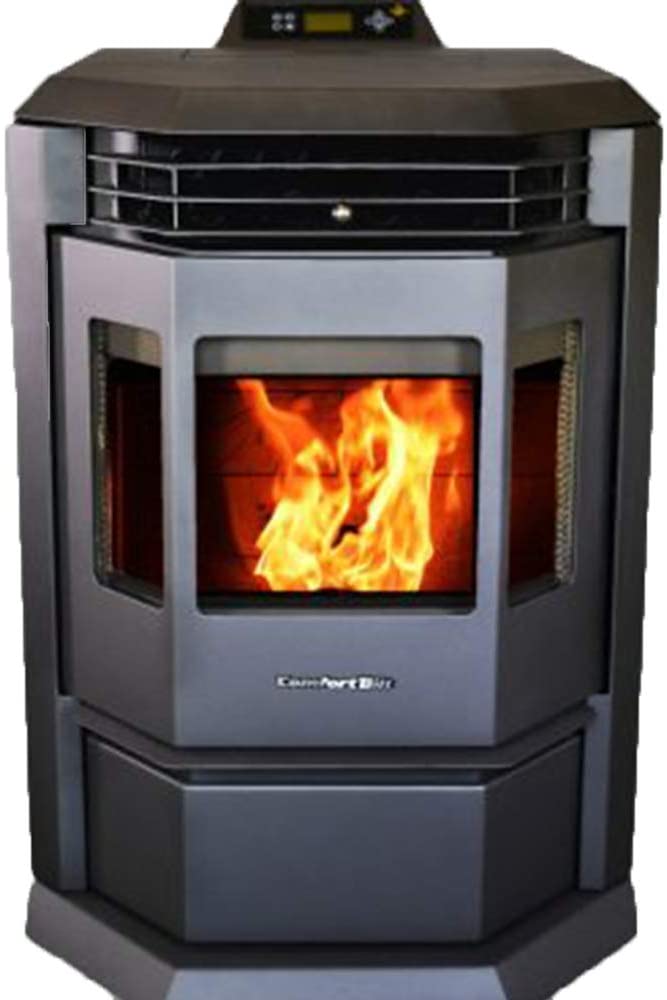
Best for: anyone who wants wood-fired heat but not the tending - a thermostat, a hopper, and hands-off operation.
A pellet stove is the appliance for people who like the idea of wood heat but not the reality of splitting, stacking, and feeding a fire. The HP22 burns compressed wood pellets from a 55-lb hopper, puts out up to 50,000 BTU for around 2,800 sq ft, and runs an 86%-efficient, EPA-certified burn on a 7-day programmable thermostat - load the hopper, set a temperature, and it augers pellets and modulates the blower on its own, up to about 24 hours between fills on low. Air-wash keeps the big view window clear. The trade-offs are real: it needs electricity (a power outage stops the heat unless you have a battery backup), pellets cost more per BTU than cordwood you cut yourself, and there's a fan hum a wood stove doesn't have. But for genuine set-and-forget heat, nothing else on this list competes.
| Pros | Cons |
|---|---|
| ✅ Thermostatic, hands-off - up to 24h per hopper | ❌ Needs electricity to run (no power, no heat) |
| ✅ 86% efficiency, EPA certified | ❌ Pellets cost more per BTU than cordwood |
| ✅ 50,000 BTU for ~2,800 sq ft | ❌ Auger/blower hum |
| ✅ Simpler venting than a wood stove |
4. Duraflame DFI-5010 - Best Electric (No Chimney)
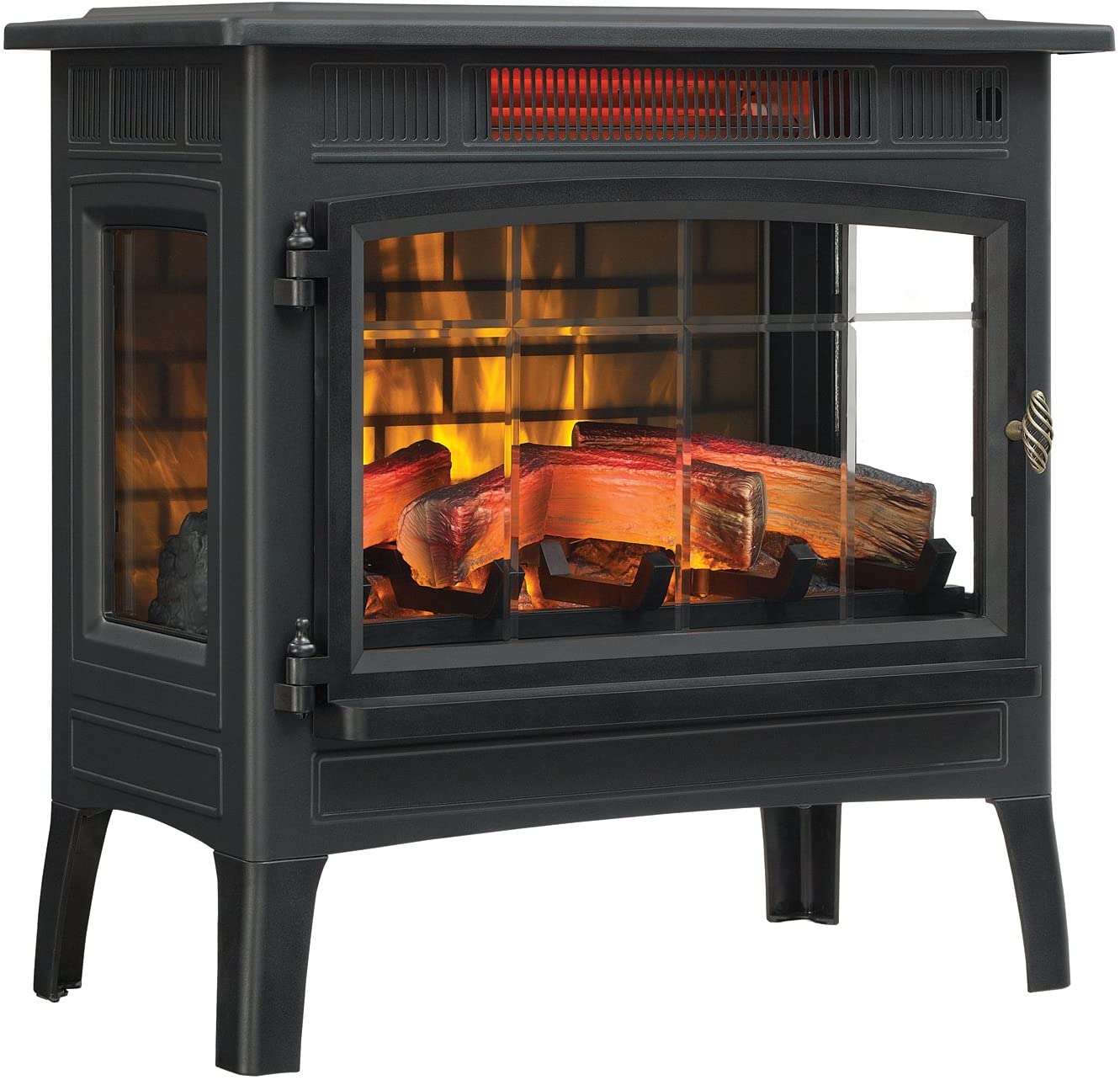
Best for: apartments, rentals, and rooms where you want the look and some zone heat without any install at all.
Be clear on what this is: an electric space heater with a very good flame effect, not a wood-heat replacement. That's exactly right for a lot of people - renters who can't cut a chimney, an apartment, a bedroom that just needs a little supplemental warmth and the ambiance. The 3D infrared quartz element pushes about 5,200 BTU (enough to take the chill off ~1,000 sq ft as supplemental heat), and infrared has a genuine perk over forced-air heaters: it doesn't dry out the room's air the way a coil heater does. It runs on a standard outlet, has a remote and a thermostat, and the layered flame effect runs with or without heat for year-round looks. No fuel, no venting, no chimney - and no heating economy either; you're paying residential electric rates for every BTU.
| Pros | Cons |
|---|---|
| ✅ Zero install - plug into any outlet | ❌ Space-heater output, not real wood heat |
| ✅ Infrared keeps room humidity - no dry air | ❌ Electric-rate heat is the priciest per BTU |
| ✅ Realistic 3D flame runs with or without heat | |
| ✅ Remote + thermostat; renter-friendly |
5. Winnerwell Nomad - Best Portable / Tent Stove
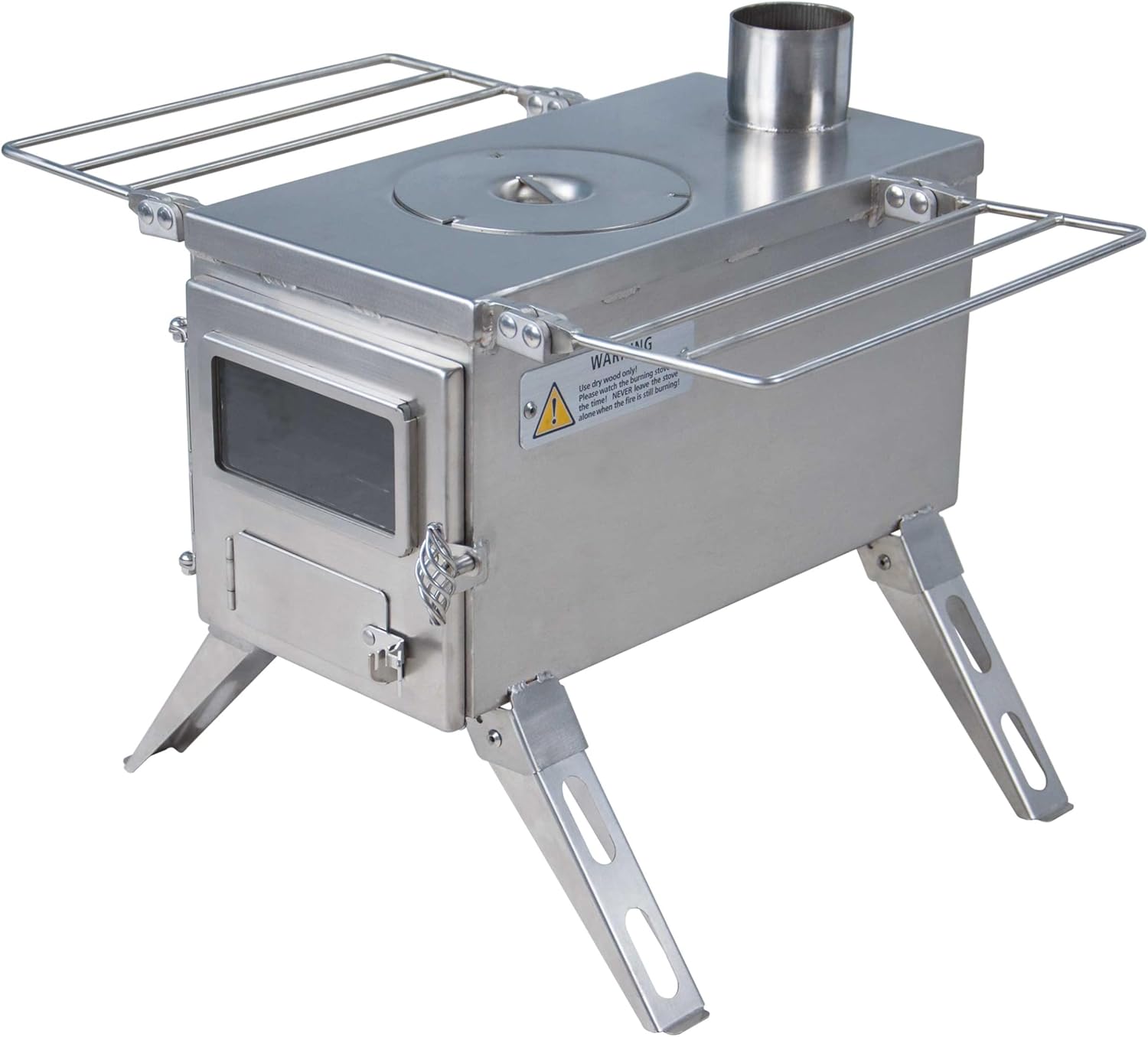
Best for: cabins, tiny homes, van conversions, and canvas hot-tents where a permanent stove install is impractical.
For heating a space that isn't a house, the Nomad is the gold standard. It's a precision 304-stainless firebox with a nesting four-leg base that folds flat and chimney sections that stow inside the body - the whole medium stove packs to around 20 pounds and travels. Stainless handles high heat, won't rust or corrode outdoors, and the included spark arrestor and chimney pipe make it genuinely usable in a canvas hot-tent, a shelter, or a tiny-home corner. It'll also boil water and cook on the flat top. It is not a house heater - small firebox, frequent feeding - but for the "off-grid cabin or winter camp" use case that a full wood stove can't serve, nothing beats it. Follow tent-stove safety basics: a spark arrestor, a carbon-monoxide detector, and proper clearances every single time.
| Pros | Cons |
|---|---|
| ✅ Packs to ~20 lbs - truly portable | ❌ Small firebox needs frequent feeding |
| ✅ 304 stainless - rustproof, high-heat | ❌ For shelters/cabins, not a whole house |
| ✅ Includes chimney pipe + spark arrestor | |
| ✅ Doubles as a cook surface |
Buying guide: pick the fuel, then the size
Fuel type is the real decision. Wood stoves (picks 1-2) give the cheapest heat and work in a power outage, but demand a Class-A chimney, firewood, and tending. Pellet (pick 3) is thermostatic and low-effort but needs electricity and bought pellets. Electric (pick 4) is ambiance and supplemental warmth with zero install. Portable (pick 5) is for spaces that aren't houses. Decide which of those describes you before comparing BTUs.
Size to the room, not the maximum. A stove that's too big gets run choked-down all winter, which smolders, tars the flue with creosote, and raises chimney-fire risk. Rough rule: ~20 BTU per square foot for a moderately insulated space, adjusted up for cold climates and drafty houses. If you're estimating firewood volume for the season, our wood CFT calculator helps you buy cordwood by the right measure.
Steel vs cast iron. Steel stoves heat up fast and cool fast - good for a room you want warm quickly. Cast iron takes longer to warm but radiates gently for hours after the fire dies - better for overnight and steady all-day heat. Neither is "better"; they suit different rhythms.
Installation is the hidden cost. Hearth pad, wall clearances, and a Class-A insulated chimney routinely cost more than the stove and must meet local code and your homeowner's insurance requirements. Get a quote before you fall in love with a stove. Wondering whether you can just burn wood in an existing gas fireplace? Usually no - see can you burn wood in a gas fireplace.
You'll need to cut and process wood. A wood or portable stove means firewood, which means a saw - see our guides to the best gas chainsaws for felling and bucking and the best small gas chainsaws for limbing and campsite work. Buying it in instead? The firewood cord calculator checks whether a delivery is really a full cord and compares heat (BTU) by species.
Frequently Asked Questions
Are log burners being banned or phased out?
No. New emissions rules (the EPA's 2020 standards in the US, Ecodesign in the UK) tightened what new stoves can emit, which is why every wood pick here is a clean-burning modern unit - but log burners are not banned, and you can still buy and install compliant stoves. Older, dirtier stoves are what's being pushed out, not wood heat itself.
What's the most efficient log burner type?
A modern EPA-certified wood or pellet stove runs roughly 75-86% efficient. Pellet stoves edge out wood on paper because of automated air control, but a well-run secondary-combustion wood stove is close and doesn't need electricity. Open fireplaces, by contrast, are often net negative - they pull more heated room air up the chimney than they deliver.
Do I need a chimney for a log burner?
For wood and pellet stoves, yes - some form of code-compliant venting. Wood stoves need a Class-A insulated chimney; pellet stoves can use simpler pellet-vent pipe. Only the electric stove (pick 4) needs no chimney at all, because it isn't burning anything.
How big a space will these heat?
Roughly: US1269E ~900 sq ft, Ashley Hearth ~1,200 sq ft, Comfortbilt HP22 ~2,800 sq ft, Duraflame ~1,000 sq ft as supplemental heat, and the Winnerwell for a cabin/tent-sized space. Real-world coverage drops in cold climates, drafty or poorly insulated buildings, and open floor plans.
Cast iron or steel - which should I buy?
Steel if you want a room warm fast and don't mind it cooling quickly after burnout; cast iron if you want slow, steady radiant heat that lingers for hours (better for overnight burns). It's a rhythm preference, not a quality difference.