5 Best Laser Cutters Under $1,000: Where Real Machines Begin
Affiliate disclosure: As an Amazon Associate, WoodyMan Reviews earns from qualifying purchases. If you buy through links on this page, we may earn a commission at no extra cost to you. How this works.
Short answer: the best laser cutter under $1,000 is the Creality Falcon2 Pro 22W - fully enclosed with a Class-1 safety rating, camera positioning, and enough optical power to cut 10mm plywood in a pass. If engraving speed and clear acrylic matter more than convenience, the Monport 40W is the cheapest genuine CO2 machine worth owning.
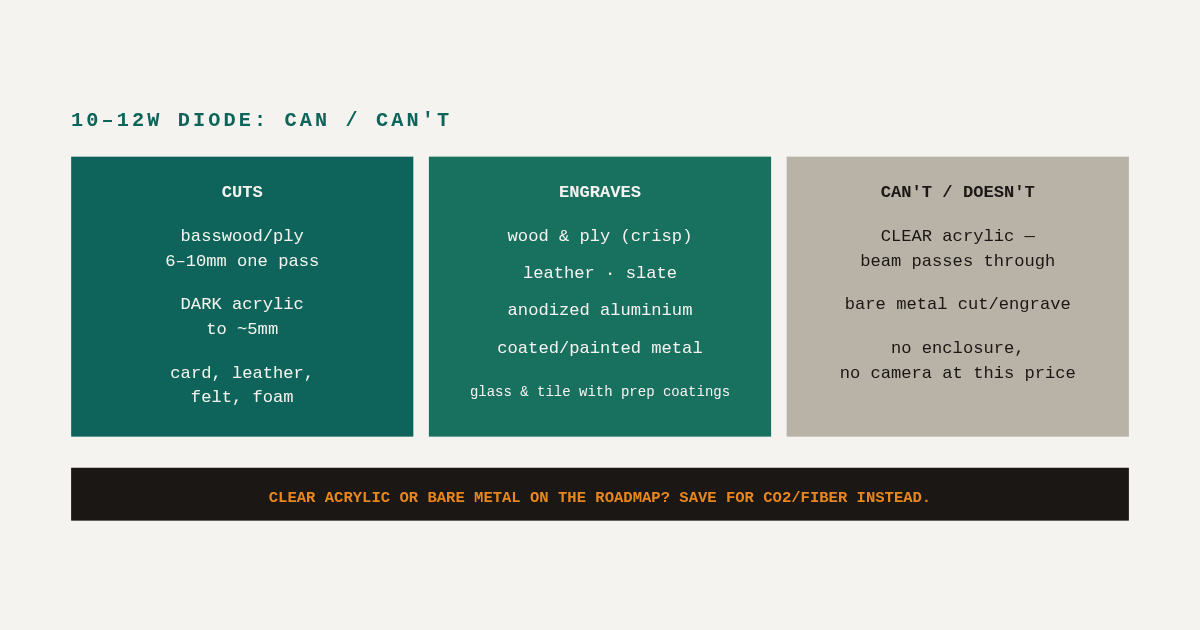
Under $500, you're choosing among bare-frame 10-12W diode lasers - capable machines, but you assemble them, babysit them, and wait on thick cuts (that class has its own guide). The $500 - $1,000 bracket is where lasers stop being kits and start being machines: 20W+ diode modules that cut 10mm plywood in one pass, full enclosures with Class-1 safety ratings, cameras for positioning, and - at the top of the range - your first taste of CO2, which engraves in seconds what a diode does in minutes and handles clear acrylic that diode beams pass straight through.
One warning that applies to the whole category: wattage claims lie. Marketing numbers like "130W laser engraver" describe electrical input, not what reaches the wood. Every power figure below is true optical output. And except for the enclosed picks, these are Class-4 laser devices - wear the goggles, vent the fumes, and never leave a running laser alone.
We earn a small commission from the Amazon links below, at no extra cost to you - see our affiliate disclosure.
The 5 best laser cutters under $1,000
| Laser Cutter | Best for | Woody Rating | |
|---|---|---|---|
| 1. Creality Falcon2 Pro 22W | Enclosed, Class-1 safe, camera - the complete package | 9.4/10 [Editor's Choice] | Check price |
| 2. Creality Falcon2 22W | Most cutting power per dollar | 9.1/10 | Check price |
| 3. Monport 40W CO2 | The CO2 gateway - speed and clear acrylic | 8.8/10 | Check price |
| 4. xTool D1 Pro 20W | The ecosystem - best accessories and software | 8.7/10 | Check price |
| 5. LONGER Ray5 20W | Cheapest real 20W - touchscreen, works offline | 8.5/10 | Check price |
1. Creality Falcon2 Pro 22W - Editor's Choice
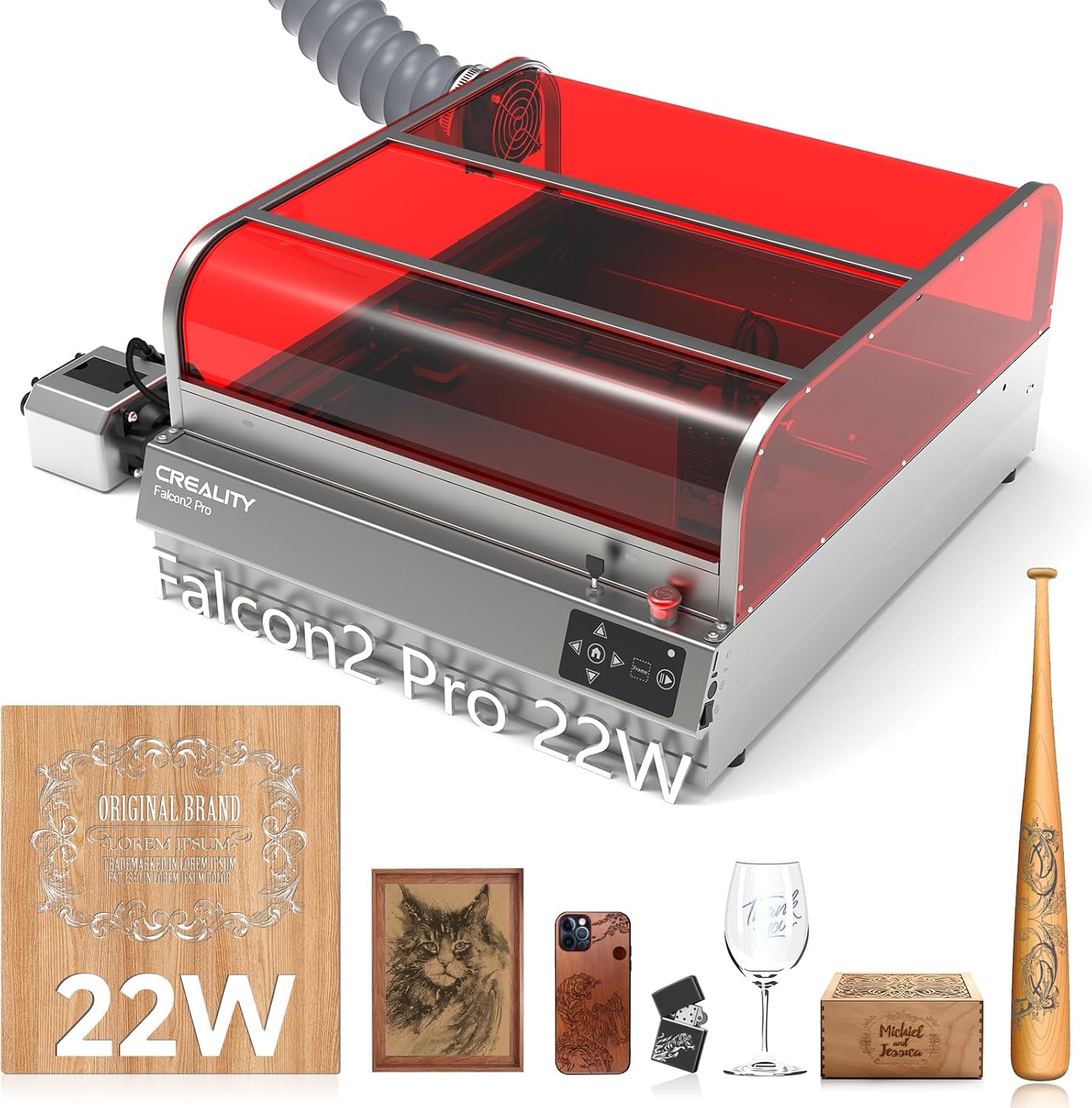
Best for: anyone who wants serious cutting power without turning a spare room into a laser lab.
The Falcon2 Pro takes the same 22W optical module as its open-frame sibling and builds the lab around it: a full enclosure with smoke-filtering exhaust fan, a Class-1 safety rating (the laser is contained - no goggles needed for bystanders, safe around kids and pets in a way no open frame is), an HD camera for positioning your design on the actual workpiece, and integrated air assist. 22W of real output cuts ~10mm plywood in one pass and slices through dark acrylic; the camera turns "measure, guess, pray" alignment into drag-and-drop. It works with LightBurn, the software everything else here also speaks. The work area (roughly 400x415mm) gives up a little to the open version, and the enclosure makes passthrough of long stock harder - those are the trades for not owning a Class-4 device.
| Pros | Cons |
|---|---|
| ✅ Class-1 enclosed - safest machine in this bracket | ❌ Slightly smaller work area than the open Falcon2 |
| ✅ Camera positioning actually works | ❌ Long stock passthrough is awkward |
| ✅ 22W true output + built-in air assist | |
| ✅ LightBurn compatible |
2. Creality Falcon2 22W - Most Power per Dollar
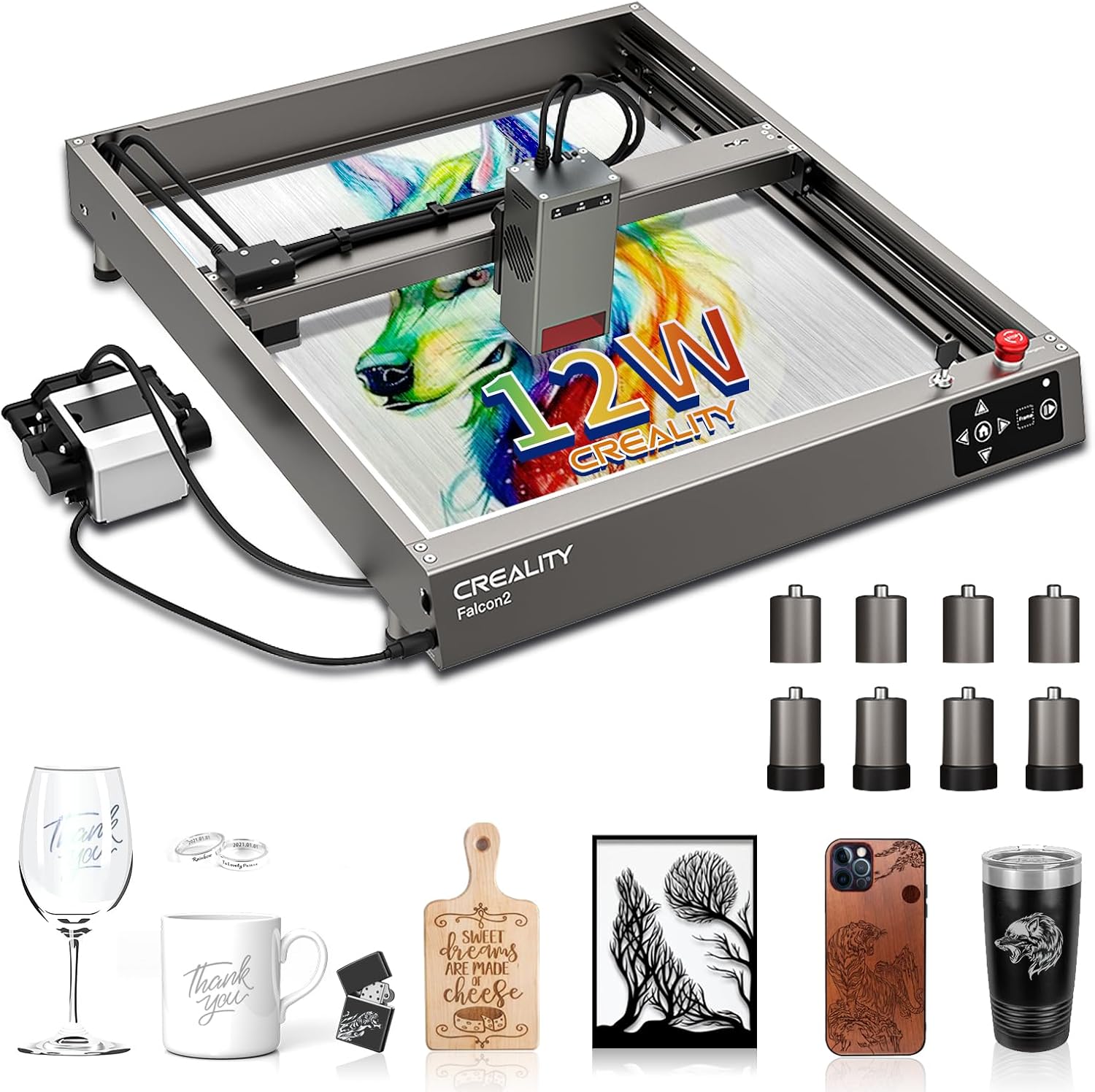
Best for: cutting-focused users who want maximum wattage per dollar and don't need the enclosure.
Same 22W FAC-compressed beam as the Pro, open-frame, several hundred dollars cheaper - this is the pick when your laser lives in a garage or shop where an enclosure matters less. It cuts up to ~15mm wood in a single pass on a good day (10mm reliably), engraves at up to 25,000mm/min, and the integrated air assist keeps char off cut edges without a separate pump. Creality's triple monitoring (flame detection, tilt cutoff, limit switches) covers the basics an open frame can cover. The 400x415mm bed handles most craft work, and its little sibling - the 12W Falcon2 we recommend under $500 - shows how well this platform has held up. Budget for goggles and honest ventilation; it's still a Class-4 device.
| Pros | Cons |
|---|---|
| ✅ 22W output at an open-frame price | ❌ Class 4 - goggles and ventilation on you |
| ✅ Air assist included, not an add-on | ❌ No camera positioning |
| ✅ Flame/tilt detection built in |
3. Monport 40W CO2 - The CO2 Gateway
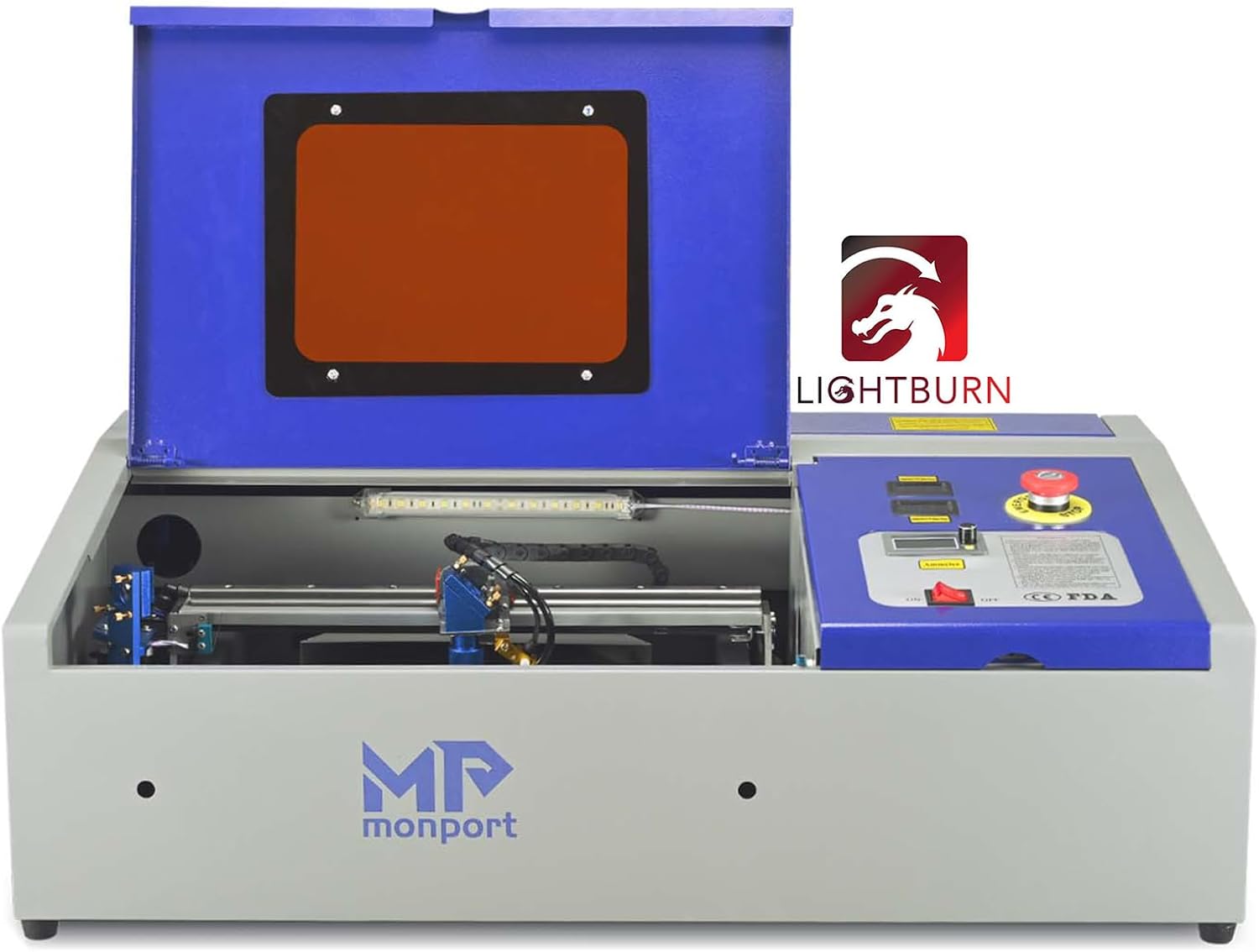
Best for: engraving businesses and anyone working with clear acrylic - the things diode lasers physically can't do well.
This is the modernized "K40" - the classic entry CO2 format with the two upgrades that used to require aftermarket surgery: a control board that speaks LightBurn natively, and proper air assist. A 40W CO2 tube is a different animal from any diode: it engraves five to ten times faster, cuts 6mm acrylic like butter, and - because CO2's 10.6µm wavelength is absorbed by transparent materials - handles the clear acrylic, glass etching, and rubber-stamp work a diode beam passes straight through. The catch is the format: an 8x12" work area (a quarter of the diode beds here), water cooling to maintain, and a mirror alignment ritual every so often. If your projects are tile-sized and your volume is real, it's the better tool; if you cut big sheets of plywood, stay diode. Our CO2 engraver guide covers the next steps up this ladder.
| Pros | Cons |
|---|---|
| ✅ CO2 speed - engraves 5-10× faster than diodes | ❌ Small 8x12" work area |
| ✅ Cuts clear acrylic; diodes can't | ❌ Water cooling + mirror alignment upkeep |
| ✅ LightBurn-ready out of the box | ❌ Tube is a consumable (years, but finite) |
4. xTool D1 Pro 20W - The Ecosystem Pick
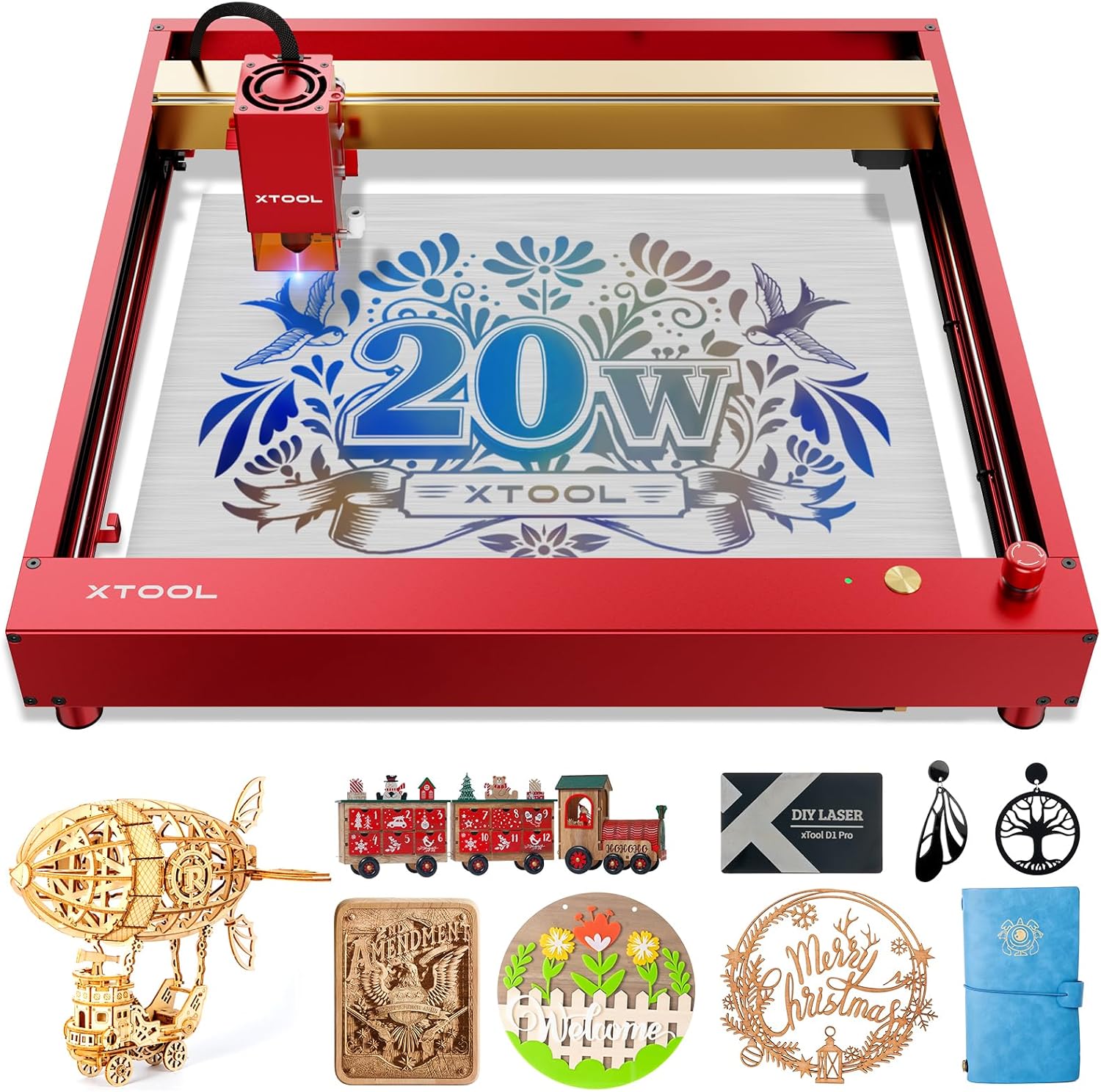
Best for: buyers who'll grow into rotary engraving, extensions, and enclosures - the platform with the deepest accessory bench.
The D1 Pro 20W is the most refined open-frame diode here: steel-shaft motion instead of belts-on-extrusion, 0.08x0.10mm compressed spot, and build quality you notice the first time you square up a frame. What really sells it is the ecosystem - the RA2 Pro rotary (tumblers, rings, spheres), a rail extension to 936x432mm, a purpose-built enclosure, and xTool's Creative Space software that makes the LightBurn learning curve optional for beginners. The 10W version is our starter pick for exactly these reasons. The honest caveat is price volatility: the 20W swings hundreds of dollars with xTool's promotions, sometimes past this list's ceiling. On a promo it's a clear buy; at full list, the Falcon2 gives you the same watts for less.
| Pros | Cons |
|---|---|
| ✅ Best build quality of the open frames | ❌ Price swings - only a deal beats the Falcon2 |
| ✅ Deepest accessory ecosystem (rotary, extension, enclosure) | ❌ Air assist pump sold separately on base kit |
| ✅ Beginner-friendly software + full LightBurn support |
5. LONGER Ray5 20W - Budget 20W That Works Offline
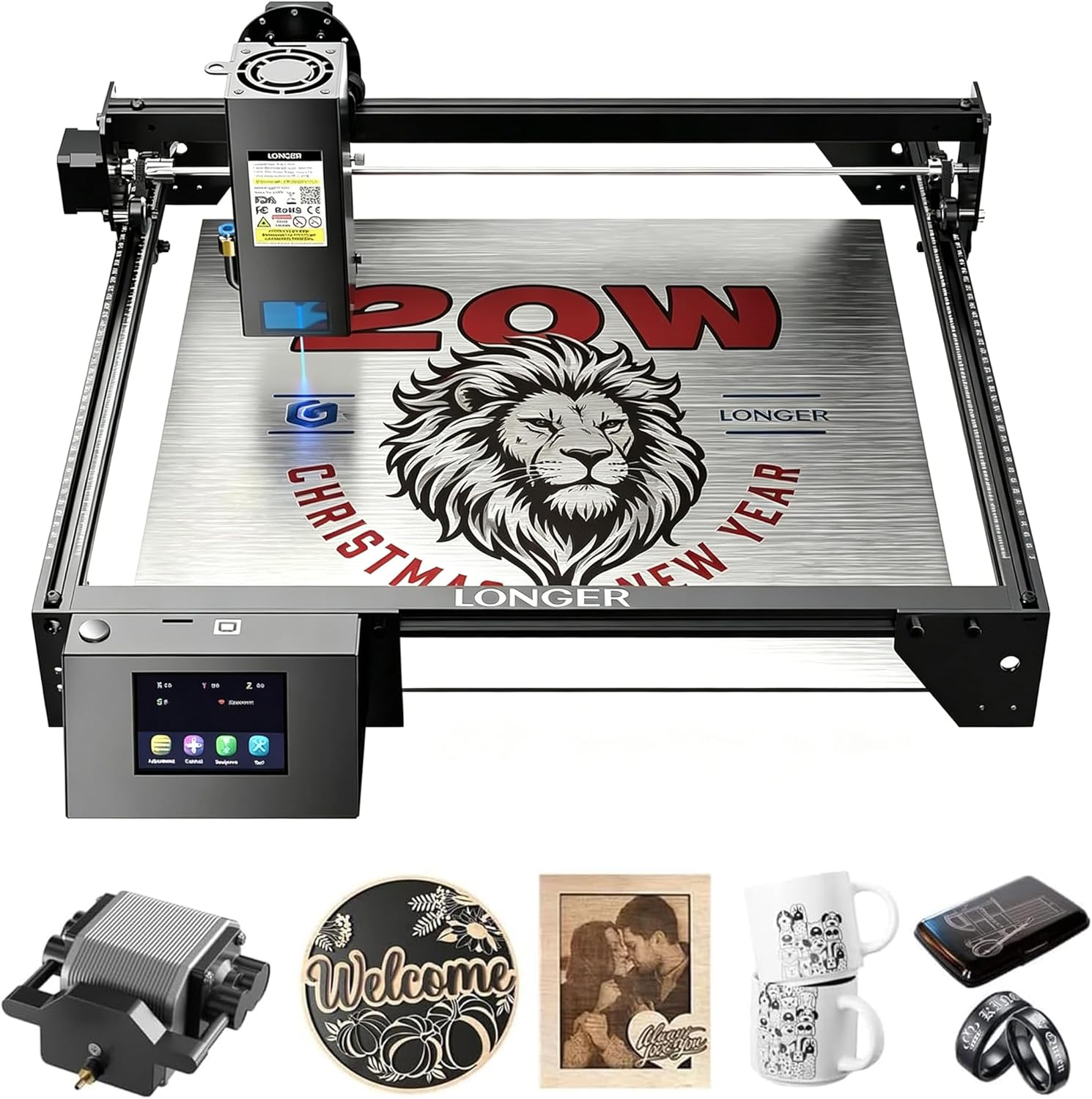
Best for: the least money that buys a genuine 20W cut - with a touchscreen so the laptop can stay in the house.
The Ray5 20W typically sells for well under half this list's budget and still delivers real 20W output that cuts 10mm ply in a pass or two, plus the feature its price class usually lacks: a 3.5" color touchscreen with offline operation. Load a job from a TF card or over WiFi, start it from the screen, monitor progress standing at the machine - a workflow every dusty workshop appreciates. The kit we link includes the air pump (don't buy laser cutters without air assist; the edge quality difference is night and day). The frame is more basic than the xTool's and assembly takes an evening, but the 400x365mm work area and LightBurn/LaserGRBL support mean nothing about it feels crippled. Its 10W sibling holds the same "standalone" slot in our under-$500 list.
| Pros | Cons |
|---|---|
| ✅ Cheapest true-20W machine here | ❌ Basic frame - more assembly, more tuning |
| ✅ Touchscreen + offline jobs via TF card/WiFi | ❌ No camera, no enclosure options |
| ✅ Air pump included in this kit |
Buying guide: what $500 - $1,000 actually buys
Diode vs CO2 is the first fork. Diodes (picks 1, 2, 4, 5) give you big work areas, zero maintenance, and fine cutting power for wood - but they engrave slowly and can't touch clear materials. CO2 (pick 3) is the reverse: blazing engraving speed, clear acrylic and glass, small bed, water cooling. Match the tool to what you'll actually make; the full laser guide walks through the physics.
Optical watts are the only watts. 20-22W optical output is the current diode sweet spot: one-pass cuts in 10mm plywood, dark acrylic up to ~8mm. If a listing shouts a number over 40 for a diode machine, it's quoting electrical input.
Enclosure = Class 1; open frame = Class 4. This isn't paperwork. An enclosed machine is safe to run in a home with kids and pets; an open frame needs goggles for everyone present, real ventilation, and your attention every minute it's running. The Falcon2 Pro's premium over the open Falcon2 is the cheapest Class-1 upgrade in the hobby.
Air assist is non-negotiable. A stream of air at the cut point stops flame-ups and produces clean, light edges instead of charcoal. Every pick here includes it or has it in the linked kit.
LightBurn is the lingua franca. All five machines run it (~$60, one-time). Whatever you buy, budget for it - it's the difference between fighting your laser and using it.
Spending less or more? Under $500, bare-frame 10-12W machines still do remarkable work - see the under-$500 guide. Above $1,000, the xTool S1 (an enclosed 20W, usually just over the line) and desktop CO2 machines like the OMTech Polar open up - that territory is covered in our wood laser cutter guide. And if your interest is decorative burning rather than cutting, pyrography is a different, cheaper hobby.
Frequently Asked Questions
Can a laser cutter under $1,000 cut plywood?
Yes - this is exactly the bracket where it gets comfortable. A true 20-22W diode cuts 8-10mm plywood in a single pass and thicker stock in multiple passes. The sub-$500 10W class does 5-6mm per pass. Hardwood cuts thinner than plywood at the same power; resin-heavy woods like pine char more.
Diode or CO2 laser - which should I buy first?
If you mostly cut wood and want a big work area with no maintenance: diode. If you mostly engrave (volume, speed) or need clear acrylic and glass: CO2. At this budget the diode machines are more polished overall, which is why they take four of five spots - but nothing diode-shaped will ever engrave as fast as a $540 CO2 tube.
Can you get a CO2 laser engraver under $1,000?
Yes - the Monport 40W on this list is a true CO2 machine in this bracket. The trade-offs versus a diode at the same price: a smaller working area, manual focus, and mandatory external venting. What you get in return is engraving speed a diode can't approach and the ability to cut clear acrylic, which diode beams pass straight through.
Do I need LightBurn, or is free software enough?
You can start with LaserGRBL (free, Windows) or xTool's Creative Space, and they're fine for basic work. LightBurn earns its ~$60 within a week of real use: better path planning, power/speed libraries per material, camera support, and it drives every machine on this list.
Are these machines safe to use indoors?
The enclosed Falcon2 Pro: yes, with its exhaust vented out a window. The open-frame picks: only with goggles rated for 455nm, serious ventilation, and constant supervision - wood smoke and acrylic fumes are genuinely nasty. Never run any laser unattended; air assist plus flame detection reduces but doesn't eliminate fire risk.
How long do these lasers last?
Diode modules are rated around 8,000-10,000 hours and are user-replaceable ($100-300) when they fade. CO2 glass tubes run 1,000-3,000 hours and cost about the same to swap. Either way, years of hobby use - the frame, not the light source, is what you're really buying.