Best CO2 Laser Engravers: 5 True CO2 Machines Compared
Affiliate disclosure: As an Amazon Associate, WoodyMan Reviews earns from qualifying purchases. If you buy through links on this page, we may earn a commission at no extra cost to you. How this works.
If you searched for a CO2 laser engraver specifically, you want a glass-tube machine - and it's worth being precise about that, because most "CO2 laser" lists (including the older version of this one) are padded with diode engravers and even CNC routers that are not CO2 at all. The difference is real and it decides what you can make:
- A CO2 laser uses a sealed glass tube and a 10.6-micron beam. It cuts thick acrylic and wood in a single pass, engraves glass, slate, leather, and coated metals, and works fast over a large bed. It needs venting and (usually) water cooling.
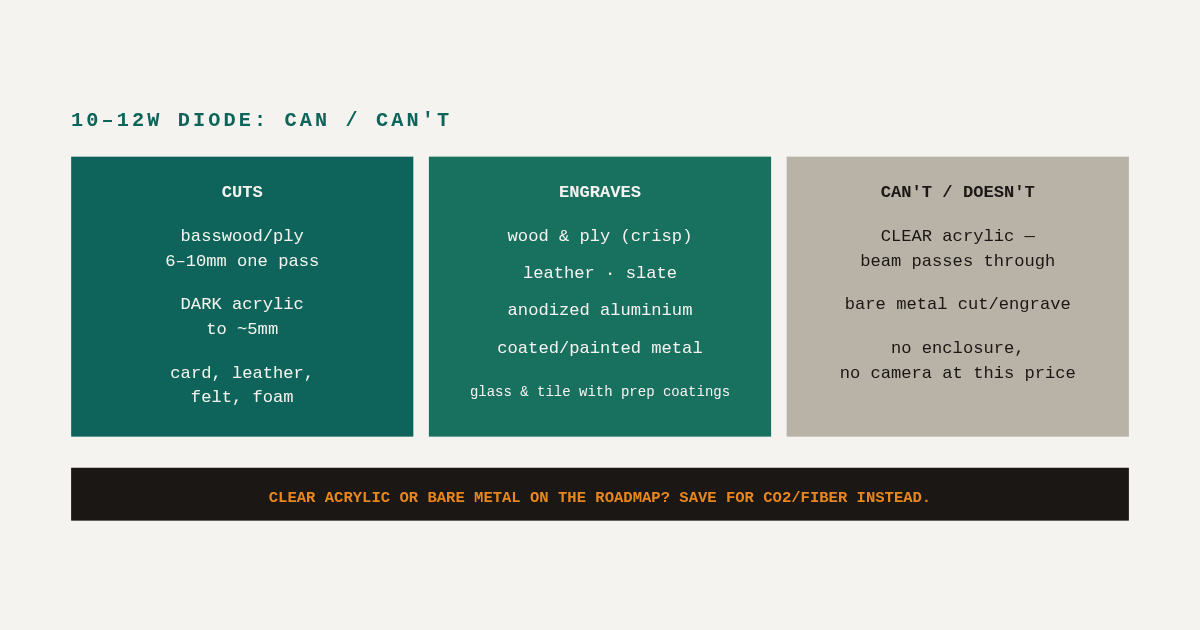
- A diode laser is a compact open-frame LED-style module. It's cheaper and great for engraving and thin cutting, but it can't touch clear acrylic and struggles with thickness. Those belong in our diode-focused guides, not here.
Everything below is a genuine CO2 machine. The trade-offs among them are wattage (cutting power and thickness), bed size, and how much of the messy engineering - cooling, air assist, camera alignment, software - the machine handles for you versus leaves to you.
We earn a small commission from the Amazon links below, at no extra cost to you - see our affiliate disclosure.
The 5 best CO2 laser engravers
| CO2 Laser | Best for | Woody Rating | |
|---|---|---|---|
| 1. OMTech Polar Lite 55W | Best all-round desktop CO2 | 9.3/10 [Editor's Choice] | Check price |
| 2. xTool P2S 55W | Best premium - smart features, biggest bed | 9.1/10 | Check price |
| 3. OMTech 50W Cabinet | Most cutting power per dollar | 8.8/10 | Check price |
| 4. Monport 40W | Cheapest way into real CO2 | 8.5/10 | Check price |
| 5. Glowforge Pro HD | The plug-and-play appliance | 8.4/10 | Check price |
1. OMTech Polar Lite 55W - Editor's Choice
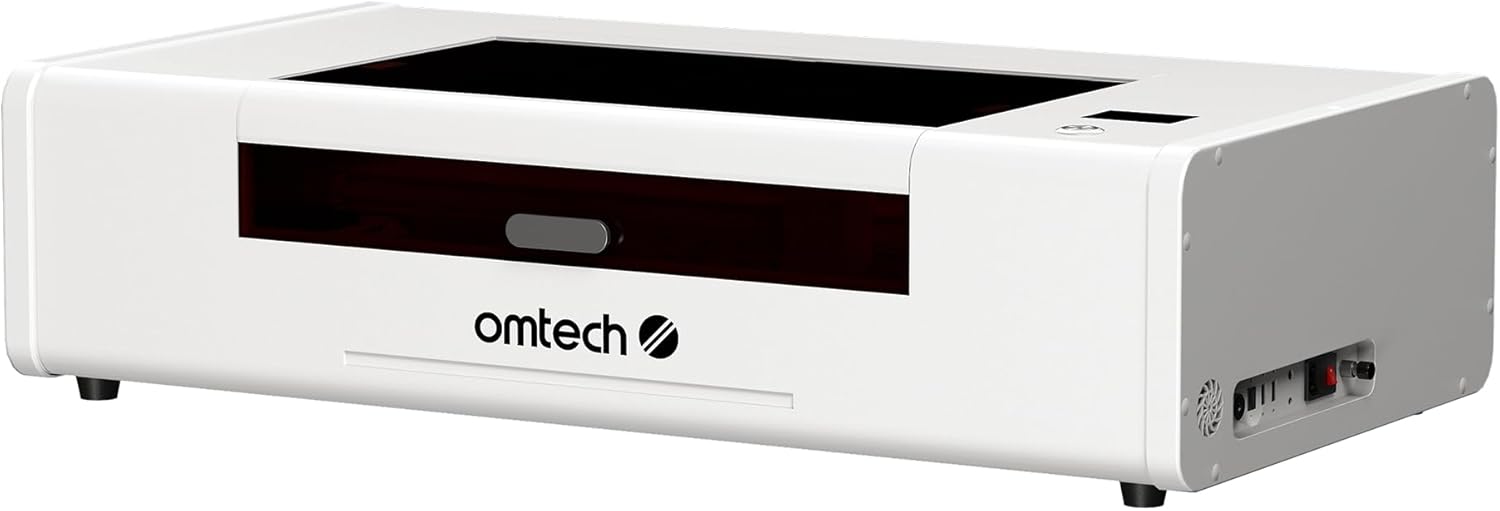
Best for: the maker who wants genuine CO2 cutting power in a self-contained desktop unit that doesn't take over the garage.
The Polar Lite hits the sweet spot for most people buying their first serious CO2 machine. At 55 watts it cuts wood and acrylic that would stall a diode laser, but it's packaged as a fully enclosed desktop unit with a built-in water-cooling loop, so there's no external chiller to plumb - a huge simplification over open cabinet lasers. It runs LightBurn (the software serious users want), has a built-in camera for positioning artwork on the material, and its Class-1 enclosure means the beam is contained during operation. Bed size is modest next to a big cabinet, so it's for coasters, signage, jewelry, and small-batch craft work rather than full sheet goods - but for that work, it's the most machine you can put on a bench without a workshop buildout.
| Pros | Cons |
|---|---|
| ✅ 55W CO2 cutting in a desktop footprint | ❌ Smaller bed than a cabinet laser |
| ✅ Built-in cooling - no external chiller | ❌ Still needs external venting |
| ✅ LightBurn + positioning camera | |
| ✅ Enclosed Class-1 - beam contained |
2. xTool P2S 55W - Best Premium
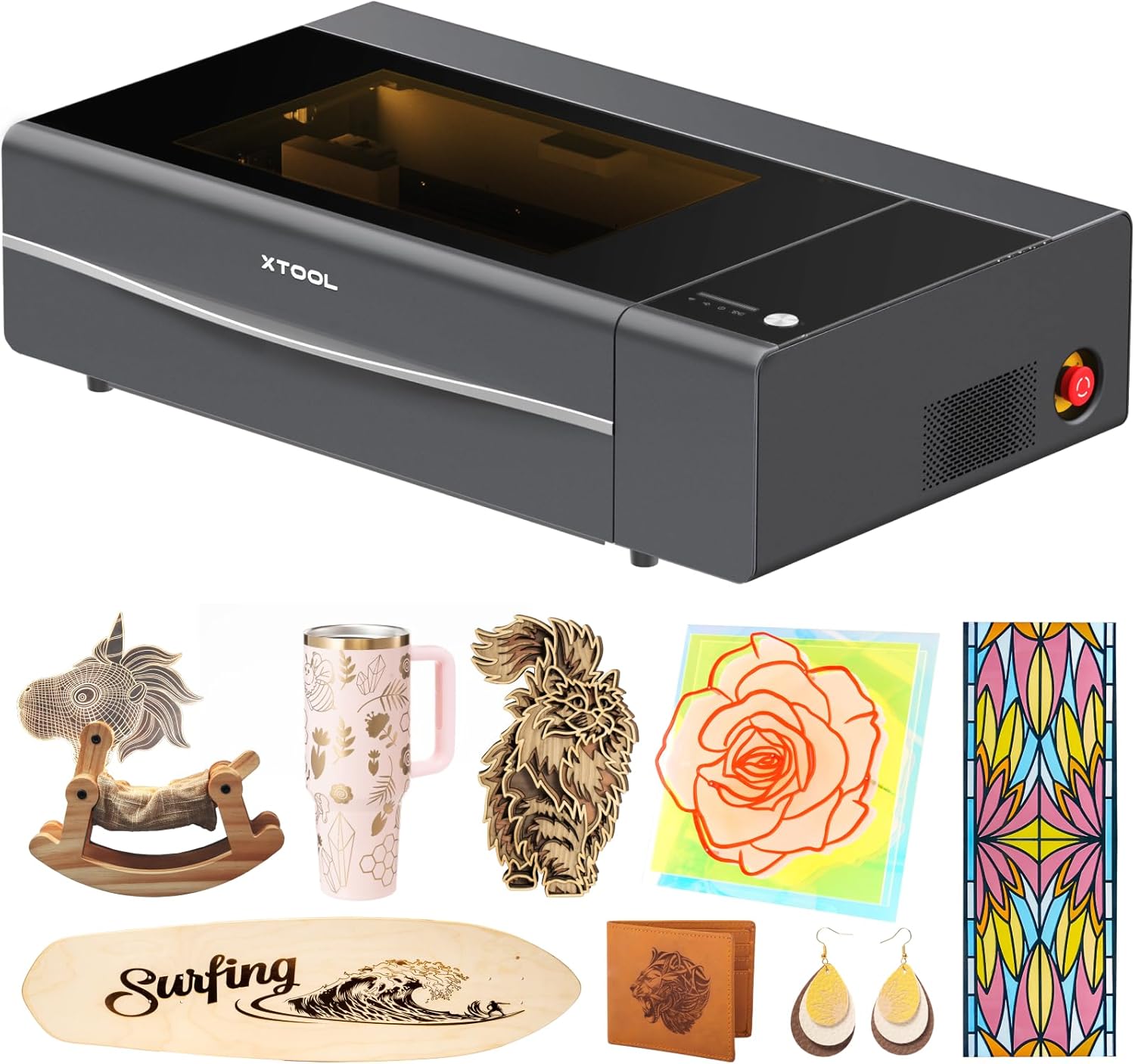
Best for: the small business or serious hobbyist who wants the least fuss and the most capability, and will pay for it.
The P2S is what a CO2 laser looks like when the manufacturer engineers away the annoyances. Its 55W tube cuts up to roughly 18mm black walnut or 20mm acrylic in a pass, but the story is the smarts: dual 16MP cameras for accurate artwork placement and curved-surface projection, LiDAR autofocus, a large 26"×14" bed with auto-passthrough for feeding material far longer than the machine, and rotary/riser add-ons for cylinders and tall objects. It runs xTool's own polished software rather than raw LightBurn, which beginners find friendlier and power users occasionally find limiting. It is the most expensive machine here by a wide margin, and it wants venting like any CO2 laser - but for turning designs into product with minimal setup friction, nothing else on the list matches it.
| Pros | Cons |
|---|---|
| ✅ Dual 16MP cameras + LiDAR autofocus | ❌ Most expensive machine here |
| ✅ Big bed + auto-passthrough for long stock | ❌ Proprietary software, not raw LightBurn |
| ✅ Cuts ~18mm walnut / 20mm acrylic per pass | |
| ✅ Rotary and riser accessories |
3. OMTech 50W Cabinet - Most Cutting Power per Dollar
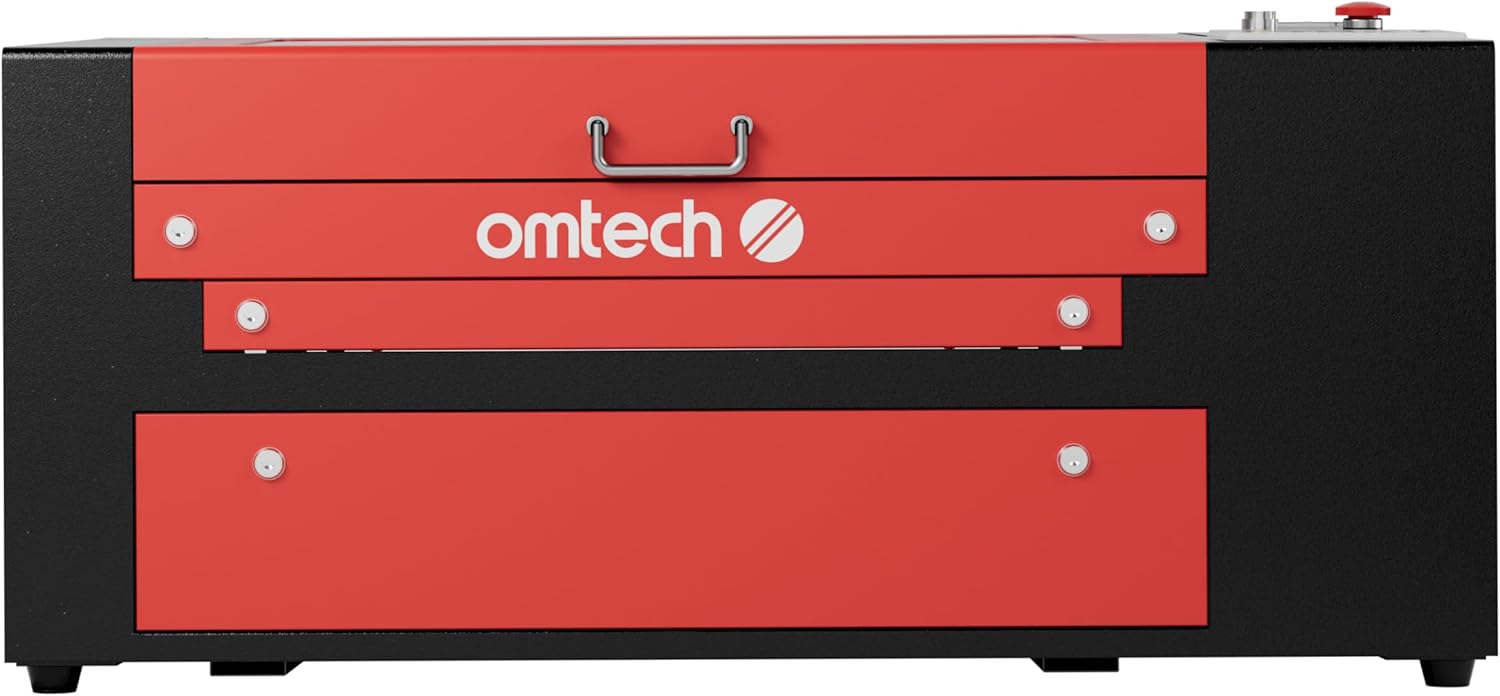
Best for: the maker who wants the biggest bed and real production cutting, and is willing to do the setup work to get it cheap.
This is the traditional cabinet-style CO2 laser - a full workstation with a large work area and a proper 50W tube - at a price the sleek desktop units can't touch. You get the room to cut real sheet goods and run batches, a Ruida controller that LightBurn drives natively, and the durability of the format that professional signage and craft shops have used for years. What you're trading for the value is convenience: expect to set up an external water chiller and an exhaust blower, do more of your own alignment and maintenance, and give it actual floor/bench space. If you understand what a CO2 laser needs and want maximum capability per dollar, this is the pick; if you want to unbox and engrave, look at the desktop or appliance options.
| Pros | Cons |
|---|---|
| ✅ Large bed for sheet goods and batches | ❌ Needs external chiller + blower |
| ✅ Most cutting capacity per dollar | ❌ More DIY setup and maintenance |
| ✅ Ruida controller - native LightBurn | ❌ Takes real space |
| ✅ Proven production-shop format |
4. Monport 40W - Cheapest Way Into Real CO2
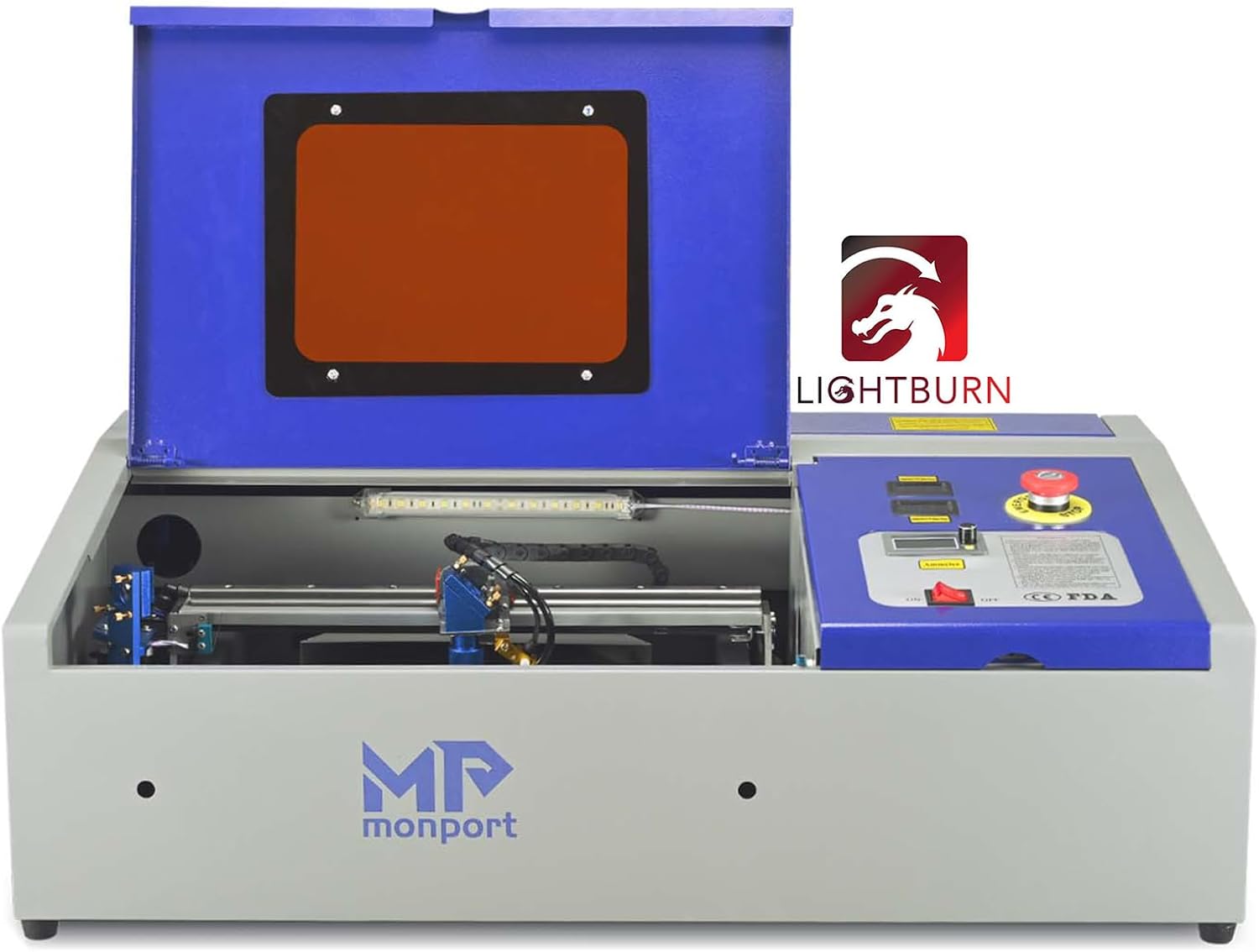
Best for: the beginner who wants a true CO2 machine - not a diode - for the lowest possible entry price.
The Monport 40W is the honest budget answer to "I want a CO2 laser but can't spend cabinet money." It's a compact enclosed 40W machine - the modern, better-built descendant of the old "K40" - that cuts thin wood, acrylic, leather, and paper and engraves a wide range of non-metals, all with real CO2 capability a diode can't replicate on clear acrylic. It runs LightBurn and comes more complete out of the box than the bare K40s of old. Forty watts is the floor for CO2 cutting, so keep expectations sized to it: thin material, more passes for thickness, a smaller bed. But as a genuine, affordable on-ramp to CO2 - and a big step up from a diode for acrylic work - it's the value entry point.
| Pros | Cons |
|---|---|
| ✅ Cheapest real CO2 machine here | ❌ 40W - thin material, more passes |
| ✅ Cuts clear acrylic a diode can't | ❌ Small bed |
| ✅ Enclosed, LightBurn-compatible | |
| ✅ Better-built than legacy K40s |
5. Glowforge Pro HD - The Plug-and-Play Appliance
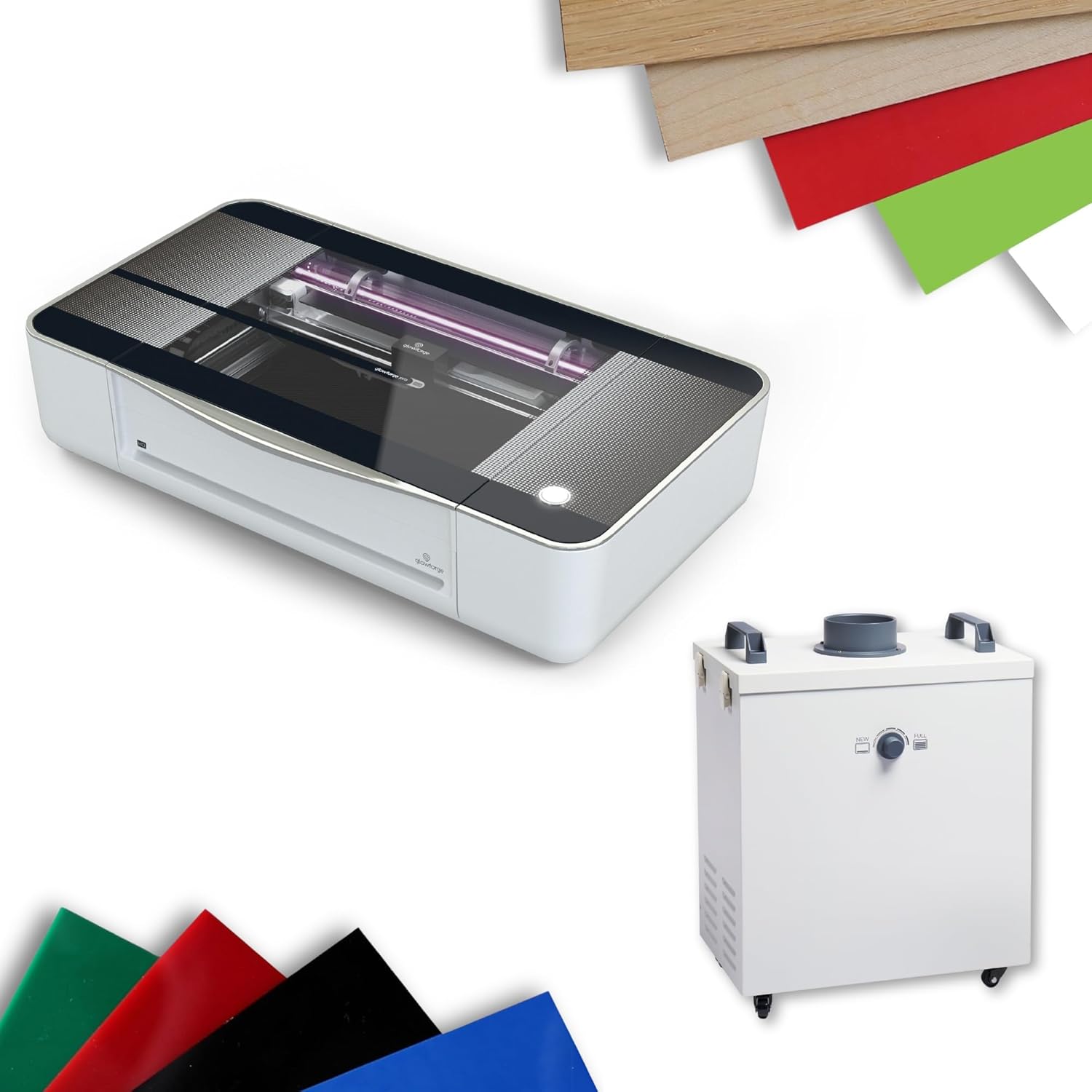
Best for: classrooms, offices, and makers who value zero-setup simplicity over cutting through thick stock or owning their workflow.
Glowforge built the CO2 machine for people who don't want to think about CO2 machines. Its overhead camera lets you place a raw material on the bed, see it on screen, drag your design onto it, and print - no manual focusing, no alignment math. Setup is genuinely appliance-grade, and the Pro's passthrough slot feeds long material. The catches are the ones you'd expect from that philosophy: the design software is cloud-based and subscription-tiered (some features gate behind a plan, and no internet means no cutting), and its practical cutting depth trails the higher-wattage cabinet and desktop units. If frictionless operation and a polished experience matter more to you than raw power or offline control, it's a fine machine; power users tend to prefer the LightBurn-driven options above.
| Pros | Cons |
|---|---|
| ✅ Camera placement - easiest workflow anywhere | ❌ Cloud software + subscription tiers |
| ✅ Appliance-grade setup; passthrough slot | ❌ No internet = no cutting |
| ✅ Great for schools/offices | ❌ Less cutting depth than cabinet lasers |
| ✅ Polished, beginner-proof experience |
Buying guide: sizing a CO2 laser to your work
Wattage sets thickness and speed. 40W cuts thin stock and engraves everything; 50-55W cuts meaningful wood and acrylic thickness and runs faster; higher-wattage cabinet tubes handle production. More watts also means more cost, cooling, and power draw - buy for the thickest material you'll actually cut, not the thickest you can imagine.
Desktop vs cabinet vs appliance. Enclosed desktop (Polar Lite, P2S) balances capability and simplicity with built-in cooling. Cabinet (OMTech 50W) maximizes bed and value but demands an external chiller, blower, and space. Appliance (Glowforge) minimizes setup at the cost of power and offline control. Match the format to how much engineering you want to own.
Every CO2 laser needs venting - plan it first. Cutting and engraving produce smoke and fumes that must be ducted outside or through a rated filter. This isn't optional and it's easy to underestimate; sort your exhaust route before the machine arrives.
Safety is non-negotiable. CO2 beams are invisible and instantly blinding; only run an enclosed (Class-1) machine with interlocks closed, keep a fire extinguisher and a watchful eye at the machine while it runs (laser fires are real), and never cut PVC or vinyl - the chlorine gas ruins the machine and harms you. Our comprehensive laser cutter guide goes deeper on safe operation.
Not sure CO2 is even right for you? If you mostly engrave and cut thin material and want to spend less, a diode laser may serve better - compare in our best laser cutters under $1000 and under $500 guides, or see the all-types overview in best wood laser cutter. For freehand pyrography instead of machine work, see wood burning.
Frequently Asked Questions
What's the difference between a CO2 and a diode laser engraver?
A CO2 laser uses a glass tube and a 10.6-micron beam that cuts thick acrylic and wood and engraves glass and coated surfaces; a diode laser is a cheaper compact module that's excellent for engraving and thin cutting but can't cut clear acrylic and struggles with thickness. CO2 is the choice when cutting power and material range matter.
What can a CO2 laser engrave and cut?
Wood, acrylic (including clear), leather, paper, cardboard, fabric, cork, rubber stamps, glass and slate (engrave), and coated/anodized metals (mark). Bare metals need a fiber laser. Never cut PVC, vinyl, or other chlorine-containing plastics.
How much does a good CO2 laser engraver cost?
A true CO2 machine starts around the price of a well-equipped diode setup (the 40W Monport) and climbs steeply for higher wattage, bigger beds, and smart features - the premium P2S sits at the top of this list. Diode engravers are cheaper, but they're a different tool.
Do I really need water cooling and an exhaust fan?
Yes. CO2 tubes are cooled by water - the desktop units (Polar Lite, P2S) build the loop in; cabinet lasers need an external chiller. And every CO2 laser produces fumes that must be vented outside or filtered. Budget and plan both before buying.
Is a Glowforge better than an OMTech or xTool?
It depends on what you value. Glowforge is the easiest to set up and use but relies on cloud software and cuts less deeply; OMTech gives more cutting power per dollar with more setup; xTool's P2S is the most capable smart machine but the priciest. There's no single winner - match it to your workflow and budget.