6 Best Homeowner Chainsaws: Every Power Source, Every Price
Affiliate disclosure: As an Amazon Associate, WoodyMan Reviews earns from qualifying purchases. If you buy through links on this page, we may earn a commission at no extra cost to you. How this works.
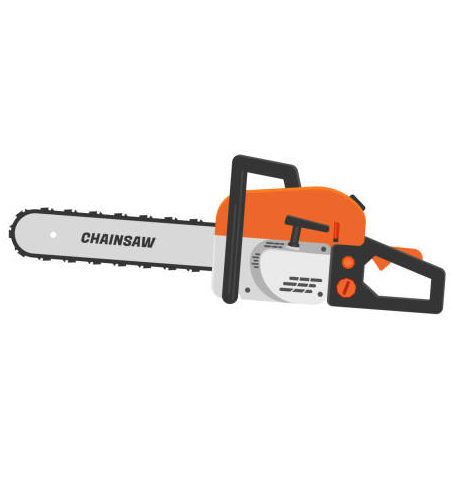
The homeowner chainsaw question has changed. Ten years ago it was "which gas saw?"; today, for most properties, a battery saw is the honest default - instant starts after months in the shed, no fuel going stale in the carburetor, no ear protection required for the neighbors' sake. Gas still earns its place at two extremes: all-day firewood processing (where swapping batteries gets expensive) and heavy 20-inch felling work. The list below covers the whole map - battery, gas, corded, and the mini pruning saws that have become their own category - so you can buy for the property you actually have.
One sizing rule before the picks: buy a bar about 2 inches longer than what you typically cut, not the longest one you can afford. A 16-18" saw handles the overwhelming majority of homeowner work; a 20" bar on rare big jobs is better rented than owned.
We earn a small commission from the Amazon links below, at no extra cost to you - see our affiliate disclosure.
The 6 best homeowner chainsaws
| Chainsaw | Best for | Woody Rating | |
|---|---|---|---|
| 1. EGO Power+ CS1804 18" (battery) | Best for most homeowners - gas power, zero fuss | 9.4/10 [Editor's Choice] | Check price |
| 2. Husqvarna 455 Rancher 20" (gas) | Serious firewood and big trees | 9.1/10 | Check price |
| 3. Husqvarna 130 16" (gas) | Best entry point to a real gas saw | 8.8/10 | Check price |
| 4. DEWALT DCCS620 12" (battery) | Storm cleanup on the 20V platform you own | 8.6/10 | Check price |
| 5. Oregon CS1500 18" (corded) | Cheapest real 18" saw - self-sharpening | 8.4/10 | Check price |
| 6. WORKPRO 6.3" Mini (battery) | One-handed pruning and kindling | 8.2/10 | Check price |
1. EGO Power+ CS1804 18" - Editor's Choice
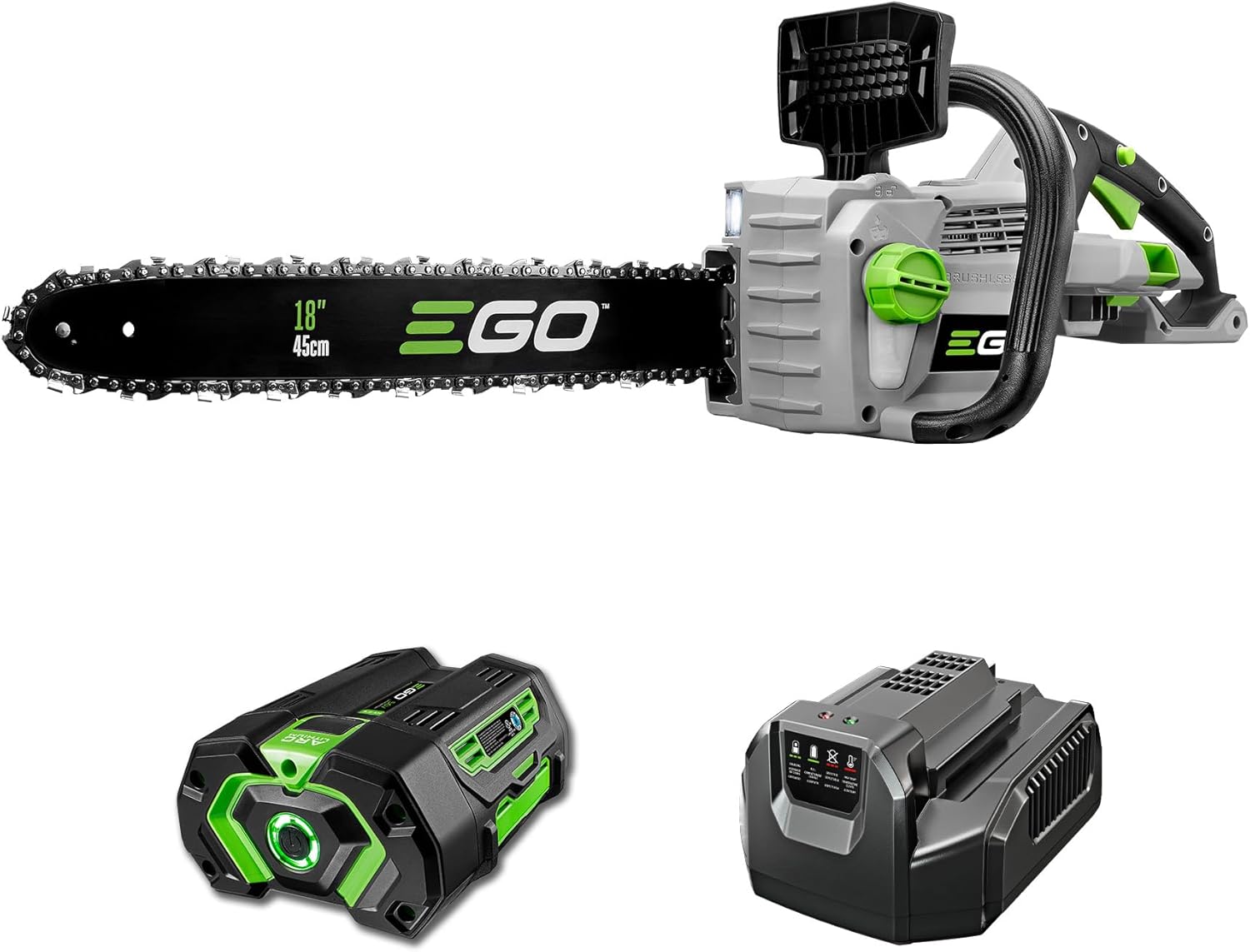
Best for: the large majority of homeowners - everything short of daily firewood production, with none of gas ownership's overhead.
EGO's 56V platform is what finally made "battery chainsaw" mean something: the CS1804's brushless motor spins an 18-inch bar with genuinely 45cc-gas-class authority, good for roughly 300 cuts through a 4x4 on the included 5.0Ah pack. Everything about it is built for the person who uses a saw ten weekends a year: push-button start after six months untouched, tool-free chain tensioning on a dial, an LED work light, and noise levels that let you clean up on a Sunday morning. Chain oil is the only fluid it ever needs. The battery system is the real purchase - packs work across EGO's mowers, blowers, and trimmers - and the only honest knocks are kit price and that all-day bucking means budgeting a second battery.
| Pros | Cons |
|---|---|
| ✅ True gas-class cutting from a battery | ❌ Kit price stings (battery is half of it) |
| ✅ Starts instantly after months of storage | ❌ All-day work needs a spare pack |
| ✅ Quiet enough for neighborhoods | |
| ✅ Tool-free tensioning + LED light |
2. Husqvarna 455 Rancher - The Firewood Machine
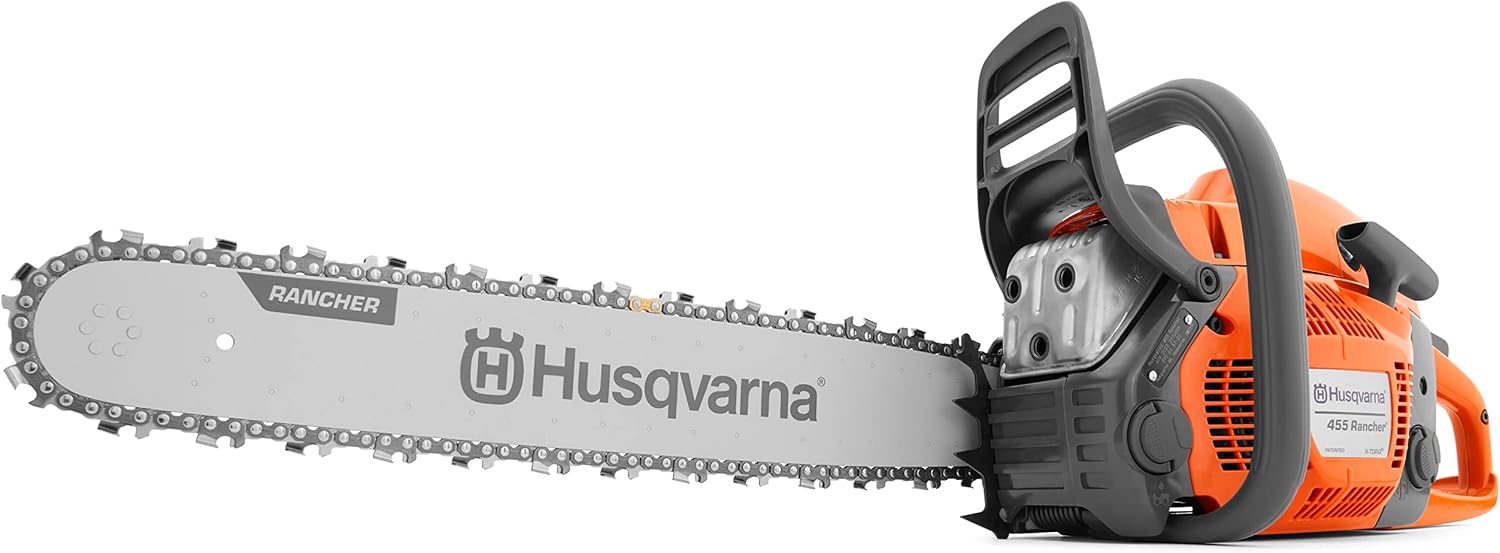
Best for: rural properties, wood-burning households, and anyone regularly dropping and bucking real trees.
The 455 Rancher has been the landowner's saw for two decades because it sits exactly on the line between homeowner and professional: a 55.5cc X-Torq engine making 3.5hp through a 20-inch bar, with the LowVib dampening and side-mounted tensioner that make long sessions tolerable. It processes a season of firewood without breathing hard, pulls through hardwood a battery saw slows down in, and parts and service exist in every farm town in America. The costs are the usual gas costs: it's an 13-plus-pound saw before fluids, it needs mixed fuel and carb care, and it's loud. If those trade-offs read as "fine, that's a chainsaw," this is your saw; if they read as "chores," buy the EGO.
| Pros | Cons |
|---|---|
| ✅ 3.5hp pulls a 20" bar through hardwood | ❌ Heavy - fatiguing for occasional users |
| ✅ All-day runtime, 30-second refuels | ❌ Gas upkeep: mix, carb, winterizing |
| ✅ LowVib + side tensioner for long sessions | |
| ✅ Ubiquitous parts and service network |
3. Husqvarna 130 - Best Entry-Level Gas
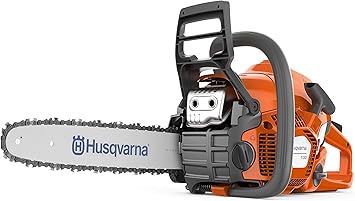
Best for: the homeowner who wants real-brand gas reliability at the category's lowest serious price.
The 130 is the same pick that tops our small gas chainsaw guide, and it earns its slot here for the same reason: it's the cheapest gas saw from a manufacturer with an actual dealer network that starts predictably and holds up. The 38cc X-Torq engine drives a 16-inch bar through everything a suburban lot produces - storm limbs, small felling, modest firewood - at around 10.3 pounds, light enough that the saw isn't the workout. Air Injection keeps the filter clean between services, and the combined choke/stop control makes cold starts beginner-friendly. It won't hurry through a 20-inch oak trunk, and its plastic is priced-to-match; it just runs, year after year, which at this price is the whole pitch.
| Pros | Cons |
|---|---|
| ✅ Cheapest dealer-backed gas saw worth owning | ❌ Slows in big hardwood - it's a 38cc saw |
| ✅ Light (10.3 lbs) and beginner-friendly starts | ❌ Build is budget-grade Husqvarna, not pro-grade |
| ✅ Air Injection = fewer filter cleanings |
4. DEWALT DCCS620 12" - For the 20V Household
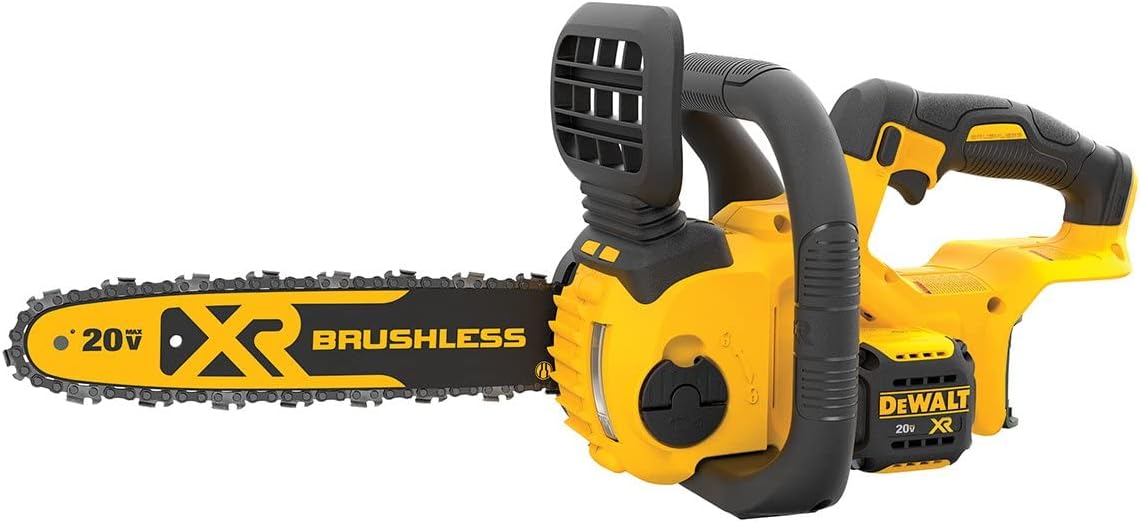
Best for: storm cleanup and light bucking for anyone already invested in DEWALT 20V MAX batteries.
If your garage already charges DEWALT 20V packs, this 12-inch brushless compact is the cheapest path to a cordless saw that isn't a toy: about 90 cuts through pressure-treated 4x4 per 5Ah charge, 8-ish pounds, tool-free tensioning, and a low-kickback bar that suits occasional users. It's genuinely one-hand-light for limbing (keep two hands on it anyway) and small enough to work inside a downed canopy where a 18-inch saw is clumsy. Know its ceiling: a 12-inch bar and 20V pack are for limbs and small trunks, not firewood production - that's what picks 1-3 are for. The listing covers bare-tool and battery-kit variants; if you're not on the platform, price the kit before comparing.
| Pros | Cons |
|---|---|
| ✅ Cheap add-on if you own DEWALT 20V packs | ❌ 12" bar - limbs and small trunks only |
| ✅ Light and nimble inside downed canopy | ❌ Not a firewood saw |
| ✅ Brushless motor, tool-free tensioning |
5. Oregon CS1500 - Cheapest Real Saw, Sharpens Itself
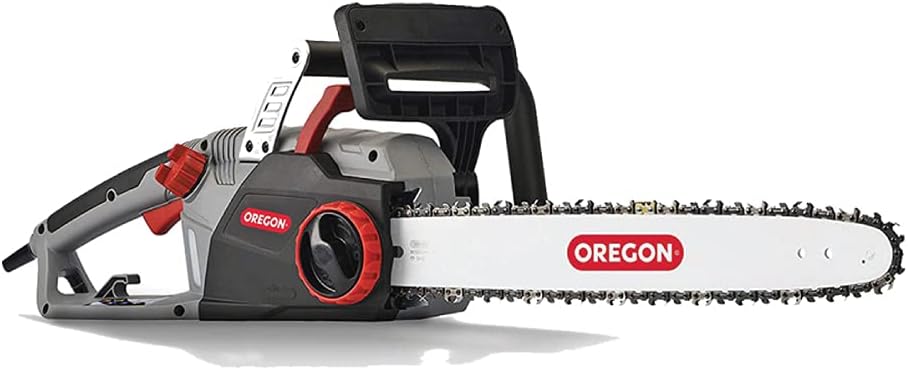
Best for: yard-range work near an outlet - the most cutting capacity per dollar in the entire category.
The corded chainsaw is unfashionable and underrated: the CS1500 gives you a 15-amp motor and a full 18-inch bar for less than half of what any comparable battery kit costs, with unlimited runtime and zero batteries to age out. Its party trick seals the deal - Oregon's built-in PowerSharp system sharpens the chain on the saw in three seconds with a lever pull, which removes the single maintenance task homeowners most neglect (a dull chain is slower and more dangerous than any power deficit). The obvious constraint is the cord: you live within 100 feet of an outlet on a proper outdoor-rated extension. For trimming, bucking delivered firewood by the garage, and suburban storm cleanup, that's less limiting than it sounds.
| Pros | Cons |
|---|---|
| ✅ 18" capacity at a fraction of battery-kit money | ❌ The cord sets your working radius |
| ✅ 3-second on-saw self-sharpening | ❌ Needs a proper 12-gauge extension cord |
| ✅ Unlimited runtime, no batteries to replace |
6. WORKPRO 6.3" Mini - The Pruning Specialist
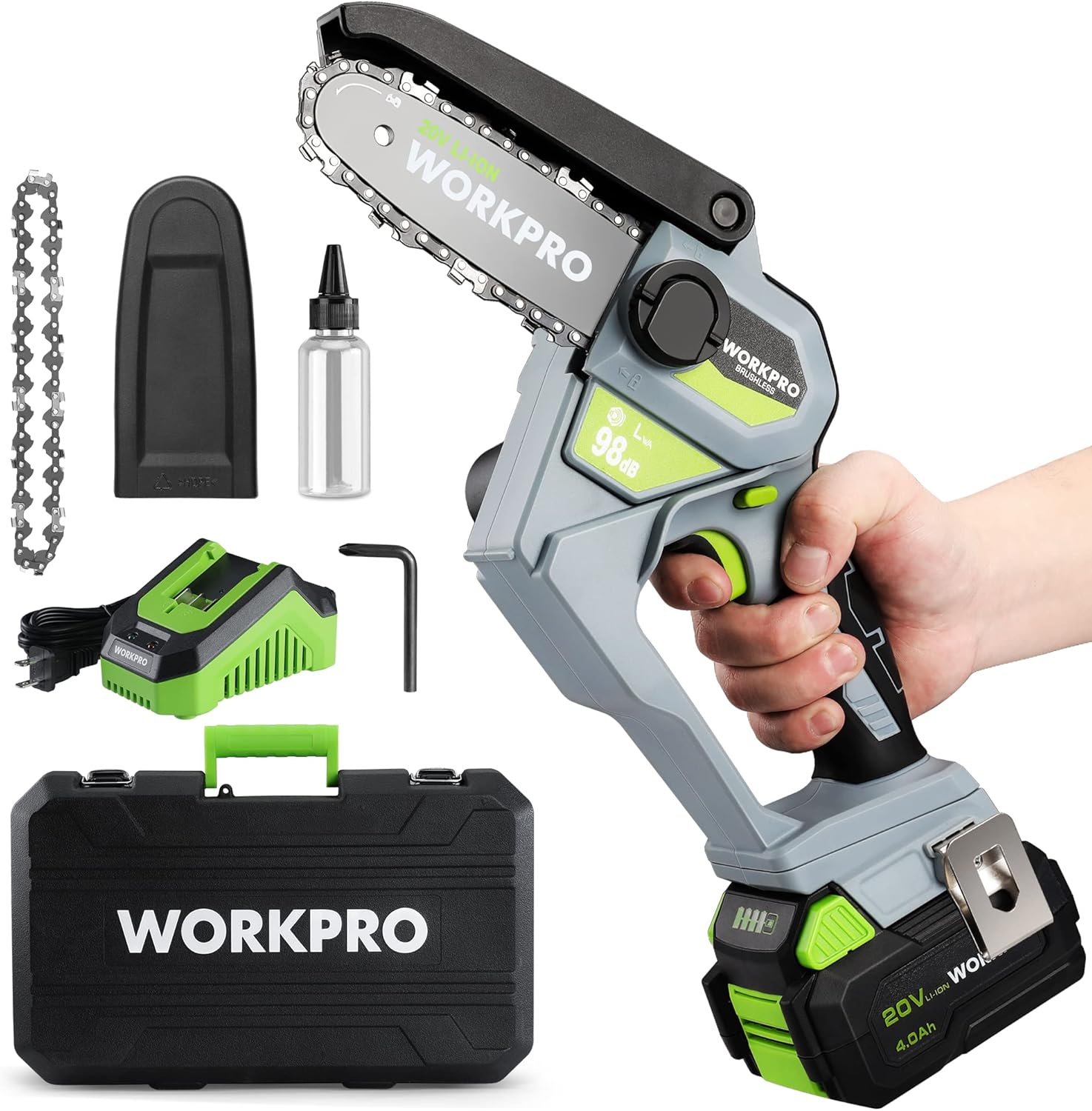
Best for: pruning, kindling, and every "too big for loppers, too small for the chainsaw" branch on the property.
The one-handed mini chainsaw earned its cult status honestly, and WORKPRO's brushless 20V version is one of the few built like a tool rather than a gadget: a 6.3-inch bar that takes branches up to roughly 4.7 inches, about ten seconds per cut, three pounds in the hand, with a 4.0Ah battery and a spare chain in the box. For rose-to-fruit-tree pruning, breaking down branches for the green bin, and cutting kindling at the wood pile, it replaces a bow saw and your patience. It is not a small chainsaw - no chain brake, minimal guarding - so treat it with full respect: gloves, glasses, cuts below shoulder height, and never one-handed above your head.
| Pros | Cons |
|---|---|
| ✅ Replaces loppers and bow saw for 1-4.7" branches | ❌ No chain brake - demands careful habits |
| ✅ 3 lbs - usable on a ladder or in a canopy | ❌ Not for anything trunk-sized |
| ✅ Brushless motor + spare chain included |
Buying guide: match the power source to the property
Battery, gas, or corded is the real decision. Battery (picks 1, 4, 6) wins on starting, noise, and zero maintenance - its costs are upfront price and finite runtime. Gas (picks 2, 3) wins on all-day work and raw torque - its costs are noise, weight, and carburetor care; if a saw sits for months with fuel in it, it becomes a saw that won't start. Corded (pick 5) wins on price and simplicity inside its radius. Most one-saw households in 2026 are best served by battery; wood-heated ones by gas plus a mini.
Bar length: cut diameter + 2 inches. A bar can technically cut double its length with two passes, but a saw sized to the work is safer and less tiring. 12-14" covers pruning and storm limbs; 16-18" covers firewood and small felling; 20" is for genuinely big wood - and if that's routine, you've outgrown "homeowner" saws. Our small gas chainsaw guide goes deep on the compact end, and the gas chainsaw guide on the big end.
Safety features are not optional extras. Insist on an inertia chain brake (stops the chain in a kickback before you can react), a low-kickback chain for occasional use, and buy chaps and a helmet with face screen before the first cut - chainsaw injuries average dozens of stitches, and chaps are cheaper than one ER visit. The mini saws skip most guarding; compensate with habits.
A sharp chain matters more than power. Dull chains cut slowly, smoke, and force you to push - which is how kickback happens. Learn to touch up with a file (two minutes per tank of fuel is the pro rhythm), or let the Oregon do it for you.
Store it ready. Battery saws: pack at 40-60%, indoors. Gas saws: run the carb dry or use stabilized ethanol-free fuel - spring "won't start" complaints are almost always fall's stale fuel.
Frequently Asked Questions
Are battery chainsaws really as good as gas now?
For 90% of homeowner work, yes - an 18-inch 56V-class saw cuts with genuine 45cc authority and starts every time. Gas still wins for all-day firewood processing (a second battery costs real money; a jerry can doesn't) and for bars over 18 inches. The honest answer is that most people who "need gas" need it three days a year.
What size chainsaw does a typical homeowner need?
16-18 inches covers firewood, storm cleanup, and small tree felling; 12-14 inches is plenty for a suburban lot that mostly produces branches. Buy for the routine work, not the once-a-decade oak - big one-off jobs are cheaper and safer rented or hired out.
Is a mini chainsaw worth it?
If you prune trees or process branches at all, surprisingly yes - it's the most-reached-for saw many owners have. Just be clear-eyed: minis lack chain brakes and full guarding, so they demand the same respect as the big saw with fewer safety nets. Buy a brushless one from a real brand; the $40 no-name versions are where the horror stories come from.
How often should a chainsaw chain be sharpened?
Roughly every tank of fuel (or battery) under regular use, sooner if you touch dirt - one ground contact can dull a chain completely. Signs you're overdue: sawdust turning to powder instead of chips, having to push the saw, and crooked cuts. A 10-minute file touch-up beats grinding away half the chain at the shop annually.
Do I need to mix oil for a gas chainsaw?
For the two picks here, yes - 50:1 gas-to-oil, and both come with tanks small enough that pre-mixed canned fuel (ethanol-free, stabilized) is worth the premium for occasional users: it eliminates stale-fuel starting problems entirely. Bar-and-chain oil is separate and applies to every saw on this list, battery ones included.
Related reading
Cutting your own firewood? Before you light it, know whether you can burn wood in a gas fireplace, and compare dedicated wood, pellet, and electric heaters in our best log burners guide.