6 Best Small Gas Chainsaws for Yard Work & Firewood
Affiliate disclosure: As an Amazon Associate, WoodyMan Reviews earns from qualifying purchases. If you buy through links on this page, we may earn a commission at no extra cost to you. How this works.
Short answer: the best small gas chainsaw for most people is the Husqvarna 130 - a 38cc, 16" saw with real safety hardware that handles everything from pruning to a cord of firewood. If light weight is the whole point, the 14" Echo CS-310 is the easiest full saw to run all day, and the 26cc PROYAMA top-handle is the smallest and lightest gas option going.
A "small" gas chainsaw means a 30-46cc engine and a 12-18" bar - enough saw for limbing, storm cleanup, and bucking firewood up to about a foot thick, without the weight that turns an afternoon of cutting into a chiropractor bill. This category has been shaken up hard in the last few years: Remington chainsaws were discontinued entirely, and the no-name 62cc imports that used to pad lists like this one (they were never "small" anyway) have mostly vanished from Amazon. Every saw below is a current, buyable model.
Why gas at all, when battery saws are this good now? Run time and refuel time. If your cutting happens in short bursts near an outlet, a battery saw is genuinely the better tool. If you're clearing a downed oak or working through a firewood pile, a gas saw refuels in thirty seconds and never fades - that's the use case this list serves.
We earn a small commission from the Amazon links below, at no extra cost to you - see our affiliate disclosure.
The 6 best small gas chainsaws
| Chainsaw | Best for | Woody Rating | |
|---|---|---|---|
| 1. Husqvarna 130 (16") | The all-round homeowner saw | 9.2/10 [Editor's Choice] | Check price |
| 2. Echo CS-310 (14") | Build quality + 5-year warranty | 9.0/10 | Check price |
| 3. Husqvarna 120 Mark III (16") | Cheapest way into a Husqvarna | 8.8/10 | Check price |
| 4. Poulan Pro PR4218 (18") | Most bar and power per dollar | 8.4/10 | Check price |
| 5. SENIX 4QL CS4QL-L3 (16") | No fuel mixing - 4-stroke engine | 8.2/10 | Check price |
| 6. PROYAMA 26cc Top-Handle (12") | Lightest & cheapest for pruning | 7.8/10 | Check price |
1. Husqvarna 130 - Editor's Choice
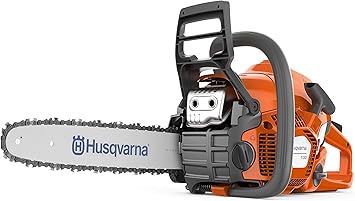
Best for: the homeowner who wants one saw that handles everything from pruning to a cord of firewood - and starts on the third pull next spring.
The 130 pairs a 38cc, 2.0 hp X-Torq engine with a 16" bar at about 10.4 lbs for the powerhead - the sweet spot where the saw is light enough to limb with but strong enough to buck 12" logs without bogging. X-Torq matters for more than emissions: it burns roughly 20% less fuel, which on a small tank means noticeably more cutting per fill. You get the safety hardware done properly - inertia-activated chain brake, effective anti-vibe mounts - plus the purge bulb and combined choke/stop that make cold starts routine. It's a "homeowner" saw from a company whose pro saws set the standard, and it feels like it.
| Pros | Cons |
|---|---|
| ✅ 2.0 hp with genuinely low vibration | ❌ Tool-required chain tensioning (bar nuts) |
| ✅ X-Torq engine - miserly on mixed fuel | ❌ Air filter access could be simpler |
| ✅ Inertia chain brake + proper anti-vibe | |
| ✅ Dealer network everywhere for parts/service |
2. Echo CS-310 - Best Build Quality
Best for: buyers who keep tools for a decade - Echo builds this 30.5cc saw to commercial tolerances and backs it with a 5-year consumer warranty, the longest in the class.
The CS-310 is the smallest saw in Echo's line and it shows its landscaper DNA: a real two-ring piston engine, a proper felting-and-foam air filter, and an i-30 starter that cuts pulling effort by a third. At around 8.8 lbs for the powerhead with a 14" bar, it's the lightest rear-handle saw here - the one you grab for an afternoon of limbing because your forearms will still work at dinner. Power is modest next to the 42cc saws (this is a 30cc engine; let the chain do the work in bigger wood), but nothing else at this size runs this smoothly or lasts this long. Also available as a 16" version if you want more reach over more torque-per-inch.
| Pros | Cons |
|---|---|
| ✅ 5-year consumer warranty - double everyone else | ❌ 30.5cc - slower in 12"+ hardwood |
| ✅ Lightest rear-handle saw on this list (~8.8 lbs) | ❌ Costs more per cc than the value picks |
| ✅ Commercial-grade air filtration and engine build | |
| ✅ i-30 starter - easy cold starts |
3. Husqvarna 120 Mark III - Best Budget Husqvarna
Best for: occasional users who want the orange saw's engineering - X-Torq engine, real chain brake - at the entry price point.
The 120 Mark III is the current generation of Husqvarna's entry saw (it replaced the Mark II in the lineup): same 38cc displacement as the 130 but tuned to 1.9 hp, with the same combined choke/stop control and purge bulb. In practice the difference from the 130 is a slightly softer top end and simpler vibration damping - real, but small next to the price gap. For storm cleanup a few times a year and a modest firewood habit, this is the rational buy; step up to the 130 if you cut most weekends. There's also a lighter 14" version.
| Pros | Cons |
|---|---|
| ✅ Genuine Husqvarna engineering at entry price | ❌ More vibration than the 130 |
| ✅ X-Torq 38cc - same displacement as the 130 | ❌ Plastic feels more budget in hand |
| ✅ Purge bulb + combined choke = easy starts |
4. Poulan Pro PR4218 - Best Value for Firewood
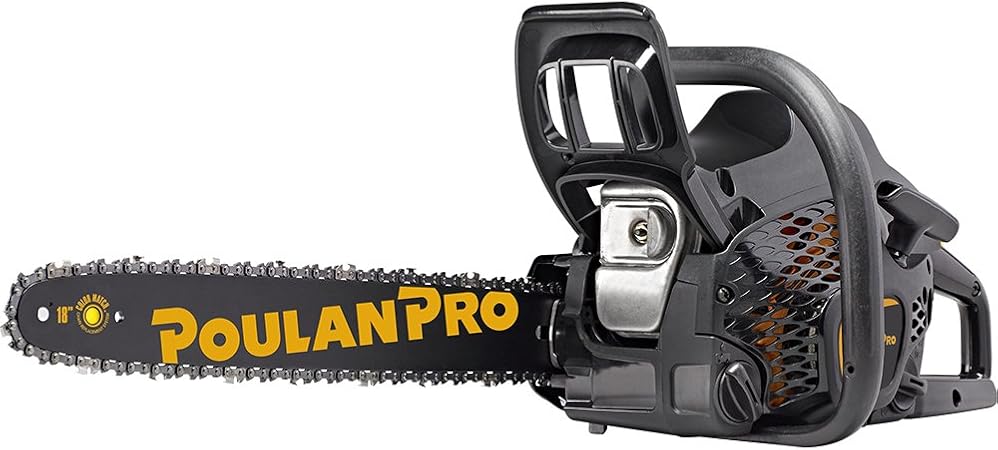
Best for: the most cutting capacity per dollar - 42cc and an 18" bar, with a carry case included, for less than the 14" saws above.
Poulan Pro is Husqvarna Group's value brand, and the PR4218 is its long-running workhorse: a 42cc OxyPower engine, effortless-pull starting system, and an 18" bar that technically stretches past "small" but keeps the saw firmly in the light-duty weight class (~13 lbs). It's the pick when the job is a winter's firewood and the budget is one bill: it bucks 14-16" logs all day. The trade-offs are honest ones - more vibration than the Husqvarnas, a chain that ships dull-ish and deserves an early sharpening, and plastic that asks to be treated gently. Storm cleanup, firewood, occasional felling: exactly its lane.
| Pros | Cons |
|---|---|
| ✅ 42cc + 18" bar at a bargain price | ❌ Buzziest saw here - take breaks |
| ✅ Carry case included | ❌ Factory chain benefits from a sharpen |
| ✅ Effortless-pull start system | |
| ✅ 2-year warranty |
5. SENIX 4QL - Best No-Mix Option
Best for: anyone who's ever killed a 2-stroke with a bad fuel mix - this is a true 4-stroke chainsaw that runs on straight gas.
The SENIX CS4QL-L3 solves the single most common way homeowner chainsaws die: wrong or stale fuel mix. Its 46cc 4-cycle engine takes plain pump gas - no oil mixing, ever - and as a bonus runs noticeably quieter and smoother than a 2-stroke, with an auto choke for starting. The costs of that convenience: it's the heaviest saw on this list (about 15 lbs), and like any 4-stroke it has engine oil that needs checking and occasional changing. If you cut a few times a year and want the saw to just start and run without fuel ceremony, it's a clever trade.
| Pros | Cons |
|---|---|
| ✅ No 2-stroke mixing - straight gas | ❌ Heaviest here (~15 lbs) |
| ✅ Quieter, smoother 4-cycle running | ❌ Engine oil to check/change like a mower |
| ✅ Auto choke, 16" bar, chain brake |
6. PROYAMA 26cc Top-Handle - Cheapest for Pruning
Best for: ladder-free pruning and small-limb work at pocket-money prices - with clear eyes about what a budget import is.
The PROYAMA is a 26cc, 12" top-handle saw that weighs next to nothing and comes absurdly well-accessorized: two chains, carry bag, tools. For lopping storm-dropped branches and pruning fruit trees, the light weight is the entire point. Two honest cautions. First, budget imports are a quality lottery - most run fine, some need carb fiddling out of the box; the accessories and price reflect that risk. Second, top-handle saws are designed for one-handed reach work and are less forgiving of kickback than rear-handle saws - keep both hands on it and both feet on the ground. If you want a saw for actual firewood, buy #1 - #5 instead.
| Pros | Cons |
|---|---|
| ✅ Extremely light and maneuverable for pruning | ❌ Import QC lottery - inspect on arrival |
| ✅ Two chains + carry bag included | ❌ Top-handle format demands extra care |
| ✅ Costs less than a bar-and-chain for a pro saw | ❌ Not a firewood saw |
How to pick a small gas chainsaw
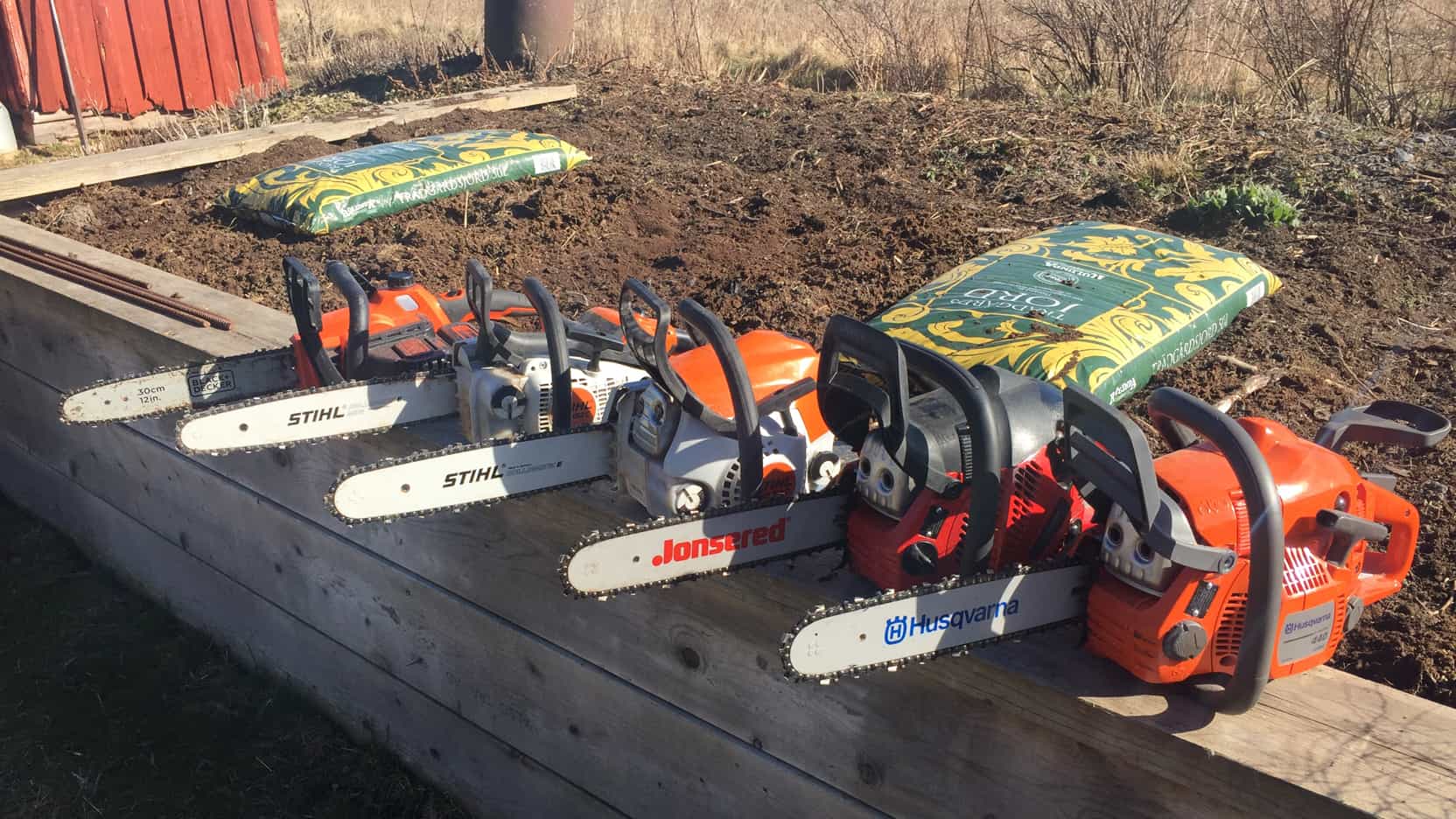
Size the bar to your wood, not your ambitions. A bar should be about 2" longer than the wood you cut most. Most yard trees and firewood rounds are under 12" - which is why 14-16" bars dominate this class. An oversized bar on a small engine cuts slower, not faster.
Weight is the spec you'll feel. Two pounds is the difference between finishing the pile and quitting at lunch. If your work is mostly overhead or one-day marathons, prioritize the Echo; if it's mostly bucking on the ground, engine size matters more.
Safety hardware is non-negotiable. Every saw here has a chain brake; prefer inertia-activated (Husqvarna, Echo) over purely manual. Low-kickback chain comes standard on all of them. Add chaps, eye and ear protection - a small saw bites exactly like a big one.
Fuel discipline keeps gas saws alive. 50:1 mix with quality 2-stroke oil (except the SENIX), ideally ethanol-free gas, and never let mixed fuel sit over a season. Most "broken" chainsaws are fuel-system victims.
Frequently asked questions
Is a small gas chainsaw better than a battery chainsaw? For sustained cutting, yes: a gas saw refuels in seconds and holds full power all day, while battery saws taper and take an hour to recharge. For 20-minute jobs near the house, the battery saw's instant start and silence win. The honest answer is that the crossover point is about an hour of continuous cutting.
What can a 38-42cc chainsaw actually cut? Comfortably: limbs, small trees, and firewood rounds up to roughly the bar length minus a couple of inches - 12-14" hardwood for a 16" saw. It will get through bigger wood with patience and a sharp chain, but if most of your cutting is 16"+ trunks, you want a mid-size saw - see our full gas chainsaw guide.
What fuel mix do small gas chainsaws use? Almost all modern 2-strokes here run 50:1 - 2.6 oz of 2-cycle oil per gallon of gas. Use fresh fuel, and if the saw sits for months, run it dry or use canned pre-mix. The SENIX 4QL is the exception: straight gas, no mixing.
Why won't my chainsaw start after winter? Nine times out of ten: stale fuel gumming the carburetor. Drain it, refill with fresh mix, give it a few extra pulls with the purge bulb. If that fails, it's usually a $15 carb kit or a new spark plug - not a new saw.
What's the lightest gas chainsaw? In this roundup, the 26cc PROYAMA top-handle at around 3 kg - genuinely one-handed light, though top-handles are pruning saws, not firewood saws. Among full rear-handle saws, the Echo CS-310 is the lightweight champion; nothing else here comes close to its power-to-weight comfort over a long session.
Is a "mini" gas chainsaw worth it over a battery mini saw? Only if you're away from charging for long stretches. The 6-8" battery mini saws are quieter, start instantly, and prune just as well. Small gas saws earn their noise the moment the job is measured in hours or truckloads rather than branches.
Are cheap top-handle chainsaws safe? They're legal to buy but designed for trained arborists working at reach. If you use one, stay off ladders, keep both hands on the saw, and treat the tip like a loaded spring. For ground-level firewood work, a rear-handle saw is safer and cuts better for the same money.
Verdict
The Husqvarna 130 is the saw most people should buy - real power, real safety hardware, and a dealer on every corner. Pick the Echo CS-310 if you value longevity and light weight over grunt, the Poulan PR4218 if the budget is tight and the firewood pile is tall, and the SENIX if fuel mixing is the reason your last saw died.
Sizing up instead? Our best gas chainsaw roundup covers mid-size saws, the homeowner chainsaw guide walks the gas-vs-battery decision, and once the wood's cut you'll want somewhere to burn it - see the best log burners.