5 Best Paints for Wooden Floors: Enamels That Survive Foot Traffic
Affiliate disclosure: As an Amazon Associate, WoodyMan Reviews earns from qualifying purchases. If you buy through links on this page, we may earn a commission at no extra cost to you. How this works.
Regular wall paint on a floor lasts about a month before it wears through at the doorways. Floors need floor enamel - paint formulated for abrasion, scrubbing and furniture legs - and that's the only kind on this list. (Plenty of "floor paint" roundups are padded with wood stains; if you want the grain to show through rather than a painted finish, you actually want our wood polish for floors or deck stain guides.)
Five coatings, each the best at one specific floor job.
We earn a small commission from the Amazon links below, at no extra cost to you - see our affiliate disclosure. We compare floor enamels on spec sheets, traffic ratings, and long-term owner reports rather than a test floor of our own; how we review.
The 5 best wooden floor paints
| Floor Paint | Best for | Woody Rating | |
|---|---|---|---|
| 1. KILZ Porch & Patio Enamel | The all-rounder - interior & exterior wood floors | 9.3/10 [Editor's Choice] | Check price |
| 2. INSL-X Tough Shield | Hardest-wearing - high-traffic floors | 9.1/10 | Check price |
| 3. INSL-X Sure Step | Stairs, porches & anywhere slippery | 8.8/10 | Check price |
| 4. Rust-Oleum RockSolid 6X | Worn, cracked exterior boards - resurfacing | 8.5/10 | Check price |
| 5. Majic Diamond Hard | Small floors & colour flexibility on a budget | 8.3/10 | Check price |
1. KILZ Porch & Patio Enamel - Editor's Choice
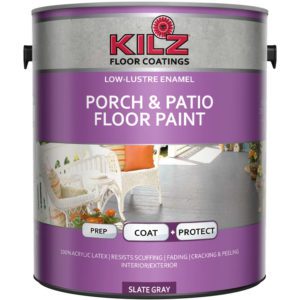
Best for: the default answer - a proper floor enamel that handles interior boards, porches and steps, at a sane price.
KILZ's porch-and-floor enamel is the best-selling floor paint on Amazon for boring, correct reasons: a low-lustre finish that hides wear, genuine scrub resistance, and it behaves both indoors and out. It's ready for real foot traffic in about 72 hours - don't rush this; early traffic is the #1 cause of "the paint failed" reviews for every brand. One gallon covers roughly 200-300 sq ft on smooth wood.
| Pros | Cons |
|---|---|
| ✅ Interior + exterior rated - one can does the house | ❌ 72-hour cure before real foot traffic |
| ✅ Low-lustre hides scuffs and wear | ❌ Limited ready-made colours |
| ✅ Best price-per-gallon of the quality enamels |
2. INSL-X Tough Shield - Most Durable
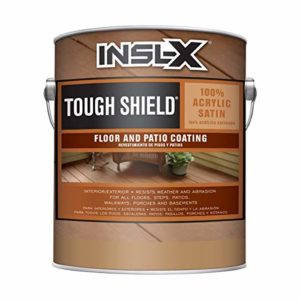
Best for: hallways, kitchens, workshops - floors that take daily punishment and get mopped hard.
INSL-X is Benjamin Moore's specialty-coatings brand, and Tough Shield is their rugged floor acrylic rated for light commercial duty - a tier above porch paint. It shrugs off detergents, oil, grease and scrubbing, and resists ponding water, which also makes it a smart pick by exterior doors and under plant pots. It costs more per gallon than the KILZ; on floors that get lived on, the extra years of wear pay for it.
| Pros | Cons |
|---|---|
| ✅ Light-commercial abrasion rating | ❌ Dearer than porch-grade enamels |
| ✅ Withstands detergents, grease, scrubbing | ❌ Few colour options on Amazon |
| ✅ Resists standing water |
3. INSL-X Sure Step - Best Anti-Slip
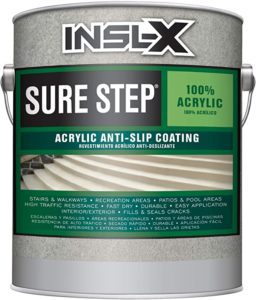
Best for: painted wood stairs, ramps and porch floors that turn lethal when wet.
Painted wood plus rain (or socks) is a slip hazard, and the fix is a coating with grit built in. Sure Step dries to a durable skid-resistant texture that's still comfortable barefoot, holds its colour outdoors, and takes the same scrubbing as a regular floor enamel. It's the "paint" answer to the problem in our non-slip wood stairs guide, and the texture doubles as camouflage for filled cracks and old surface sins.
| Pros | Cons |
|---|---|
| ✅ Genuine slip resistance, wet or dry | ❌ Textured finish is harder to sweep clean |
| ✅ Interior/exterior, good colour retention | ❌ Texture telegraphs through thin second coats |
| ✅ Hides minor surface imperfections |
4. Rust-Oleum RockSolid 6X Deck Coat - Best Resurfacer
Best for: exterior wood floors past the point of paint - cracked, splintery porch and deck boards you're not ready to replace.
This isn't a paint so much as a trowel-in-a-can: RockSolid 6X goes on six times thicker than ordinary paint, filling hairline cracks and locking down splinters into a uniform textured surface. It's the honest middle option between "repaint" and "re-deck", buying tired boards several more years. Be realistic about the deal: resurfacers demand thorough prep (all loose material off, clean, dry) and they're a commitment - once on, you maintain it as a coating; you don't go back to bare wood.
| Pros | Cons |
|---|---|
| ✅ Fills cracks, locks down splinters | ❌ Unforgiving of lazy prep |
| ✅ One thick coat does the job | ❌ Effectively permanent - plan on maintaining it |
| ✅ Textured, barefoot-friendly finish |
5. Majic Diamond Hard - Best Budget / Small Jobs
Best for: a single small room, stair risers, or matching floor paint to furniture - quart-scale projects where a gallon of enamel is overkill.
Majic's Diamond Hard satin is an interior/exterior acrylic that bonds to nearly anything - wood, tile, metal, even glass - usually without primer. It's not a dedicated floor enamel like the top two picks, but its hard satin film holds up genuinely well on lower-traffic floors and painted stairs, the colour range is the widest here, and the quart/2-quart sizes suit small jobs. Think guest room or painted border - not the kitchen runway.
| Pros | Cons |
|---|---|
| ✅ Sticks to almost any surface, usually no primer | ❌ Not rated for heavy-traffic floors |
| ✅ Widest colour choice on this list | |
| ✅ Small sizes - no wasted gallon |
Painting a wooden floor: the part that decides everything
The paint is 20% of the result. The other 80%:
- Sand to clean, dull wood. Gloss or old finish left on the boards is why floor paint peels. A good sander with 80-120 grit is enough - you're keying the surface, not refinishing.
- Vacuum, then tack-cloth. Dust under floor paint becomes permanent grit texture.
- Prime bare or stained wood. Especially over knots and water stains, which bleed through latex enamels.
- Two thin coats beat one thick one. Thick coats stay soft for weeks under furniture feet.
- Respect the cure. Walkable in a day; furniture and rugs wait 72 hours minimum, ideally a week. Rushing this undoes everything above.
Frequently asked questions
Can I use normal wall paint on a wooden floor? No - wall paint has no abrasion resistance and wears through at traffic paths within weeks. Floor enamels are formulated for scrubbing and foot traffic; that's the entire category difference.
Paint or stain for a wooden floor? Paint covers (ideal for mismatched boards, patches, old pine you don't love); stain shows the wood. If your boards are attractive hardwood, consider polish or finish before committing - paint is much harder to reverse.
How long before I can walk on a painted floor? Light socks-only traffic in 24 hours for most acrylic enamels; normal use and furniture after ~72 hours; full hardness takes up to 30 days. The finish is at its most damageable in week one.
Do I need to prime first? Over bare wood, knots, water stains or glossy old finishes - yes, a stain-blocking primer. Over sound, sanded, previously painted floors in a similar colour, two coats of these enamels self-prime fine.
What sheen is best for floors? Low-lustre/satin. Gloss shows every scuff; flat scrubs poorly. Every dedicated floor enamel here sits in that middle band for a reason.
Verdict
KILZ Porch & Patio for most floors, Tough Shield where traffic is brutal, Sure Step wherever slipping is the real enemy. RockSolid 6X rescues exterior boards past paint, and Majic Diamond Hard covers the small stuff. Whichever you pick, spend your effort on the sanding and the cure time - that's what separates a five-year floor from a five-month one.
Related guides: best floor paints (all surfaces) · best wood polish for floors · best sanders for woodworking