Best Outdoor House Paints: 5 Picks for the Whole Exterior
Affiliate disclosure: As an Amazon Associate, WoodyMan Reviews earns from qualifying purchases. If you buy through links on this page, we may earn a commission at no extra cost to you. How this works.

Painting a whole house exterior is a bigger problem than painting one surface: your walls, trim, doors, and porch may be wood, stucco, fiber cement, brick, and metal all at once, and the paint has to hold color and shrug off weather across all of them for years. A good outdoor house paint is:
- 100% acrylic latex - flexible, breathable, and UV-stable, so it won't crack, blister, or fade quickly across changing seasons.
- Multi-surface - bonds to the mix of substrates a house actually has, not just one.
- Fade- and mildew-resistant - holds its color in the sun and resists the mold that darkens shaded walls.
This guide is the whole-house overview. If you're specifically painting wood siding and want the wood-first details (tannin bleed, wood movement, breathability), see our dedicated best exterior paint for wood siding guide - this page zooms out to the full exterior across every surface.
We earn a small commission from the Amazon links below, at no extra cost to you - see our affiliate disclosure.
The 5 best outdoor house paints
| Paint | Best for | Woody Rating | |
|---|---|---|---|
| 1. Prestige Exterior Paint & Primer | Best overall - all surfaces, color choice | 9.0/10 [Editor's Choice] | Check price |
| 2. Zinsser Perma-White Exterior | Best for damp / mildew-prone climates | 9.1/10 | Check price |
| 3. Montage Signature | Best low-VOC / eco | 8.5/10 | Check price |
| 4. Rust-Oleum Exterior Mildew Performance | Best budget white | 8.1/10 | Check price |
| 5. KILZ Adhesion Primer | Best multi-surface primer | 8.7/10 | Check price |
1. Prestige Exterior Paint & Primer - Editor's Choice
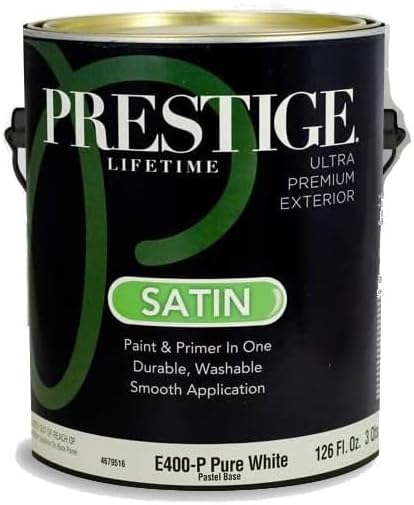
Best for: the whole house - its walls, trim, and mixed surfaces - with real color choice, delivered.
For a whole-exterior repaint, the Prestige Exterior Paint & Primer is the most practical online pick: a 100% acrylic paint-and-primer rated for the full range of house surfaces - wood, masonry, cement board siding, vinyl, aluminum, and factory-primed - in a genuinely wide selection of colors and sheens (flat, satin, semi-gloss). That matters on a house, where you want a body color, a trim color, and maybe a door accent from one reliable product. On sound, previously painted surfaces it self-primes in one product; bare or tricky areas still want a dedicated primer (below). It's the do-the-whole-house choice for color and value.
| Pros | Cons |
|---|---|
| ✅ Bonds to wood, masonry, vinyl, metal | ❌ Prime bare/tricky spots separately |
| ✅ Wide color & sheen range for body + trim | ❌ Best over sound existing paint |
| ✅ Self-priming acrylic; delivered | |
| ✅ Strong value for a whole house |
2. Zinsser Perma-White Exterior - Best for Damp / Mildew-Prone Climates
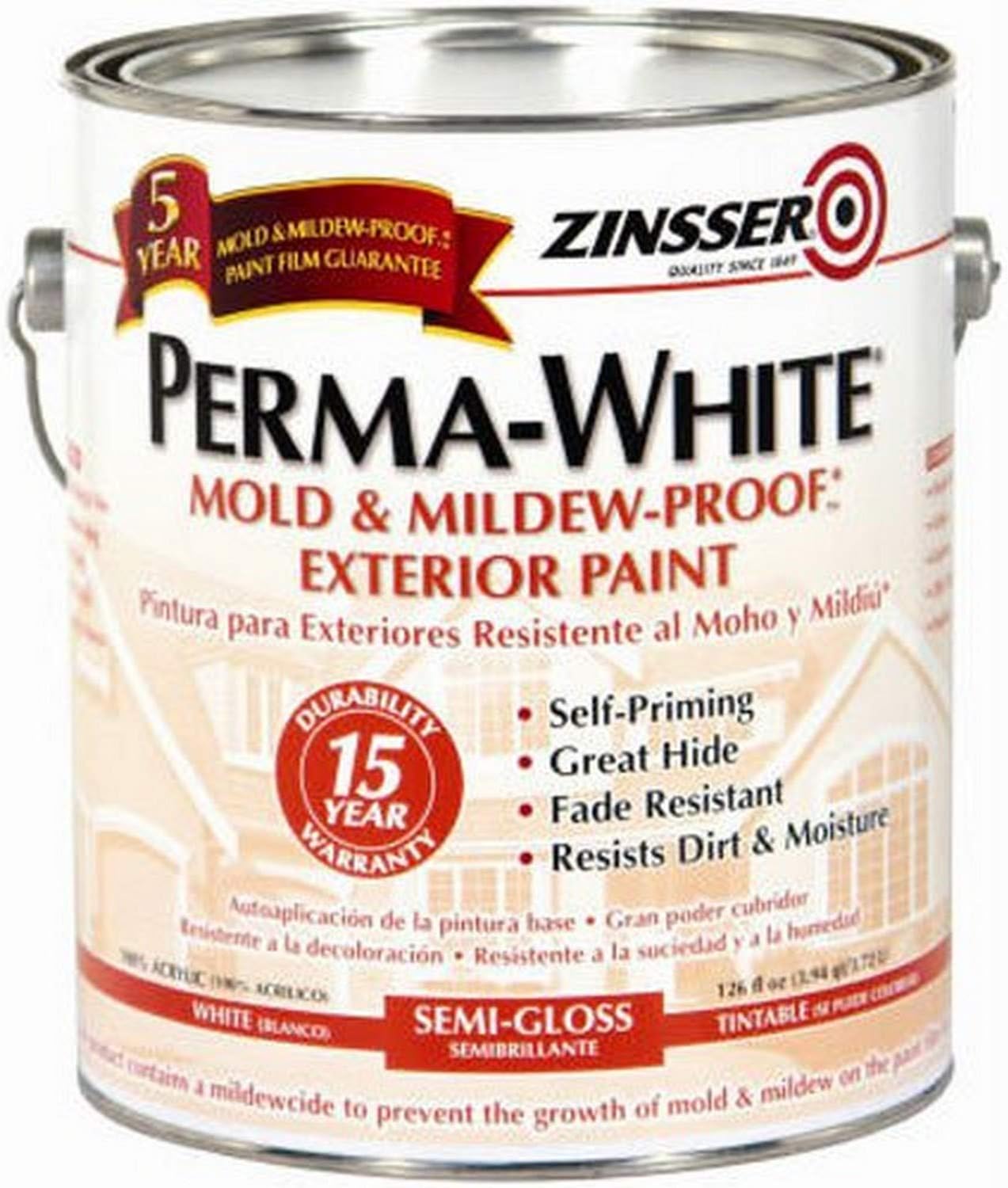
Best for: houses in humid, shaded, or coastal settings where mildew is the enemy.
If your house sits in humidity, shade, or near the coast, mildew is what wrecks the paint job - and Perma-White is built for exactly that, carrying a guarantee against mold and mildew on the paint film. It's a self-priming acrylic that goes over previously painted exterior surfaces, stays flexible, and cleans up with water. It's focused on whites and lights rather than a deep-color system, so it's ideal as a durable body-and-trim white (or light) in a mildew-prone climate. Where damp is your main threat, this is the paint that keeps north-facing walls from going black.
| Pros | Cons |
|---|---|
| ✅ Guaranteed mold/mildew resistance | ❌ Whites/lights - limited deep colors |
| ✅ Self-priming; flexible acrylic | ❌ Prime bare spots first |
| ✅ Ideal for humid/coastal/shaded homes |
3. Montage Signature - Best Low-VOC / Eco
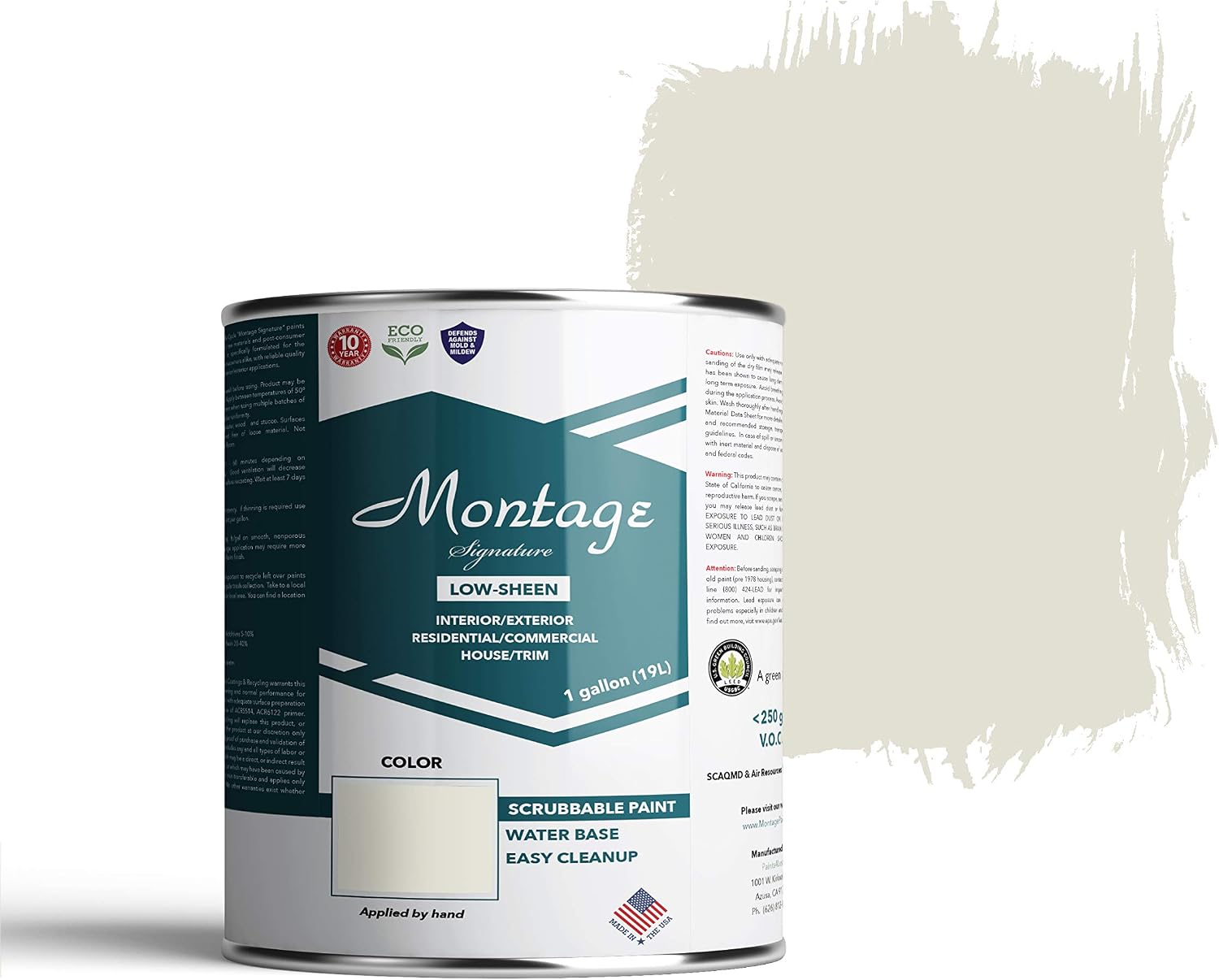
Best for: homeowners who want durable exterior coverage with low odor and low environmental impact.
Montage Signature is the whole-house pick for anyone who cares about what's in the can and in the air around their home. It's a low-VOC interior/exterior acrylic, partly made from recycled paint, with low odor and water cleanup - but formulated to be genuinely durable and washable outdoors, not a compromise. The low-sheen finish flatters most siding and trim, and the muted color palette is tasteful for a whole-house scheme. It costs more per gallon and the palette is curated rather than unlimited, but it's the standout if sustainability and low fumes matter to you.
| Pros | Cons |
|---|---|
| ✅ Low-VOC, low-odor, partly recycled | ❌ Pricier per gallon |
| ✅ Durable & washable for eco paint | ❌ Curated (limited) palette |
| ✅ Interior/exterior - matches whole home |
4. Rust-Oleum Exterior Mildew Performance - Best Budget
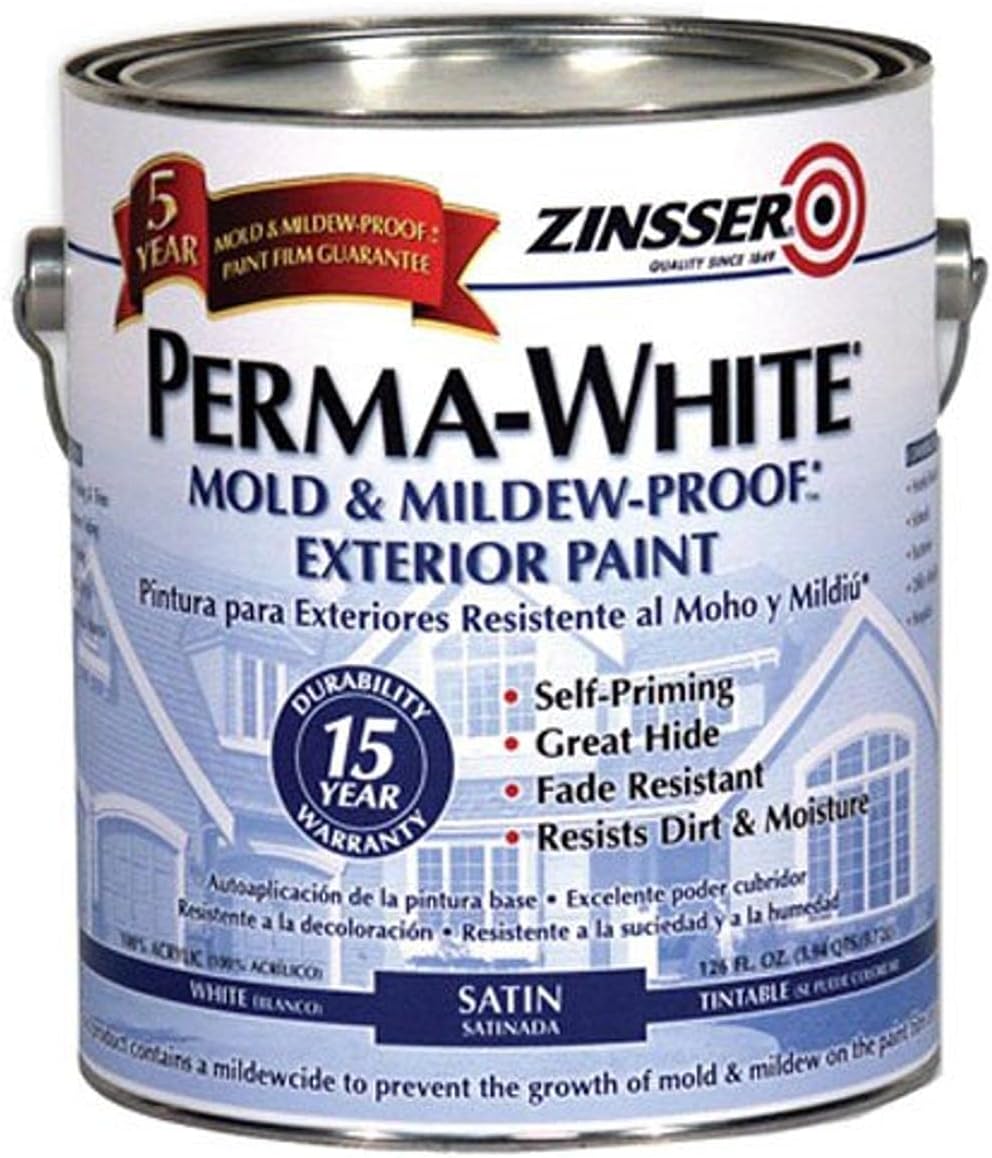
Best for: covering a lot of exterior on a budget with mildew-resistant white.
For a big exterior on a tight budget, this Rust-Oleum delivers mildew resistance and weather protection at the lowest cost here. It's a straightforward acrylic that brushes and rolls well across siding and trim, dries to a clean white, and holds up to sun and rain as a utility exterior coating. You give up deep-color options and some film toughness of the pricier picks, and bare surfaces want a primer first - but for sheds, fences, secondary structures, and budget whole-house jobs in white, it's honest, affordable protection.
| Pros | Cons |
|---|---|
| ✅ Cheapest mildew-resistant exterior here | ❌ Whites - no deep colors |
| ✅ Easy brush/roll on siding and trim | ❌ Prime bare surfaces first |
| ✅ Solid weather protection for the price |
5. KILZ Adhesion Primer - Best Multi-Surface Primer
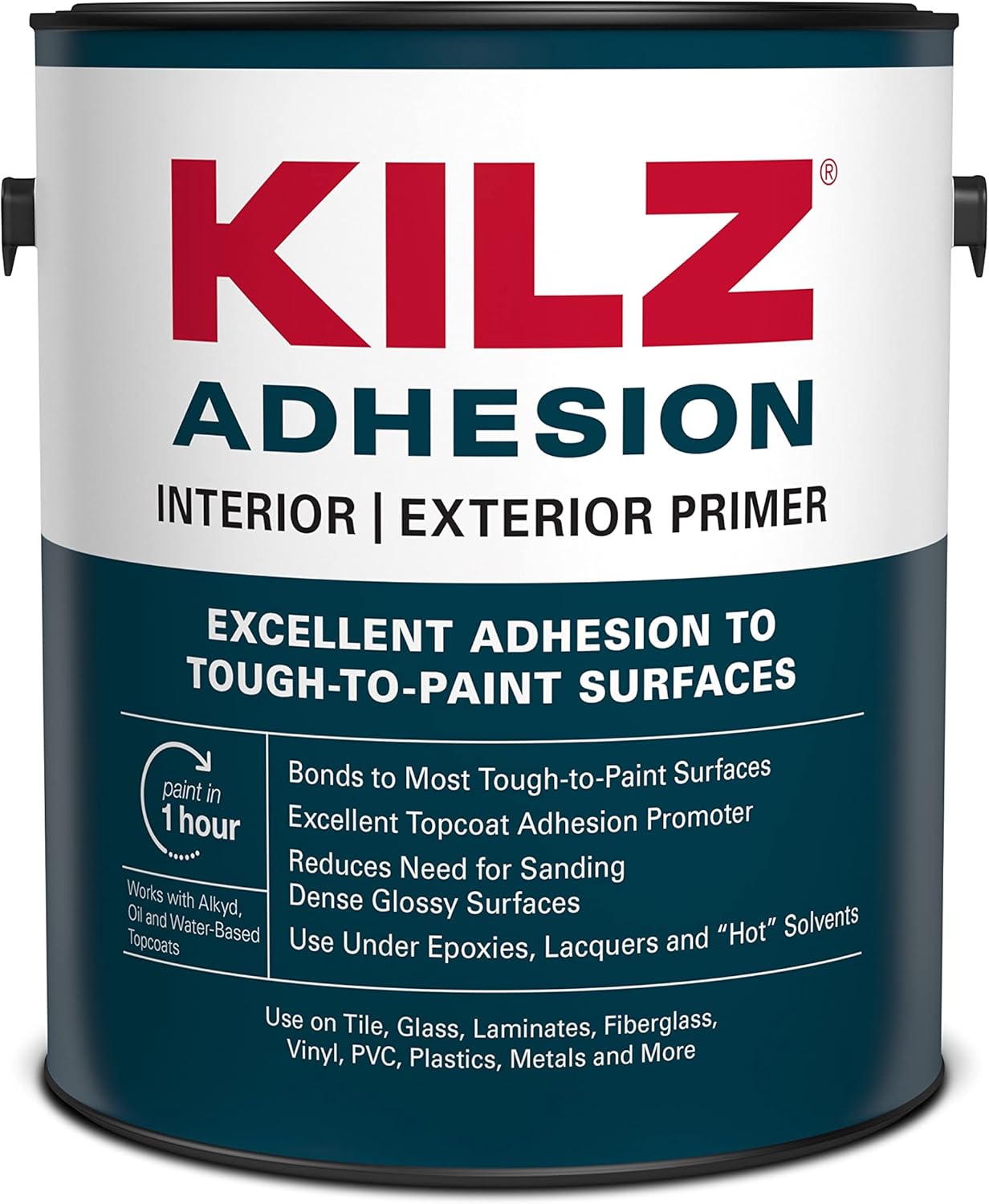
Best for: priming the mix of surfaces a whole house presents so the topcoat bonds everywhere.
A whole-house repaint runs into surfaces that eat ordinary primer: glossy old trim, chalky siding, slick metal, previously coated masonry. KILZ Adhesion is a water-based bonding primer that grips these tough, hard-to-coat surfaces so your acrylic topcoat sticks uniformly across the whole exterior. It's the primer to run on bare, glossy, or chalky areas before any of the paints above. (For raw cedar or redwood specifically, add a dedicated tannin stain-blocking primer - see the buying guide.) Low odor, water cleanup, fast recoat - the foundation that makes a whole-house job last.
| Pros | Cons |
|---|---|
| ✅ Bonds glossy/chalky/metal/masonry | ❌ It's a primer, not a topcoat |
| ✅ Uniform base across mixed surfaces | ❌ Cedar tannin wants a stain-blocker |
| ✅ Water-based, low odor, fast recoat |
How to paint a whole house exterior
Think in a system: body, trim, primer
A house isn't one coat of one color. Plan a body color (satin/low-lustre, the bulk of the gallons), a trim color (usually semi-gloss for durability and contrast), and a primer for bare or problem areas. Buying a paint line with wide color and sheen options (Prestige) makes matching body and trim from one product easy.
Match paint and primer to each substrate
- Wood siding: acrylic latex; prime bare wood, and use a tannin stain-blocker on cedar/redwood. (Deep-dive: best exterior paint for wood siding.)
- Stucco / masonry / brick: acrylic masonry-rated paint; let new masonry cure and use a masonry primer if needed.
- Fiber cement: acrylic; usually factory-primed - just topcoat, spot-priming cuts and bare areas.
- Metal / glossy trim / vinyl: scuff-sand and use a bonding primer (KILZ Adhesion) so paint grips.
Prep, then two coats
Wash off dirt, chalk, and mildew and let it dry; scrape and sand loose paint and gloss; caulk gaps after priming. Then apply two topcoats - one coat won't build even color or a weatherproof film. Paint in dry, mild weather (roughly 50-85°F), out of direct blazing sun, with no rain for 24 hours.
Estimate coverage
Exterior paint covers roughly 250-400 sq ft per gallon depending on surface texture (rough or thirsty siding drinks more). Measure your wall area, divide by the low end of the coverage range, and double it for two coats - then add 10% so you don't run short mid-wall.
Frequently Asked Questions
What is the best paint for a house exterior?
A 100% acrylic latex exterior paint - flexible, breathable, UV- and fade-resistant, and (in the right formula) mildew-resistant. For a whole house with mixed surfaces, an all-substrate paint-and-primer like Prestige is the most practical; in damp climates, a mildew-guaranteed paint like Perma-White.
Can one paint cover wood, stucco, and metal?
A quality acrylic exterior paint rated for multiple substrates (like Prestige) can topcoat wood, masonry, fiber cement, vinyl, and primed metal - but each substrate needs the right primer first where it's bare or slick. The paint is often shared; the prep and primer vary by surface.
How many gallons do I need to paint my house?
Estimate your exterior wall area, divide by ~300 sq ft/gallon (coverage varies with texture), then multiply by two for two coats and add about 10%. A typical single-story house often needs roughly 6-10 gallons for the body plus trim; measure to be sure.
How long does exterior house paint last?
A quality acrylic system, well prepped and applied in two coats, generally lasts 7-10 years - longer on protected walls, less on sun- and weather-beaten sides. Surface prep is the single biggest factor in longevity.
Body and trim - same paint, different sheen?
Commonly yes. Many homeowners use a satin/low-lustre on the body (hides flaws, sheds dirt) and a semi-gloss on the trim and doors (more durable and scrubbable, and the sheen contrast looks crisp). A paint line with multiple sheens makes this easy from one product.
More painting guides
Zoom in on specifics: best exterior paint for wood siding for the wood-first details, best floor paint for porches and decks, and the wood paint hub for painting technique. Protecting bare wood instead of painting? See best wood preservatives.