Best Exterior Paints for Wood Siding: 6 That Survive the Weather
Affiliate disclosure: As an Amazon Associate, WoodyMan Reviews earns from qualifying purchases. If you buy through links on this page, we may earn a commission at no extra cost to you. How this works.

Exterior wood siding is the hardest job a paint can face: it bakes in UV, soaks up rain, swells and shrinks with every season, and grows mildew on the shady north wall. The paint that lasts on it has three qualities:
- 100% acrylic latex - it stays flexible so it moves with the wood instead of cracking, breathes so trapped moisture can escape (no blistering), and holds color against UV.
- Mildew resistance - mildewcides in the film keep the shaded, damp areas from going black.
- A proper primer bond - bare or weathered wood, and tannin-rich cedar/redwood, need the right primer under the paint or it won't stick or will bleed brown stains through.
One honest note up front: the very best-rated siding paints from the pros - Sherwin-Williams Emerald, Behr Marquee - are bought at paint counters, not shipped by the gallon online. The six below are the strongest options you can order on Amazon, covering self-priming siding paint, tough barn-and-fence coatings, paint-and-primer-in-one, a low-VOC pick, and the primer to pair with them.
We earn a small commission from the Amazon links below, at no extra cost to you - see our affiliate disclosure.
The 6 best exterior paints for wood siding
| Product | Best for | Woody Rating | |
|---|---|---|---|
| 1. Zinsser Perma-White Exterior | Best overall - mildew-proof, self-priming | 9.2/10 [Editor's Choice] | Check price |
| 2. KILZ Siding, Fence & Barn | Best for large / weathered siding | 8.9/10 | Check price |
| 3. Prestige Exterior Paint & Primer | Best paint-and-primer value | 8.6/10 | Check price |
| 4. Montage Signature | Best low-VOC / eco | 8.4/10 | Check price |
| 5. Rust-Oleum Exterior Mildew Performance | Best budget white | 8.1/10 | Check price |
| 6. KILZ Adhesion Primer | Best primer to pair | 8.7/10 | Check price |
1. Zinsser Perma-White Exterior - Editor's Choice
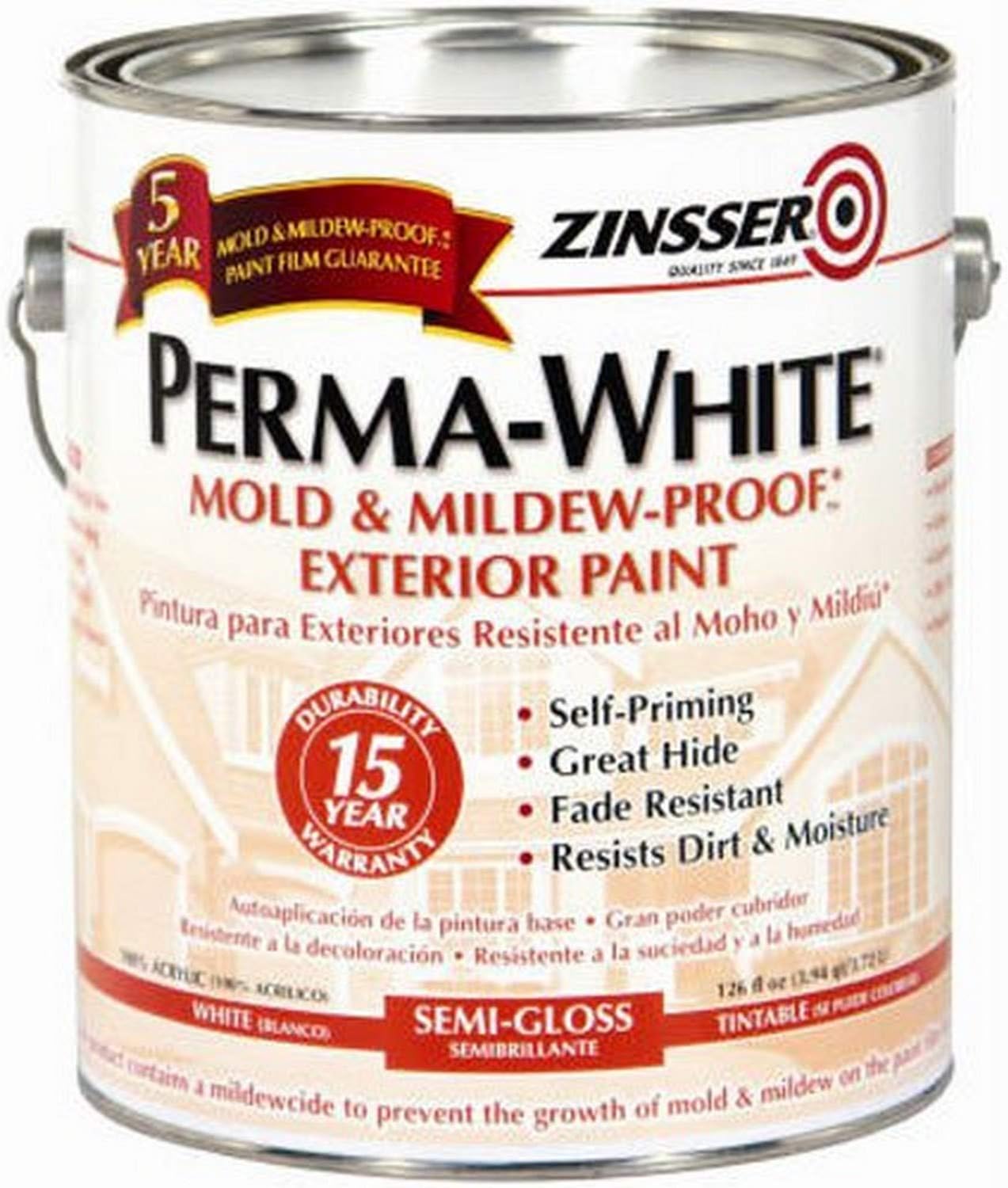
Best for: siding on a damp, shaded, or humid site - and repaints where you want to skip a separate primer.
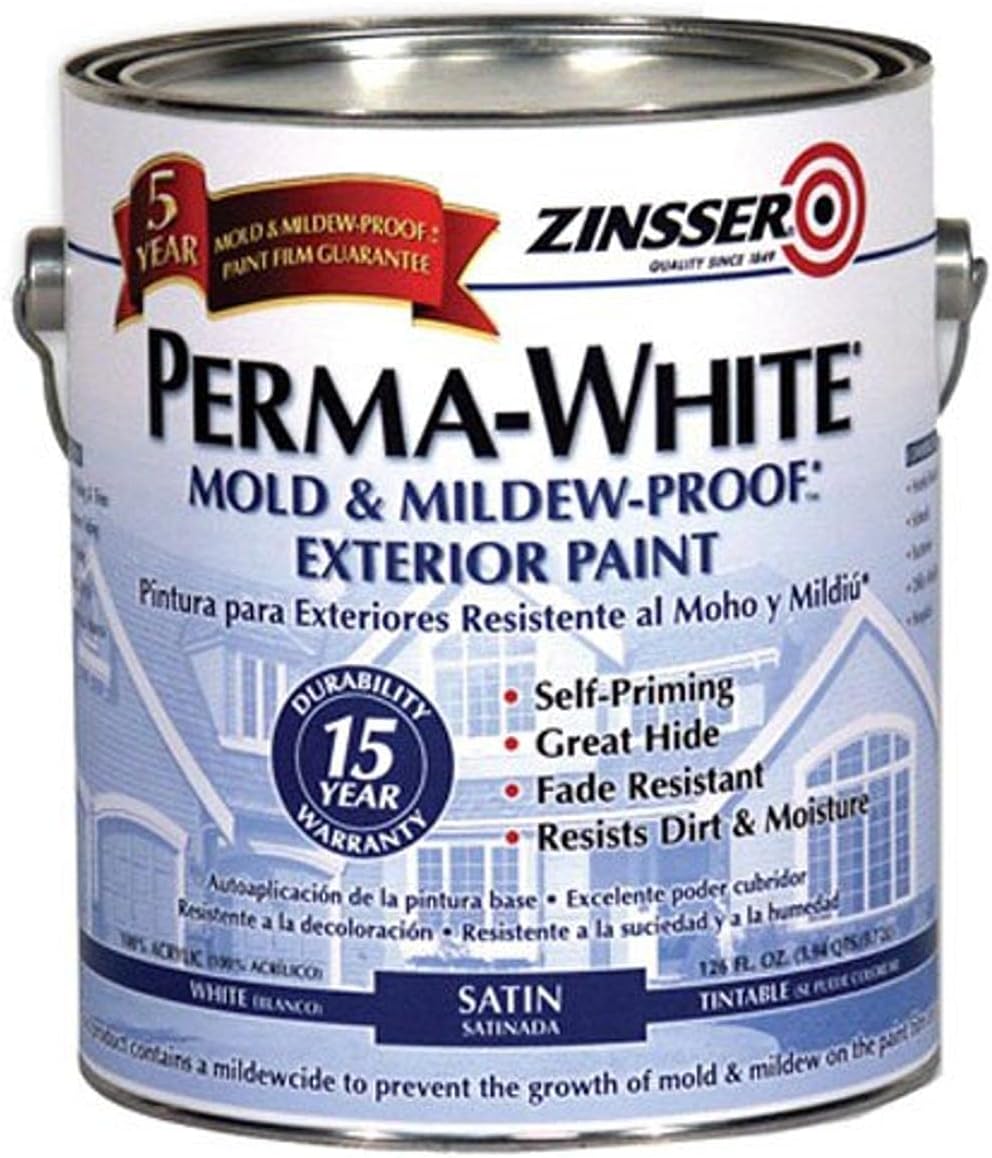
Perma-White's whole reason to exist is the problem that ruins most exterior paint jobs: mildew. It carries a strong mildewcide and comes with a guarantee against mold and mildew growth on the paint film, which is exactly what the north side of a house needs. It's a self-priming acrylic over previously painted siding (prime bare spots), goes on and stays flexible, and cleans up with water. Available in satin and semi-gloss, it's the paint we'd reach for first on wood siding in any climate that sees real humidity. It's sold tinted toward whites/lights and isn't a deep-base color system, but for durable, mildew-proof siding paint you can order online, nothing here beats it. See the wider painting picture in our wood paint guide.
| Pros | Cons |
|---|---|
| ✅ Guaranteed mold/mildew resistance | ❌ Whites/lights focus - limited deep colors |
| ✅ Self-priming over painted siding | ❌ Prime bare wood spots first |
| ✅ Flexible acrylic, water cleanup | |
| ✅ Satin or semi-gloss |
2. KILZ Siding, Fence & Barn - Best for Large / Weathered Siding
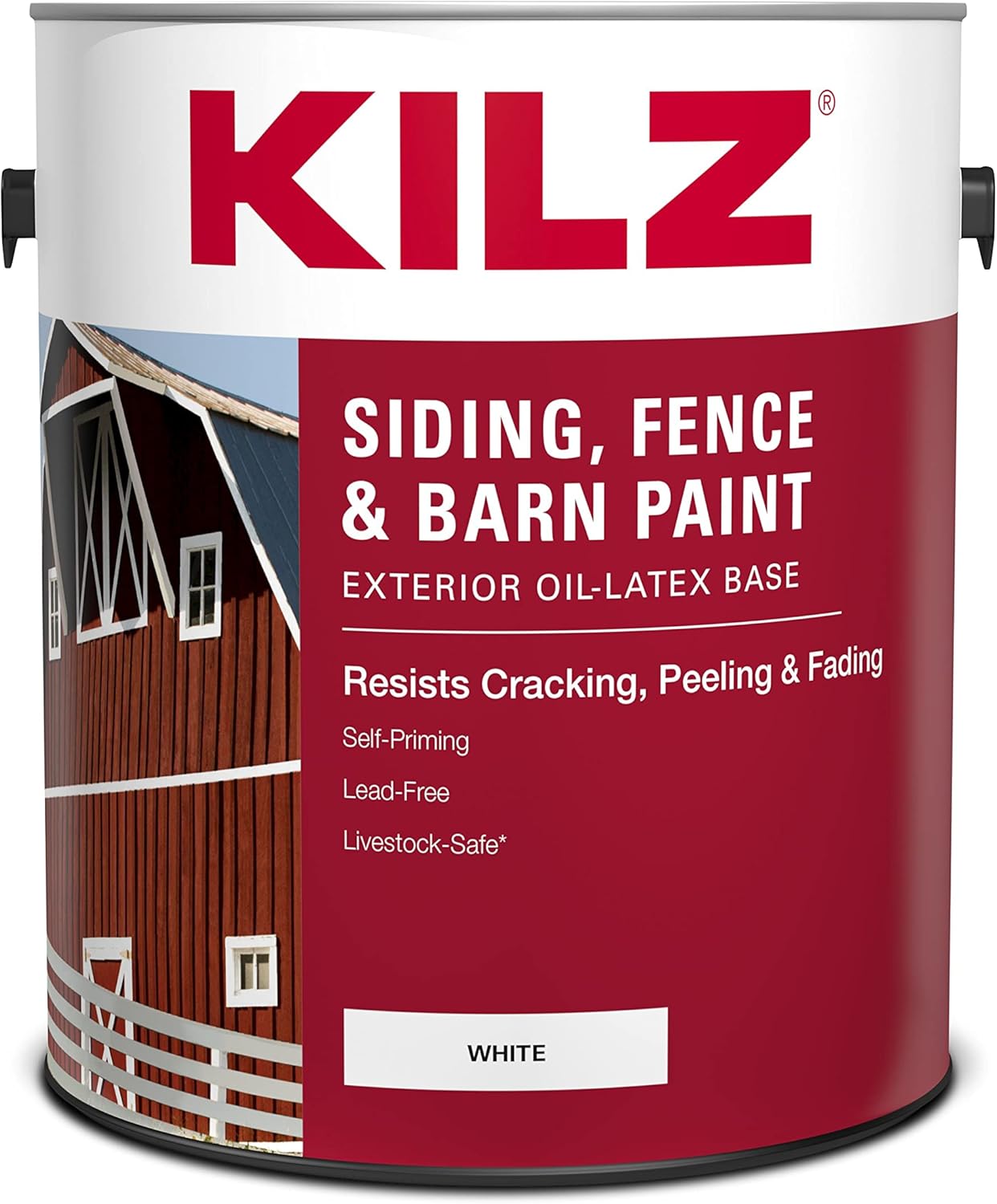
Best for: big runs of rough or weathered siding, fences, and outbuildings where value-per-gallon matters.
When you're covering a lot of rough, thirsty, weathered wood - board-and-batten, a barn, a long fence - you want a tough coating that goes far without breaking the bank, and KILZ's purpose-built Siding, Fence & Barn paint is it. Its oil-enriched water-based formula penetrates and grips weathered wood better than a straight latex, resists cracking and peeling, and holds up to sun and rain. It's a flat/low-sheen utility finish rather than a showpiece house paint, and the color range is basic (classic whites and barn red), but for large exterior wood surfaces where durability and coverage-per-dollar rule, it's the workhorse. Great for the outbuildings; step up to Perma-White for the house's front face.
| Pros | Cons |
|---|---|
| ✅ Oil-enriched - grips weathered wood | ❌ Utility flat finish, basic colors |
| ✅ Great coverage-per-dollar on big jobs | ❌ Not a showpiece house paint |
| ✅ Resists cracking and peeling |
3. Prestige Exterior Paint & Primer - Best Paint-and-Primer Value
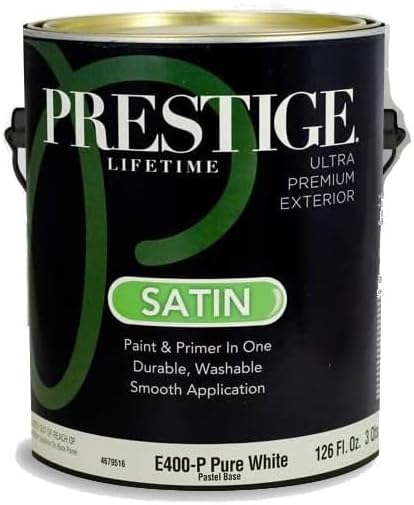
Best for: repaints on sound, previously painted siding where you want color choice and one product.
Prestige is the online-value play: a 100% acrylic exterior paint-and-primer-in-one that comes in a real range of colors and sheens (flat, satin, semi-gloss), shipped to your door. On sound, previously painted siding it lays down a durable, flexible film in one product, and the color selection is far wider than the mildew-focused and utility paints above. It's not a substitute for a dedicated stain-blocking primer on bare cedar or heavily weathered wood - "paint and primer in one" means self-priming over stable painted surfaces, not a miracle over raw wood - but for a color repaint on siding that's in decent shape, it's a lot of paint for the money.
| Pros | Cons |
|---|---|
| ✅ Wide color and sheen selection | ❌ Still prime bare/tannin-rich wood separately |
| ✅ 100% acrylic, self-priming over paint | ❌ Best on already-sound siding |
| ✅ Strong value, delivered |
4. Montage Signature - Best Low-VOC / Eco
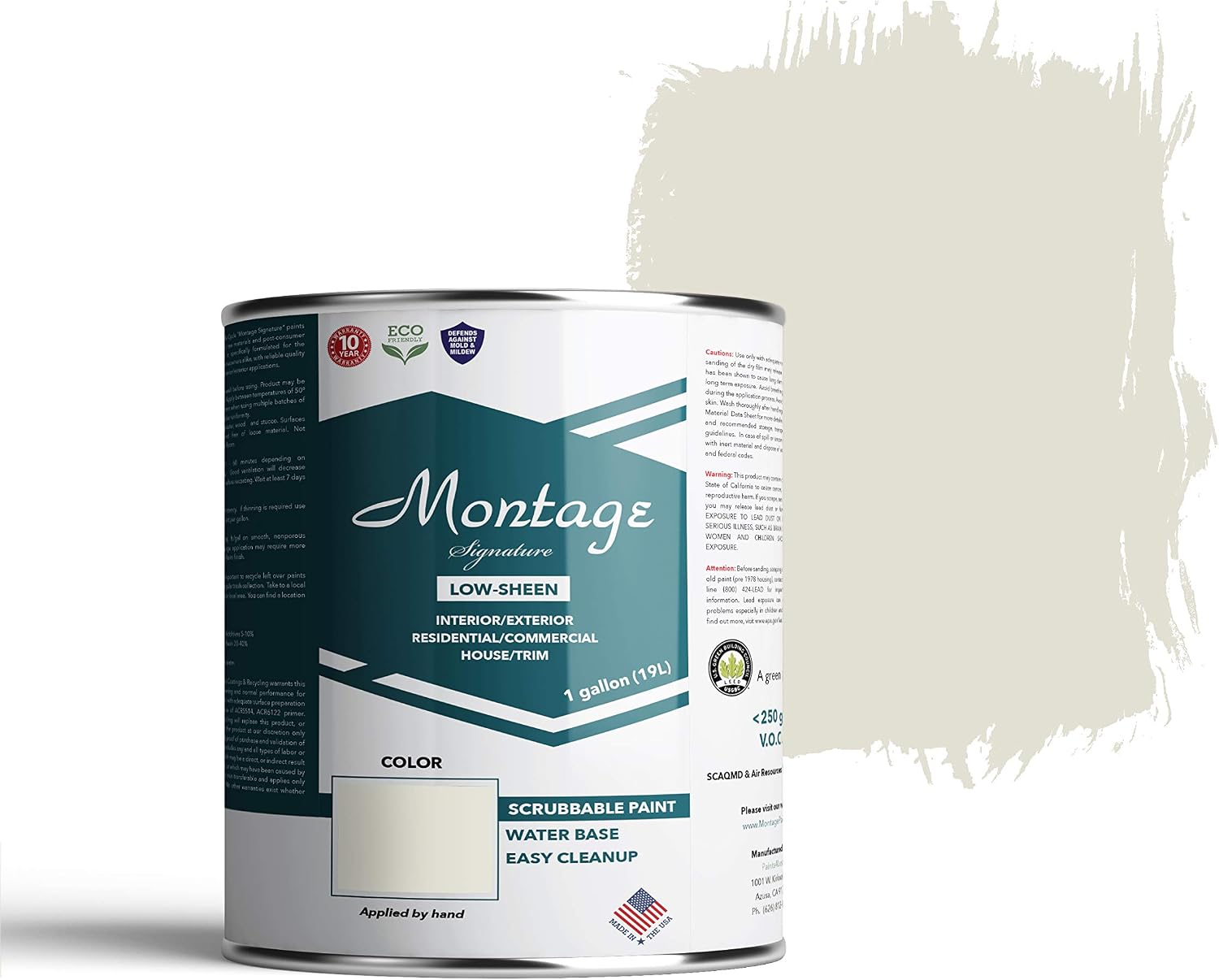
Best for: homeowners who want a durable finish with low odor and low environmental impact.
Montage Signature is the pick for anyone who cares what's in the can. It's a low-VOC interior/exterior acrylic made partly from recycled paint, with low odor and easy water cleanup, yet it's formulated to be genuinely durable and washable outdoors - not a compromise "green" paint that fails early. The low-sheen finish suits siding, and it comes in a set of muted, tasteful colors. It costs more per gallon than the utility options and the palette is curated rather than unlimited, but if VOCs and sustainability matter to you and you still want a paint that holds up on siding, it's the standout here.
| Pros | Cons |
|---|---|
| ✅ Low-VOC, low-odor, partly recycled | ❌ Pricier per gallon |
| ✅ Durable and washable for eco paint | ❌ Curated (limited) color palette |
| ✅ Low-sheen finish suits siding |
5. Rust-Oleum Exterior Mildew Performance - Best Budget White
Best for: the lowest-cost way to put a mildew-resistant white on siding, trim, or a fence.
If you just need a dependable white on exterior wood and want to spend the least, this Rust-Oleum exterior paint delivers mildew resistance and weather protection at a budget price. It's a straightforward acrylic that brushes and rolls well on siding and trim, dries to a clean white, and shrugs off sun and rain for a utility coating. You give up the deep-color options and some of the film toughness of the pricier picks, and like most siding paint it wants a primer on bare wood - but for sheds, fences, trim, and budget siding jobs where white is fine, it's honest, cheap protection.
| Pros | Cons |
|---|---|
| ✅ Cheapest mildew-resistant white here | ❌ Whites only - no deep colors |
| ✅ Easy brush/roll on siding and trim | ❌ Prime bare wood first |
| ✅ Solid weather protection for the price |
6. KILZ Adhesion Primer - Best Primer to Pair
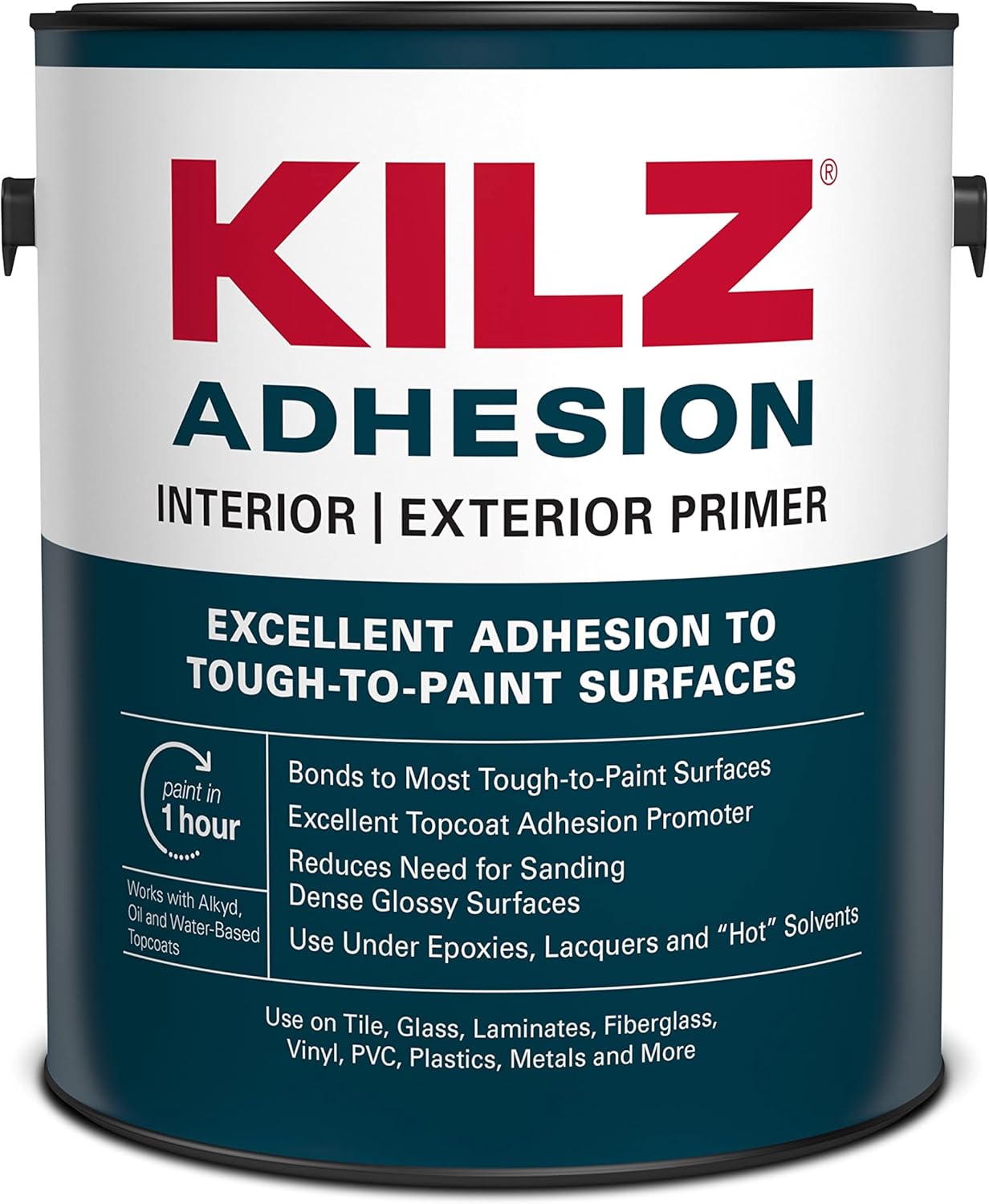
Best for: priming bare, glossy, or hard-to-coat siding so your topcoat actually sticks.
Paint is only as good as what's under it, and on bare wood, chalky old paint, or a slick previously-glossed surface, you need a bonding primer first. KILZ Adhesion is a water-based bonding primer that grips difficult surfaces - including glossy and chalky ones - where ordinary primer would peel, giving your acrylic topcoat a sound foundation. It's the primer to pair with the Prestige or Rust-Oleum on tricky siding, or to spot-prime bare areas before the self-priming paints. (For tannin bleed on raw cedar or redwood specifically, a dedicated stain-blocking primer is worth adding - see the buying guide.) Low odor, water cleanup, fast recoat.
| Pros | Cons |
|---|---|
| ✅ Bonds to glossy/chalky/hard surfaces | ❌ It's a primer, not a topcoat |
| ✅ Sound base for acrylic siding paint | ❌ Heavy tannin bleed wants a stain-blocker |
| ✅ Water-based, low odor, fast recoat |
How to choose (and apply) exterior siding paint
Always use 100% acrylic latex
For wood siding, 100% acrylic latex is the answer: it flexes with the wood's seasonal movement (so it won't crack), it breathes so moisture escapes instead of blistering the film, and it holds color under UV far better than oil. Oil-enriched formulas (like the KILZ barn paint) earn a place on rough weathered wood, but acrylic is the default for siding.
Prime the right way
- Bare or weathered wood: prime it. A bonding primer (KILZ Adhesion) covers most cases.
- Cedar or redwood: these bleed brown tannin stains through paint - use a stain-blocking primer made for tannin bleed, or those brown streaks will telegraph through your topcoat.
- Sound, previously painted siding: a self-priming paint (Perma-White) or paint-and-primer (Prestige) can go straight over it; spot-prime any bare areas.
Two coats, and mind the sheen
Always plan two topcoats on siding - it builds an even color and a durable film that resists weather. For sheen, satin/low-lustre is the sweet spot: enough to shed dirt and moisture, not so glossy it spotlights every imperfection in old wood.
Prep and weather
Wash off dirt, chalk, and mildew (and let it dry), scrape loose paint, and sand glossy spots. Paint when it's dry and mild - most exterior paints want roughly 50-85°F, no rain for 24 hours, and out of blazing direct sun that flash-dries the film. Good prep outlasts good paint.
Frequently Asked Questions
What kind of paint is best for exterior wood siding?
100% acrylic latex exterior paint. It stays flexible with the wood's expansion and contraction, breathes so moisture doesn't blister it, resists UV fading, and (in mildew-resistant formulas like Perma-White) fights the mold that plagues shaded walls.
Do I need to prime wood siding before painting?
Bare, weathered, or glossy siding: yes - prime it so the paint bonds and lasts. Cedar and redwood need a stain-blocking primer to stop tannin bleed. Sound previously painted siding can take a self-priming paint directly, with bare spots spot-primed.
How many coats of paint does wood siding need?
Two topcoats over primer. One coat rarely builds an even color or a weather-durable film on siding; two coats is the standard for a job that lasts.
Why does paint peel or blister on wood siding?
Usually trapped moisture (painting damp wood, or a non-breathable film), poor prep (painting over dirt, chalk, or gloss), or skipping primer on bare wood. Use a breathable acrylic, prime correctly, prep thoroughly, and paint in dry, mild weather.
How long does exterior paint last on wood siding?
A quality acrylic system, properly prepped and applied in two coats, typically lasts 7-10 years on wood siding - longer on protected walls, less on sun-and-weather-beaten faces. Good surface prep is the biggest factor in how long it holds.
More painting & finishing guides
Painting more than siding? See our wood paint hub for the full how-to, best outdoor house paint for whole-exterior projects, and best floor paint for porches and decks. Want to protect bare wood instead of paint it? Start with the best wood preservatives.