7 Best Wood Preservatives: Rot, Insect & Water Protection
Affiliate disclosure: As an Amazon Associate, WoodyMan Reviews earns from qualifying purchases. If you buy through links on this page, we may earn a commission at no extra cost to you. How this works.

"Wood preservative" gets slapped on three completely different kinds of product, and buying the wrong kind is why treated posts still rot. Actual preservatives poison the organisms that eat wood - borates for insects and decay fungi, copper naphthenate for anything touching soil. Water repellents (Thompson's and friends) only slow moisture down; they contain little or nothing that kills rot. And preservative-stains like TWP do both jobs on decks. This list is organized by that distinction, so match the product to the actual threat: bugs, ground contact, or weather.
One rule that applies to everything below: preservatives need bare, dry wood. They can't penetrate paint, old sealer, or wet timber - strip first, treat second, topcoat last.
We earn a small commission from the Amazon links below, at no extra cost to you - see our affiliate disclosure.
The 7 best wood preservatives
| Preservative | Best for | Woody Rating | |
|---|---|---|---|
| 1. Bora-Care Concentrate | Insects + rot fungi - deepest protection on bare wood | 9.4/10 [Editor's Choice] | Check price |
| 2. Copper-Green Wood Preservative | Ground contact - posts, sills, cut ends | 9.1/10 | Check price |
| 3. TWP 1501 Cedartone | Decks - EPA-registered preservative + stain in one | 9.0/10 | Check price |
| 4. Woodlife Classic (Rust-Oleum Wolman) | Clear coat under paint - trim, fences, millwork | 8.6/10 | Check price |
| 5. Bondo Rotted Wood Restorer | Wood that's already gone soft - repair, not prevention | 8.4/10 | Check price |
| 6. Eco Advance Wood Concentrate | Water repellency around kids, pets & plants | 8.1/10 | Check price |
| 7. Thompson's WaterSeal Clear | Budget water beading on big areas | 7.9/10 | Check price |
1. Bora-Care Concentrate - Editor's Choice
Best for: stopping the things that actually eat wood - termites, carpenter ants, powderpost beetles, and decay fungi - in framing, sill plates, log walls, barns, and any bare wood you can reach before it's painted.
Bora-Care is the product pest professionals use: a borate (disodium octaborate) carried in glycol, which pulls the mineral deep into the wood instead of leaving it on the surface. Treated wood becomes permanently toxic to insects and rot fungi but stays safe to handle once dry. One gallon of concentrate mixes 1:1 with water and treats roughly 800 sq ft. The honest limitation: borates are water-soluble, so outdoors they must be topcoated with paint or stain to stop rain leaching them out - Bora-Care is at its unbeatable best on wood that stays dry or gets sealed after treatment.
| Pros | Cons |
|---|---|
| ✅ Kills/prevents termites, beetles, ants AND rot fungi | ❌ Must be topcoated on rain-exposed wood (leaches) |
| ✅ Glycol carrier drives borate deep, not just surface | ❌ Concentrate price stings up front |
| ✅ Low toxicity to people/pets once dry | |
| ✅ 1 gal concentrate → ~800 sq ft treated |
2. Copper-Green Wood Preservative - Best for Ground Contact
Best for: the brutal cases - fence-post bottoms, deck-post bases, sill plates, dock timbers, and the cut ends of pressure-treated lumber where the factory treatment doesn't reach.
Copper naphthenate is the classic "green stuff," and it remains the only over-the-counter chemistry rated for wood in or near soil. Brush or dip-soak it onto anything headed below grade; the copper stops both rot fungi and insects where borates would wash away. It's oil-based, smells like it means business, and dries a distinctly green tint (a brown version exists if the color matters). The single most valuable habit in fence building: slop this on every field-cut end of PT lumber - cut ends are where "treated" posts rot first.
| Pros | Cons |
|---|---|
| ✅ Rated for ground contact / below grade | ❌ Strong solvent smell while curing |
| ✅ The fix for cut ends of pressure-treated lumber | ❌ Green tint isn't for visible surfaces |
| ✅ Doesn't leach like borates | |
| ✅ Brush, dip or soak application |
3. TWP 1501 Cedartone - Best Preservative + Stain for Decks
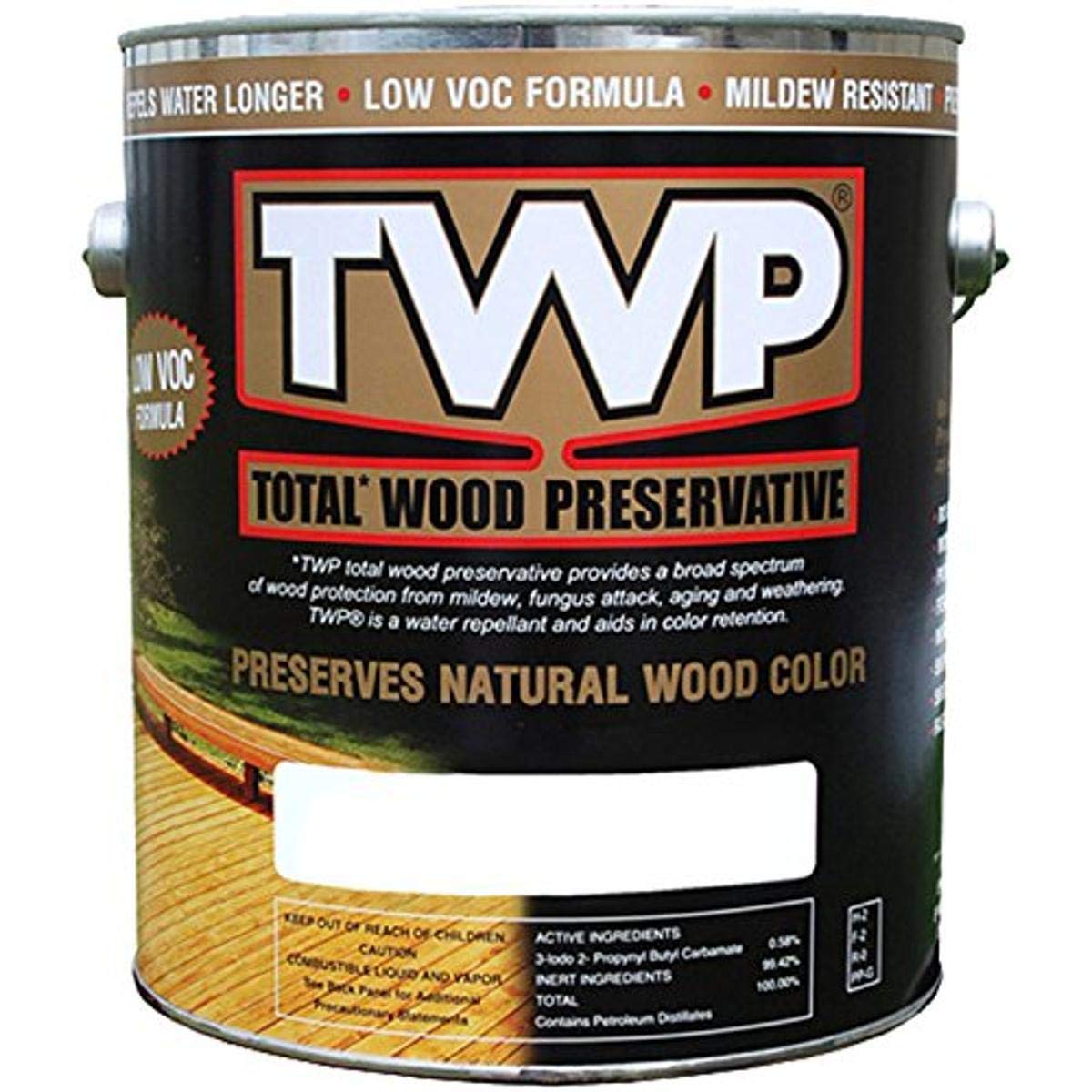
Best for: decks and exterior wood where you want protection and color in one coat - TWP is an actual EPA-registered wood preservative (EPA #51578-1), not just pigment in oil.
Most "protective" deck stains protect through pigment and water repellency alone. TWP's registration means it's formulated and tested against rot and mildew as a pesticide system, while behaving like a penetrating oil stain: it fades evenly instead of peeling, and renewal is clean-and-recoat with no stripping. The 1500 series is the low-VOC version legal in all states. If your project is a deck rather than posts or framing, this is the category winner - we compare it against the pure stains in our oil-based deck stain guide.
| Pros | Cons |
|---|---|
| ✅ EPA-registered preservative + penetrating stain | ❌ Costs more than box-store deck stains |
| ✅ Fades evenly - never peels | ❌ Weathered wood drinks it (100-150 sq ft/gal) |
| ✅ Low-VOC formula legal in all 50 states |
4. Woodlife Classic - Best Clear Coat Under Paint
Best for: bare exterior trim, fences, shakes and millwork that will be painted or stained afterwards - a thin clear preservative that buys the topcoat years of extra life.
Rust-Oleum's Wolman Woodlife Classic is the modern descendant of the original "WoodLife" treatment: a clear, water-based wood preservative with a fungicide plus water repellent, for above-ground use. It soaks into bare wood, resists rot, mildew and water damage, and - the key trick - it's paintable once dry, which the waxy big-box sealers are not. Prime carpenters' habit: back-prime and end-treat exterior trim with this before installation, then paint as normal (see our exterior paint for wood siding guide for what goes on top).
| Pros | Cons |
|---|---|
| ✅ Paintable/stainable after drying - most sealers aren't | ❌ Above-ground use only |
| ✅ Fungicide + water repellent in a thin, easy coat | ❌ Small container - big jobs need several |
| ✅ Ideal for end grain and back-priming trim |
5. Bondo Rotted Wood Restorer - Best for Wood That's Already Soft
Best for: the window sill or door jamb that's already spongy - this isn't prevention, it's triage that saves you replacing the whole piece.
Everything else on this list stops rot from starting; 3M's Bondo Restorer deals with rot that already happened. It's a thin penetrating resin you flood into soft, punky wood; it wicks in and cures the mush into a hard, stable base within 2 hours, ready for Bondo Wood Filler on top and then paint. Used honestly - localized rot in otherwise sound trim, sills, jambs and posts - it's excellent. It will not resurrect structurally failed lumber, and it does nothing to protect the surrounding wood; fix the moisture source too or the rot just moves next door.
| Pros | Cons |
|---|---|
| ✅ Hardens spongy wood into a fillable, paintable base | ❌ Repair product - zero preventive value |
| ✅ Cures in ~2 hours, built-in applicator brush | ❌ Pricey per ounce for large repairs |
| ✅ Pairs with Bondo Wood Filler for invisible fixes |
6. Eco Advance Wood Concentrate - Best Around Kids, Pets & Plants
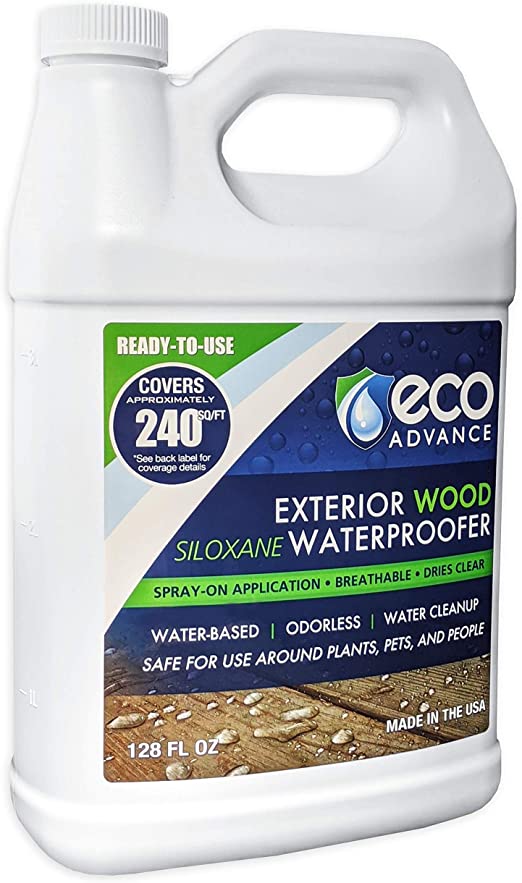
Best for: water-repelling decks, fences and play structures where runoff lands on lawn and garden - the least-toxic option here that still performs.
Eco Advance is a water-based siloxane repellent: a 16 oz bottle mixes into a gallon of spray-on treatment covering about 240 sq ft. It's non-flammable, virtually odorless, safe around people, pets and plants once applied, and vapor-permeable - so it can go on newer wood that would trap moisture under a film finish. Be clear about what it is: a water repellent, not a pesticide. It fights the moisture that enables rot; it won't stop termites. For play sets, planter exteriors and garden fences, that trade is usually right.
| Pros | Cons |
|---|---|
| ✅ Safest formula here - low odor, eco-certified chemistry | ❌ Repellent only - no insect/fungus killing power |
| ✅ Vapor-permeable - fine on newer wood | ❌ Reapply more often than oil products |
| ✅ Walk-on dry in under 2 hours |
7. Thompson's WaterSeal Clear - Best Budget Water Sealer
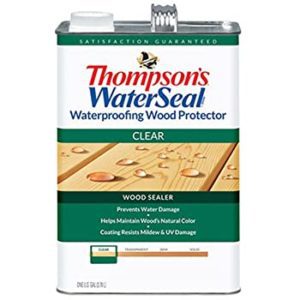
Best for: cheap, honest water beading over a lot of square footage - fences, sheds, rough lumber - where premium products don't pencil out.
The gallon-jug classic. Thompson's Clear Wood Protector goes on fast with a pump sprayer, beads water immediately, resists mildew, and can be applied even to damp wood - genuinely convenient on big fence runs. The limits are equally plain: it's a light-duty repellent that needs re-coating roughly yearly on horizontal surfaces, and its waxy base can interfere with stains or paint applied later. Use it where "keep the worst of the rain off, cheaply" is the whole job description.
| Pros | Cons |
|---|---|
| ✅ Cheapest per square foot on this list | ❌ Wax residue complicates later paint/stain |
| ✅ Sprays on fast, works on damp wood | ❌ Yearly re-coat on decks in practice |
| ✅ Everywhere - easy to rebuy the same product |
Which type do you actually need?
Insects or existing rot risk (framing, logs, barns, crawl spaces): borate - Bora-Care (#1). Topcoat it outdoors.
Wood touching soil or standing water (posts, sills, docks): copper naphthenate - Copper-Green (#2). Nothing else on the shelf is rated for it.
A deck you also want to look good: preservative-stain - TWP 1501 (#3), and see the full oil-based deck stain comparison.
Bare trim/fence that gets painted after: clear paintable preservative - Woodlife Classic (#4), then your exterior paint.
Just shedding rain, cheaply or safely: water repellent - Eco Advance (#6) or Thompson's (#7).
Already soft and crumbling: Bondo Restorer (#5) - and strip any failed coating first with a deck paint remover.
Frequently asked questions
What's the difference between a wood preservative and a water sealer? A preservative contains a registered pesticide - borate, copper, or similar - that kills or repels fungi and insects. A water sealer just makes water bead. Sealers help (dry wood doesn't rot), but they do nothing against termites and little against established fungus. Check the label for an EPA registration number; that's the tell.
Do I need to treat pressure-treated lumber? Only the cuts. Factory treatment penetrates the outer band of the board; every saw cut and drilled hole exposes untreated core. Brushing copper naphthenate onto cut ends and holes is standard practice (and required by the treatment warranty in most cases).
How long does wood preservative last? Ground-contact copper treatments: many years, often decades. Borates: effectively permanent while the wood stays dry or sealed - they only fail by being washed out. Water repellents: 1-3 years and then re-coat. Preservative-stains like TWP: 2-4 years on deck floors.
Can I paint over wood preservative? Over borates and Woodlife Classic - yes, once fully dry, and outdoors you should. Over waxy water sealers like Thompson's - usually not without heavy prep. Over copper naphthenate - oil-based primer only, after a long cure, and expect the green to ghost through light colors.
Is wood preservative safe once dry? The products here are safe to touch when cured - borates in particular are low-toxicity to mammals. During application it's the usual rules: gloves, ventilation, keep pets off until dry. Don't use any of them on surfaces that contact food, and don't burn treated offcuts.
Verdict
Match the chemistry to the threat. Bora-Care is the editor's choice because insects-plus-rot is the most common real problem and it solves both on any bare wood. Copper-Green owns everything that touches soil, and TWP 1501 is what your deck actually wants. The repellents at the bottom of the list are fine products - as long as you're buying them to shed water, not expecting them to stop rot they were never designed to fight.
Prepping first? Old finishes have to come off for any of these to penetrate - our paint remover for wood decks guide covers that, and the wood paint pillar maps every finish type we've tested.