6 Best Oil-Based Deck Stains: Real Oils Only
Affiliate disclosure: As an Amazon Associate, WoodyMan Reviews earns from qualifying purchases. If you buy through links on this page, we may earn a commission at no extra cost to you. How this works.
Half the "oil-based deck stain" roundups on the internet quietly include acrylic products - which behave completely differently: they film over the wood instead of soaking in, and they fail by peeling instead of fading. This list is penetrating oils only. If your deck's last coat peeled off in sheets, that was a film-former, and switching to a true oil is exactly the fix.
Oil stains fail gracefully (they fade, you clean and re-oil - no stripping), they're far more forgiving to apply, and on dense or older wood they're usually the only thing that actually absorbs. Here are the six worth buying, by use case.
We earn a small commission from the Amazon links below, at no extra cost to you - see our affiliate disclosure. These picks come from comparing manufacturer specs, contractor consensus, and multi-season owner reports - not our own test deck; how we review.
The 6 best oil-based deck stains
| Deck Stain | Best for | Woody Rating | |
|---|---|---|---|
| 1. Ready Seal (Natural Cedar) | Easiest application - no lap marks, ever | 9.4/10 [Editor's Choice] | Check price |
| 2. TWP 1501 Cedartone | Maximum protection - EPA-registered preservative | 9.2/10 | Check price |
| 3. Cabot Australian Timber Oil | Richest color depth on dense woods | 8.9/10 | Check price |
| 4. Penofin Hardwood Formula (Ipe) | Exotic hardwoods - ipe, teak, cumaru | 8.7/10 | Check price |
| 5. TWP 101 Pro-Series | Harsh climates (where VOC rules allow) | 8.6/10 | Check price |
| 6. Ready Seal 100 Clear | Keeping new wood looking bare | 8.2/10 | Check price |
1. Ready Seal Natural Cedar - Editor's Choice
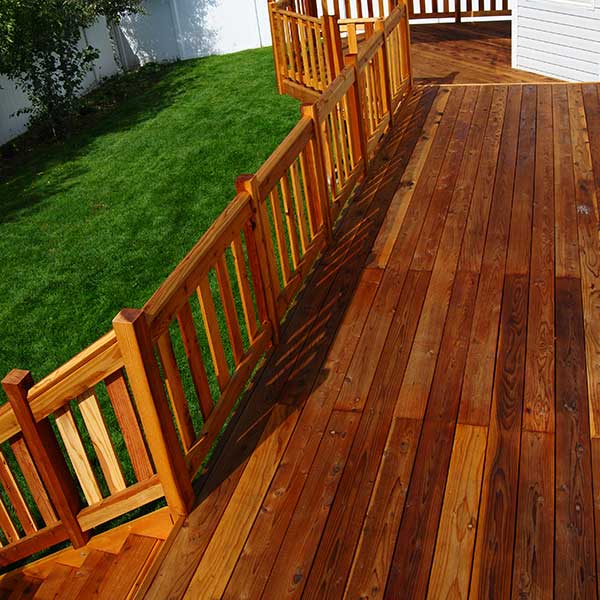
Best for: anyone who wants a professional-looking deck without professional technique - Ready Seal markets itself as "Goof Proof" and, unusually for marketing copy, it's accurate.
Semi-transparent oil that you can apply with a sprayer, roller or brush in any order, with no back-brushing and no wet-line to maintain - the two things that create the streaks and lap marks that ruin DIY stain jobs. It self-blends. Two things to know before you panic: it goes on dark and takes about 14 days to lighten to its true color, and it needs fully dry, absorbent wood (new smooth-planed boards should weather a few months first). Maintenance is the best part - no stripping, just clean and re-coat.
| Pros | Cons |
|---|---|
| ✅ Impossible to leave lap marks - self-blending | ❌ Looks too dark for the first ~2 weeks |
| ✅ Spray, roll or brush - no back-brushing | ❌ Won't absorb into new smooth-planed wood |
| ✅ Re-coat without stripping | |
| ✅ Multiple tones (Light Oak, Redwood, Dark Walnut...) |
Buying tip: on Amazon, Ready Seal's price and stock vary a lot from one color to the next, and some tones are sold only by third-party sellers at a markup. If the price looks high, check the other tones on the same page, or a local hardware store: a gallon of Natural Cedar ran about $38-48 at Walmart, True Value and Hardware World when we checked in September 2026.
2. TWP 1501 Cedartone - Best Protection
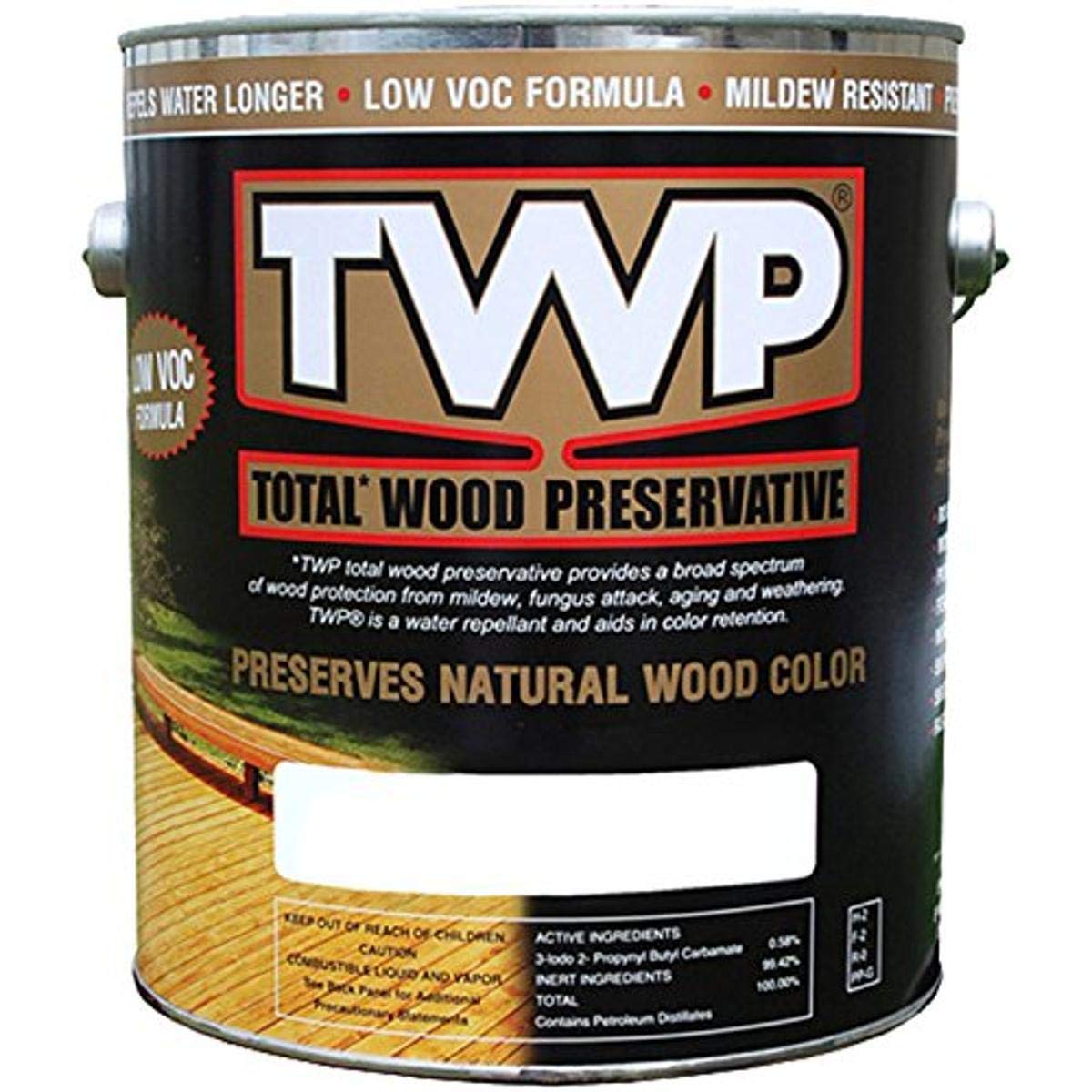
Best for: decks you want to protect, not just color - this is the deck-restoration forum favorite for a reason.
TWP is one of the few deck stains that's an actual EPA-registered wood preservative (EPA #51578-1), not just a pigment in oil: it's formulated against rot, mildew and UV as a system. The 1500 series is the low-VOC version that's legal in all states. It penetrates deeply, fades evenly rather than peeling, and re-application is clean-and-coat. Cedartone is the classic color; expect roughly 100-150 sq ft per gallon on a weathered deck drinking its first coat.
| Pros | Cons |
|---|---|
| ✅ EPA-registered preservative + stain in one | ❌ Pricier per gallon than box-store brands |
| ✅ Fades evenly - never peels | ❌ Thirsty old decks eat coverage fast |
| ✅ Low-VOC 1500 series legal in all states |
3. Cabot Australian Timber Oil - Best Color Depth
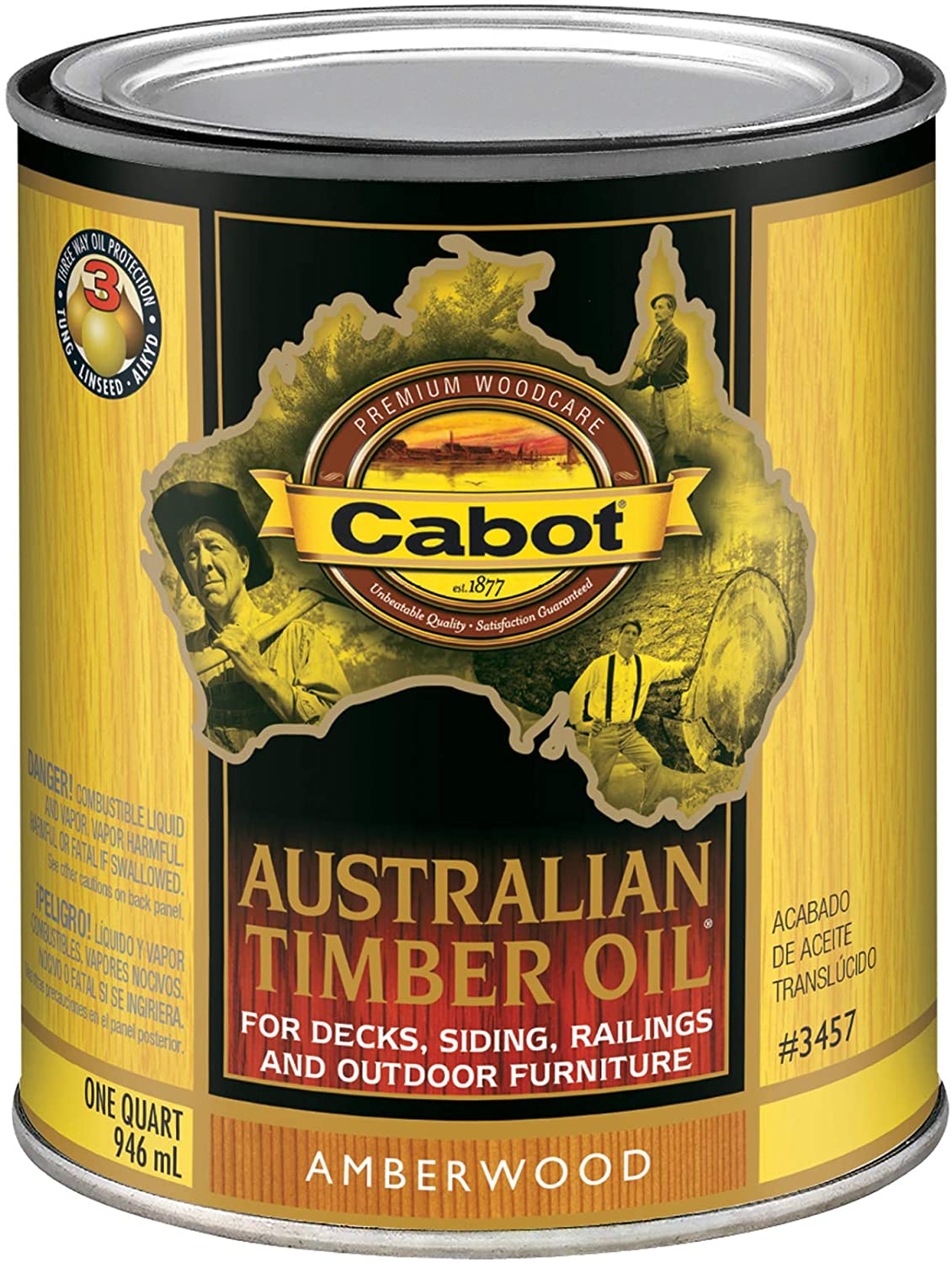
Best for: the furniture-grade look - its three-oil blend gives dense woods a warm translucent glow nothing else on this list matches.
Cabot's formula is a deliberate cocktail: linseed oil for penetration, long-oil alkyds for durability, and tung oil for color depth and water repellency. Originally developed for Australian hardwoods, it's superb on mahogany, cedar and any tight-grained decking where you want the grain lit up rather than covered. Amberwood is the crowd favorite; the quart linked below is right for rails and furniture, and the 1-gallon size covers a full deck.
| Pros | Cons |
|---|---|
| ✅ Linseed + alkyd + tung oil blend - unmatched glow | ❌ Needs re-coating more often on full-sun decks |
| ✅ Excellent on dense/tropical species | ❌ Translucent tones offer less UV block than semi-solids |
| ✅ Quart to gallon sizes for any project |
4. Penofin Hardwood Formula (Ipe) - Best for Exotics
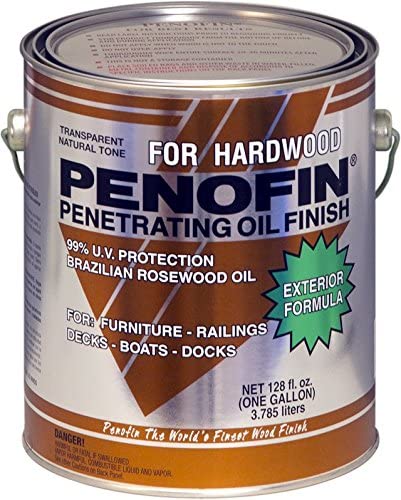
Best for: ipe, teak, cumaru and other tropical decking - woods so dense that ordinary stains just sit on top and go sticky.
Exotic hardwood decks are a different problem: the grain is so tight most finishes can't get in. Penofin's hardwood formula is engineered for exactly this - apply, let it penetrate 15-30 minutes, then wipe off every bit of excess (skip the wipe and you'll get a tacky mess; this is the #1 user error, not a product flaw). Expect to re-oil roughly yearly; that's the deal with ipe no matter what you use, and an annual wipe-on refresh beats sanding back a failed film every time.
| Pros | Cons |
|---|---|
| ✅ Actually penetrates ipe/teak-density grain | ❌ Must wipe off excess or it stays tacky |
| ✅ Rich finish that shows off exotic grain | ❌ Yearly maintenance on full-sun exotic decks |
| ✅ Quart / 1-gal / 5-gal sizes |
5. TWP 101 Pro-Series - Best for Harsh Climates
Best for: brutal-weather decks in states where the higher-VOC formula is still sold - the old-school version contractors still swear by.
The 100 series is TWP's original, stronger-solvent formulation: it drives deeper into weathered wood than the 1500 series and many pros in freeze-thaw or high-altitude climates still insist on it. The trade-off is regulatory, not performance - VOC rules mean it can't be shipped to some states (California and much of the Northeast; Amazon will tell you at checkout). If it's legal where you live and your deck takes real punishment, this is the pick. Same even-fade behaviour, same clean-and-recoat maintenance as the 1501.
| Pros | Cons |
|---|---|
| ✅ Deepest penetration of the TWP line | ❌ Not available in low-VOC states |
| ✅ Contractor favourite for freeze-thaw climates | ❌ Stronger solvent smell during application |
| ✅ EPA-registered preservative like the 1501 |
6. Ready Seal 100 Clear - Best Clear Finish
Best for: brand-new cedar or redwood you want to keep looking like brand-new cedar or redwood - with eyes open about the trade-off.
Same goof-proof oil base as our #1 pick, minus the pigment. Here's the honest physics: pigment is most of a stain's UV protection, so a clear finish will let the wood grey noticeably faster than any tinted option on this list - plan on more frequent re-coats. What it does deliver: water beading, mildew resistance, and zero color shift on wood whose natural tone you love. If greying bothers you, the Natural Cedar (#1) with minimal pigment is the smarter compromise.
| Pros | Cons |
|---|---|
| ✅ Zero color change - pure wood tone | ❌ Least UV protection - wood greys sooner |
| ✅ Same lap-mark-proof application as #1 | ❌ Shorter re-coat cycle than pigmented oils |
| ✅ Water beading + mildew resistance |
Prep and tools: what makes the stain last
The stain is only half the job. Most deck finishes that fail early were put on dirty, grey or damp wood, and most lap marks come from the wrong applicator. Work out how much stain to buy with our deck stain calculator, which also walks through staining a deck step by step, and have these ready:
- DEFY Wood Deck Cleaner - an oxygen-based powdered cleaner that lifts grey, dirt and mildew without the fiber damage of bleach.
- DEFY Wood Brightener - goes on after the cleaner to neutralize it and open the grain, so the oil absorbs evenly.
- Chapin 25020 Clean 'N Seal Deck Sprayer - a 2-gallon pump sprayer made for deck cleaners and transparent stains. Ready Seal is one of the few stains made to be sprayed without back-brushing.
- Wooster Bravo Stainer Brush (5-1/2 in) - for back-brushing TWP, Cabot and Penofin into the grain, with a threaded handle for an extension pole.
- Shur-Line Deck Stain Pad with Groove Tool - the fast way to coat floor boards, with a tool for the gaps between them.
Transparency decides everything else
Oil vs water-based: the 60-second decision
Choose oil if: the deck is older or weathered wood, you want easy maintenance (clean + re-coat, no stripping), you're staining dense/exotic species, or the last water-based coat peeled.
Choose water-based (acrylic) if: you need maximum color retention for 3+ years, the wood is new and smooth, or local VOC rules leave you no choice. Just know acrylics fail by peeling, and fixing peel means stripping or sanding the old finish off.
Prep decides the result either way. Oil stains need clean, dry, absorbent wood: strip any old film finish (paint remover guide), wash, let it dry 2+ days, and test absorption by sprinkling water - if it soaks in within a minute, the wood's ready to drink stain.
Frequently asked questions
How long does oil-based deck stain last? Realistically 1-3 years on horizontal deck boards (sun and foot traffic) and 3-5 on verticals like rails and fences. Anyone promising more on a deck floor is selling. The win with oils isn't longevity - it's that renewal is a wash-and-recoat afternoon, not a stripping weekend.
One coat or two? For penetrating oils: apply what the wood absorbs, and no more. On thirsty weathered wood that's often two wet-on-wet passes; on tighter grain it's one. Excess oil that can't soak in sits on the surface and turns sticky - with Penofin especially, wipe it off.
When should I stain a new deck? Pressure-treated lumber needs to dry out first - typically 1-3 months, until water droplets absorb instead of beading. Smooth-planed cedar benefits from a few months of weathering (or a light sanding) so the oil can get in.
What temperature can I stain in? Roughly 10-32°C (50-90°F), on a dry deck with 24-48 rain-free hours ahead. Avoid staining in direct midday sun - the oil flashes off before it penetrates.
Can I put oil stain over old water-based stain? Not over an intact acrylic film - the oil can't reach the wood. Strip or sand back to bare timber first, then oil. Over an old faded oil finish, clean and re-coat directly.
Verdict
For most decks, Ready Seal is the answer - it's the stain you can't mess up, and its maintenance cycle is the easiest in the category. Step up to TWP 1501 when protection matters more than convenience, Cabot ATO when looks matter most, and Penofin the day you inherit an ipe deck.
Before any of them: prep. Our guides to paint removers for wood decks and sanders for exterior paint removal cover getting back to clean wood, and if the whole exterior needs attention, see the best exterior paints for wood siding.