Best Detail Sanders: 6 Picks for Corners and Tight Spots
Affiliate disclosure: As an Amazon Associate, WoodyMan Reviews earns from qualifying purchases. If you buy through links on this page, we may earn a commission at no extra cost to you. How this works.
A detail sander does what your random orbital and sheet sanders can't: reach into corners, along moldings, between spindles, and up to edges where a round pad won't fit. But "detail sander" spans three tools that work differently, and the right one depends on how tight your corners really are:
- Teardrop pad sanders (the classic "mouse") - a pointed triangular pad for chairs, trim, and general detail work. The everyday choice.
- Multi-attachment detail sanders - a pad sander that swaps in fingers and profiles to reach places a fixed triangle can't.
- Oscillating multi-tools with a triangle sanding head - the most versatile, and the only thing that gets flush into a true 90° inside corner (plus it cuts, scrapes, and grinds).
The six below cover all three. One honest pointer up front: if what you specifically want is the classic teardrop "mouse" sander, our dedicated best mouse sanders guide ranks that narrower field in more depth. This page is the wider detail-sanding map.
We earn a small commission from the Amazon links below, at no extra cost to you - see our affiliate disclosure.
The 6 best detail sanders
| Detail Sander | Best for | Woody Rating | |
|---|---|---|---|
| 1. BLACK+DECKER BDEMS600 | Best overall detail/mouse sander | 9.3/10 [Editor's Choice] | Check price |
| 2. Milwaukee M12 FUEL Detail | Premium cordless - swirl-free finish | 9.1/10 | Check price |
| 3. SKIL SR232301 Multi-Function | Best multi-attachment kit | 8.7/10 | Check price |
| 4. DEWALT DWE315K Oscillating | Tightest corners + does everything | 8.6/10 | Check price |
| 5. WEN 6301 | Best budget | 8.3/10 | Check price |
| 6. Genesis GPS080 | Smallest grip - delicate work | 8.1/10 | Check price |
1. BLACK+DECKER BDEMS600 - Editor's Choice
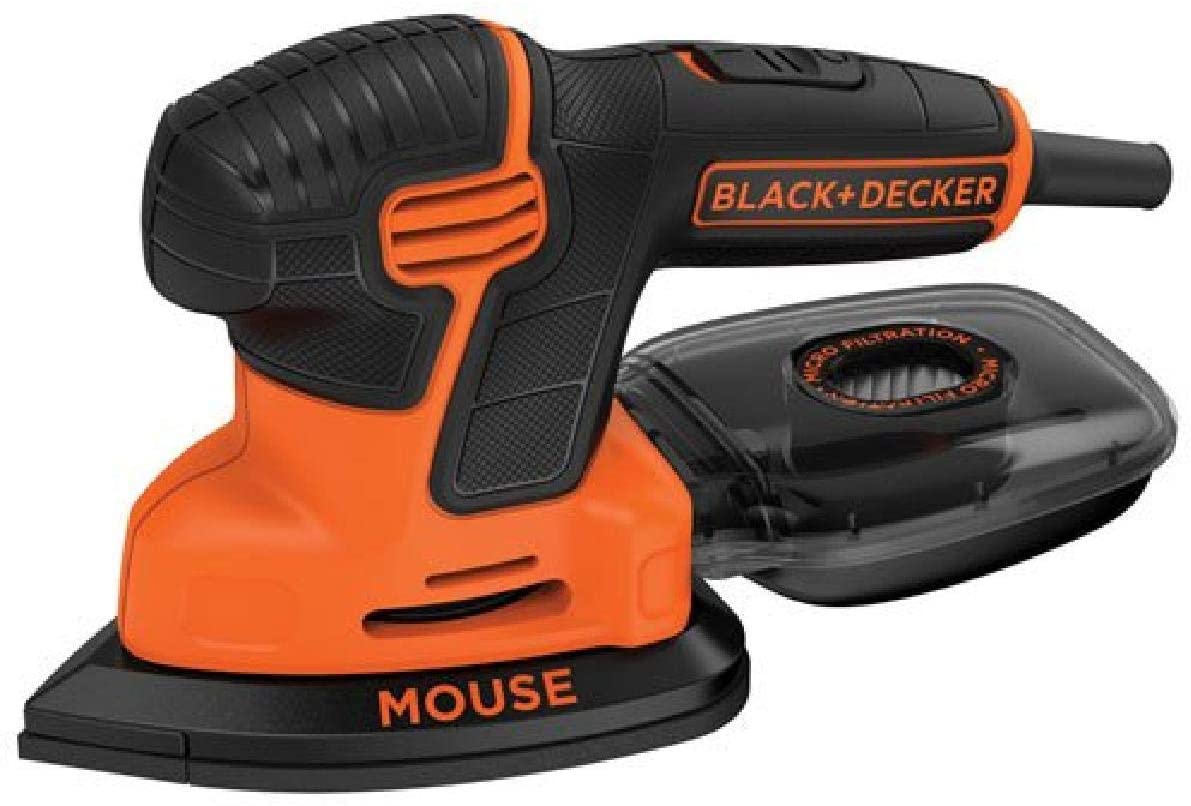
Best for: the vast majority of detail sanding - trim, furniture, chairs, and general corner work at a friendly price.
The BDEMS600 is the tool that defined this category and still wins it for most people. The pointed teardrop pad reaches corners and edges a round sander can't, the 1.2-amp motor delivers around 14,000 orbits per minute for real material removal, and a three-position grip lets you hold it flat for surfaces or up on the tip for detail. It ships with a finger attachment that squeezes into slots and slats no full pad can reach, and the hook-and-loop paper swaps in seconds. Dust collection through the small onboard canister is modest - pairing it with a shop vac helps - but for chairs, cabinet faces, trim, and the everyday "get into the corner" job, it's the light, cheap, reliable default.
| Pros | Cons |
|---|---|
| ✅ Reaches corners; 3-position grip | ❌ Small onboard dust canister |
| ✅ Finger attachment for slats/slots | ❌ Vibrates the pad (fine swirls under stain) |
| ✅ Light, easy hook-and-loop paper changes | |
| ✅ Cheap and reliable |
2. Milwaukee M12 FUEL Detail Sander - Premium Pick
Best for: stained furniture and finish work where swirl marks cost you re-dos - and anyone already on M12 batteries.
Here's the technical difference that justifies the price: cheap detail sanders vibrate their pad, which scrubs micro-swirls into the surface that only show up after you stain. Milwaukee's brushless M12 FUEL unit runs a true orbital action - the same motion as a random orbital, shrunk to a detail pad - and leaves a stain-grade surface right into the corners. It's cordless, genuinely powerful for its size, and ships with mesh sanding sheets. The catch is the M12 tax: it's a bare tool, so add a battery and charger, or buy the kit with battery. If your finished work is stained and swirl marks are a real problem - or this won't be your last M12 tool - it's worth every dollar; for paint prep, it's overkill.
| Pros | Cons |
|---|---|
| ✅ True orbital - stain-grade, swirl-free finish | ❌ M12 tax: bare tool needs battery/charger |
| ✅ Brushless, cordless, powerful for its size | ❌ Overkill for paint prep |
| ✅ Gets into corners without swirl marks | |
| ✅ Grows with the M12 platform |
3. SKIL SR232301 Multi-Function - Best Attachment Kit
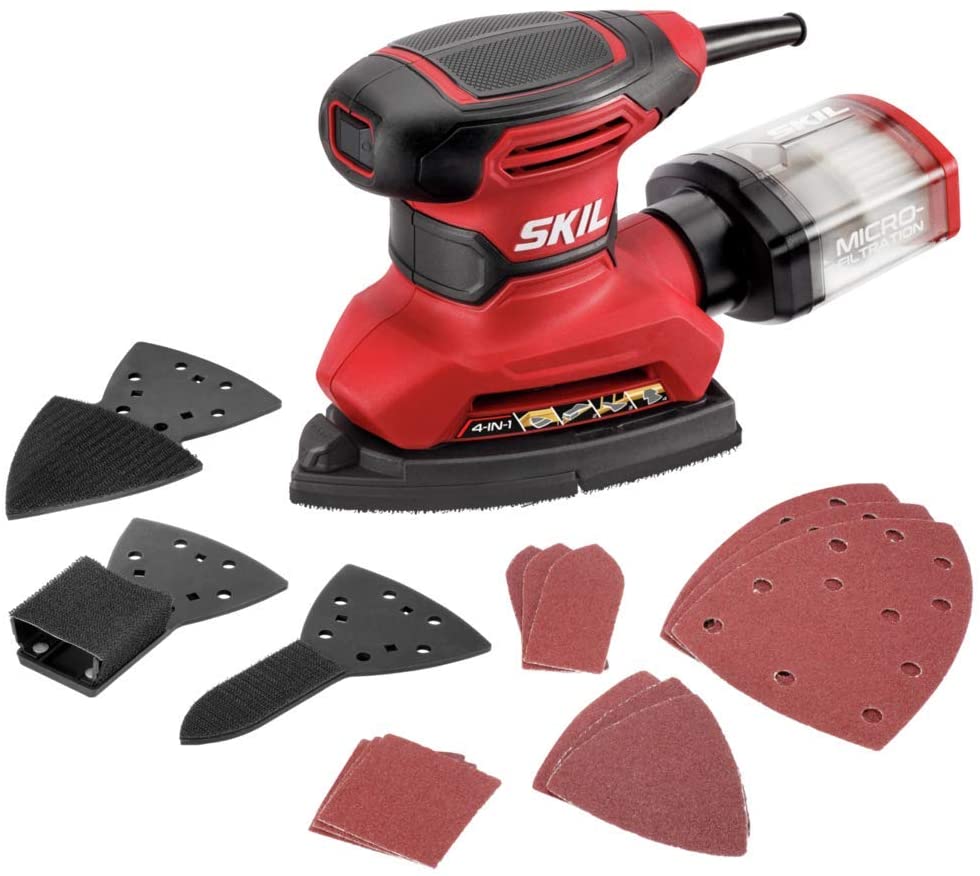
Best for: varied projects where a fixed triangle pad won't reach - spindles, contours, and profiles.
A single triangular pad can't reach everything, and the SKIL SR232301's answer is a set of swappable heads - a standard detail triangle plus finger and contour attachments - that let one tool follow spindles, get under lips, and work profiles a fixed pad can't. It's corded (so no battery to run flat on a long job), has pressure-control feedback via an LED, runs low vibration, and comes with a micro-filter dust box plus a generous pack of sanding sheets to start. It's a single-speed tool and the attachment system adds a little fiddle, but for the person who sands a bit of everything - furniture restoration, trim, hobby work - the versatility per dollar is the best here. It pairs naturally with the furniture sander approach for bigger surfaces.
| Pros | Cons |
|---|---|
| ✅ Multiple heads reach spindles/contours/profiles | ❌ Single speed |
| ✅ Corded - no runtime limit | ❌ Swapping attachments adds a little fiddle |
| ✅ Micro-filter dust box + lots of sheets | |
| ✅ Low vibration, pressure-control LED |
4. DEWALT DWE315K Oscillating - Tightest Corners
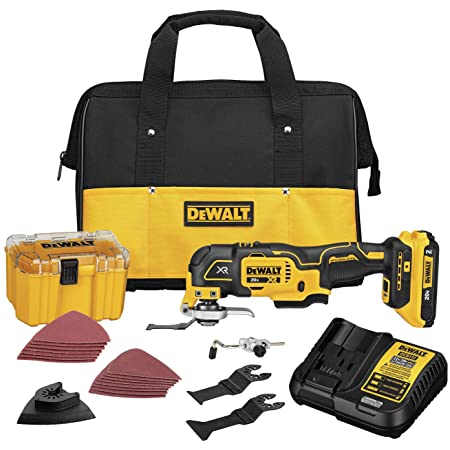
Best for: true 90° inside corners and anyone who wants one tool that also cuts, scrapes, and removes grout.
When the corner is a genuine right angle - where two walls of a box meet, the inside of a face frame - a teardrop pad still leaves the very apex untouched. An oscillating multi-tool with a triangular sanding head gets flush into it, and the DWE315K is a well-built, versatile one. The 3-amp motor and dual-grip variable-speed trigger drive a big kit of cutting and sanding accessories, so the same tool that sands the corner also flush-cuts trim, scrapes old caulk, and pulls grout. As a sander it's less refined than a dedicated pad tool - the triangle head is best for spot work rather than large surfaces - but nothing else here reaches a true inside corner as cleanly, and the do-everything versatility is a genuine bonus. See where oscillating and orbital sanding diverge in our belt vs orbital explainer.
| Pros | Cons |
|---|---|
| ✅ Only tool that sands flush into true 90° corners | ❌ Less refined than a dedicated pad sander |
| ✅ Also cuts, scrapes, removes grout | ❌ Triangle head best for spot work, not big surfaces |
| ✅ Variable speed, large accessory kit | |
| ✅ One tool for many jobs |
5. WEN 6301 - Best Budget
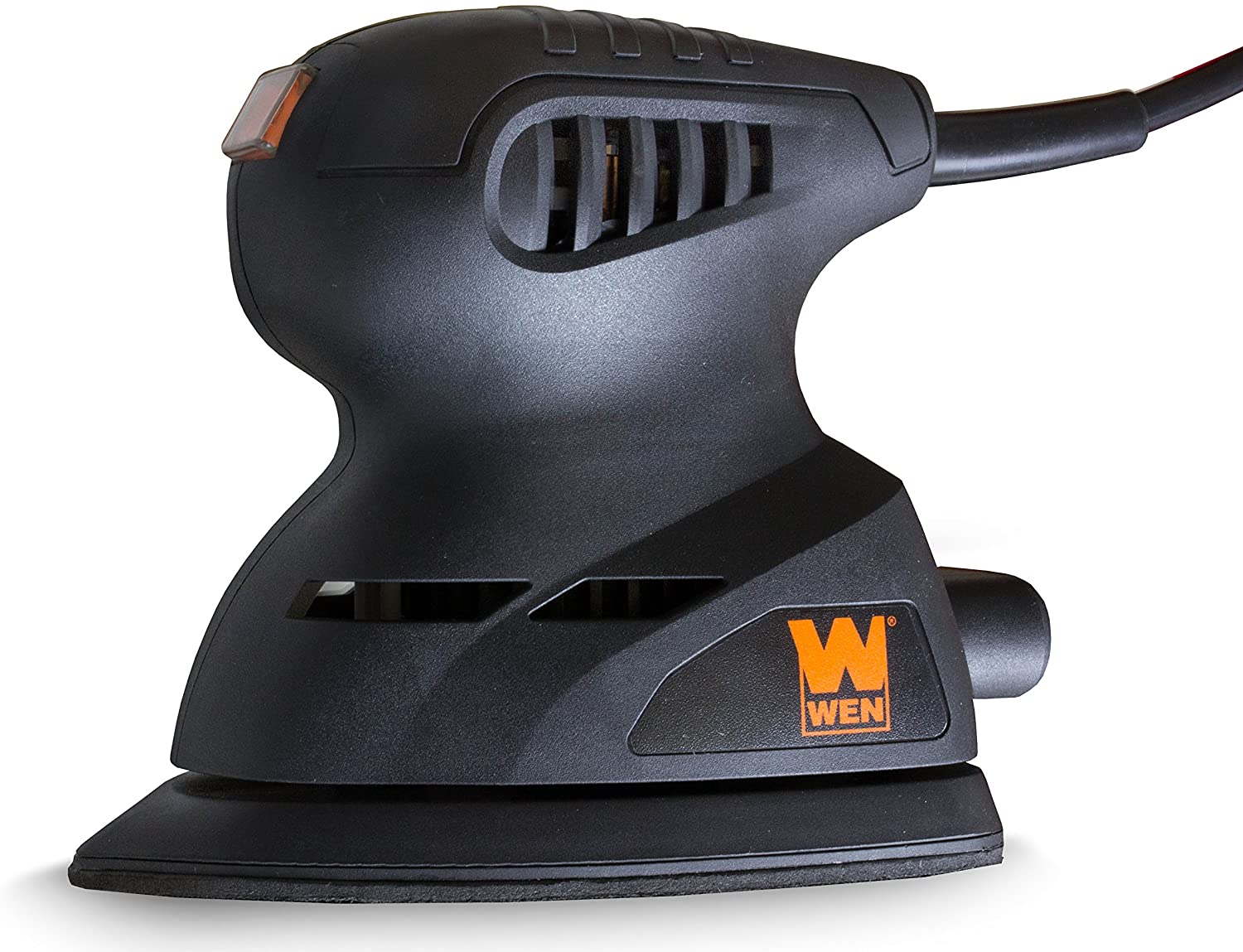
Best for: the occasional user who wants a capable corner sander for as little as possible.
The WEN 6301 proves you don't need to spend much to sand a corner. It's a compact ~2.5 lb detail palm sander with an angled tip that reaches into tight spots, hook-and-loop paper, and a fan-assisted dust port - the essentials, executed cheaply and competently. There's a sealed on/off switch to keep dust out of the works and not much else, which is exactly the point: for a homeowner who needs to knock down a few corners on a project a handful of times a year, paying premium-tool money makes no sense. Set expectations to match the price - basic dust collection, a single speed, no frills - and it's the most sensible cheap tool on the page.
| Pros | Cons |
|---|---|
| ✅ Cheapest capable detail sander here | ❌ Basic dust collection, single speed |
| ✅ Light (~2.5 lb), angled reaching tip | ❌ No frills |
| ✅ Sealed switch keeps dust out | |
| ✅ Fine for occasional use |
6. Genesis GPS080 - Smallest Grip
Best for: small hands and delicate, close-in work where a full-size body gets in the way.
The GPS080 is the most compact tool here, and that's its whole reason for being: a genuinely small palm sander that fits smaller hands and lets you work close and controlled on delicate pieces - model work, small furniture repairs, intricate trim - where a bigger sander feels clumsy. It takes standard detail triangle paper, runs a simple single-speed motor, and weighs almost nothing. It's the least powerful pick and its dust collection is minimal, so it's not for big or aggressive jobs - but for fine, patient detail sanding in tight quarters, its small size is exactly the advantage the bigger tools can't offer.
| Pros | Cons |
|---|---|
| ✅ Smallest body - great for small hands/delicate work | ❌ Least powerful here |
| ✅ Close, controlled handling | ❌ Minimal dust collection |
| ✅ Standard detail triangle paper | ❌ Not for big or aggressive jobs |
| ✅ Very light and cheap |
Buying guide: which detail sander form factor?
Match the tool to your corners. For general trim, furniture, and detail work, a teardrop pad sander (picks 1, 5, 6) is right. For varied contours and profiles, a multi-attachment sander (pick 3). For true 90° inside corners or a do-everything tool, an oscillating multi-tool (pick 4). And if finish quality on stained work matters most, the orbital M12 (pick 2) is the one that won't leave swirls.
Vibrating vs orbital. Most detail sanders under a certain price vibrate the pad; only orbital tools (the M12 here) truly orbit. Vibration is fine for paint prep and rough smoothing, but it leaves micro-swirls you'll see under stain - for stained furniture, choose orbital or plan to finish the final grit by hand with the grain.
Dust collection is usually the weak point. Onboard canisters on small sanders are token at best. If you sand often or care about your lungs and workspace, buy a model with a vacuum port and hook up a shop vac - it makes a bigger difference than any spec on the box.
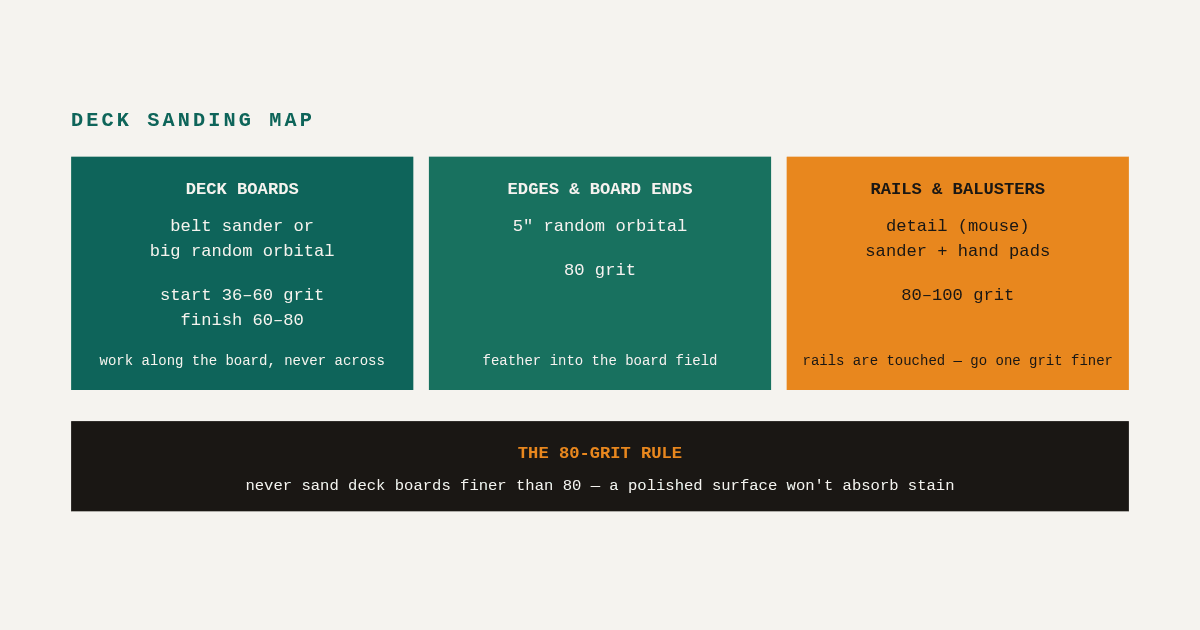
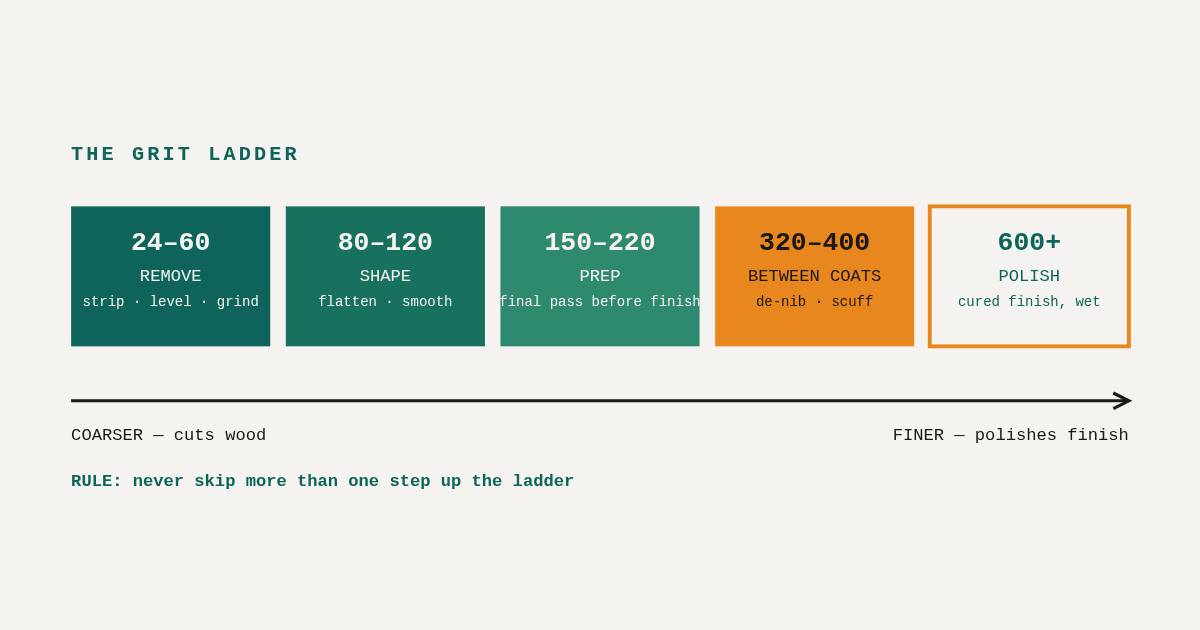
Grit matters more than the tool. Running the right progression (coarse to fine) matters more than which sander holds the paper. Buy a generous grit assortment with whatever tool you pick. For larger flat surfaces beyond detail work, step up to a sheet sander or the broader wood sanders lineup, and for furniture refinishing specifically, the best furniture sander guide.
Frequently Asked Questions
What's the difference between a detail sander and a mouse sander?
"Mouse" is a nickname for the teardrop-shaped pad detail sander (BLACK+DECKER trademarked "Mouse"). All mouse sanders are detail sanders, but "detail sander" also covers multi-attachment tools and oscillating multi-tools with sanding heads. Our mouse sanders guide focuses on the teardrop type specifically.
Can a detail sander replace a regular orbital sander?
No - they're complementary. A detail sander reaches corners and tight spots but is slow and small for open surfaces; a random orbital sander smooths large flat areas fast but can't get into corners. Most shops own both.
Which detail sander gets fully into a 90° corner?
An oscillating multi-tool with a triangular sanding head (the DEWALT DWE315K here) is the only type that reaches flush into a true right-angle inside corner. Teardrop pad sanders get close but leave the very apex.
Why does my detail-sanded wood show swirl marks after staining?
Because a vibrating detail sander scrubs fine circular scratches that stain makes visible. Fix it by using an orbital detail sander (the M12), sanding to a finer final grit, or finishing the last pass by hand in the direction of the grain before staining.
Do I need the multi-attachment kit or is a plain pad enough?
If you mostly sand flat corners and trim, a plain teardrop pad is enough. If you regularly work spindles, contours, and profiles, the attachment heads (SKIL) or an oscillating tool save real time by reaching shapes a fixed triangle can't follow.