Best Furniture Sanders: 5 Picks for Refinishing Without Wrecking It
Affiliate disclosure: As an Amazon Associate, WoodyMan Reviews earns from qualifying purchases. If you buy through links on this page, we may earn a commission at no extra cost to you. How this works.
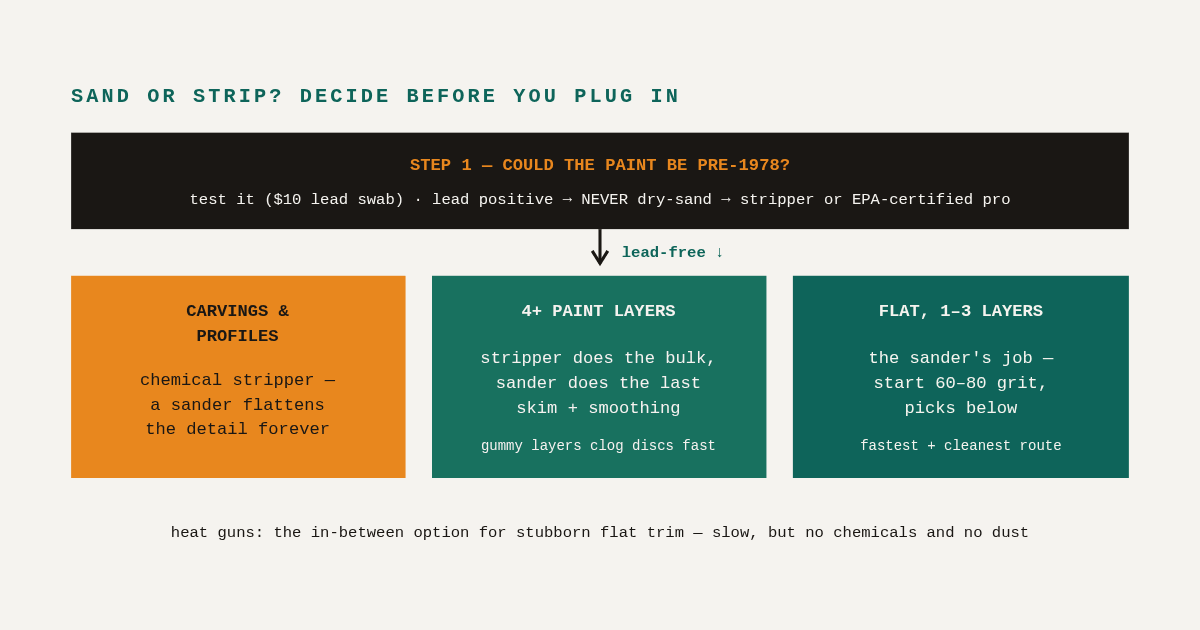
Short answer: the best sander for furniture is a 5" random orbital - the Bosch ROS20VSC - for every flat face, paired with a detail sander for spindles, carving, and corners. What you should not use is a belt sander: furniture veneer is thinner than a coin, and a belt sander eats through it in seconds.
Sanding furniture is a different problem from sanding rough lumber, and the difference is restraint. Furniture has three things that punish an aggressive sander:
- Thin veneer. Most furniture faces are a veneer often less than 1/32" thick - a belt sander or a heavy hand blows straight through it to the substrate, ruining the piece. This is why there's no belt sander on this list.
- Curves, spindles, and carving. Chair legs, turned rails, and moulded edges need a sander that follows shapes, not just flat pads.
- A stain-grade surface. Refinished furniture usually gets stained or clear-coated, so any swirl mark shows. You want swirl-free tools and patience.
So the "best furniture sander" is really a small set of gentle, controllable tools: a swirl-free random orbital for flat faces, detail and multi-attachment sanders for the shaped parts, and fine finishing sanders. Here are five that refinish furniture without wrecking it.
We earn a small commission from the Amazon links below, at no extra cost to you - see our affiliate disclosure.
The 5 best furniture sanders
| Sander | Best for | Woody Rating | |
|---|---|---|---|
| 1. Bosch ROS20VSC | Best overall - flat faces, swirl-free | 9.3/10 [Editor's Choice] | Check price |
| 2. SKIL SR232301 Multi-Function | Best for spindles & contours | 8.8/10 | Check price |
| 3. Makita BO4556K | Gentlest fine finish (veneer) | 8.7/10 | Check price |
| 4. BLACK+DECKER BDEMS600 | Carving, corners & moulding | 8.5/10 | Check price |
| 5. DEWALT DWE6411K | Flat panels & corners on a budget | 8.3/10 | Check price |
1. Bosch ROS20VSC - Best Overall (Random Orbital)
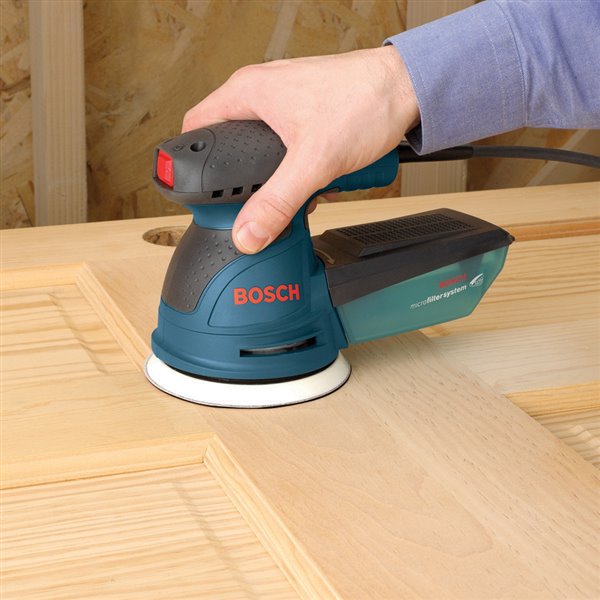
Best for: the flat faces of furniture - tabletops, drawer fronts, cabinet sides - with a stain-grade, swirl-free result.
For the flat parts of a piece, a 5" random orbital is the furniture refinisher's main tool, and the ROS20VSC's two features make it right for delicate work. The random-orbit action leaves no swirl marks, so stain goes down evenly; and variable speed lets you dial down - crucial on thin veneer, where slow and light keeps you from burning through. Good dust collection means you see the surface as you work and don't grind swirl-causing grit back into it. Take it easy on veneered edges (the veneer is thinnest there) and it'll bring a tabletop to a flawless finish. The everyday hero of furniture refinishing.
| Pros | Cons |
|---|---|
| ✅ Swirl-free - stain-grade surface | ❌ Round pad can't reach carving/corners |
| ✅ Variable speed - go gentle on veneer | ❌ Still easy to over-sand veneer edges |
| ✅ Good dust collection | |
| ✅ Comfortable for long refinishing |
2. SKIL SR232301 Multi-Function - Spindles & Contours
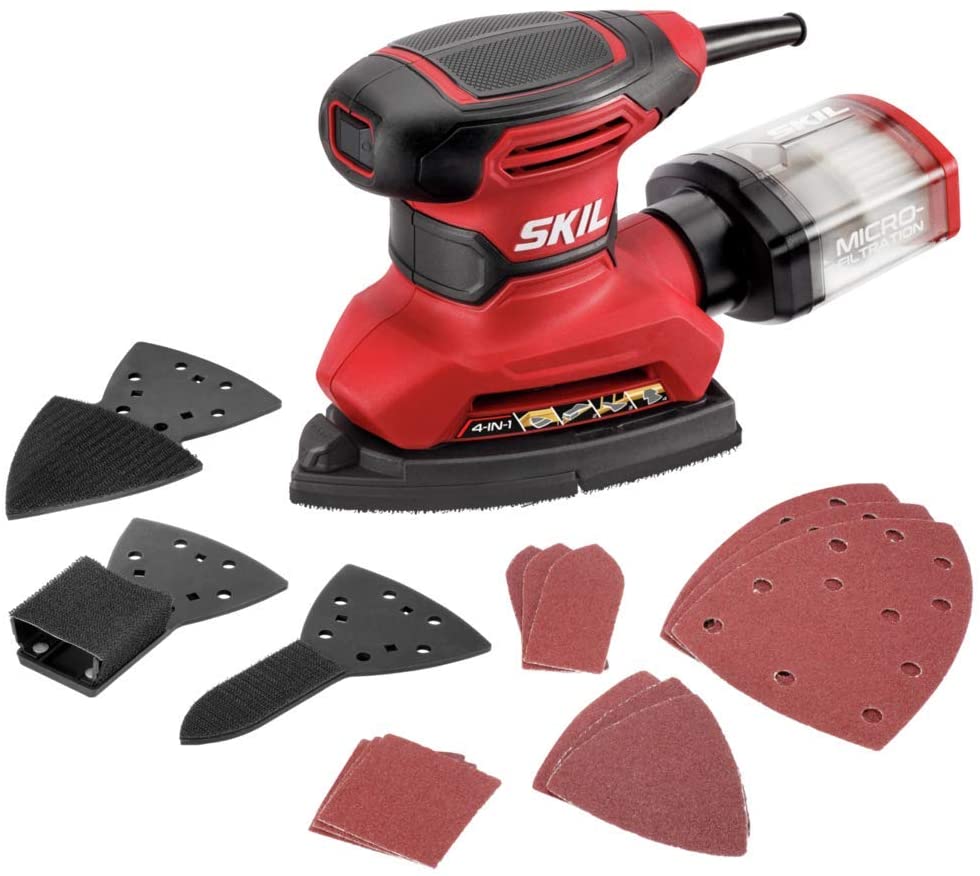
Best for: furniture with shaped parts - turned legs, spindles, contoured edges, and profiles.
Furniture is full of shapes a flat pad can't follow, and the SR232301's answer is a set of swappable heads - a detail triangle plus finger and contour attachments - that let one tool trace spindles, get under lips, and work moulded profiles. It's corded (no battery to die mid-refinish), runs low vibration, and includes a micro-filter dust box and a starter pack of sheets. Single-speed and the attachment swaps add a little fiddle, but for restoring a chair with turned legs or a dresser with shaped edges, its versatility is exactly what the job needs. The most useful single tool for shaped furniture parts.
| Pros | Cons |
|---|---|
| ✅ Heads reach spindles/contours/profiles | ❌ Single speed |
| ✅ Corded - no runtime limit | ❌ Attachment swaps add fiddle |
| ✅ Micro-filter dust box + sheets | |
| ✅ Low vibration |
3. Makita BO4556K - Gentlest Fine Finish
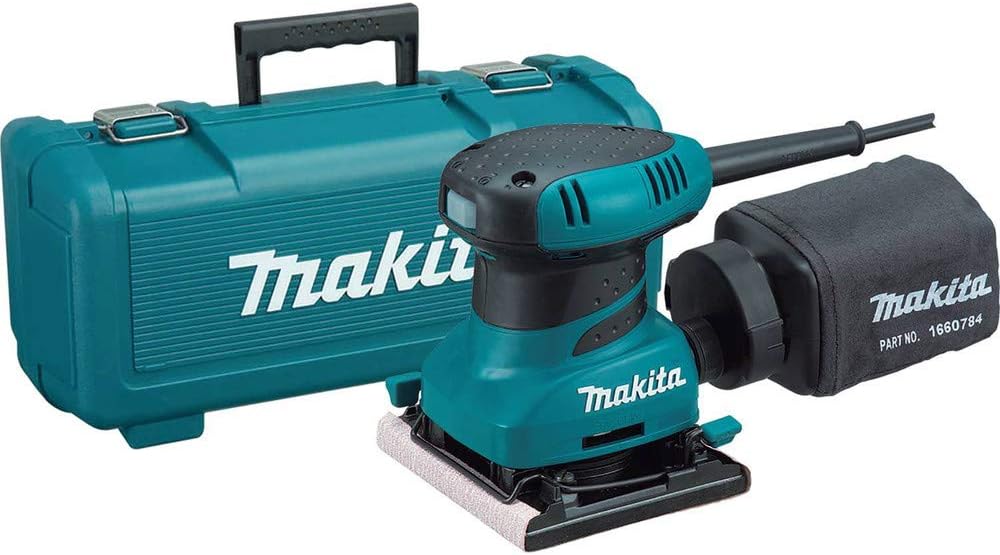
Best for: the most delicate flat work - thin veneer and final finish passes where control matters most.
When the surface is precious - an antique veneer, a final pass before stain - you want the gentlest, smoothest tool, and the BO4556K is it. This 1/4-sheet finishing sander is light (about 2.5 lbs), superbly balanced, and the lowest-vibration sander in this group, so it's easy to keep flat and moving without digging in. Its small fixed orbit removes material slowly - which sounds like a weakness but is exactly what you want on thin veneer, where a fast sander is a liability. Clamp-style standard paper keeps consumables cheap. For careful final finishing on delicate furniture, it's the safe pick.
| Pros | Cons |
|---|---|
| ✅ Lowest vibration - very controllable | ❌ Slow removal (by design) |
| ✅ Gentle on thin veneer | ❌ Clamp paper only |
| ✅ Light, balanced; cheap paper |
4. BLACK+DECKER BDEMS600 - Carving, Corners & Moulding
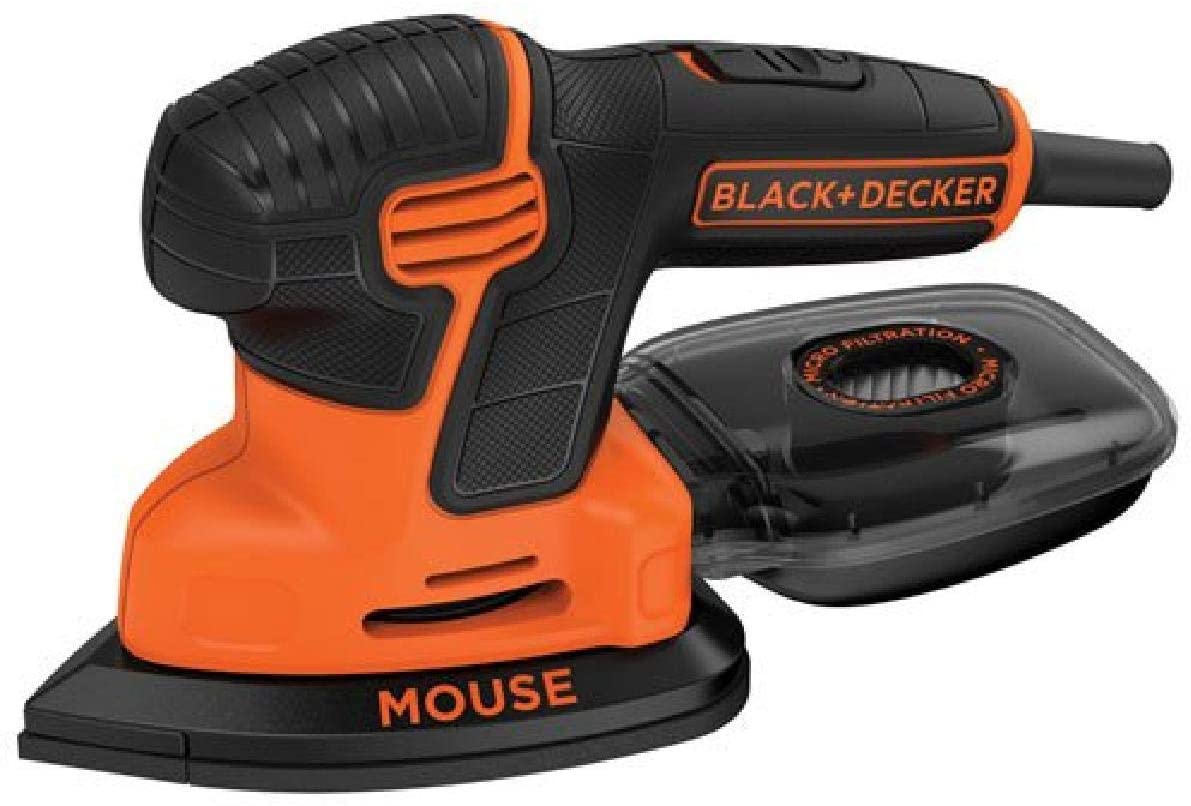
Best for: the carved details, inside corners, and moulding on furniture a flat sander can't touch.
Ornate furniture - carved feet, moulded frames, the inside corners of a hutch - needs a pointed detail sander, and the BDEMS600 is the cheap, capable classic. Its teardrop pad points into corners and follows moulding, and the finger attachment reaches slots and narrow reveals. It's light and its three-position grip handles both detail and small flat spots. Modest dust collection and not for big surfaces, but as the "get into the detail" tool alongside your random orbital, it's inexpensive and effective. See more in our mouse sanders and detail sanders guides.
| Pros | Cons |
|---|---|
| ✅ Reaches carving, corners, moulding | ❌ Not for large flat areas |
| ✅ Finger attachment for reveals | ❌ Modest dust collection |
| ✅ Light and cheap |
5. DEWALT DWE6411K - Flat Panels & Corners on a Budget
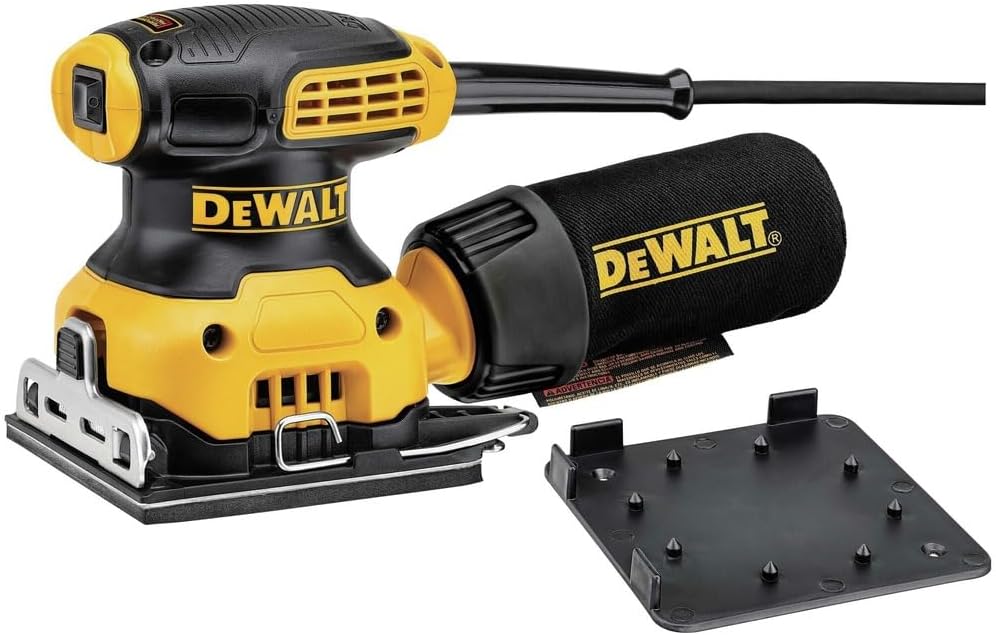
Best for: square corners and flat panels - a value finishing sander for cabinets and case pieces.
A 1/4-sheet finishing sander earns its keep on furniture because its square pad gets into the inside corners of face frames, drawers, and case pieces where a round pad can't. The DWE6411K is a strong-value one: enough power to work efficiently, a counterweight that keeps vibration low, and it runs on cheap cut sandpaper (or hook-and-loop). It's a slower, more deliberate finisher than a random orbital - which is fine for careful furniture work - and it's the most affordable way to cover the corner-and-panel jobs. A sensible companion to the ROS20VSC for case goods.
| Pros | Cons |
|---|---|
| ✅ Square pad reaches inside corners | ❌ Slow removal - finishing only |
| ✅ Cheap consumables; low vibration | ❌ Can swirl under stain if rushed |
| ✅ Great value for corners/panels |
How to sand furniture without ruining it
Never use a belt sander on furniture
A belt sander removes material far too fast for veneer or delicate solid wood - one careless second and you're through the veneer. Keep belt sanders for rough lumber; use random orbital, detail, and finishing sanders on furniture.
Respect thin veneer
Most furniture faces are veneer, often thinner than a coin. Use a light touch, low speed, and finer grits; check often; and stop the moment you see the color change that means you're reaching the substrate. When in doubt, hand-sand.
Match the tool to the shape
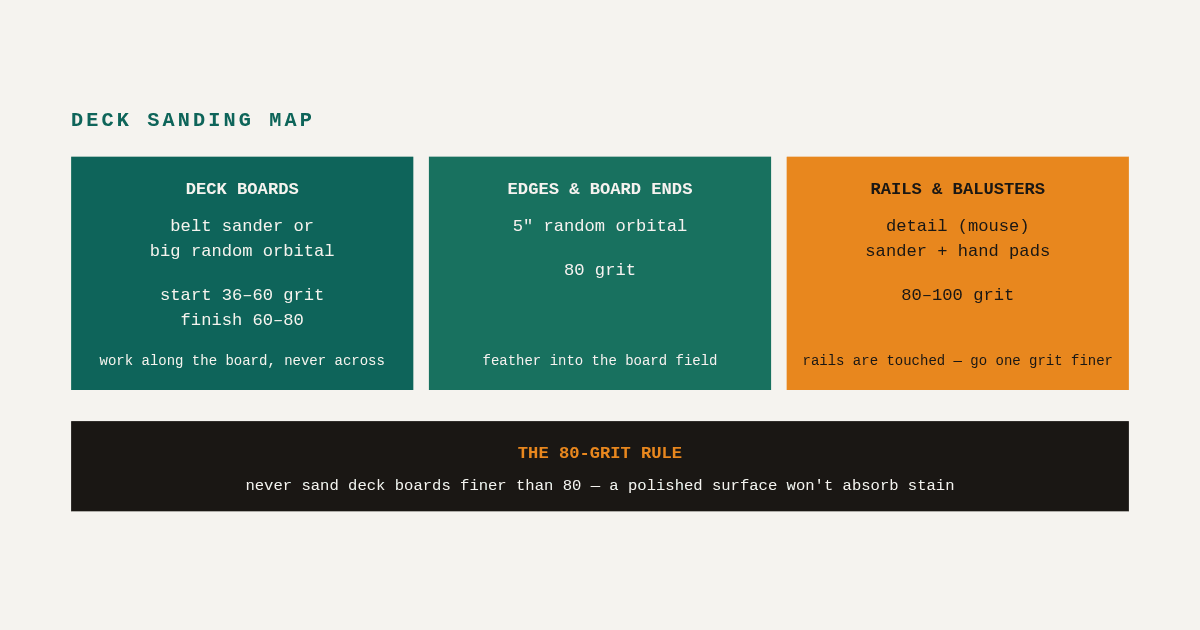
Flat faces → random orbital. Turned legs, spindles, contours → multi-attachment or detail sander. Carved details and inside corners → detail/mouse sander. Most refinishing jobs need two or three of these.
Grit progression for refinishing
To strip an old finish, start around 80-120 grit (or chemically strip first to save the veneer), then work up 120 → 180 → 220. For a stain-grade surface, finish at 180-220 and sand with the grain. Don't skip grits or scratches will telegraph through the stain.
Frequently Asked Questions
What's the best sander for refinishing furniture?
A 5" random orbital like the Bosch ROS20VSC for the flat faces, paired with a detail or multi-attachment sander for spindles, carving, and corners. Avoid belt sanders on furniture - they remove material too aggressively for veneer and delicate parts.
Can I use a belt sander on furniture?
Almost never. Belt sanders remove material extremely fast and will burn through thin veneer or gouge solid wood in seconds. Use gentler random orbital, sheet, and detail sanders on furniture, and hand-sand delicate spots.
How do I sand furniture with spindles and carving?
Use a detail sander (pointed pad) or a multi-attachment sander like the SKIL SR232301, whose swappable heads follow contours and reach into profiles. For very fine carving, fold sandpaper or use sanding sponges by hand.
What grit should I use to refinish furniture?
Start coarse enough to remove the old finish (around 80-120, or strip it chemically to protect veneer), then progress 120 → 180 → 220. Finish at 180-220 for a stain-grade surface, always sanding with the grain.
More in the sanders cluster
Go deeper: the wood sanders hub, a general sander-for-woodworking kit, sheet sanders for corners, mouse and detail sanders for carving, and sanders for doors.