6 Best Drywall Sanders: Dust Control Is the Whole Game
Affiliate disclosure: As an Amazon Associate, WoodyMan Reviews earns from qualifying purchases. If you buy through links on this page, we may earn a commission at no extra cost to you. How this works.
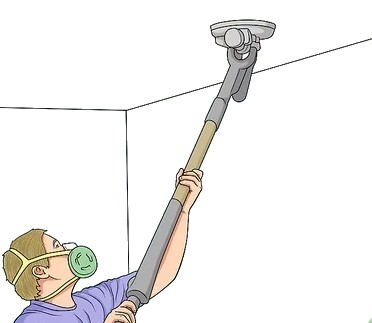
Sanding drywall by hand means days on a ladder and a house full of the finest, most invasive dust any trade produces. A pole-style drywall sander fixes both problems at once: the round head covers a wall in minutes instead of hours, and the built-in vacuum system captures most of the dust at the pad before it goes airborne. That second part is the real reason to buy one - judge every drywall sander by its dust collection first and its motor second.
Two honest notes before the list. First, the machine everyone associates with this category - the Festool PLANEX that topped our old ranking - has been discontinued in that version, and its successor costs more than most whole-room renovations budget for tools; for readers of this site the picks below are the sane range. Second, if your job is one patch rather than one room, skip the pole sanders entirely and jump to pick #6 or a simple sanding sponge.
We earn a small commission from the Amazon links below, at no extra cost to you - see our affiliate disclosure.
The 6 best drywall sanders
| Drywall Sander | Best for | Woody Rating | |
|---|---|---|---|
| 1. WEN 6377 Dual-Head | Best for most people - corners included | 9.3/10 [Editor's Choice] | Check price |
| 2. DEWALT DCE800B (cordless) | Pro pick - remodelers and repeat jobs | 9.0/10 | Check price |
| 3. YATTICH YT-917 | Best budget pole sander - LED-lit head | 8.7/10 | Check price |
| 4. WEN 6369 | The proven cheap classic | 8.5/10 | Check price |
| 5. Handife 800W | Cheapest way to a dust-managed wall | 8.3/10 | Check price |
| 6. Bosch ROS20VSC | Patches and small repairs, not whole rooms | 8.0/10 | Check price |
1. WEN 6377 Dual-Head - Editor's Choice
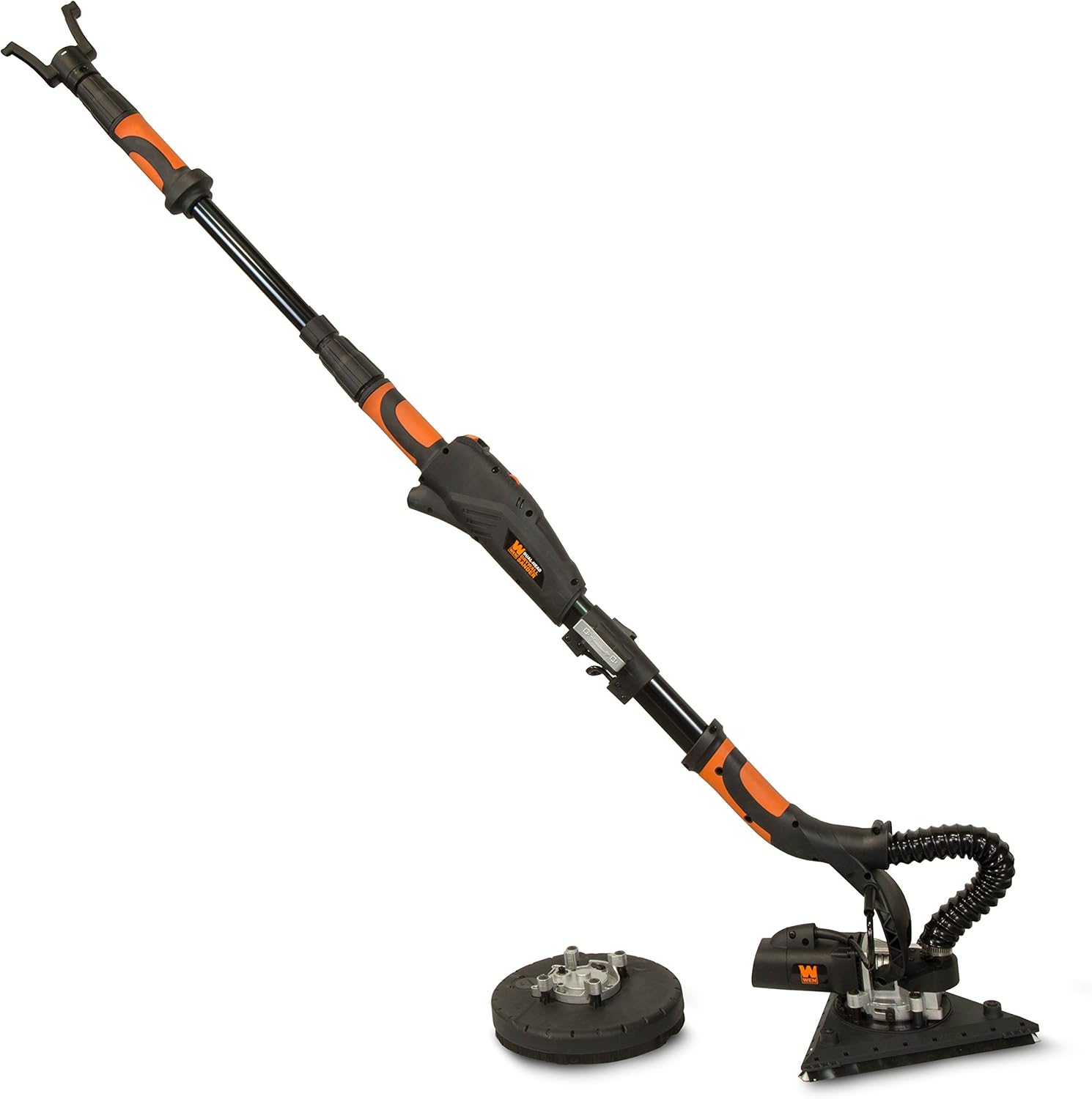
Best for: almost everyone finishing a room or more - the only affordable pole sander that handles corners properly.
The 6377 is WEN's original 6369 with the one upgrade that matters most: a second, triangular head that swaps on for corners and edges - exactly where every round-head sander leaves hand-sanding behind. The 5-amp head-mounted motor runs 600-1,500 RPM on a dial, the pivoting head self-aligns flush against wall or ceiling, and the whole thing telescopes to about five feet while weighing nine pounds. A 15-foot dust hose runs to your shop vac, and the hook-and-loop pads take standard 9-inch discs (six round and six triangle papers ship in the box). It's not a pro-duty machine - run it hard every week and bearings will complain eventually - but for finishing a basement or skim-coated living room it does everything the four-figure rigs do, corner to corner.
| Pros | Cons |
|---|---|
| ✅ Triangular second head - corners without hand-sanding | ❌ Hose fits some shop vacs loosely (tape fixes it) |
| ✅ Variable speed 600-1,500 RPM | ❌ Not built for daily pro use |
| ✅ Light (9 lbs) for overhead work | |
| ✅ Standard 9" hook-and-loop discs, 12 included |
2. DEWALT DCE800B - The Pro Pick
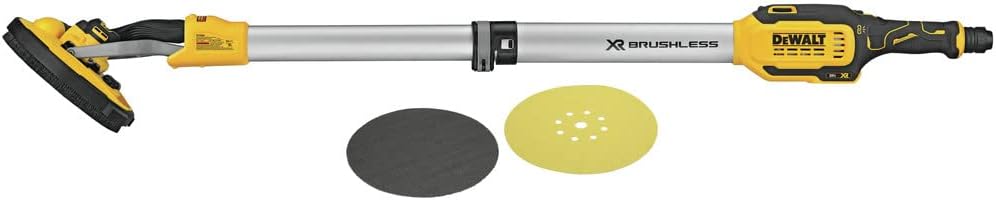
Best for: remodelers, flippers, and anyone sanding drywall more than once a year - especially on jobsites where cords are a hazard.
This is the machine that made pros stop lugging corded rigs: a 20V brushless 9-inch drywall sander with a telescoping shaft, an articulating head that tracks the surface, and a variable-speed dial that goes low enough for finish coats. The AirLock port clicks straight into DEWALT dust extractors - with Wireless Tool Control the vac starts when the sander does - but it also clamps onto a regular shop-vac hose. It's sold tool-only, so you're either already on the 20V MAX platform or budgeting for a big battery (a 5Ah pack does a room and change per charge). Between the runtime math and the price, it's overkill for one basement - and exactly right for the tenth.
| Pros | Cons |
|---|---|
| ✅ Cordless - no cord + hose tangle on scaffolds | ❌ Tool-only; battery and charger cost real money |
| ✅ Brushless motor holds speed under pressure | ❌ Head is round only - corners still need hand work |
| ✅ Articulating head follows walls and ceilings | |
| ✅ AirLock + wireless vac trigger with DEWALT extractors |
3. YATTICH YT-917 - Best Budget Pole Sander
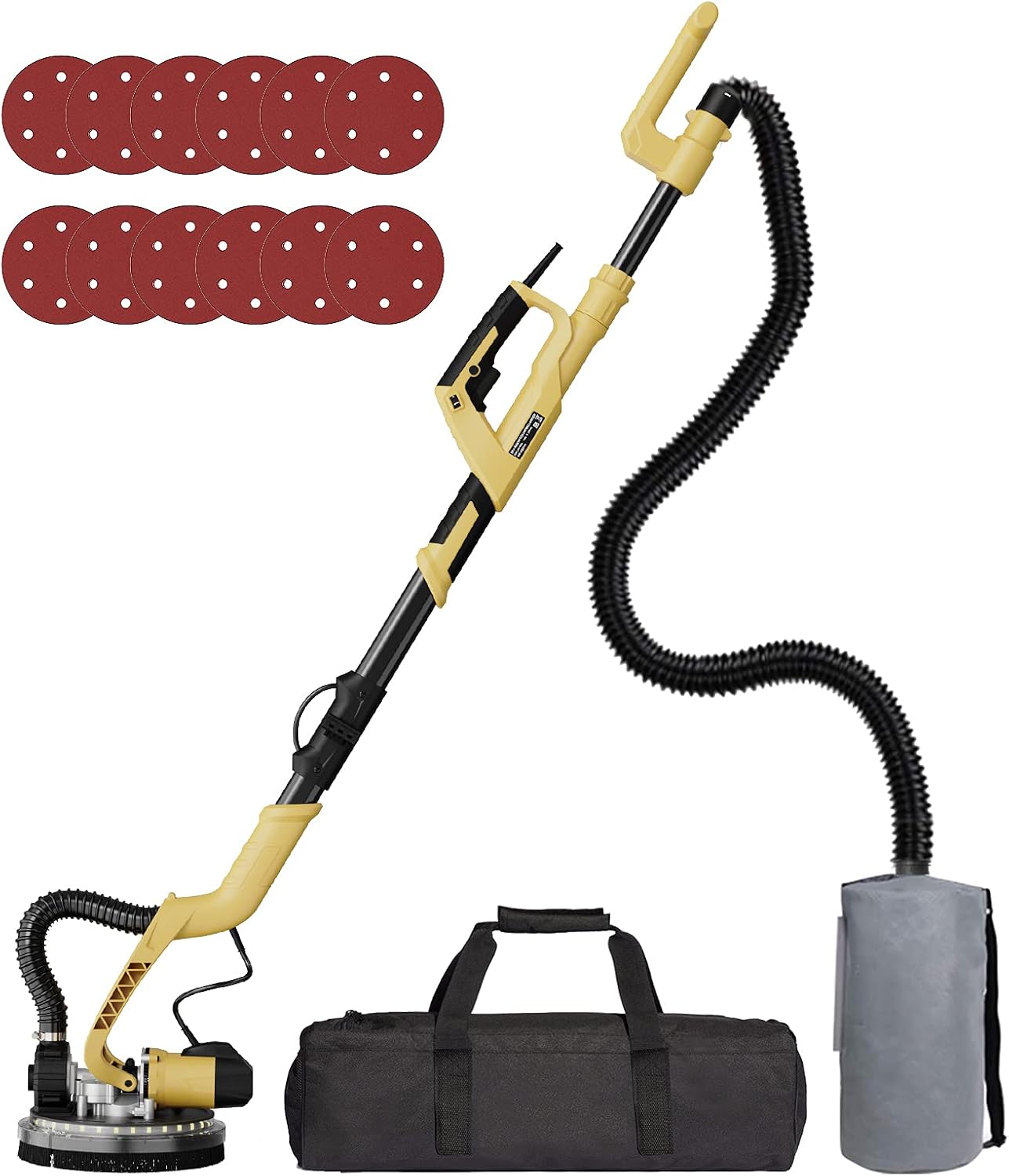
Best for: DIYers who want the most usable feature set per dollar - and anyone working rooms without finished lighting.
YATTICH's updated YT-917 keeps the reason the original became the default budget pick: the double ring of LEDs around the head, which rakes light across the mud at the exact low angle that exposes ridges and hollows before your fingertips find them. Around that party trick is a genuinely competent sander - 7 speeds from 1,000-1,850 RPM, an aluminum extension handle, an automatic dust-collection system with its own bag (or hook it to a vac for better capture), 12 discs, and a carry bag. Build quality is a step below the WEN - more plastic in the joints, and the stock dust bag catches maybe two-thirds of what a shop vac would - but as a first drywall sander it's hard to argue with.
| Pros | Cons |
|---|---|
| ✅ LED-lit head shows imperfections as you sand | ❌ Included dust bag is mediocre - use a vac |
| ✅ 7 speeds, 1,000-1,850 RPM | ❌ More plastic than the WEN in the wear points |
| ✅ 12 discs + carry bag included |
4. WEN 6369 - The Proven Cheap Classic
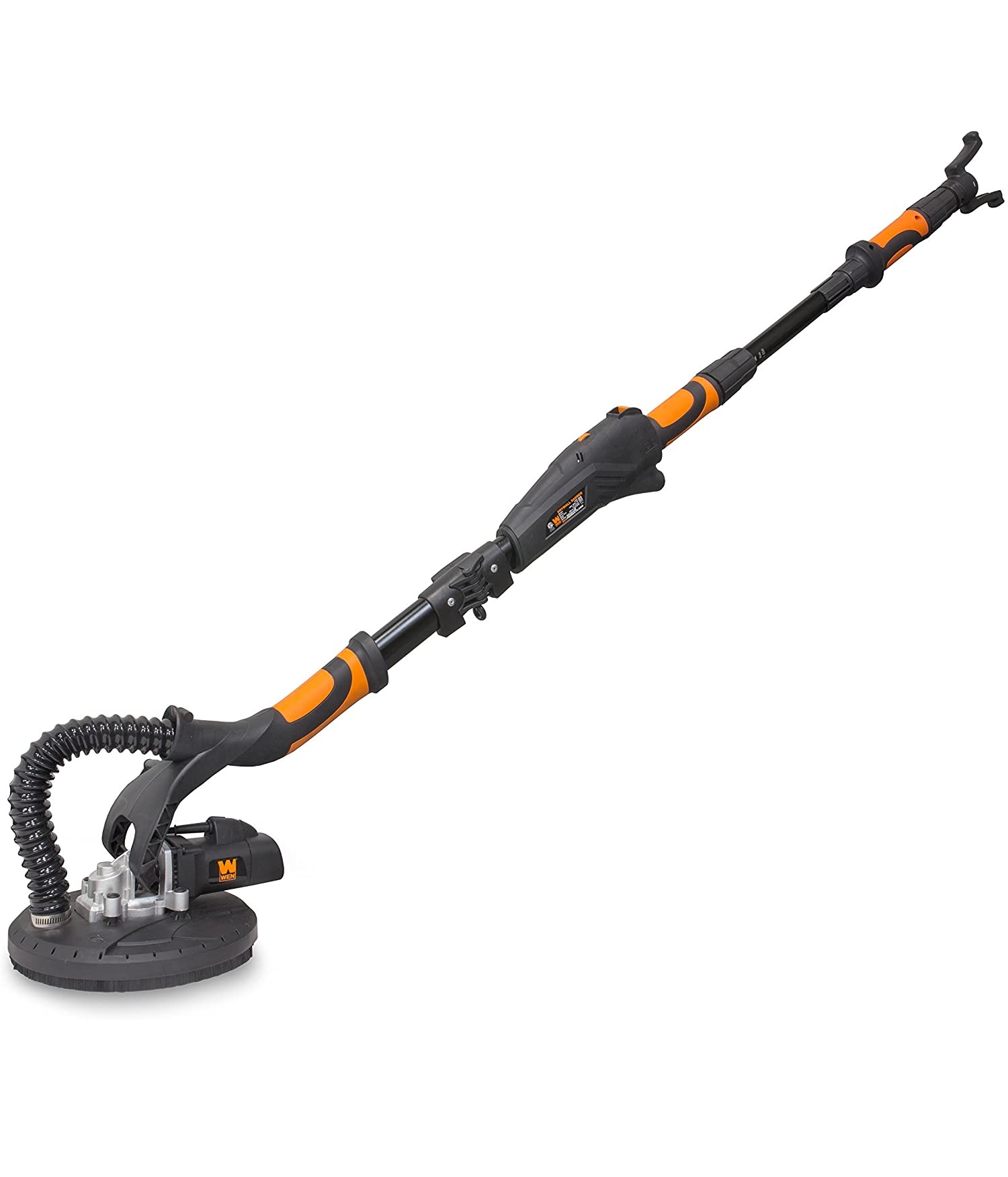
Best for: one room, one budget, no surprises - the sander with a decade of reviews behind it.
The 6369 is the single-head original of our top pick: same 5-amp head-mounted motor, same 600-1,500 RPM dial, same pivoting 8.5-inch head and 15-foot hose, same nine-pound telescoping frame. What you give up versus the 6377 is only the triangular corner head - and if your room has crown molding or you don't mind ten minutes with a sanding sponge in the corners, that's a fair trade for the lower price. Consumables are everywhere (it takes the same standard 9-inch discs), parts support from WEN is unusually good for the price class, and the sheer volume of long-term owner reviews makes this the least risky cheap tool in the category.
| Pros | Cons |
|---|---|
| ✅ Cheapest tool here with a real track record | ❌ Round head only - corners by hand |
| ✅ Same motor and speed range as our top pick | ❌ Bag-less: you need a shop vac on the hose |
| ✅ Standard discs, easy parts support |
5. Handife 800W - Cheapest Dust-Managed Wall
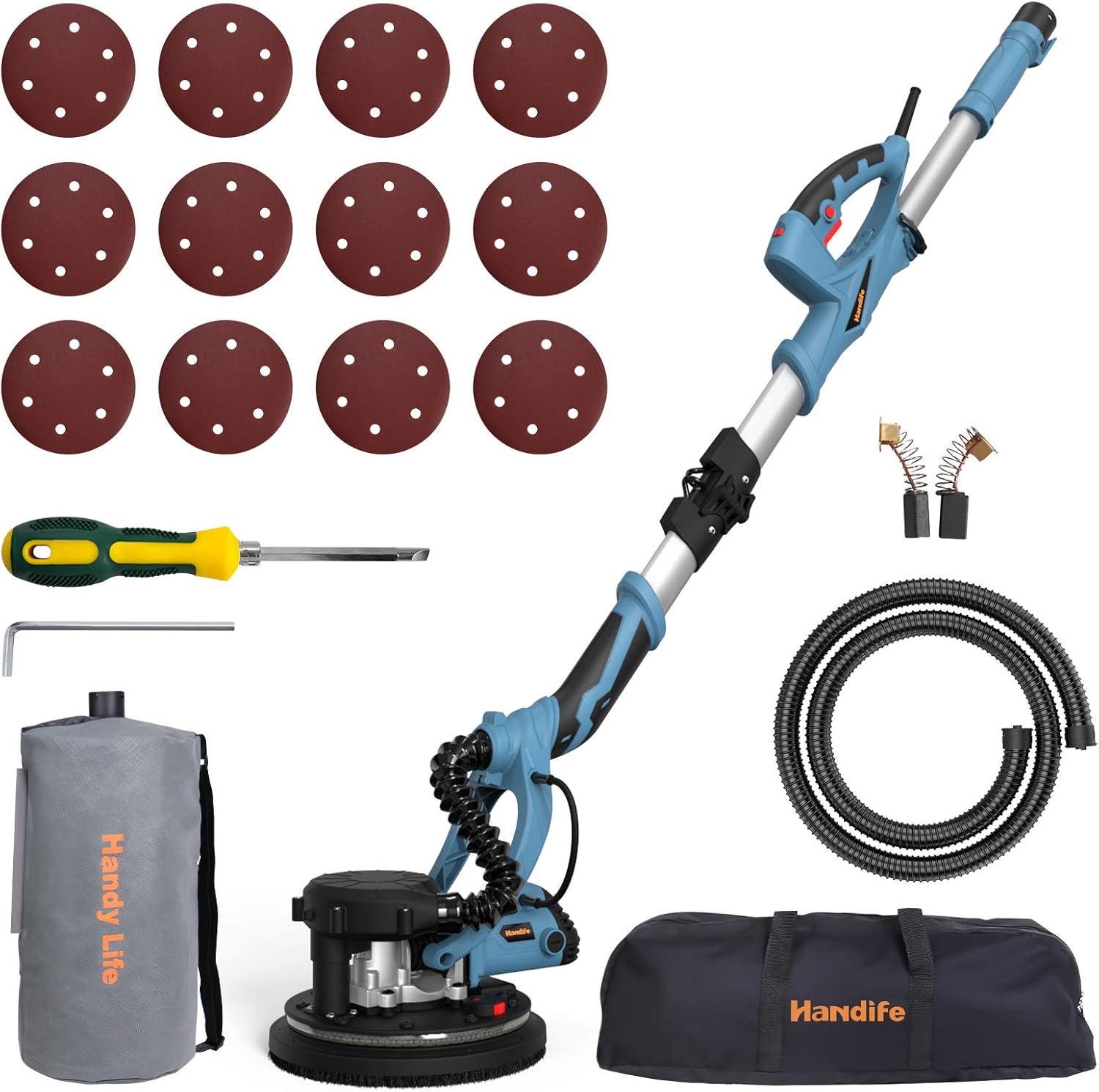
Best for: the tightest budgets and one-off jobs where the sander may never come out of the closet again.
Handife's 800W pole sander undercuts everything above it while keeping the features that matter: 800-1,800 RPM adjustment, a self-contained vacuum system with dust bag, double-deck LED lights copied from the YATTICH playbook, a folding shaft for storage, and a section of the pad guard that opens up so the disc can reach right into wall-ceiling junctions. Twelve discs, spare carbon brushes, and a storage bag come along. The honest caveat is longevity: this is a commodity-class tool, and while most units sail through a whole-house job, the brand won't be servicing it in five years. For a single renovation that's often exactly the right amount of tool.
| Pros | Cons |
|---|---|
| ✅ Lowest price for a real vacuum-equipped pole sander | ❌ Commodity build - buy for the job, not the decade |
| ✅ Open-edge guard reaches into ceiling junctions | ❌ Dust bag needs frequent emptying |
| ✅ Folds for storage; spare brushes included |
6. Bosch ROS20VSC - For Patches, Not Rooms
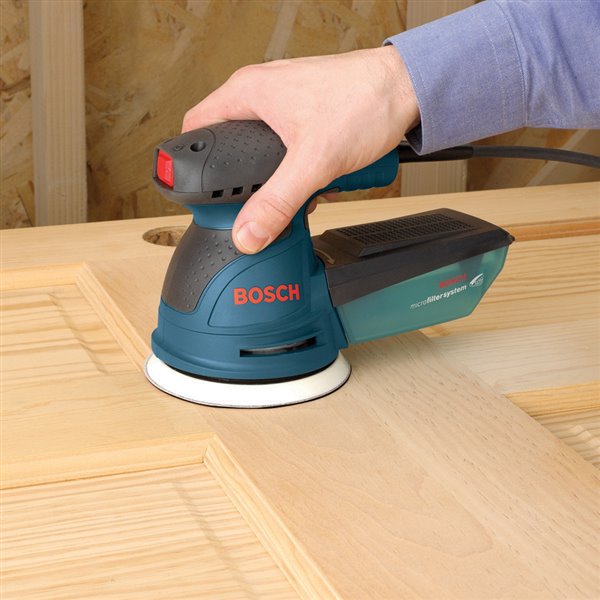
Best for: patched holes, small repairs, and furniture-scale jobs - the pick when a pole sander is more machine than the job deserves.
A 5-inch random orbital is the wrong tool for a whole wall (you'll be on a ladder all day working a 5-inch circle), but for a doorknob hole patch or a skim-coated water stain it beats setting up a pole rig. The ROS20VSC earns the slot over commodity orbitals for one drywall-relevant reason: its microfilter dust canister actually captures fine dust down to a half-micron, which is the size class drywall dust lives in. Variable speed (7,500-12,000 OPM) lets you slow down so you don't burn through a thin coat of mud; run 150-220 grit and a light touch. It then goes back to being an excellent wood sander the rest of the year - see where it fits in the broader sanders guide.
| Pros | Cons |
|---|---|
| ✅ Microfilter canister handles ultra-fine drywall dust | ❌ Hopeless for full walls or ceilings - patches only |
| ✅ Variable speed protects thin mud coats | ❌ No pole reach - you're on the ladder |
| ✅ Doubles as a first-rate wood sander |
Buying guide: what actually matters in a drywall sander
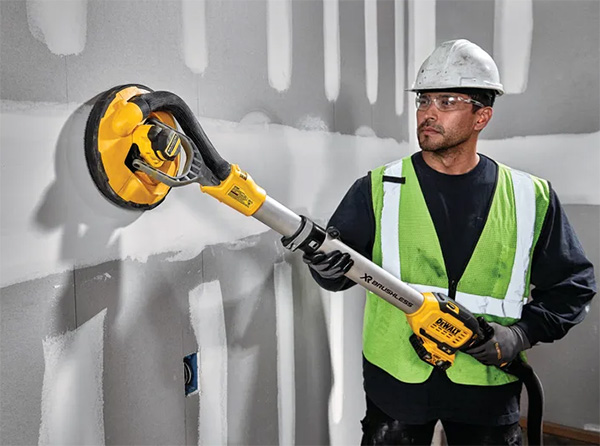
Dust collection first. Drywall dust is fine enough to pass through ordinary vacuum filters and settle in every room of the house. A sander with pad-level extraction plus a shop vac with a fine-dust (ideally HEPA) filter captures the overwhelming majority of it; a sander without extraction just launches it. This one criterion separates the tools worth buying from the rest.
Pole vs handheld. For walls and ceilings you want a pole sander - the reach does the ladder's job and your arms last the whole room. Handheld orbitals and mouse sanders are for patches and corners; if that's your whole job, our mouse sander guide covers the small end.
Corners are the hidden cost. Round heads can't reach into a 90° corner. Either buy the dual-head WEN, accept some hand-sanding with a sponge, or budget for a corner tool. Nothing ruins a proud sanding job like fuzzy corners under raking light.
Grit: less than you think. Fresh mud sands fast. 120 grit for the first pass on standard joint compound, 150-220 for finish passes and skim coats. Coarser than 100 scratches the paper facing around the joint, and those scratches telegraph through paint. Mesh (screen) abrasives clog slower than paper discs and shake clean.
Variable speed matters on light coats. Full speed on a thin skim coat burns through to the tape in seconds. Every pick above has a speed dial - use the bottom half of it more than the top.
Check your work with light, not fingers. A raking work light held near the wall shows every ridge and hollow (the YATTICH builds this in). Mark flaws in pencil - never pen, which bleeds through paint.
If you're pricing out a whole finishing job - hanging, taping, mudding, sanding - our guide on how to bid a drywall job breaks down where sanding time actually goes. And for choosing between sander types across all your projects, start at the wood sanders hub or the belt vs orbital explainer.
Frequently Asked Questions
Can I use a regular orbital sander on drywall?
For patches, yes - with fine grit (150+), low speed, and dust collection attached. For whole walls it's the slow, exhausting road, and most orbitals' dust systems can't cope with the volume. Whole-room work is what pole-style drywall sanders exist for.
Is wet sanding drywall better than dry sanding?
Wet sanding (a damp sponge instead of abrasive) produces no dust, which makes it right for occupied rooms and small patches. But it's slower, and it smears mud rather than cutting it flat, so the finish is slightly wavier. For anything bigger than a patch, dry sanding with real dust extraction gives a flatter wall in less time.
What grit sandpaper should I use on drywall?
120 grit for the main pass on cured joint compound, then 150-220 to finish - especially under gloss or eggshell paint, which highlights scratches. Never go coarser than 100 on the field of the wall: it tears the paper facing.
Do drywall sanders really collect all the dust?
No - expect roughly 90% capture with a good sander hooked to a shop vac with a fine-dust filter, less with onboard bags. That remaining fraction still means drop cloths, a doorway plastic sheet, and ideally a box fan exhausting out a window. It's a massive improvement over hand sanding, not a clean-room guarantee.
Do I need to sand between coats of joint compound?
A light knock-down of ridges and tool marks between coats - by hand, 15 seconds a joint - saves heavy sanding at the end. Save the machine for after the final coat. And prime before judging: primer reveals flaws paint will show, while there's still time for an easy touch-up coat.