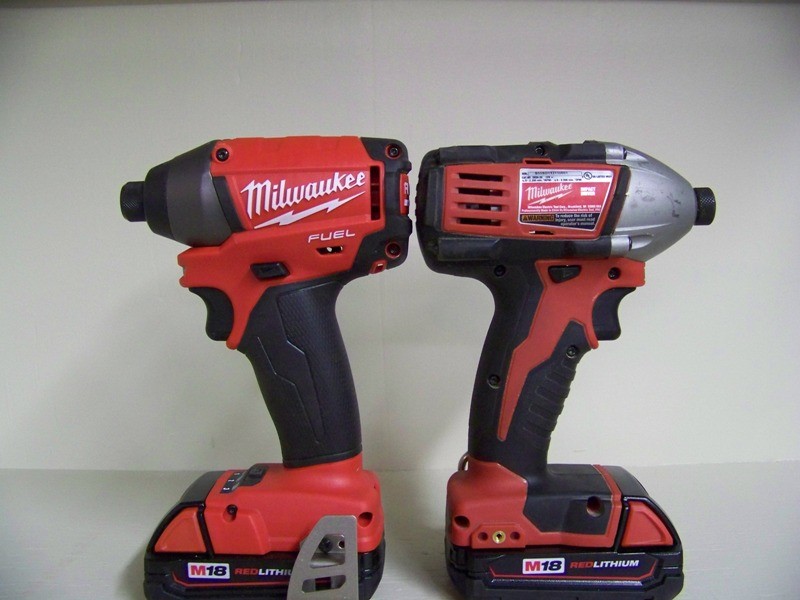
Best Cordless Planers: 5 Battery Hand Planers Worth Owning
Affiliate disclosure: As an Amazon Associate, WoodyMan Reviews earns from qualifying purchases. If you buy through links on this page, we may earn a commission at no extra cost to you. How this works.

A cordless hand planer earns its place for the jobs a benchtop thickness planer can't reach: shaving a sticking door in place, trimming a deck board, easing a cabinet face, chamfering an edge. Nearly every model is a 3-1/4-inch planer, so the real decisions are the ones that matter on site - which battery platform you already own, depth-of-cut and rabbet capacity, and whether it's brushless (worth it for runtime and motor life). Buy into the wrong battery system and you're paying twice; buy a bare tool when you have no batteries and you'll be surprised at checkout.
The five below span the major platforms and price points. A note on the old version of this list: it was built on now-dead product links and models that have been superseded, so this is a clean re-pick against what's actually available and supported in 2026.
We earn a small commission from the Amazon links below, at no extra cost to you - see our affiliate disclosure.
The 5 best cordless planers
| Cordless Planer | Best for | Woody Rating | |
|---|---|---|---|
| 1. Makita XPK02Z 18V LXT | Best overall - smoothest, fastest brushless cut | 9.4/10 [Editor's Choice] | Check price |
| 2. DEWALT DCP580B 20V MAX | The 20V MAX household pick | 9.1/10 | Check price |
| 3. Milwaukee 2623-20 M18 | Best rabbeting / depth control | 8.9/10 | Check price |
| 4. WEN 20653 20V Max (kit) | Best value - includes battery + charger | 8.5/10 | Check price |
| 5. Makita XPK01Z 18V LXT | Cheaper Makita for lighter duty | 8.3/10 | Check price |
1. Makita XPK02Z 18V LXT - Editor's Choice
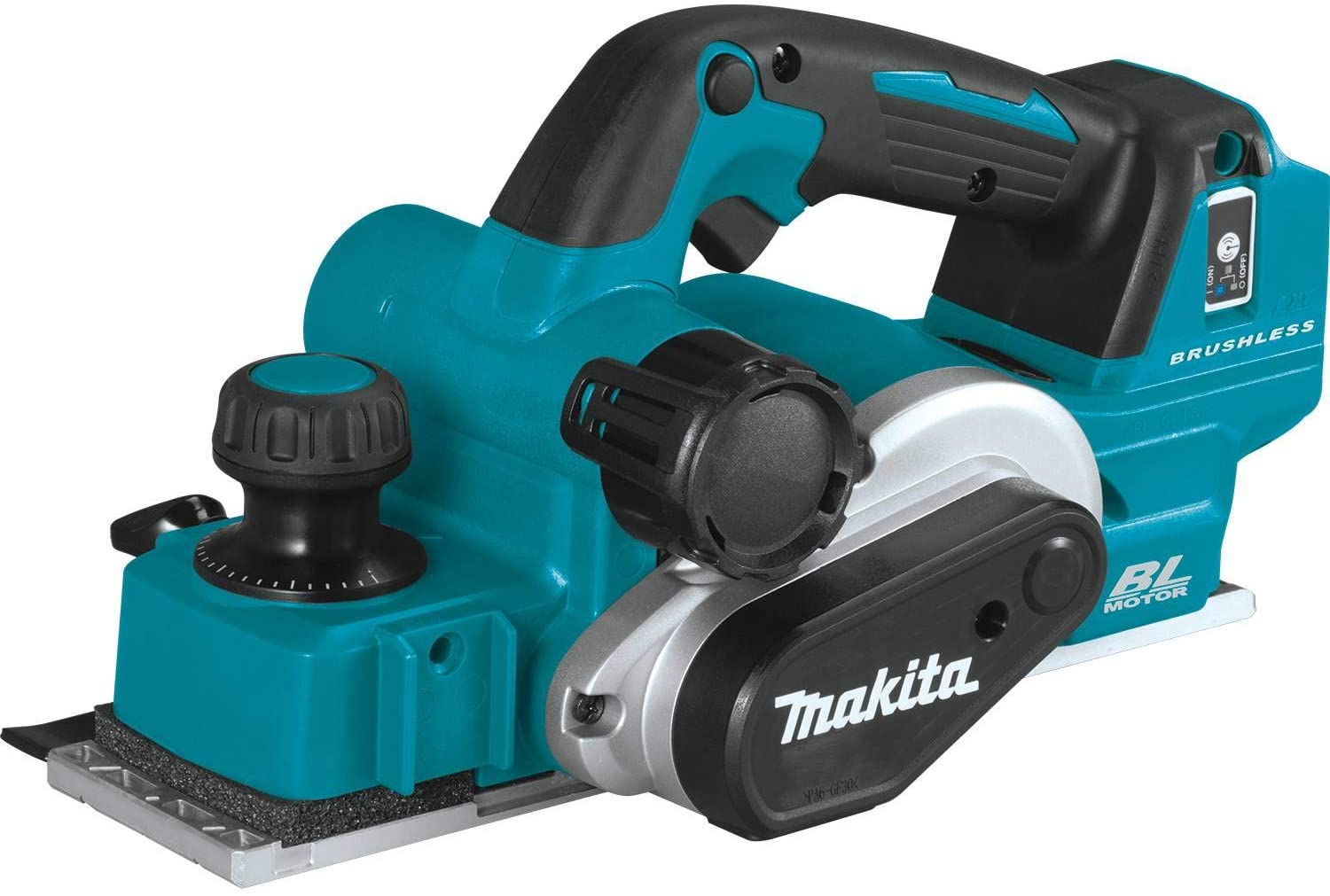
Best for: anyone on Makita's 18V LXT platform who wants the cleanest, fastest handheld planing available cordless.
The XPK02Z is the planer to beat. Its brushless motor spins the two-blade cutter head at 15,000 RPM - noticeably faster than most rivals - for a glassy finish and quick stock removal up to 3-1/4" wide and 1/8" deep in a single pass. The depth knob is precise and repeatable, there's a front v-groove for chamfering, and it's AWS-capable (Makita's Auto-start Wireless System) for tool-triggered dust extraction. As a bare tool it drops straight onto any LXT battery you already own - the whole reason to buy it is if you're in that ecosystem, because standalone the battery is a real cost. If your shop runs Makita, this is a near-automatic pick.
| Pros | Cons |
|---|---|
| ✅ 15,000 RPM brushless - smoothest, fastest cut | ❌ Bare tool - you need LXT batteries |
| ✅ 3-1/4" width, 1/8" depth in one pass | ❌ Only worth it inside the Makita ecosystem |
| ✅ Precise, repeatable depth knob | |
| ✅ AWS wireless dust-extraction trigger |
2. DEWALT DCP580B 20V MAX - The 20V Household Pick
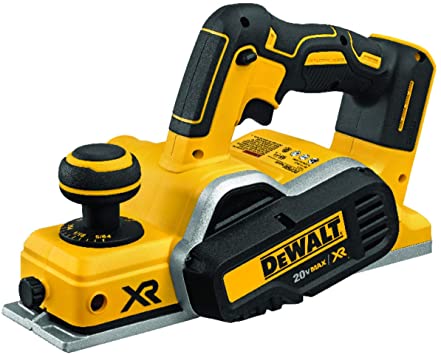
Best for: the many households already charging DEWALT 20V MAX batteries for drills and saws.
If your garage runs DEWALT 20V MAX, this is your planer - and it's an excellent one on its own merits. The brushless motor makes 32,000 cuts per minute and holds speed under load, precision aluminum shoes keep cuts dead-parallel, and the depth dial adjusts in fine 1/256" increments up to a 5/64" pass. A poly-V drive belt and a spring-loaded kickstand (so you can set it down mid-workpiece without the blade touching) round out a tool built for finish carpentry and door work. Like the Makita it's a bare tool, so the value equation swings entirely on whether you already own the batteries; if you do, there's no reason to look further.
| Pros | Cons |
|---|---|
| ✅ 32,000 CPM brushless, holds speed under load | ❌ Bare tool - needs 20V MAX batteries |
| ✅ Aluminum shoes = parallel, accurate cuts | ❌ Slightly heavy in the hand |
| ✅ Fine 1/256" depth increments | |
| ✅ Kickstand protects the workpiece |
3. Milwaukee 2623-20 M18 - Best for Rabbeting
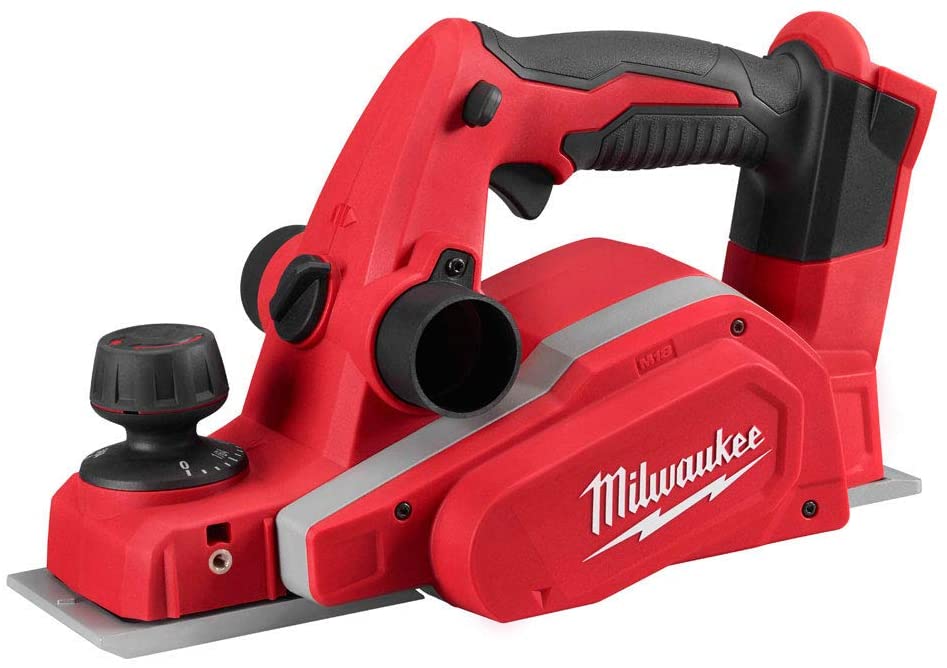
Best for: M18 owners who do joinery - the depth control and rabbet capacity here are the standouts.
For anyone on Milwaukee's M18 system, the 2623-20 brings the best fine-control story on this list: a depth dial with 20 locking positions for precise, repeatable stock removal, and a class-leading 27/64" rabbet capacity that makes shiplap and rabbet joints practical with a handheld planer. The motor runs 14,000 RPM through a two-blade head, and it uses common double-edge carbide blades that are cheap and widely stocked. As with the others it's a bare tool for the platform faithful. One buying warning: search results are cluttered with third-party "for Milwaukee" knockoff listings - make sure you're buying the genuine Milwaukee 2623-20, not a lookalike bundle.
| Pros | Cons |
|---|---|
| ✅ 20-position depth dial - best fine control | ❌ Bare tool - needs M18 batteries |
| ✅ 27/64" rabbet - real joinery capacity | ❌ Watch for knockoff "for Milwaukee" listings |
| ✅ Common, cheap double-edge carbide blades | |
| ✅ Bevel/edge guide included |
4. WEN 20653 20V Max - Best Value (Comes With a Battery)
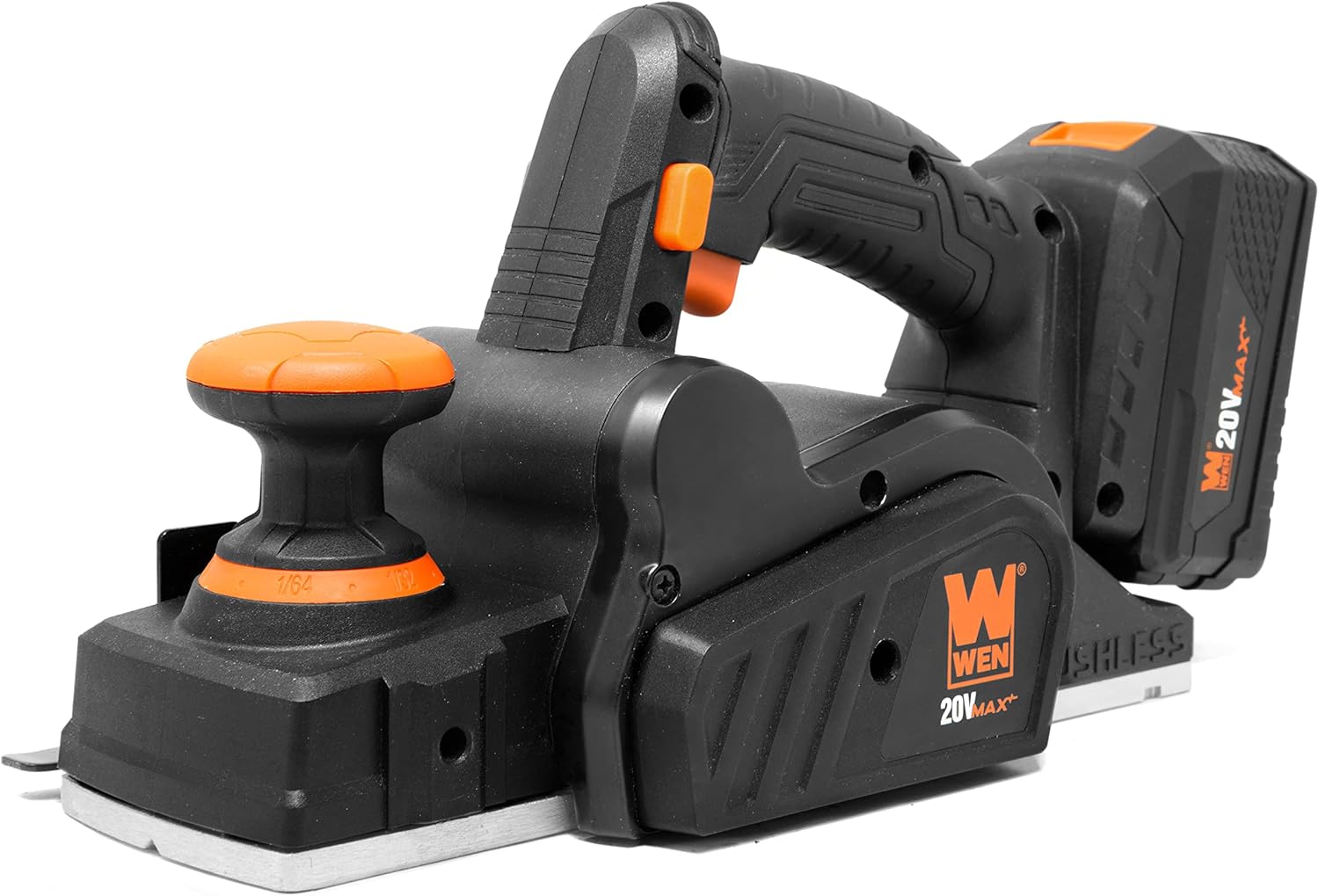
Best for: anyone who owns no cordless platform yet and doesn't want to pay separately for a battery.
Every pick above is a bare tool - great if you're already invested, a nasty surprise if you're not. The WEN 20653 solves that: it's a brushless 3-1/4" planer that ships with a 4.0Ah battery and a charger in the box, so it's genuinely ready to work out of the carton for less than a bare premium tool plus a battery. It delivers up to 26,000 cuts per minute, has an onboard LED charge gauge, and cross-fits WEN's whole 20V Max line if you want to add tools later. It won't match Makita's finish or Milwaukee's rabbet depth, and WEN's ecosystem is smaller - but for a homeowner who needs a cordless planer and nothing else, it's the most sensible money on this page.
| Pros | Cons |
|---|---|
| ✅ Battery + charger included - ready to use | ❌ Finish not quite Makita/DEWALT level |
| ✅ Brushless, 26,000 CPM | ❌ Smaller battery ecosystem to grow into |
| ✅ Best out-the-door value here | |
| ✅ Onboard charge gauge |
5. Makita XPK01Z 18V LXT - Cheaper Makita for Lighter Duty
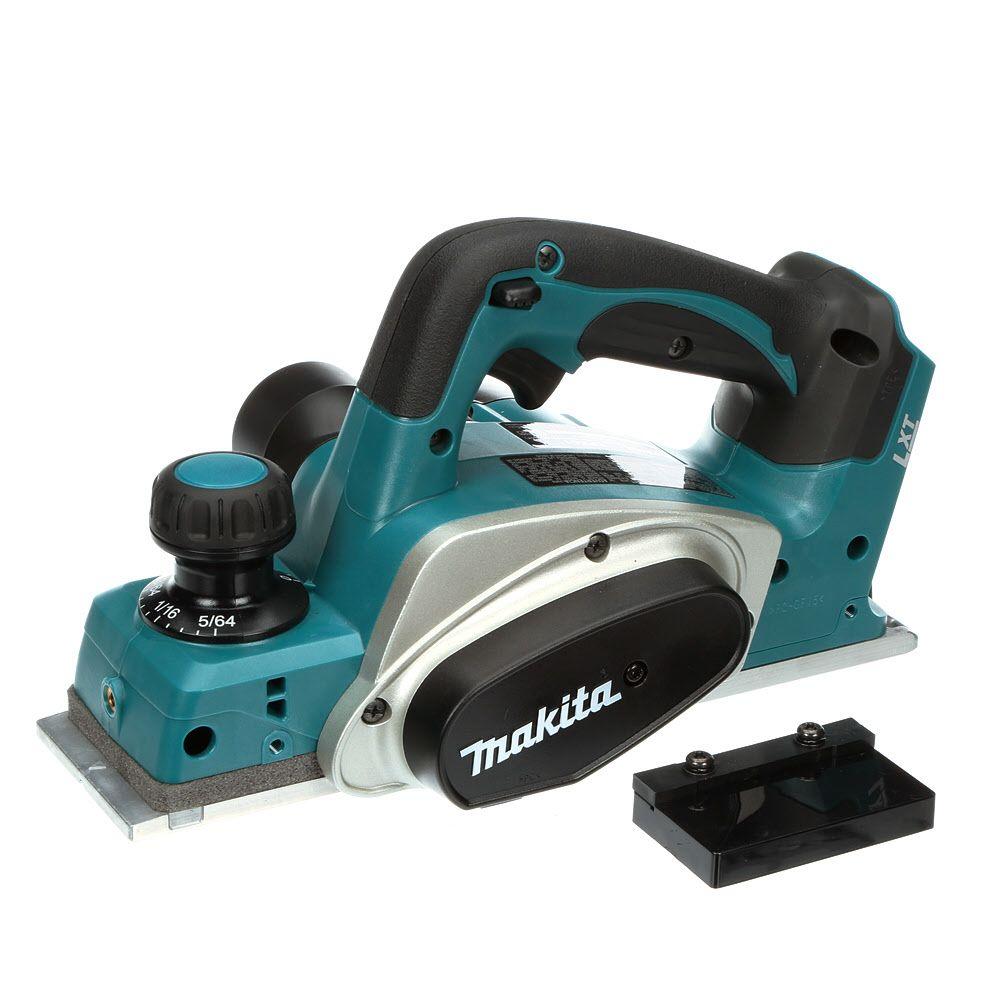
Best for: LXT owners who want Makita quality but don't need the brushless XPK02Z's speed or price.
The XPK01Z is the XPK02Z's older, non-brushless sibling, and it's still a very good planer for occasional and light-duty work. It runs the same 3-1/4" width and 0-5/64" depth range at 14,000 RPM through a two-blade head, with the aluminum base and spring-loaded kickstand that make Makita planers pleasant to use. You give up the brushless motor's runtime and the XPK02Z's extra speed and AWS, but you save meaningfully, and it drops onto the same LXT batteries. For an LXT household that reaches for a planer a few times a project rather than all day, it's the smarter spend.
| Pros | Cons |
|---|---|
| ✅ Makita build quality for less | ❌ Brushed motor - less runtime than XPK02Z |
| ✅ Same LXT batteries as the XPK02Z | ❌ No AWS; slower than the brushless pick |
| ✅ Kickstand + aluminum base | |
| ✅ Great for occasional/light-duty use |
Buying guide: what actually matters
Battery platform first. With four of these five as bare tools, the smartest planer is usually the one that fits batteries you already own - the finish differences between good brushless planers are small next to the cost of buying into a second ecosystem. If you own no cordless platform, the WEN kit (or buying a Makita/DEWALT kit version) is the honest answer.
Brushless is worth it if you'll use it. Brushless motors run longer per charge, hold speed under load, and last longer. For all-day or frequent use, pay for it (picks 1-4). For a few passes a month, the brushed XPK01Z saves money with little practical downside.
Depth and rabbet capacity for joinery. Standard depth-per-pass is around 5/64" - 1/8". If you want to cut rabbets or shiplap, the Milwaukee's 27/64" rabbet and 20-stop dial lead the field. For plain door-and-edge work, any of these is plenty.
A cordless hand planer isn't a thickness planer. These flatten and trim edges and faces in place; they don't dimension lumber to a consistent thickness across its width - that's a benchtop tool. See our wood planers guide for that job, and pair either with the best sander for woodworking for final smoothing. Debating M18 vs M18 FUEL for the Milwaukee route? Our M18 vs M18 FUEL breakdown covers it.
Frequently Asked Questions
What can I actually do with a cordless hand planer?
Trim a door that's sticking (in the jamb, no removal), shave and fit deck or fence boards, flatten a glued-up edge, chamfer with the v-groove, and ease cabinet or table edges. It's a fitting-and-trimming tool, not a lumber-dimensioning one.
Are cordless planers powerful enough vs corded?
For handheld work, yes - modern brushless models like the XPK02Z and DCP580B remove stock as fast as most corded hand planers. The gap only shows in sustained all-day heavy removal, where battery swaps add up. Most users never hit that ceiling.
Should I buy a bare tool or a kit?
Bare tool if you already own compatible batteries (much cheaper). Kit if you don't - and factor the battery cost honestly, because a "cheap" bare tool plus a battery and charger often costs more than the WEN kit that includes both.
How deep should each pass be?
Small - around 1/32" for a clean finish, up to the tool's max (≈1/8") only for fast rough removal. Multiple light passes give a better surface and less tear-out than one deep bite, especially across figured grain.
Do these come with dust collection?
They eject chips (usually switchable left/right), and the Makita XPK02Z adds AWS wireless triggering for a compatible extractor. For fine dust control, connect a shop vac to the chip port - planers throw a lot of shavings.