Best Adhesives for Wood: 7 Glues and When to Use Each
Affiliate disclosure: As an Amazon Associate, WoodyMan Reviews earns from qualifying purchases. If you buy through links on this page, we may earn a commission at no extra cost to you. How this works.
Short answer: the best all-round wood glue is Titebond III Ultimate - waterproof, food-safe once cured, and stronger than the wood itself on a clamped joint. For interior-only furniture work, the cheaper Titebond Original does the same job; for gaps, repairs, or wood-to-metal, step up to polyurethane or epoxy.
Beyond that headline, there is no single "best" wood glue - there's a best glue for the job, and picking the wrong type is why joints fail. Four families cover almost everything a woodworker does:
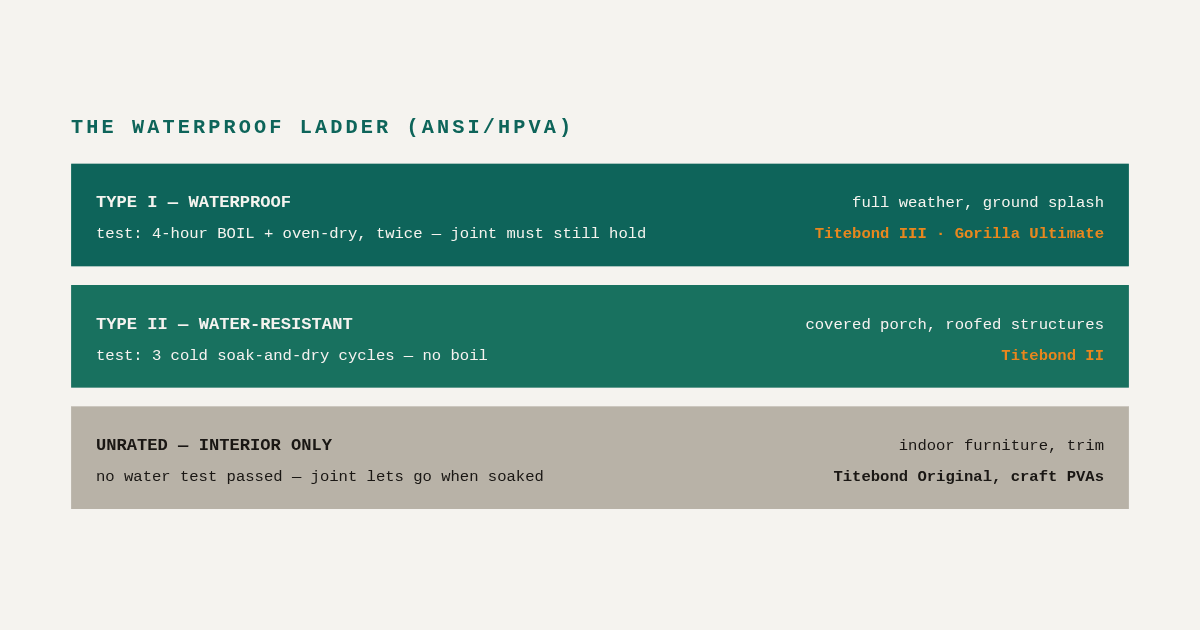
- PVA (yellow wood glue) - the everyday default for wood-to-wood joints. Strong, easy, water cleanup. The Titebond ladder (I → II → III) is really about water resistance: I is interior, II is water-resistant, III is waterproof.
- Polyurethane - foams and expands to fill gaps, bonds dissimilar materials (wood to metal, stone, plastic), and is waterproof. Messy and needs moisture to cure.
- Epoxy - two parts, gap-filling, and the strongest for structural repairs, voids, and non-porous surfaces. No clamping pressure needed.
- CA (super glue) - instant grab for small parts, trim, and woodturning. Not a structural joint glue, but indispensable for quick holds and finishing.
Below is the best pick in each family (with the full PVA ladder), and a clear guide to which one your project needs.
We earn a small commission from the Amazon links below, at no extra cost to you - see our affiliate disclosure.
The 7 best wood adhesives
| Adhesive | Type / Best for | Woody Rating | |
|---|---|---|---|
| 1. Titebond III Ultimate | PVA - best overall (waterproof) | 9.5/10 [Editor's Choice] | Check price |
| 2. Titebond II Premium | PVA - best water-resistant value | 9.1/10 | Check price |
| 3. Titebond Original | PVA - best for interior joints | 9.0/10 | Check price |
| 4. Gorilla Wood Glue | PVA - best fast-grab / DIY | 8.7/10 | Check price |
| 5. Gorilla Original (Polyurethane) | Gap-filling & dissimilar materials | 8.5/10 | Check price |
| 6. Gorilla 2-Part Epoxy | Structural repairs & voids | 8.6/10 | Check price |
| 7. Starbond Medium CA Glue | Instant holds, trim & turning | 8.8/10 | Check price |
1. Titebond III Ultimate - Editor's Choice (PVA)
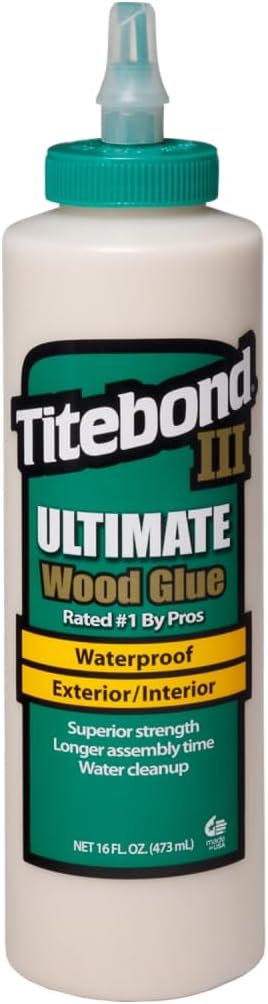
Best for: the one glue to own - nearly every wood joint, indoors or out.
If you keep a single bottle in the shop, make it Titebond III. It's a PVA yellow glue like the others, but it's rated ANSI Type I waterproof, so it handles outdoor furniture, cutting boards, and anything that sees moisture - while still being perfect for ordinary interior joints. It offers a longer open time than Original (more working time on complex glue-ups), a strong bond that's typically stronger than the wood itself, easy water cleanup, and it's approved for indirect food contact (cutting boards, salad bowls). It costs a little more and dries a slightly darker tan, but as a do-everything wood glue it's the safest default. Clamp it while it sets, then finish with the best wood preservatives for outdoor pieces.
| Pros | Cons |
|---|---|
| ✅ Fully waterproof (Type I) - indoor/outdoor | ❌ Costs more than Original |
| ✅ Long open time; bond stronger than wood | ❌ Dries a darker tan |
| ✅ Food-safe (indirect); water cleanup | |
| ✅ Truly do-everything |
2. Titebond II Premium - Best Water-Resistant Value (PVA)
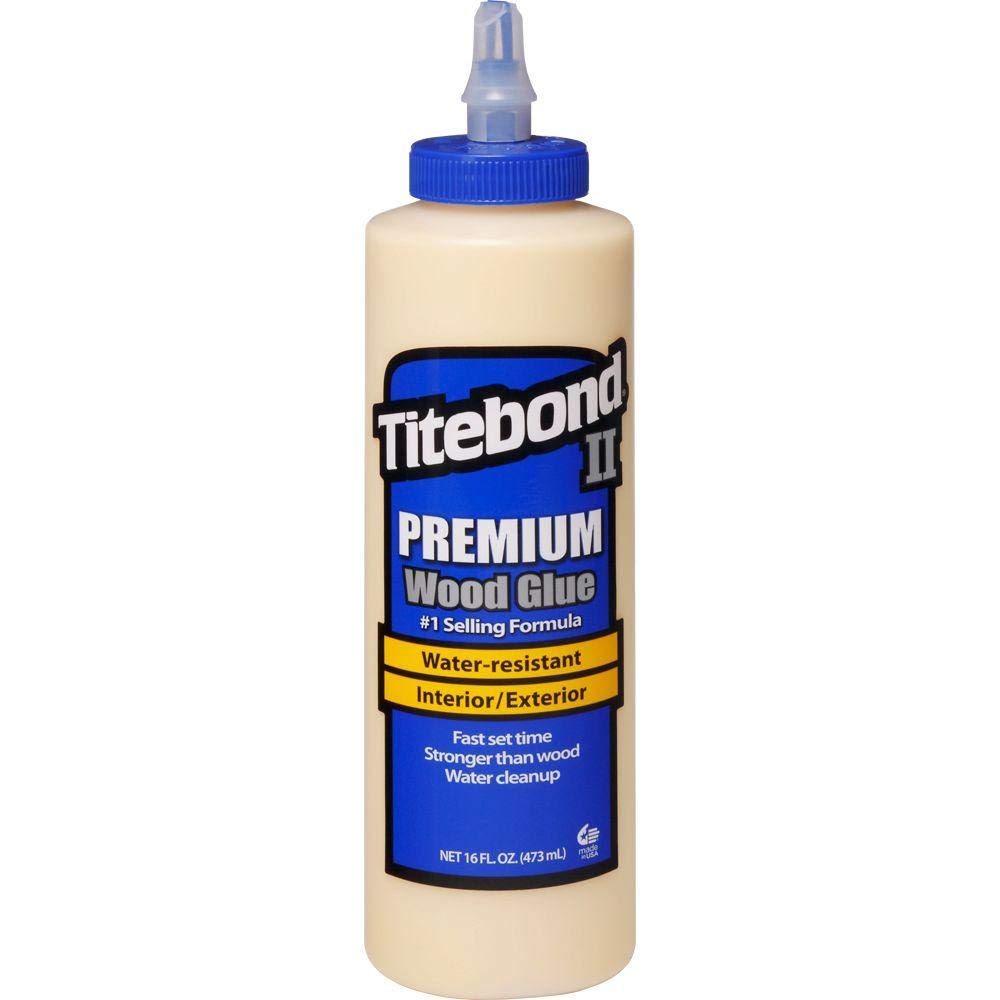
Best for: projects that see occasional moisture but don't need full waterproofing - at a lower price than III.
Titebond II is the middle rung of the ladder: ANSI Type II water-resistant (not fully waterproof), which covers the huge middle ground of projects - birdhouses, planters, garden furniture under cover, a charcuterie board that gets damp-wiped - for less than Titebond III. It has a fast set and strong tack, cleans up with water, and is also approved for indirect food contact. If your work rarely lives in standing weather, II gives you most of the moisture resistance for less money. Step up to III only when the piece will truly be exposed outdoors.
| Pros | Cons |
|---|---|
| ✅ Water-resistant (Type II) at lower cost | ❌ Not fully waterproof like III |
| ✅ Fast set, strong tack | ❌ Shorter open time than III |
| ✅ Food-safe (indirect); water cleanup |
3. Titebond Original - Best for Interior Joints (PVA)
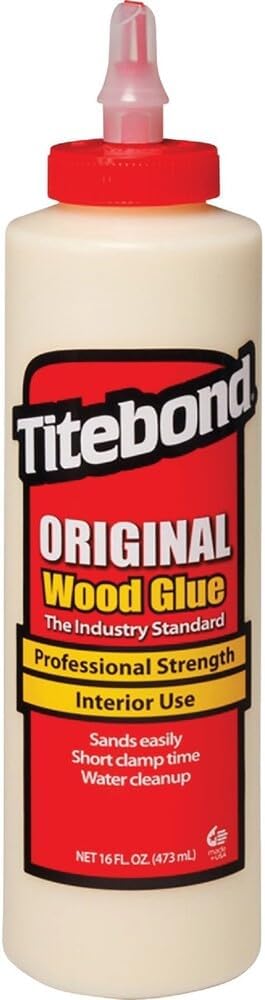
Best for: indoor furniture and cabinetry where fast tack and strength matter and moisture never does.
The red-label Original is the woodworker's benchmark interior glue. It has the strongest initial tack of the three and a slightly faster set, which many furniture makers prefer for quick assemblies, and it sands cleanly. The catch is it's interior-only - no water resistance - so keep it to indoor furniture, cabinets, and joinery that will never get wet. For those jobs it's a touch cheaper and grabs faster than II or III, which is why it stays a shop staple. If there's any chance of moisture, use II or III instead.
| Pros | Cons |
|---|---|
| ✅ Strongest initial tack; fast set | ❌ Interior only - no water resistance |
| ✅ Sands cleanly; shop-staple reliable | ❌ Not for anything that gets wet |
| ✅ Slightly cheaper than II/III |
4. Gorilla Wood Glue - Best Fast-Grab / DIY (PVA)
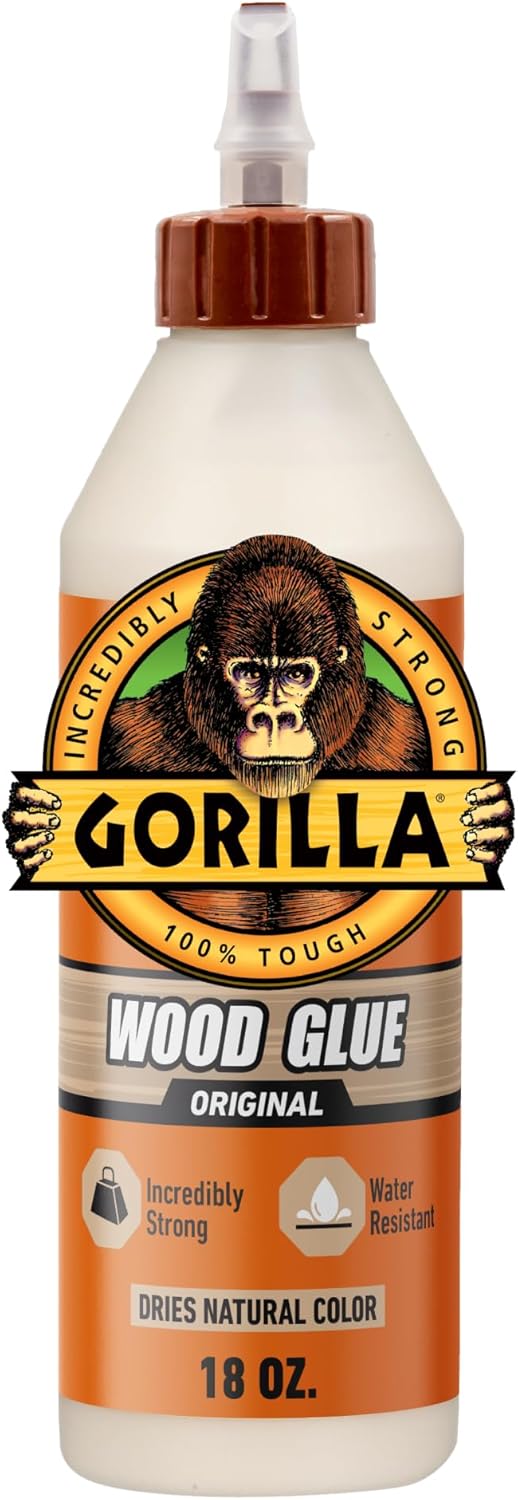
Best for: DIY repairs and quick fixes where fast grab and clean drying matter.
Gorilla Wood Glue is also a PVA, pitched at fast tack, clear-ish natural drying, and easy use - which makes it a favorite for furniture repairs, small projects, and DIYers who want a joint to hold quickly. It's water-resistant (ANSI Type II) for covered outdoor use, needs only a short clamp time, and cleans up with water. Purists still reach for Titebond for fine joinery (slightly stronger, longer track record), but for household repairs and general projects Gorilla's grab-and-go convenience is genuinely handy. A great second bottle for quick jobs.
| Pros | Cons |
|---|---|
| ✅ Fast grab, short clamp time | ❌ Not quite Titebond for fine joinery |
| ✅ Water-resistant (Type II) | ❌ Covered outdoor use only |
| ✅ Dries natural, water cleanup |
5. Gorilla Original - Gap-Filling & Dissimilar Materials (Polyurethane)
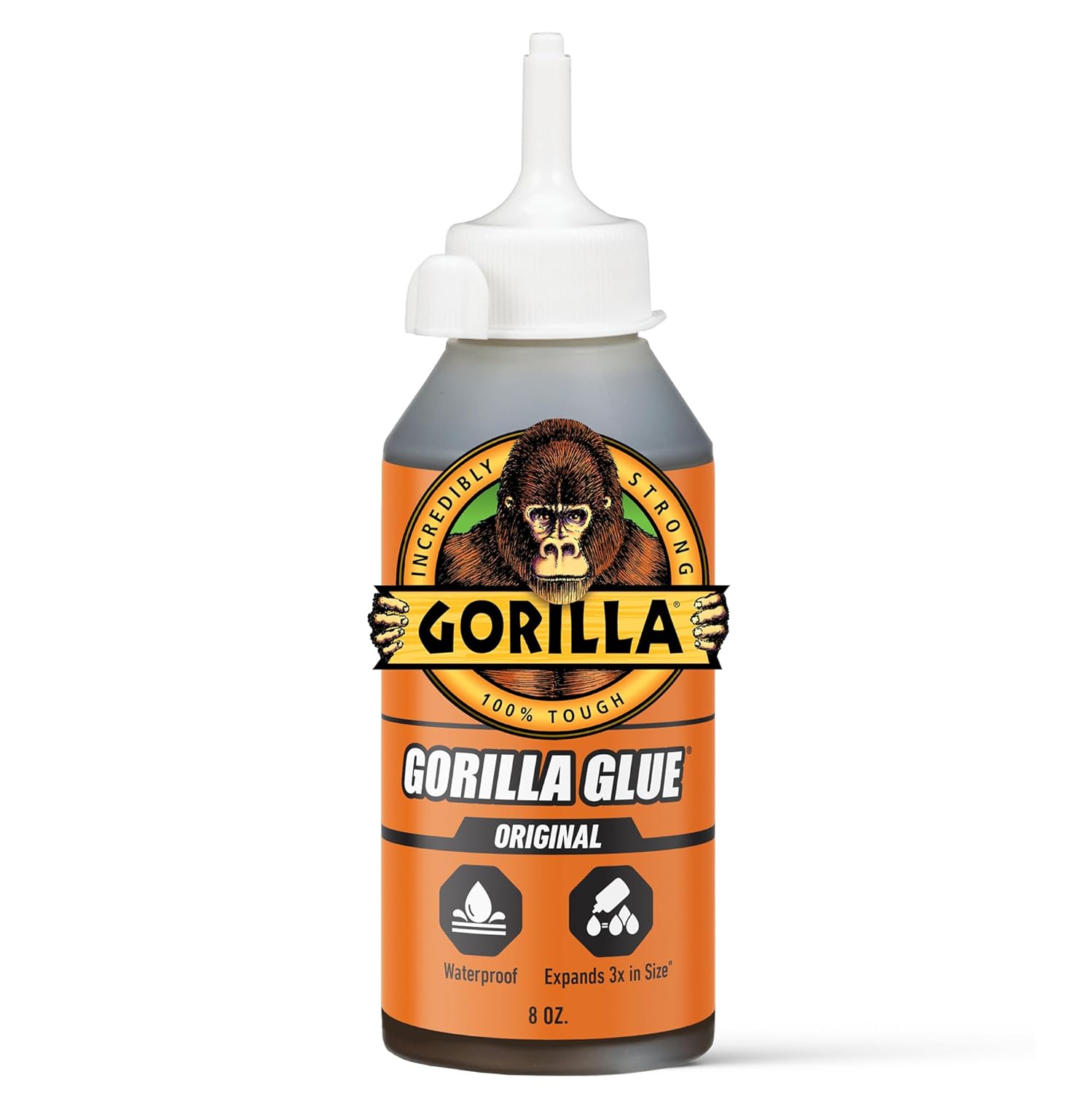
Best for: bonding wood to metal, stone, or plastic, and filling gappy joints - waterproof.
This is the original brown, foaming polyurethane glue, and it does what PVA can't: it bonds dissimilar materials (wood to metal, ceramic, stone, most plastics) and it expands to fill gaps as it cures, so it's forgiving on imperfect joints. It's fully waterproof and incredibly strong. The trade-offs are real: you dampen one surface to trigger the cure, it foams and expands (so you must clamp and expect squeeze-out to clean up), and it stains skin. For mixed-material projects and gap-filling repairs it's the right tool; for clean wood-to-wood joinery, a PVA is tidier.
| Pros | Cons |
|---|---|
| ✅ Bonds wood to metal/stone/plastic | ❌ Foams/expands - messy squeeze-out |
| ✅ Gap-filling and fully waterproof | ❌ Needs moisture to cure; stains skin |
| ✅ Very strong bond |
6. Gorilla 2-Part Epoxy - Structural Repairs & Voids
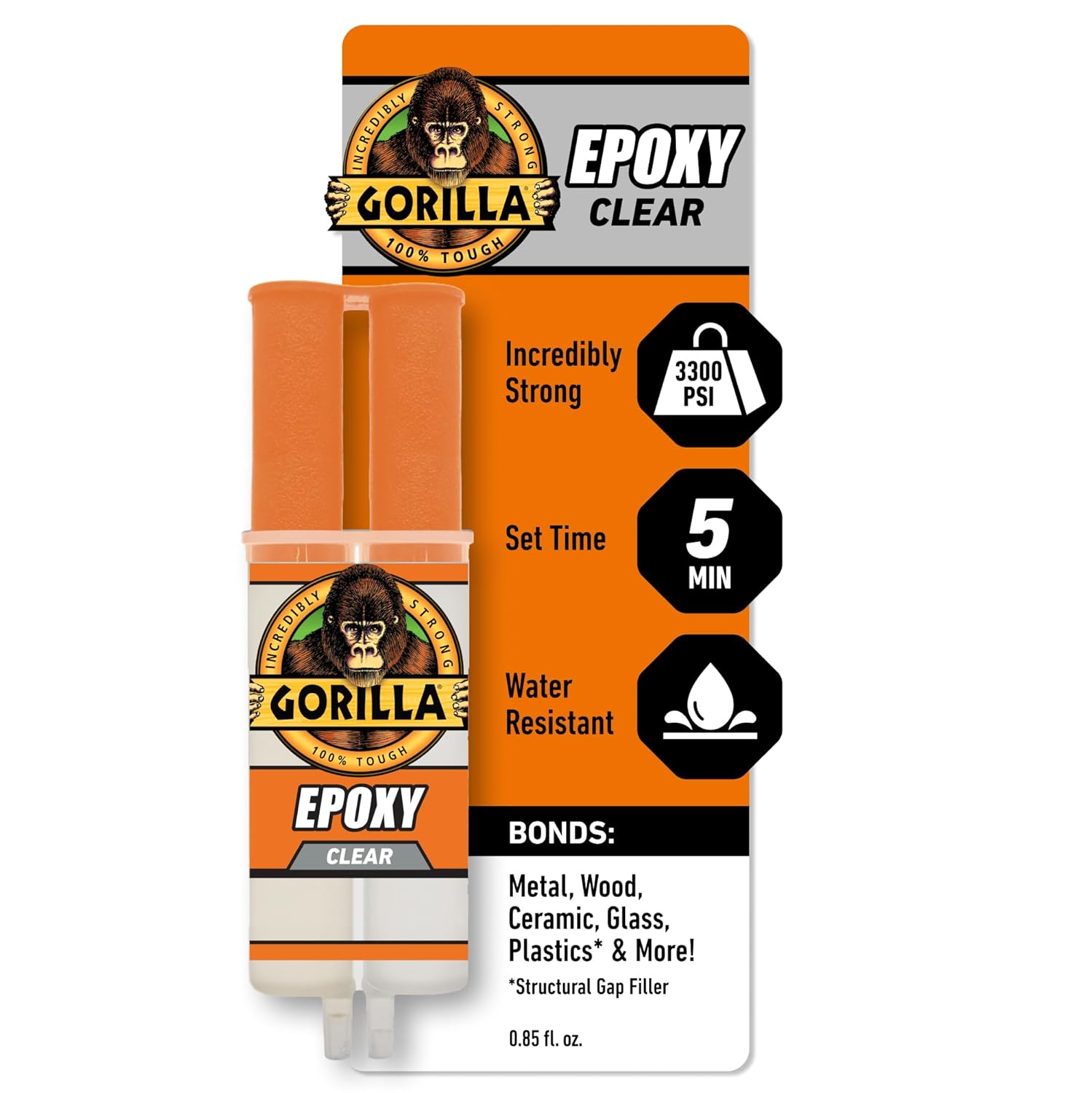
Best for: structural repairs, filling voids and cracks, and bonding where you can't clamp.
When a joint is loose, a part is broken, or you need to fill a void, two-part epoxy is the answer. You mix resin and hardener from the dual syringe and it cures to an incredibly strong, gap-filling bond that needs no clamping pressure - ideal for repairs where the fit isn't tight. It bonds wood plus metal, glass, ceramic, and most plastics, and it's rigid and water-resistant once cured. This 5-minute-set version is convenient for quick repairs (work fast - you have minutes); slower-setting epoxies give more working time for bigger jobs. It's not for large glue-ups, but for repairs and voids nothing else is as strong and forgiving.
| Pros | Cons |
|---|---|
| ✅ Gap-filling; no clamping needed | ❌ Must mix; 5-min set is a rush |
| ✅ Bonds wood + metal/glass/plastic | ❌ Overkill for normal wood joints |
| ✅ Very strong structural repairs |
7. Starbond Medium CA Glue - Instant Holds, Trim & Turning
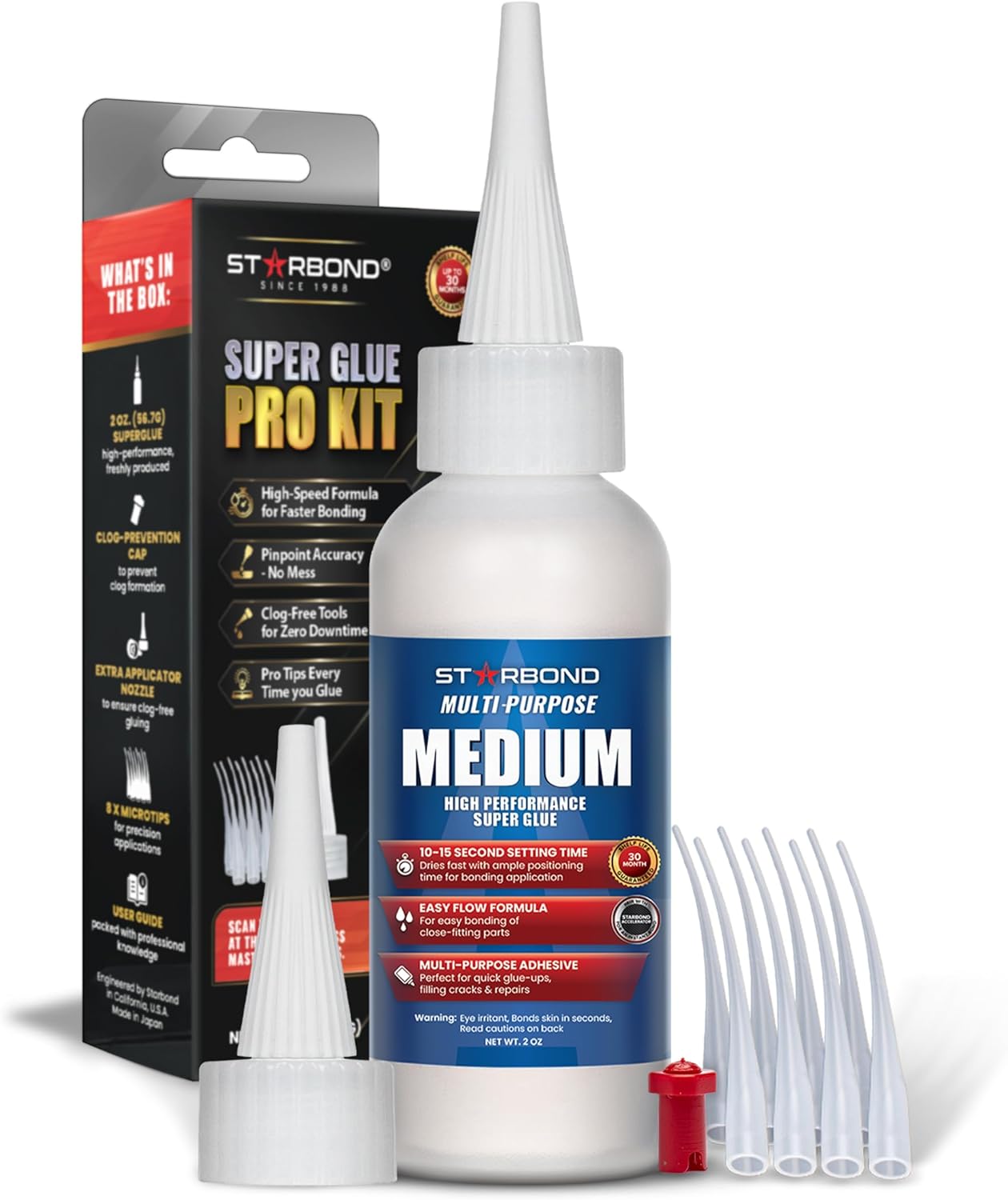
Best for: instant grab on small parts, trim, inlay, and woodturning - plus a shop favorite for filling cracks.
Cyanoacrylate (CA, "super glue") isn't for structural joinery, but every serious shop keeps it for instant holds: tacking trim, gluing small or fiddly parts, fixing inlay, and - a woodturner's staple - flooding a crack or void (often with an accelerator) then turning or sanding it flush. Starbond's medium viscosity is the versatile all-rounder (thin wicks into hairline cracks; thick fills gaps), and the Pro Kit's anti-clog cap and micro-tips make it genuinely usable rather than a glued-shut mess. It sets in seconds, so it complements - never replaces - your PVA. Turners especially will find it indispensable; see the art of bowl turning.
| Pros | Cons |
|---|---|
| ✅ Instant grab; fills cracks/voids | ❌ Not a structural joint glue |
| ✅ Anti-clog cap + micro-tips | ❌ Bonds skin instantly - care needed |
| ✅ Turner/trim/inlay favorite |
How to choose the right wood adhesive
Start with PVA - and pick the right water rating
For ordinary wood-to-wood joints, a PVA (yellow) glue is almost always the answer. Choose by exposure: Titebond Original for interior, Titebond II for occasional moisture, Titebond III for fully outdoor/waterproof. When unsure, III covers everything.
Reach for polyurethane or epoxy when PVA can't
- Bonding wood to metal, stone, or plastic, or filling a gappy joint → polyurethane.
- Structural repair, filling a void, or a joint you can't clamp → two-part epoxy.
Keep CA for speed, not structure
Use CA glue for instant holds, small parts, trim, inlay, and (with accelerator) filling cracks - especially in woodturning. It's a complement to your PVA, not a replacement for glued joints.
Clamp time and open time matter
Open time is how long you can position parts before the glue skins; clamp time is how long to hold pressure. Complex glue-ups want a longer open time (Titebond III); quick assemblies benefit from fast tack (Original, Gorilla). Always clamp PVA joints - good clamps and a bench vise are as important as the glue.
Frequently Asked Questions
What is the strongest glue for wood?
For wood-to-wood joints, a good PVA like Titebond III creates a bond stronger than the wood itself - the wood fails before the glue line does. For structural repairs, voids, or non-porous materials, two-part epoxy is the strongest gap-filling option. "Strongest" depends on the joint: use PVA for joinery, epoxy for repairs.
What's the difference between Titebond I, II, and III?
Mainly water resistance. Titebond Original (I) is interior-only; Titebond II is water-resistant (ANSI Type II) for occasional moisture; Titebond III is fully waterproof (Type I) for outdoor use. III also has a longer open time. All three form very strong wood-to-wood bonds.
Is Gorilla Glue or wood glue better?
They're different products. Gorilla Wood Glue is a PVA like Titebond - best for clean wood-to-wood joints. Original Gorilla Glue is polyurethane - best for bonding dissimilar materials and filling gaps, but it foams and is messier. Use PVA for joinery; use polyurethane when you need gap-filling or mixed-material bonding.
Do I need to clamp wood glue?
Yes - PVA and polyurethane joints need clamping pressure while they cure to close the joint and ensure a strong bond (polyurethane especially, since it foams and can push parts apart). Epoxy and CA don't require clamping. Follow each glue's clamp-time guidance.
What is the best wood glue for furniture?
For building furniture, Titebond Original - interior joints don't need waterproofing, and its fast tack and easy sanding make clean work of casework and chairs. For furniture repairs, where you can't always clamp perfectly, Gorilla Wood Glue's fast grab helps; if the repair has gaps or loose old joints, use epoxy instead of forcing PVA into a bad fit.
What's the best glue for wood-on-wood?
A yellow PVA wood glue - nothing bonds bare wood to bare wood better, and the joint ends up stronger than the surrounding wood. Pick by exposure: Titebond Original indoors, Titebond II for occasional moisture, Titebond III outdoors. Polyurethane and epoxy only win on wood-to-wood when the joint has gaps.
Which wood glue is food-safe for cutting boards?
Titebond II and Titebond III are approved for indirect food contact, making them suitable for cutting boards and serving pieces once fully cured. Titebond III's waterproof rating also handles the washing a board gets, so it's the usual choice for cutting boards.
More woodworking guides
Glue-ups need good clamping - see the woodworking vise guide. Finishing after assembly? Try our wood paint hub and best wood preservatives. New to the shop? Start with the comprehensive guide to woodworking tools. In the UK? See the best wood glues UK for picks available on Amazon UK. Pouring epoxy rather than gluing with it? The epoxy resin calculator works out volume for river tables and pours.