The Art of Bowl Turning: How to Turn Functional Bowls on a Lathe
Affiliate disclosure: As an Amazon Associate, WoodyMan Reviews earns from qualifying purchases. If you buy through links on this page, we may earn a commission at no extra cost to you. How this works.
Turning a rough chunk of wood into a smooth, functional bowl is one of woodworking's most satisfying skills - and one of the most approachable ways into the lathe. This guide walks a beginner through the whole process: the gear you actually need, how to choose and mount a blank, the gouge techniques for shaping the outside and hollowing the inside, and how to sand and finish. It's a craft you learn by doing, but knowing the sequence up front makes the first bowl far less intimidating.
We earn a small commission from the Amazon links below, at no extra cost to you - see our affiliate disclosure.
The gear you need to turn bowls
You don't need much to start, but a few things are essential:
| Gear | Why you need it | |
|---|---|---|
| A lathe with swing & low-speed torque (JET JWL-1221VS) | Holds and spins the blank; low speed to true a rough blank safely | Check price |
| A 4-jaw scroll chuck (PSI Barracuda) | Grips the bowl by a tenon so you can hollow the inside | Check price |
| Bowl gouges (Hurricane HSS set) | The main cutting tools for shaping and hollowing | Check price |
You'll also want a way to sharpen the gouges (they must be sharp), a faceplate or screw chuck to mount the blank initially, a face shield, and abrasives and finish. For choosing the machine itself, see our bowl-turning lathes, under-$1000, and 4-jaw chuck guides.
Step 1: Choose and prepare a blank
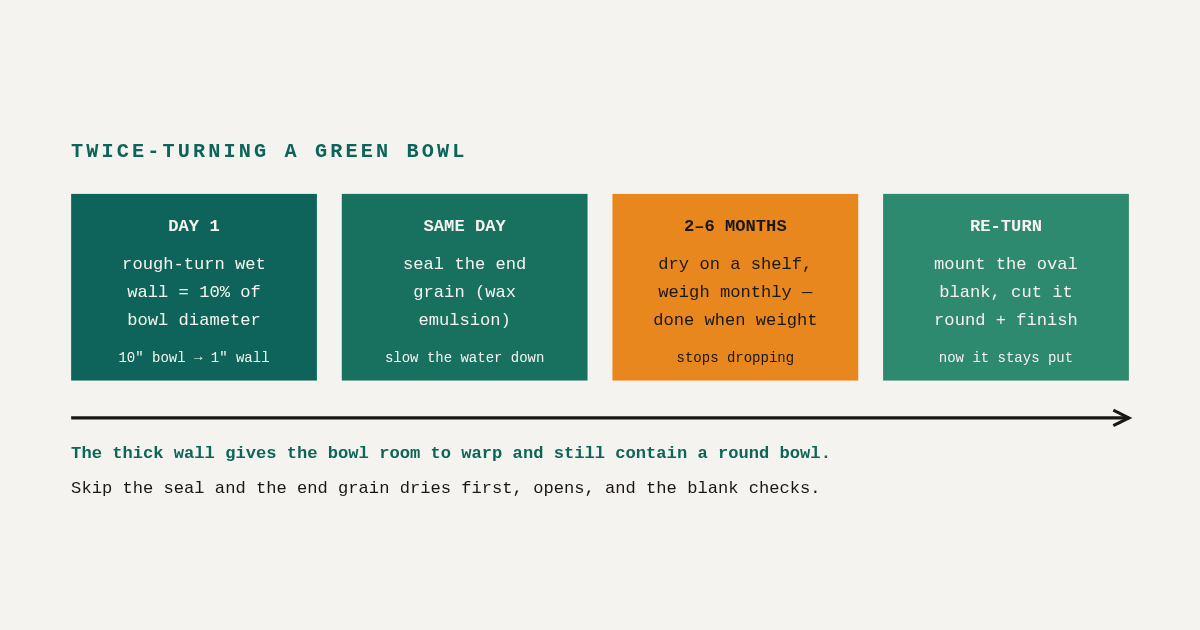
- Green (wet) vs. dry wood. Green wood cuts easily and is often free (a fallen branch, a log), but it moves and can crack as it dries - beginners often rough-turn green, then let it dry before finishing. Kiln-dried blanks are stable but harder to cut and pricier.
- Pick a friendly species to start - a stable, even-grained hardwood like maple, cherry, or birch. Avoid cracked or punky wood.
- Round the blank roughly (a bandsaw helps) and mark the center on both faces.
Step 2: Mount the blank
There are two common first mounts:
- Faceplate - screwed to one face of the blank; very secure for the first (outside-shaping) stage.
- Screw chuck - a single stout screw held in your chuck; fast and convenient for smaller blanks.
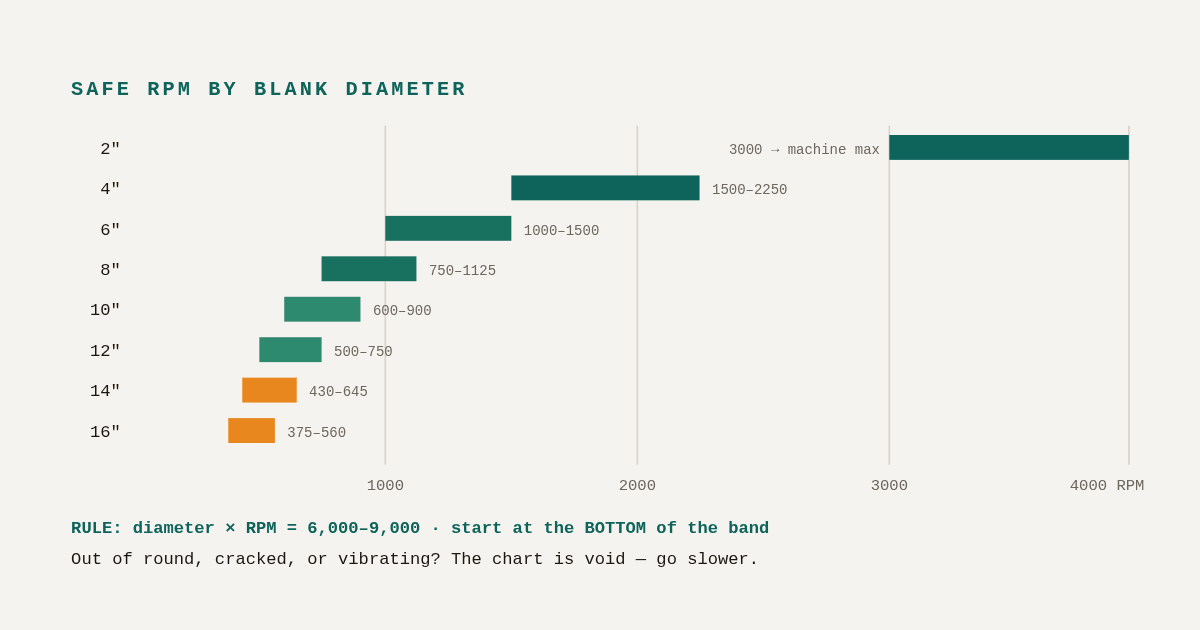
Mount the blank, bring up the tailstock for extra support if you can, and set a low speed - a big, out-of-round blank must start slow.
Step 3: Turn the outside and cut a tenon
With the blank spinning, use a bowl gouge to:
- True the blank round - light cuts until it runs smooth (this is where low speed and patience matter).
- Shape the outside of the bowl - the curve from rim to foot.
- Cut a tenon (a short cylindrical or dovetailed nub) on the base, sized to your chuck's jaws. This is what the chuck will grip for the next stage.
Ride the gouge's bevel, cut downhill (from larger to smaller diameter, generally toward the headstock on the outside), and take light cuts. Let the tool cut - don't force it.
Step 4: Reverse, chuck it, and hollow the inside
Remove the faceplate/screw, grip the tenon in your 4-jaw chuck, and now hollow the inside:
- Work from the center outward in stages, deepening as you go.
- Keep the wall thickness consistent - check often (calipers or a light behind thin walls). Uneven walls are the classic beginner tell.
- Refine the rim and the inside curve to match the outside.
Keep the tool rest close to the work, reposition it as you go deeper, and keep cuts light and controlled.
Step 5: Sand and finish
- Sand through the grits (often 120 → 220+), with the lathe on a low speed and then off to check for scratches. Don't skip grits.
- Apply a finish suited to the bowl's use - a food-safe oil (mineral oil, walnut oil) or a durable film finish for decorative bowls. Buff to the sheen you want.
- Part off or reverse-mount to finish the base cleanly, removing the tenon if you wish.
Safety and common mistakes
- Wear a face shield, no gloves or loose clothing, and keep the tool rest close.
- Start slow - most catches and thrown blanks happen at too-high speed on an unbalanced blank.
- Sharp tools only - dull gouges cause catches and tear-out.
- Consistent wall thickness and not rushing the grits are the two things beginners get wrong most.
Bowl turning rewards practice - your fifth bowl will be far better than your first. For the fundamentals of the machine and cluster, start at our wood lathes hub.
Frequently Asked Questions
What tools do I need to start turning bowls?
A lathe with adequate swing and low-speed control, a 4-jaw scroll chuck to grip the bowl by a tenon, a set of bowl gouges, a way to sharpen them, a faceplate or screw chuck for mounting, and a face shield. Add abrasives and a suitable finish. See our bowl-turning lathes and chuck guides.
Should I turn green or dry wood for bowls?
Both work. Green wood cuts easily and is often free but moves and can crack as it dries - many turners rough-turn it green, then let it dry and finish-turn later. Dry blanks are stable but harder to cut and cost more. Beginners often start with stable dry hardwood or the rough-turn-green method.
How do I hold a bowl blank on the lathe?
Start with a faceplate or screw chuck to shape the outside and cut a tenon, then grip that tenon in a 4-jaw scroll chuck to hollow the inside. The chuck is what lets you hollow the bowl without a faceplate or tailstock in the way.
What's the best lathe for turning bowls?
One with enough swing for your bowl size and good low-speed torque to start rough blanks safely - a solid midi like the JET JWL-1221VS suits most beginners. For bigger bowls, look at 14"+ swing machines in our bowl-turning lathes guide.
Why do my bowls have uneven walls or catches?
Uneven walls come from not checking thickness as you hollow; catches come from dull tools, not riding the bevel, or too-high speed. Keep tools sharp, take light bevel-rubbing cuts, start slow, and check wall thickness often - these fix the most common beginner problems.
More in the turning cluster
Ready to buy in? See the wood lathes hub, best wood lathes for turning bowls, best wood lathe under $1000, mini lathes, and the best 4-jaw chucks.