Best Budget Wood Lathes Under $500: 5 Worth Turning On
Affiliate disclosure: As an Amazon Associate, WoodyMan Reviews earns from qualifying purchases. If you buy through links on this page, we may earn a commission at no extra cost to you. How this works.
Short answer: the best wood lathe under $500 is the WEN LA3424 - a 12"×18" cast-iron midi with enough swing for proper bowls, from a brand that actually stocks spare parts. If build quality matters more than capacity, the RIKON 70-105; if the budget is the boss, whichever WEN mini is on sale.
A $300 lathe can absolutely teach you to turn - bowls, pens, spindles, the lot. What it can't do is fake mass: cheap lathes live or die by how much cast iron is under the workpiece, because weight is what absorbs vibration, and vibration is what ruins cuts and confidence. So this list has a bias: real cast-iron machines from brands with parts support, and none of the 60-pound sheet-metal "14x40" specials that dominate budget-lathe search results. (We cut four of those from the old version of this list - all four have since vanished from Amazon, which rather proves the point.)
Five machines under $500, by use case.
We earn a small commission from the Amazon links below, at no extra cost to you - see our affiliate disclosure. We compare these on cast weight, speed range, taper standard, and owner-reported reliability rather than our own shop time; how we review.
The 5 best budget wood lathes
| Wood Lathe | Best for | Woody Rating | |
|---|---|---|---|
| 1. WEN LA3424 (12"×18") | Most lathe per dollar - bowls & spindles | 9.2/10 [Editor's Choice] | Check price |
| 2. RIKON 70-105 (10"×18") | Best build quality - the pen-turner's tank | 9.0/10 | Check price |
| 3. Shop Fox W1704 (8"×13") | Best small-project lathe - true variable speed | 8.8/10 | Check price |
| 4. WEN LA3421 (8"×13") | Cheapest variable-speed entry | 8.5/10 | Check price |
| 5. WEN 3421 (8"×12") | The deal-watcher's pick - often on sale | 8.3/10 | Check price |
1. WEN LA3424 12"×18" - Editor's Choice
Best for: the beginner who doesn't want to upgrade in a year - the only lathe under $500 with genuine 12" swing for bowl work.
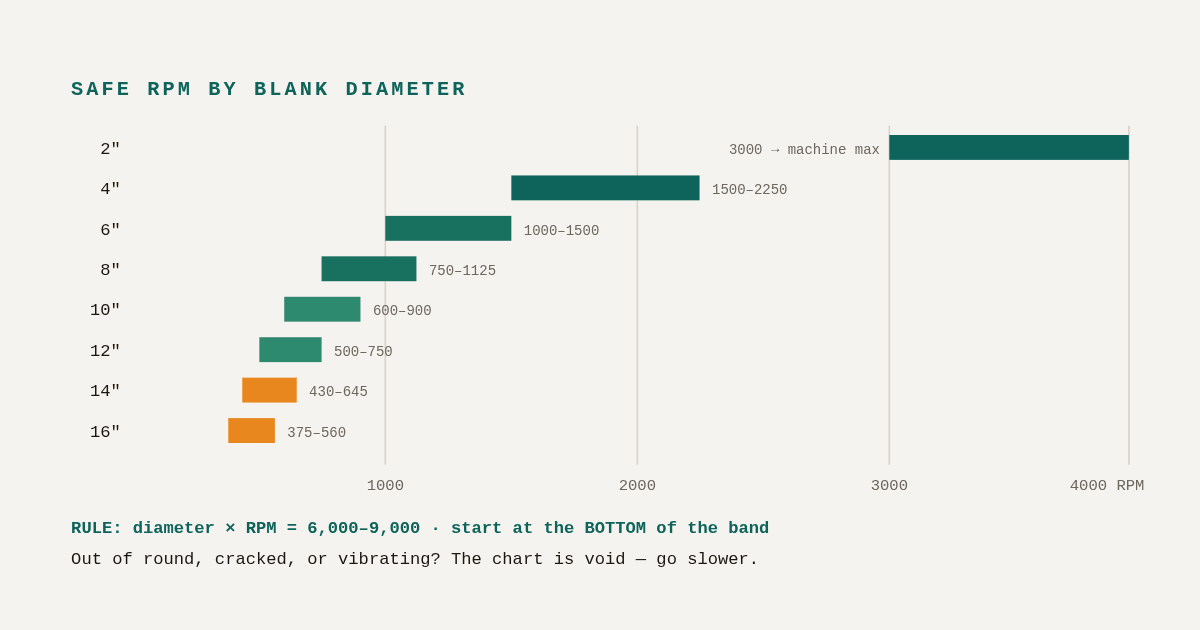
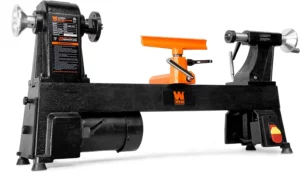
Capacity is what you're buying here: a 12-inch swing and 18 inches between centers means real bowls and full-length spindles, not just pens. The 4.5-amp motor drives five belt-set speeds (520-3,400 RPM - that 520 floor matters, because roughing an unbalanced bowl blank at high speed is how beginners get scared), and at 70+ pounds it stays planted. Belt-change speed selection is the trade-off versus the variable-speed minis below - a 90-second lever ritual instead of a dial. Pair it with WEN's inexpensive chuck (see our lathe chuck guide) and you have a complete bowl-turning setup under budget.
| Pros | Cons |
|---|---|
| ✅ 12" swing - real bowls, not just pens | ❌ Belt-change speeds, not a dial |
| ✅ 520 RPM floor for rough blanks | ❌ Chuck & chisels not included |
| ✅ 70+ lb - stays planted | |
| ✅ Cheap chuck/accessory ecosystem |
2. RIKON 70-105 10"×18" - Best Build Quality
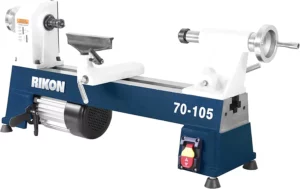
Best for: the buyer who'd rather have less capacity and more machine - RIKON's fit, finish and support are a class above at this price.
RIKON is a "real" lathe brand (their midi lathes live in serious shops), and the 70-105 was designed at pen-turners' request: 75 pounds of cast iron in a compact 10"×18" format, with the precise machining that makes centers line up dead-on - the thing cheap lathes quietly get wrong. It costs more per inch of capacity than the WEN, and that's the honest trade: you're paying for alignment quality and a company that will still stock parts in a decade. For pens, ornaments, small boxes and stoppers, it's the buy-once option.
| Pros | Cons |
|---|---|
| ✅ Best machining/alignment at this price | ❌ Most $ per inch of capacity here |
| ✅ 75 lb cast iron - minimal vibration | ❌ 10" swing limits bowl ambitions |
| ✅ Real brand, real parts support |
3. Shop Fox W1704 8"×13" - Best Small-Project Lathe
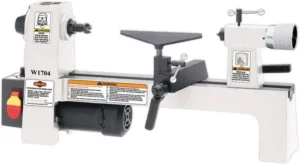
Best for: pens and small spindle work, with the convenience feature that matters most - a true variable-speed dial.
The W1704 (Shop Fox is Grizzly's retail brand - same parts network) pairs a cast-iron bed with variable speed from 700 to 3,200 RPM on a dial. For small work, that's the feature you'll touch every session: match speed to cut without touching a belt. The 1/3HP motor is honest about its size - aggressive cuts in hard maple will stall it - but for pens, bottle stoppers and finials it's the nicest-handling machine on this list.
| Pros | Cons |
|---|---|
| ✅ True variable-speed dial (700-3,200) | ❌ 1/3 HP - light cuts only |
| ✅ Cast iron body; Grizzly parts network | ❌ 8" swing / 13" centers is small-work territory |
4. WEN LA3421 8"×13" - Cheapest Variable Speed
Best for: the smallest budget that still insists on a speed dial.
WEN's answer to the Shop Fox: 3.2 amps, variable 750-3,200 RPM, 8"×13" capacity, MT1 tapers, for meaningfully less money. The castings and finish sit a notch below the W1704 - plan to spend an evening deburring and truing things up - but functionally it covers the same small-work ground, and WEN's spares availability is genuinely good for the price class. If the W1704's price stings, this is the sane alternative.
| Pros | Cons |
|---|---|
| ✅ Variable speed at the lowest price | ❌ Rougher fit & finish out of the box |
| ✅ Good spare-parts availability | ❌ MT1 tapers limit accessory choice vs MT2 |
5. WEN 3421 8"×12" - The Deal Watcher's Pick
Best for: patient shoppers - the previous-generation WEN mini is regularly discounted into impulse-buy territory.
The 3421 is the LA3421's older sibling: the same 3.2-amp variable-speed formula in a marginally smaller 8"×12" envelope. Both listings coexist on Amazon and their prices leapfrog - whichever WEN mini is cheaper on the day you look is the one to buy; the practical difference is an inch of bed. Same caveats (tune it up on arrival, MT1 tapers), same virtue: a real variable-speed lathe for the price of a decent chuck.
| Pros | Cons |
|---|---|
| ✅ Frequently the cheapest real lathe on Amazon | ❌ Same tune-up-on-arrival caveats as the LA3421 |
| ✅ Same VS formula as the newer model |
How to buy a cheap lathe without regretting it
Weight is the spec sheet's truth serum. Under ~60 pounds, a lathe dances; over 70, it turns. Every machine above clears the bar - the vanished no-name "14x40 for $240" machines never did.
Swing × centers = your projects. 8" swing → pens, stoppers, small boxes. 10-12" → bowls and platters. Centers (bed length) only matter for spindles - table legs need 18"+; pens don't care.
Variable speed vs belts. A dial is a luxury on spindle work and near-mandatory for beginners who like to experiment; belts are fine once you know your three favourite speeds. What's not negotiable: a low end near 500 RPM for rough, unbalanced blanks.
Budget the other $150. A lathe alone turns nothing: chisels (~$60 starter set), a 4-jaw chuck for bowls, and a face shield. Factor that in before you max the lathe budget - our wood lathes guide walks the full setup.
Frequently asked questions
How much does a decent wood lathe cost? A genuinely usable mini/benchtop lathe runs $250-500 new (this list). The next real tier - midi lathes with 1HP-class motors and electronic variable speed - starts around $700; see our best lathes under $1000.
Can you turn bowls on a budget lathe? Yes, within the swing limit: the 12"-swing LA3424 handles proper bowls; the 8" minis manage small ones. Start with our bowl turning guide - technique limits beginners far more than machines do.
Why are wood lathes so expensive relative to their simplicity? Cast iron. A lathe is basically a motor bolted to a very heavy, very straight spine - and 70-300 pounds of precision-ground iron is inherently costly to make and ship. That's also why suspiciously cheap lathes are suspiciously light.
New budget lathe or used quality lathe? If you can inspect it in person, a used Jet/Delta midi is the best value in turning. Buying sight-unseen online, new-with-warranty from this list is the safer play - worn bearings and bent spindles hide well in photos.
Verdict
The WEN LA3424 is the answer for most beginners - the only sub-$500 machine whose capacity you won't outgrow the month you discover bowls. The RIKON 70-105 if quality beats capacity for you, the Shop Fox W1704 for the nicest small-work experience, and whichever WEN mini is on sale if the budget is truly the boss.