Sandpaper Brands Compared: 3M vs Mirka vs Norton vs Klingspor
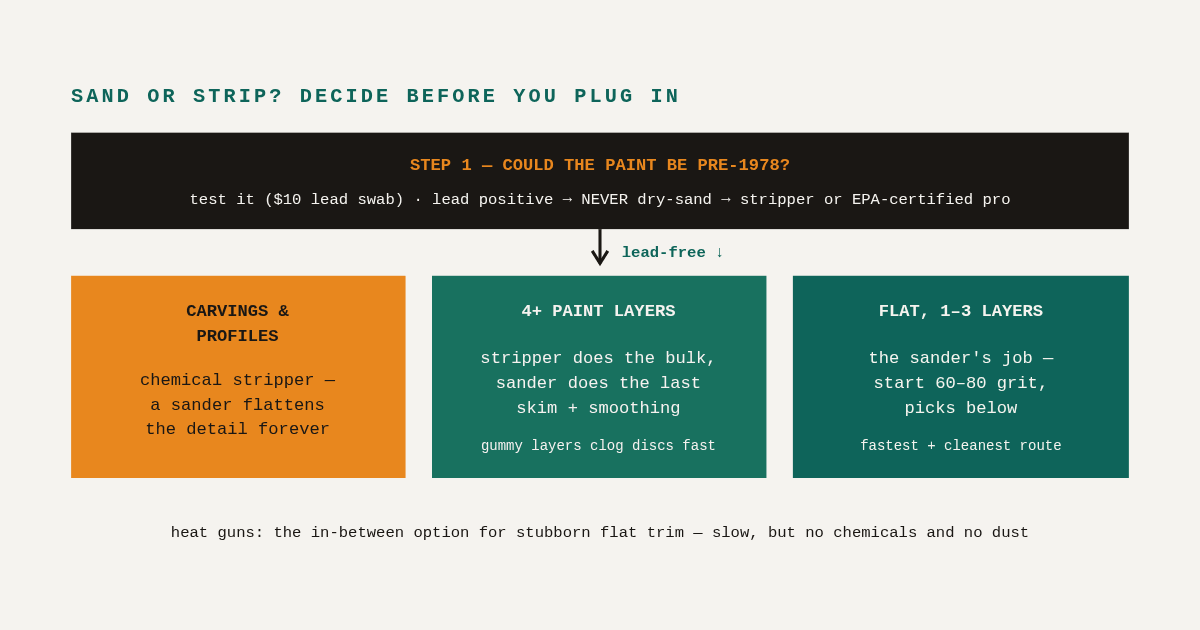
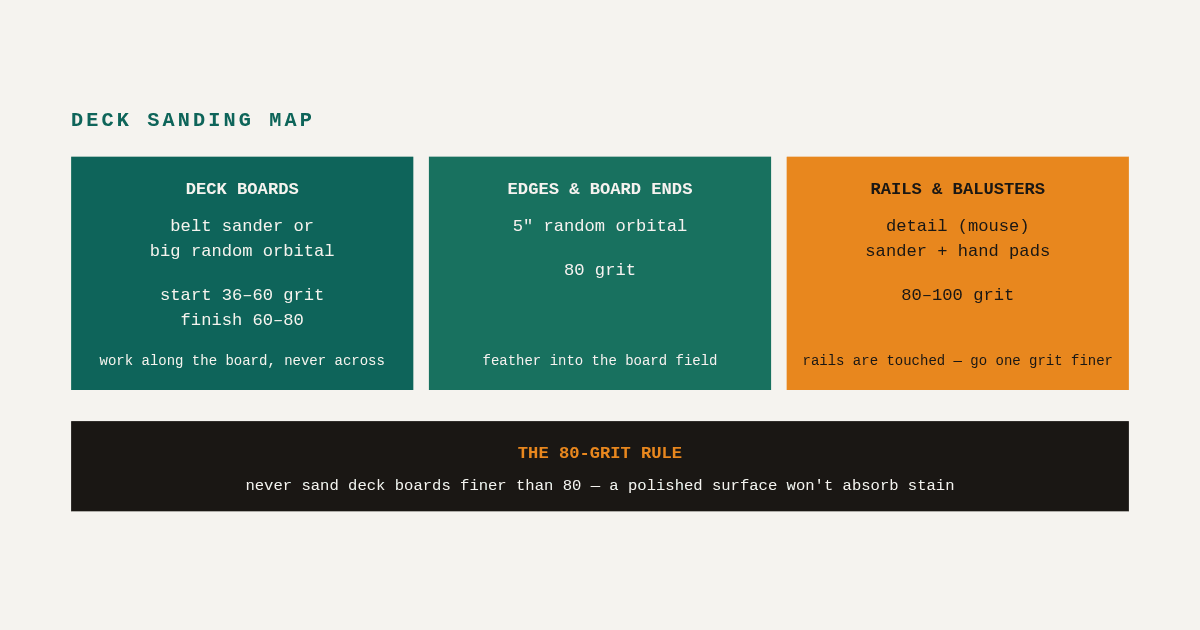
The honest hierarchy: the jump from no-name hardware-store paper to any premium brand (3M, Mirka, Norton, Klingspor) is dramatic - it cuts faster, loads slower, and lasts several times longer. The jumps between premium brands are small and situational. So the real questions are: which premium line fits your kind of sanding, and which jobs genuinely don't deserve premium paper? That's what this page answers - it's a brand guide, deliberately: for what the numbers on the paper mean, see it as the companion to our grit sequences for floors and paint removal.
The four brands worth knowing
| Brand | Known for | Buy it when |
|---|---|---|
| 3M | Cubitron II precision ceramic grain; Pro Grade line | Heavy stock removal at coarse grits - fastest cut in the business |
| Mirka | Abranet mesh discs; Gold line | You sand with dust extraction - mesh barely loads on resinous woods and MDF |
| Norton | 3X / ProSand; the value-premium sweet spot | Everyday shop sanding - most durability per dollar |
| Klingspor | Industrial abrasives, bulk rolls and boxes | You sand a lot and buy in volume - best bulk pricing of the tier |
3M put shaped ceramic grain on consumer paper: triangular particles that cut with a point and fracture into fresh edges as they wear. At 40-120 grit doing real removal work, nothing else cuts as fast for as long. Past 150 grit, the advantage shrinks while the price doesn't - this is the brand for the coarse end of the ladder.
Mirka built its reputation on Abranet: a mesh disc that's nearly all holes, so dust leaves through the abrasive itself instead of packing into it. On pine, MDF, and old finishes - the loading championships - Abranet with a vacuum attached lasts absurdly long. Without extraction it loses most of its advantage; its whole design assumes airflow.
Norton 3X/ProSand is the quiet default of many shops: meaningfully tougher grain and better anti-load coating than hardware-store aluminum oxide, at a price close enough that there's little reason to buy generic. If you just want "good paper, no research," it's Norton.
Klingspor is the industrial pick - less retail presence, unglamorous packaging, and excellent consistency at bulk prices. A box of their discs or a roll of their cloth-backed paper is how high-volume shops keep abrasive costs sane.
When cheap paper is genuinely fine
One-off scuff passes, glue cleanup, easing an edge, small craft jobs - anything measured in strokes rather than square meters. The premium math is about labor per sheet: paper that cuts twice as fast and lasts three times as long wins any job with real area, and loses on jobs too small for durability to matter. A scuff-sand before repainting doesn't care what name is on the back of the sheet.
Two places never to cheap out: wet/dry silicon-carbide paper for wet sanding finishes (bargain paper sheds grit into your finish film) and hook-and-loop discs (cheap velcro dies long before the abrasive, taking your pad's hooks with it - the false economy that also eats mouse sander pads).
Match the brand to the sander
- Random orbital discs: Mirka Abranet if you run a vacuum; 3M ceramic at coarse grits; Norton for the everyday middle. Our woodworking sander guide covers the machines side.
- Belt sanders: belts live hard - premium pays for itself here faster than anywhere. Klingspor and Norton cloth belts are the volume pick; see the belt sander roundup for the machines.
- Sheet/mouse sanders and hand blocks: the cheapest tier of tool is the most forgiving of mid-tier paper - Norton or store-brand name paper (the branded house lines are usually rebadged majors) is fine.
FAQ
Is expensive sandpaper actually worth it? For power sanding of any real area, yes, decisively - faster cut and multiple times the life outweigh the ~2× sheet price. For occasional hand touch-ups, no.
What's the difference between aluminum oxide, ceramic, and silicon carbide? Aluminum oxide is the wood-sanding default; ceramic cuts faster and lasts longer at coarse grits (that's most of what you're paying 3M for); silicon carbide is the wet/dry abrasive for finishes and metal.
Are mesh discs better than paper discs? With dust extraction, usually - they load far slower and you can see through them to the work. Without a vacuum, ordinary paper discs at a lower price do just as well.
Do premium brands use different grit standards? No - same CAMI/FEPA scales as everything else. A P120 Mirka and a P120 no-name leave the same size scratch; the premium disc just keeps leaving it long after the cheap one has gone dull and started burnishing.