7 Best Belt Sanders UK (2026 Review): From DIY to Trade
Affiliate disclosure: As an Amazon Associate, WoodyMan Reviews earns from qualifying purchases. If you buy through links on this page, we may earn a commission at no extra cost to you. How this works.
Short answer: the Makita 9404/2 is the best belt sander you can buy in the UK - a 1,010 W, 100 mm machine with auto belt tracking and variable speed that will outlast every other tool in this list. Most DIYers don't need that much sander: the Black+Decker 720 W does 90% of the same work for a fraction of the price, and if you want a bench machine rather than a handheld, the Clarke CS4-6E belt & disc sander is the pick.
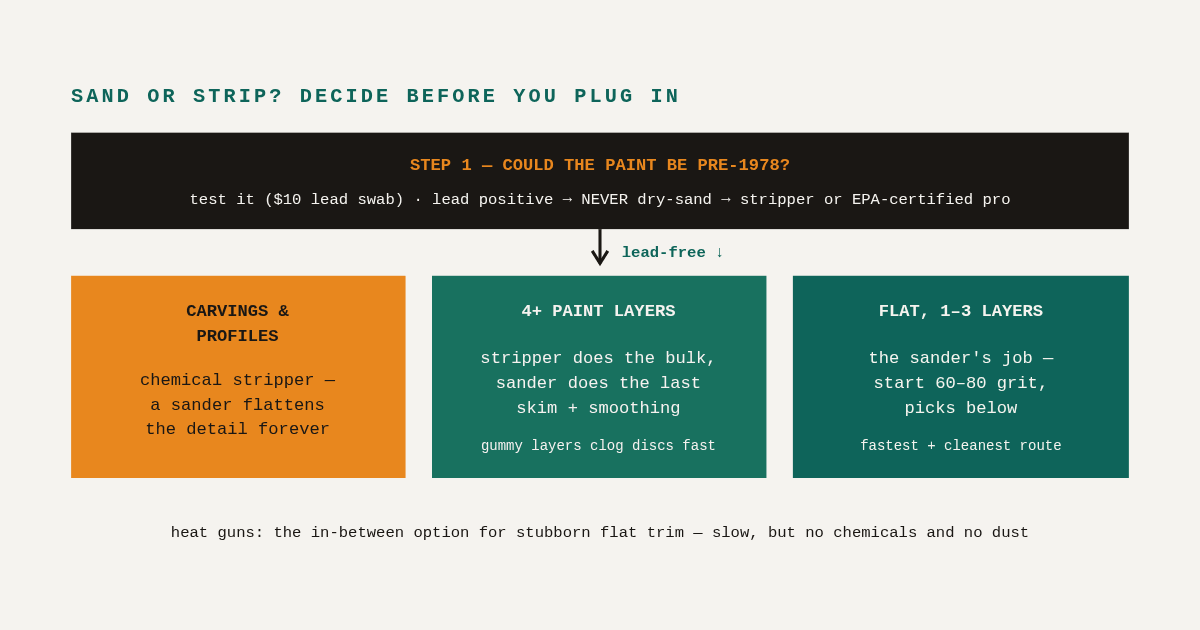
A belt sander is the stock-removal tool: levelling boards, stripping old finishes, cleaning up rough-sawn timber - the jobs where an orbital sander would take all afternoon. That aggression is also why the buying decision matters more than with other sanders: an underpowered belt sander bogs and burns belts, and a poorly tracked one wanders off course mid-stroke.
How this list was made: we shortlist the current UK models, compare them spec by spec (power, belt size, speed control, tracking, dust collection), and dig through owner reviews for the real-world failure points - full method on our How We Review page.
We earn a small commission from the Amazon links below, at no extra cost to you - see our affiliate disclosure.
The 7 best belt sanders in the UK
| Belt Sander | Best for | Woody Rating | |
|---|---|---|---|
| 1. Makita 9404/2 240V | The trade-grade benchmark | 9.3/10 [Editor's Choice] | Check price |
| 2. Bosch PBS 75 A | Best all-rounder for DIY | 9.0/10 | Check price |
| 3. Black+Decker 720 W | Best value for most people | 8.7/10 | Check price |
| 4. Einhell TC-BC 8038 | Speed control on a budget | 8.4/10 | Check price |
| 5. Clarke CS4-6E Belt & Disc | Best belt and disc sander (bench) | 8.3/10 | Check price |
| 6. Silverline 810 W 76 mm | Cheapest usable option | 8.1/10 | Check price |
| 7. Clarke Contractor CBS2 | Heavy-duty handheld, big jobs | 8.0/10 | Check price |
1. Makita 9404/2 - Editor's Choice
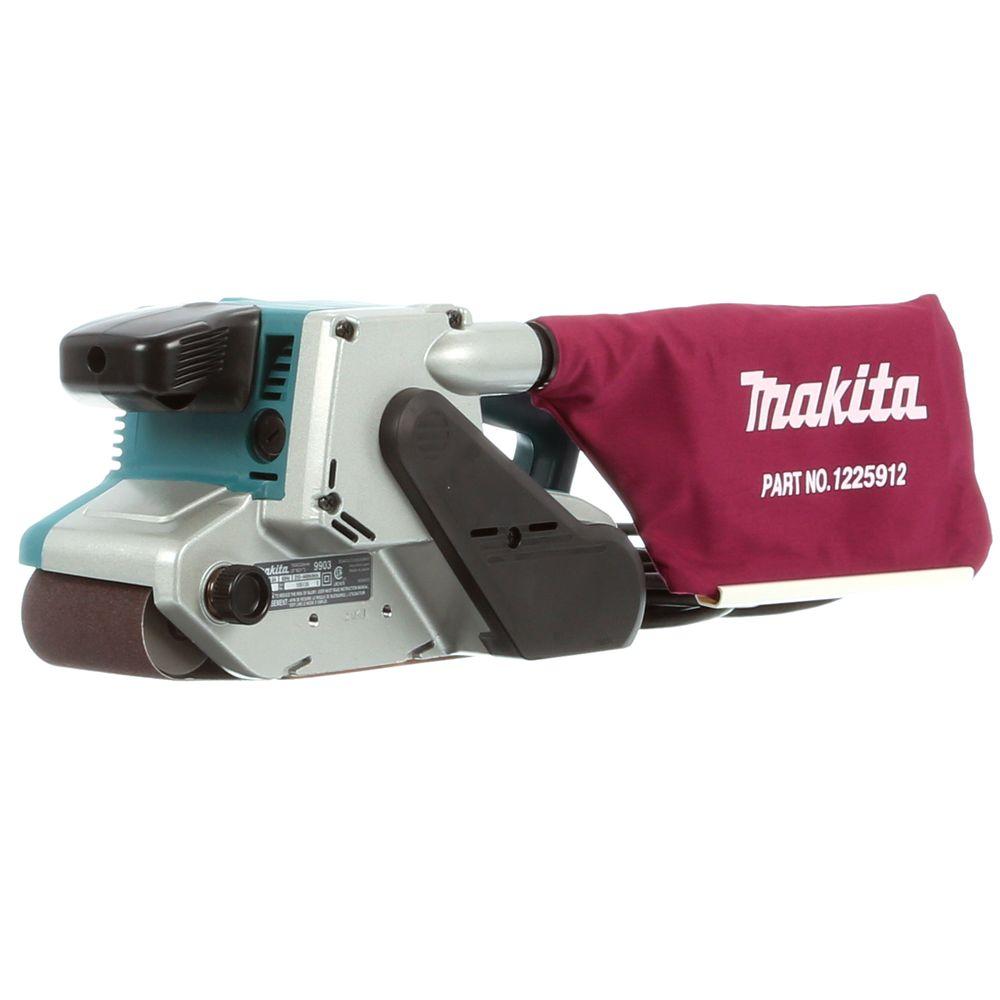
Best for: anyone who sands regularly enough to feel the difference build quality makes - this is the belt sander UK joiners actually own.
1,010 W driving a wide 100 mm belt, with variable speed from 210 to 440 m/min so you can dial it back for veneers and hardwoods instead of one-speed-fits-nothing. The two details that justify the price: auto belt tracking (the belt stays centred without constant knob-fiddling - the single most annoying failure of cheap belt sanders) and a noise level of just 84 dB, unusually quiet for this much motor. The dust bag genuinely collects rather than decorates. At 4.7 kg it's a two-hands machine, but that weight is doing the pressing for you.
| Pros | Cons |
|---|---|
| ✅ Auto belt tracking - set it and sand | ❌ Serious price for occasional DIY |
| ✅ Variable speed (210-440 m/min) | ❌ 4.7 kg - tiring on vertical surfaces |
| ✅ Wide 100 mm belt covers ground fast | |
| ✅ Quiet (84 dB) and famously durable |
2. Bosch PBS 75 A - Best DIY All-Rounder
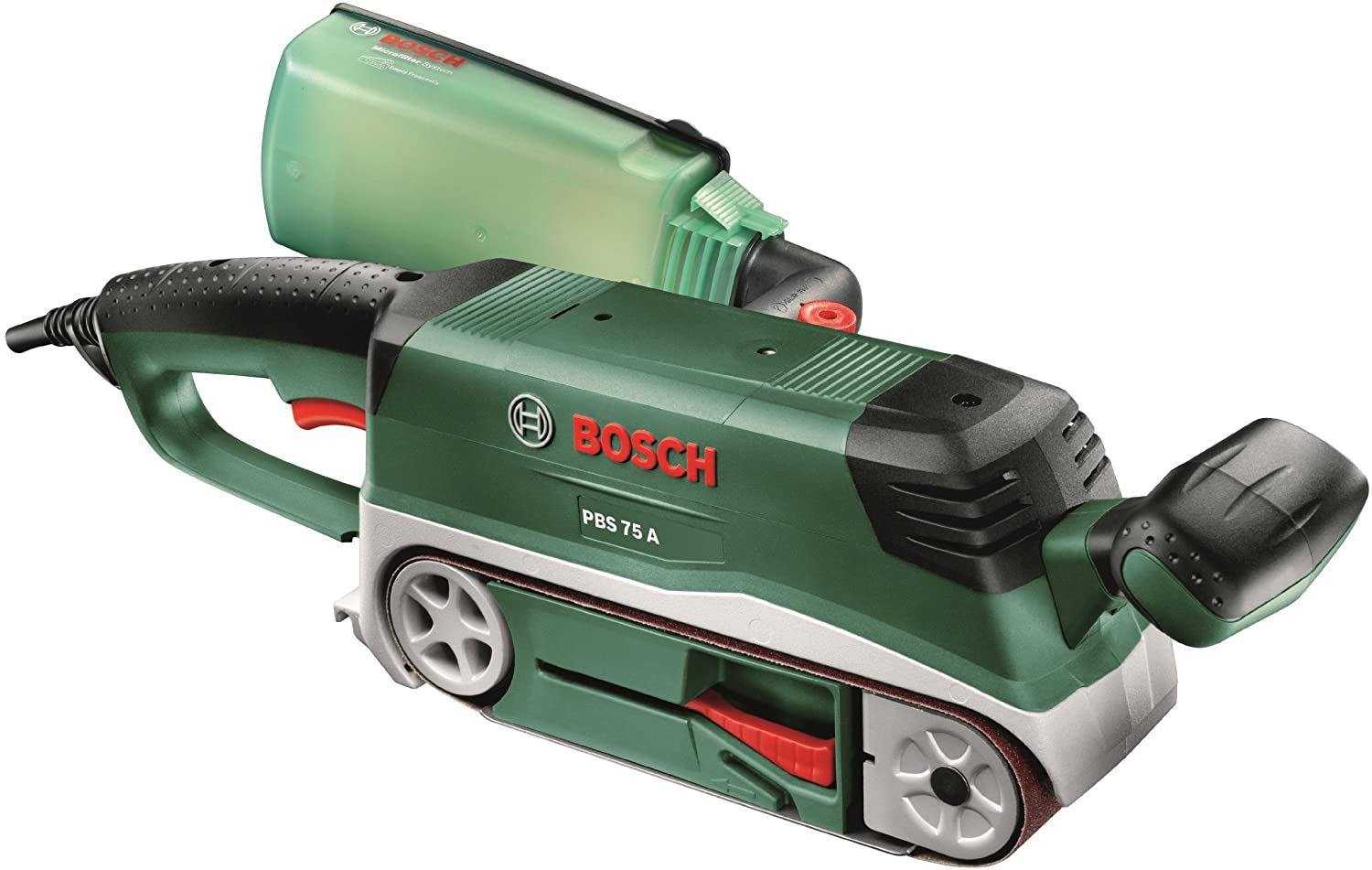
Best for: the DIYer who wants brand-name reliability without paying trade prices.
A 710 W motor on the standard 75 × 533 mm belt, in a compact 3.4 kg body that's noticeably easier to steer than the Makita. Its party trick: the PBS 75 A can be clamped upside down or on its side as a stationary sander, which turns it into a makeshift bench machine for shaping small workpieces - a genuinely useful second life most handhelds don't offer. Owner reviews consistently praise the low vibration; the recurring complaint is noise, which is real but normal for the category.
| Pros | Cons |
|---|---|
| ✅ Can be mounted as a stationary sander | ❌ Noisy at full speed |
| ✅ Low vibration, easy handling (3.4 kg) | ❌ Single speed on the base model |
| ✅ Standard 75 × 533 mm belts - cheap, everywhere |
3. Black+Decker 720 W - Best Value
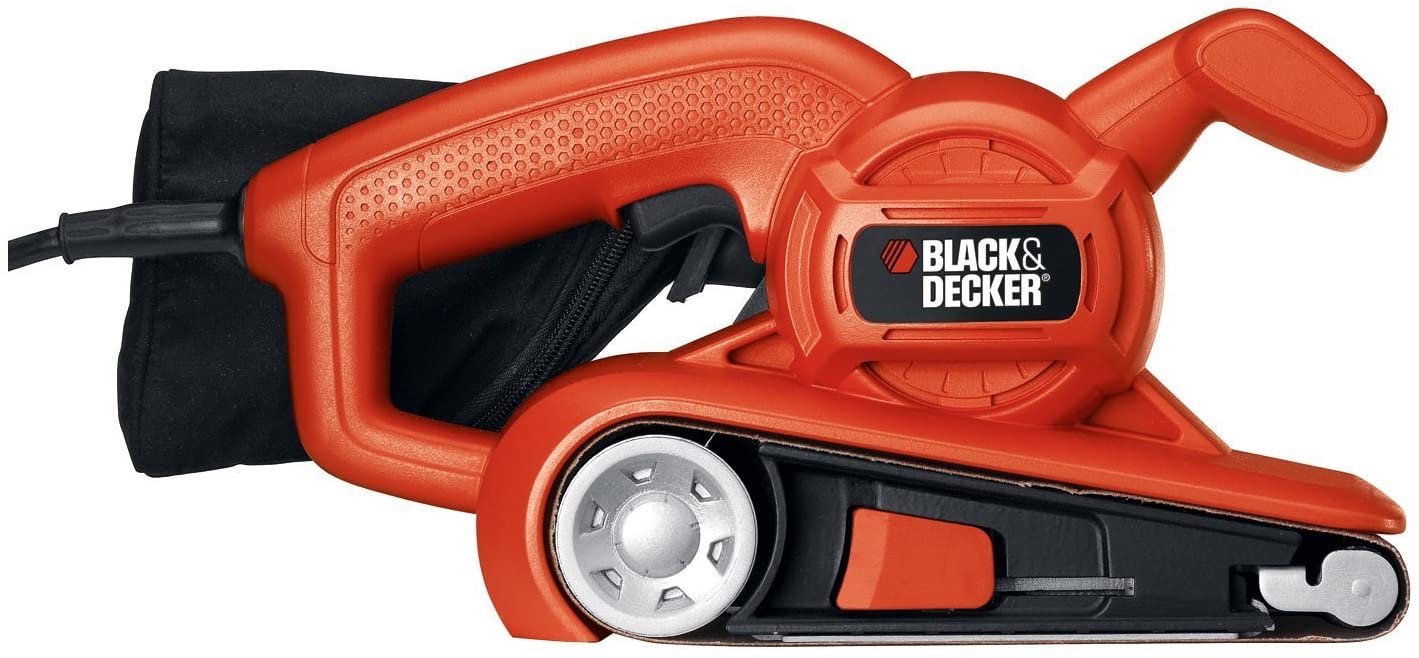
Best for: most people, honestly - the least money that buys a belt sander you won't fight with.
720 W on a 75 × 457 mm belt, with the feature that sets it apart at this price: an angled belt design that sands right up to the edge of skirting, walls and adjacent surfaces, where standard belt sanders leave an unreachable strip. Belt changes are tool-free via a quick-release lever, and tracking auto-adjusts after a change. Dust collection is effective for the class. The trade-off is some vibration under load - manageable, but you'll know you're holding a budget tool.
| Pros | Cons |
|---|---|
| ✅ Angled belt sands flush to edges | ❌ Noticeable vibration under load |
| ✅ Tool-free rapid belt change + auto tracking | |
| ✅ Effective dust collection for the price | |
| ✅ Beginner-friendly handling |
4. Einhell TC-BC 8038 - Speed Control on a Budget
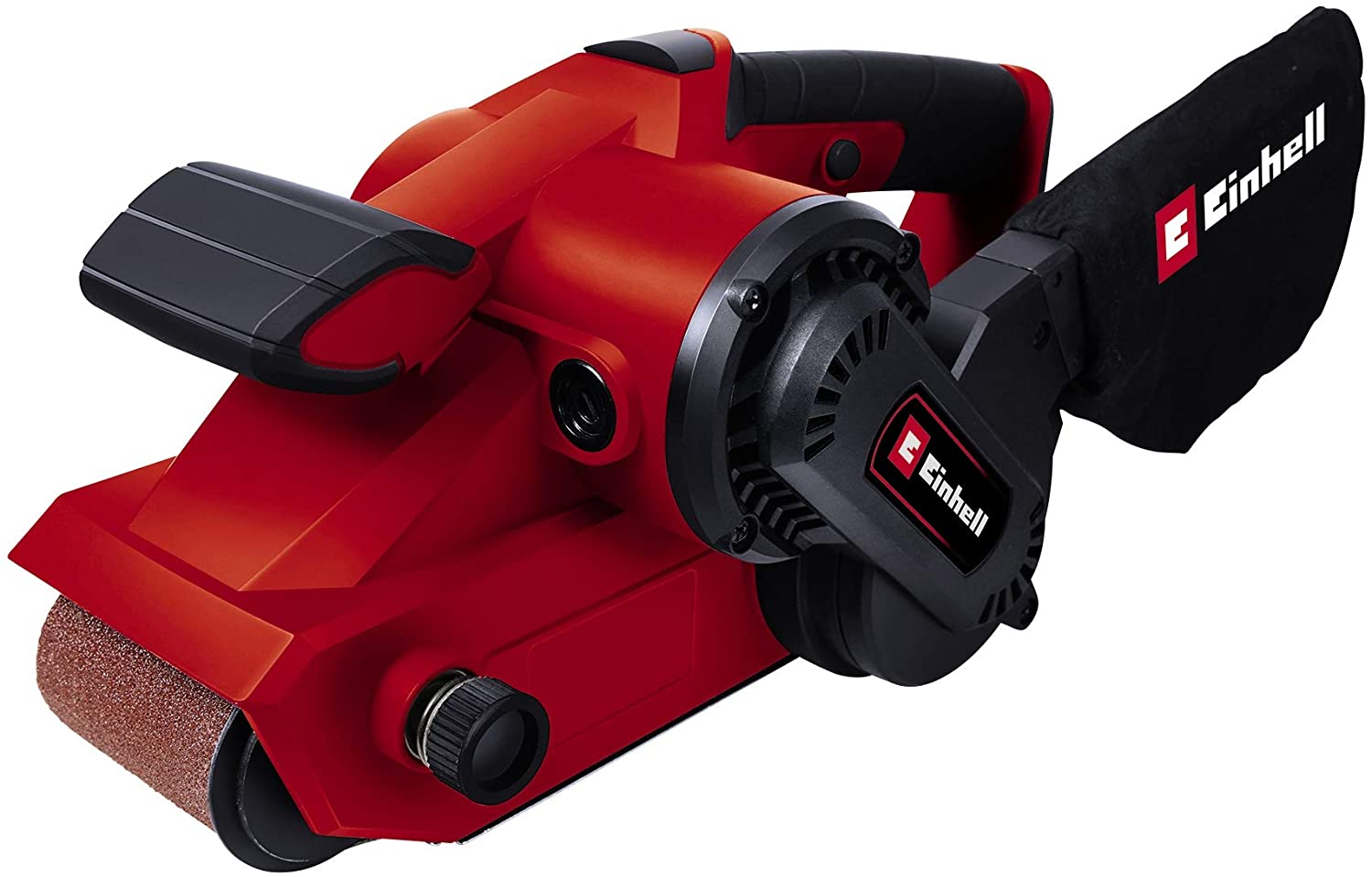
Best for: budget buyers who specifically want electronic speed control - rare under £60.
800 W and 3.5 kg with a front assist handle for two-handed guidance, and the headline feature: electronic speed control at a price point where almost everything else runs flat out only. That matters for delicate work - softwoods, veneered board, paint you want to thin rather than obliterate. The weak point, consistently flagged in owner reviews, is dust collection: the bag catches the big stuff and lets the fine dust fly, so plan on a mask or a vacuum adapter.
| Pros | Cons |
|---|---|
| ✅ Electronic speed control at a budget price | ❌ Poor dust collection |
| ✅ Front handle gives precise guidance | |
| ✅ Light (3.5 kg) for an 800 W machine |
5. Clarke CS4-6E - Best Belt & Disc Sander
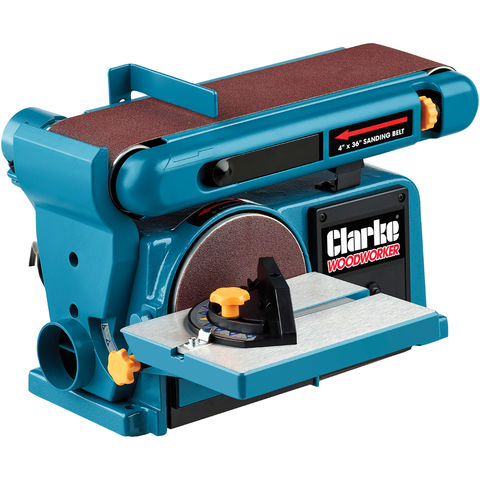
Best for: bench work - shaping, squaring ends, chamfering small workpieces you bring to the sander.
The one machine here that isn't handheld: a cast-iron bench unit combining a 4" × 36" belt that tilts and locks anywhere from 0-90° with a 6" disc spinning at 2,850 rpm. At 18.4 kg it plants itself on the bench and doesn't move, which is exactly what you want when sanding small parts your hands would otherwise be holding an inch from a moving belt. Finger guard, disc guard, locking switch, and a 60 mm dust port for a vacuum. It's loud, and 370 W means patient rather than aggressive stock removal - but for joinery cleanup and small-parts shaping it's the best value bench sander in the UK.
| Pros | Cons |
|---|---|
| ✅ Belt + disc in one bench machine | ❌ Loud |
| ✅ Belt tilts 0-90° and locks | ❌ 370 W - patient, not aggressive |
| ✅ Cast-iron build, proper guards, 60 mm dust port |
6. Silverline 810 W - Cheapest Usable Option
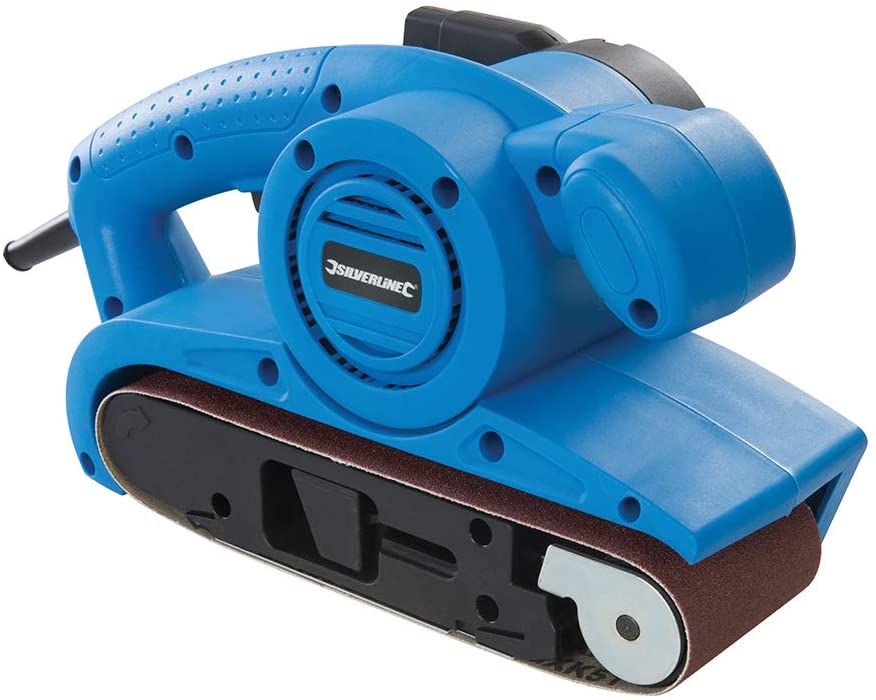
Best for: one project and a drawer afterwards - the least you can spend without buying a toy.
810 W on a 76 mm belt with the essentials covered: a belt tracking adjustment knob (cheap sanders that lack one are unusable), a lock-on switch for long passes, a detachable dust bag, and even spare motor brushes in the box. Fit and finish are exactly what the price suggests, and Silverline's customer service gets rough reviews - but the tool itself does honest work for remarkably little money. If your belt sanding is one deck or one staircase, this is the rational buy.
| Pros | Cons |
|---|---|
| ✅ Tracking knob + lock-on switch at rock-bottom price | ❌ Budget fit and finish |
| ✅ Spare brushes included | ❌ Weak customer support |
| ✅ Strong 810 W motor for the money |
7. Clarke Contractor CBS2 - Heavy-Duty Handheld
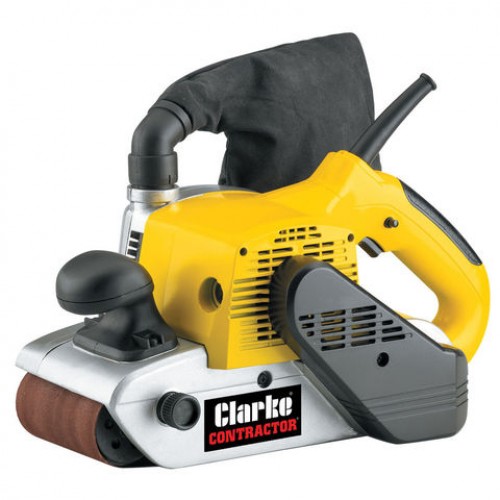
Best for: big flat areas - floors, doors, worktops - where sanding width and machine weight do the work.
A hefty 8.5 kg trade-style handheld with a large sanding platen that flattens big surfaces fast, and twin handles that give real control over all that mass. The weight is the feature: on horizontal work you barely press at all. It's overkill for furniture and murder on your arms for anything vertical, and the dust bag is its known weak point - but for levelling floorboards or stripping a series of doors, it's a lot of machine for the money.
| Pros | Cons |
|---|---|
| ✅ Big platen levels large surfaces fast | ❌ Weak dust bag |
| ✅ 8.5 kg of self-pressing weight | ❌ Too heavy for vertical/detail work |
| ✅ Twin-handle control |
Belt sander buying guide: what actually matters
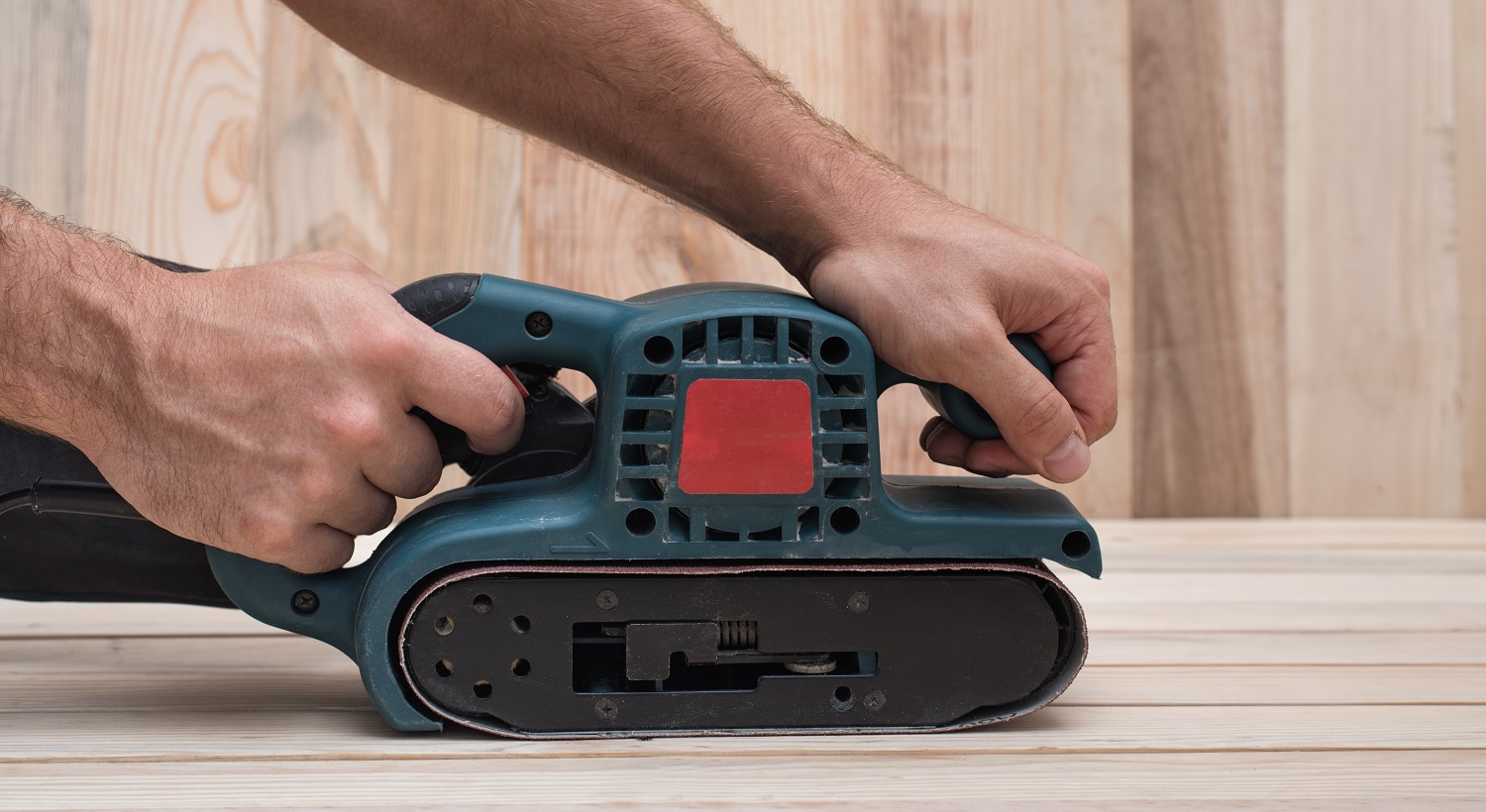
Belt tracking is the make-or-break feature. A belt that drifts off its rollers mid-stroke gouges the work and shreds itself. Auto-tracking (Makita) is best; a good manual tracking knob (everything else here) is fine; no tracking adjustment at all is disqualifying.
Power and speed. 700 W+ handles DIY comfortably; 1,000 W is trade territory. Variable speed matters more than peak power for mixed work - full speed for stripping a deck, dialled down for veneer and softwoods.
Belt size sets your running costs. 75 × 533 mm is the UK standard with the cheapest, widest belt selection. Odd sizes mean pricier belts, forever - check belt price before you buy the machine.
Dust collection is a health feature, not a convenience. Belt sanders produce more dust, faster, than any other sander. A bag is the minimum; a vacuum port you actually use is better. Our wood sanders hub covers dust extraction across every sander type.
Handheld vs bench. If the work comes to the tool (small parts, shaping, end-grain squaring), you want a bench belt & disc machine like the Clarke CS4-6E. If the tool goes to the work (floors, doors, worktops), you want a handheld. They're different tools, not competitors.
Frequently asked questions
Is a belt sander better than an orbital sander? For fast material removal on large, flat surfaces - yes, by a wide margin. For finishing, the orbital wins: a belt sander's straight-line scratch pattern needs a finer sander after it anyway. Full comparison in our belt sander vs orbital sander guide.
What is a belt sander used for? Aggressive flattening and stripping: levelling glued-up boards, removing old paint and varnish, cleaning up rough-sawn timber, and fast shaping. It's the first sander on a rough surface, never the last - follow it with an orbital or sheet sander before finishing.
What's the best belt and disc sander in the UK? The Clarke CS4-6E - a tilting 4" × 36" belt plus a 6" disc in a cast-iron bench unit, with proper guards and a dust port, at a hobbyist price.
Are belt sanders dangerous? Respectfully powerful rather than dangerous: the belt only moves one way and can grab and launch a loose workpiece. Clamp your work, keep both hands on the machine, start it off the surface, and let it stop before setting it down. Eye and dust protection always.
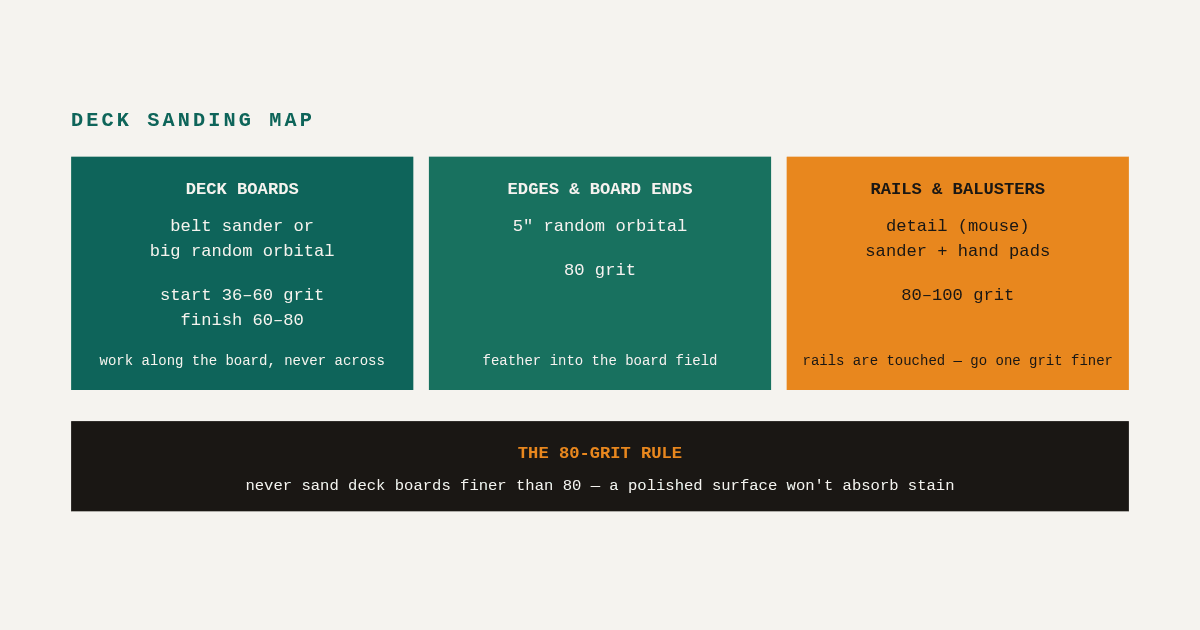
What grit belts should I buy? 40-60 for stripping and levelling, 80-100 for general smoothing, 120 to finish before switching to an orbital. Buy multipacks - belt sanders eat abrasives, and a worn belt burns wood instead of cutting it.
Verdict
The Makita 9404/2 is the buy-once answer if belt sanding is a regular part of your work. For everyone else, the Black+Decker 720 W covers occasional DIY at the friendliest price, the Bosch PBS 75 A is the step up that can moonlight as a bench machine, and the Clarke CS4-6E is the pick when the workpieces are small and the sander should stay put. Restoring furniture rather than levelling floors? Start with our furniture restoration sander guide instead - a belt sander is usually too much tool for that job.