Best Full-Size Wood Lathes: 5 Floor-Standing Machines Compared
Affiliate disclosure: As an Amazon Associate, WoodyMan Reviews earns from qualifying purchases. If you buy through links on this page, we may earn a commission at no extra cost to you. How this works.
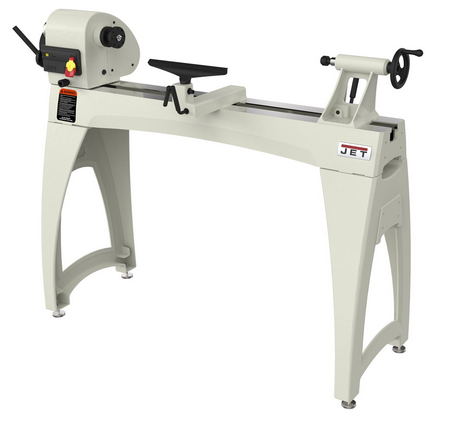
A full-size wood lathe is a floor-standing machine built for the work a midi lathe can't handle: big bowls and platters, long spindles, table legs, and hard woods turned at real low-speed torque. Stepping up from a benchtop machine, four specs actually separate them:
- Swing - the max diameter over the bed. Full-size lathes run 14" to 22"+; that number is the biggest bowl you can turn.
- Distance between centers - how long a spindle you can turn (24" to 44" here).
- Horsepower - 1 to 3 HP. More power means it won't bog when you take a real cut in dense wood at low speed.
- Drive type - mechanical variable speed (belt/pulley), EVS (electronic variable speed, smooth dial), or DVR (direct-drive smart motor, no belts, the quietest and most controllable).
And weight: these are 200-700+ lb cast-iron machines, and that mass is a feature - it's what lets them turn a heavy, off-balance blank without walking. Here are five worth buying, from an entry floor lathe to a 22" powerhouse.
We earn a small commission from the Amazon links below, at no extra cost to you - see our affiliate disclosure.
The 5 best full-size wood lathes
| Lathe | Swing / HP | Woody Rating | |
|---|---|---|---|
| 1. JET JWL-1640EVS | 16" / 1.5 HP EVS | 9.4/10 [Editor's Choice] | Check price |
| 2. NOVA Galaxi DVR 1644 | 16" / 1.75 HP DVR | 9.2/10 | Check price |
| 3. Grizzly G0766 | 22" / 3 HP EVS | 9.0/10 | Check price |
| 4. Grizzly G0838 | 16" / 2 HP VFD | 8.6/10 | Check price |
| 5. JET JWL-1440VS | 14" / 1 HP | 8.3/10 | Check price |
1. JET JWL-1640EVS - Editor's Choice
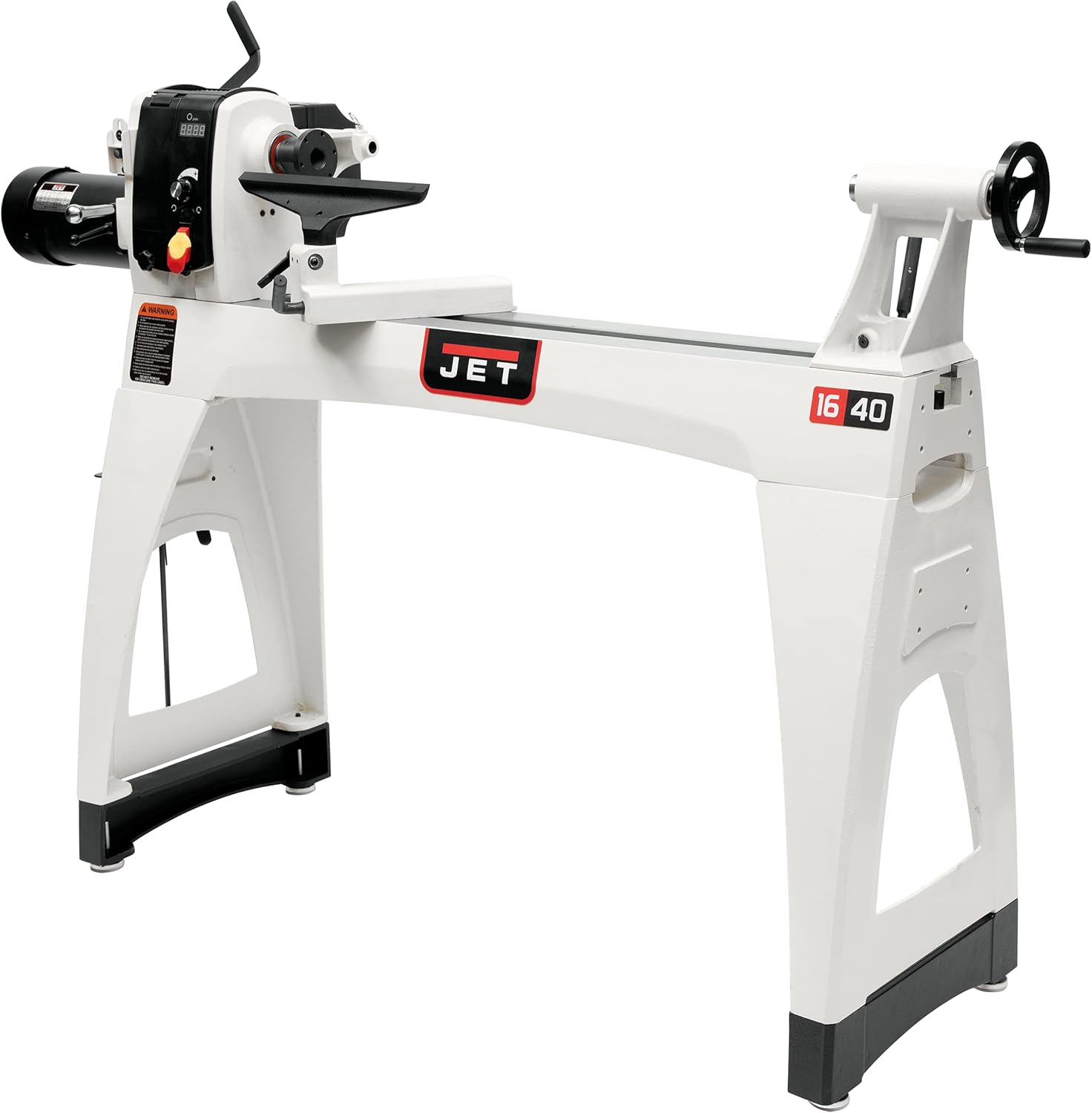
Best for: the serious hobbyist or pro who wants a refined, do-everything 16" lathe.
The 1640EVS is the full-size lathe most turners aspire to and few regret. Its electronic variable speed dials smoothly from 40 to 3,200 RPM with a digital readout, so you can inch a rough blank up to speed and hold it there under load - the 1.5 HP motor doesn't flinch. The 16" swing and 40" between centers cover big bowls and long spindles alike, and a sliding, reversible headstock lets you turn outboard or move to a comfortable working position. Everything about it - the banjo, the tailstock, the fit - is a class above budget floor lathes. It's an investment, but it's the one that turns "someday" projects into today's. Pair it with a proper 4-jaw chuck and you're set for life.
| Pros | Cons |
|---|---|
| ✅ Smooth EVS 40-3,200 RPM + digital readout | ❌ Premium price |
| ✅ Sliding, reversible headstock | ❌ Heavy - plan placement |
| ✅ Refined fit and finish throughout | |
| ✅ 16" swing handles big work |
2. NOVA Galaxi DVR 1644 - Best Drive Technology
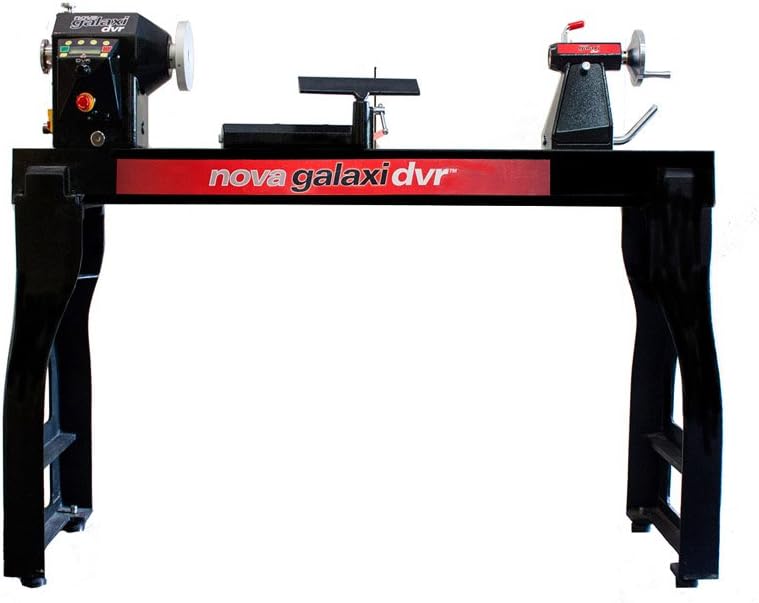
Best for: turners who want the smoothest, quietest, most controllable power delivery.
The Galaxi's headline is its DVR (Digital Variable Reluctance) direct-drive motor - the motor drives the spindle directly with no belts or pulleys, which means almost no vibration, near-silent running, and computer-controlled speed from a low 100 RPM up to 5,000. The electronics even sense load and add power to hold speed through a heavy cut. With a 16" swing and 44" between centers, it turns big bowls and long spindles, and the belt-free design means less maintenance over its life. It's priced with the JET and the digital interface has a small learning curve, but for sheer refinement of power delivery, nothing here beats it.
| Pros | Cons |
|---|---|
| ✅ Belt-free DVR - quiet, low vibration | ❌ Digital controls have a learning curve |
| ✅ Load-sensing holds speed in a cut | ❌ Premium price |
| ✅ 100-5,000 RPM, 44" between centers | |
| ✅ Less maintenance (no belts) |
3. Grizzly G0766 - Biggest Swing for the Money
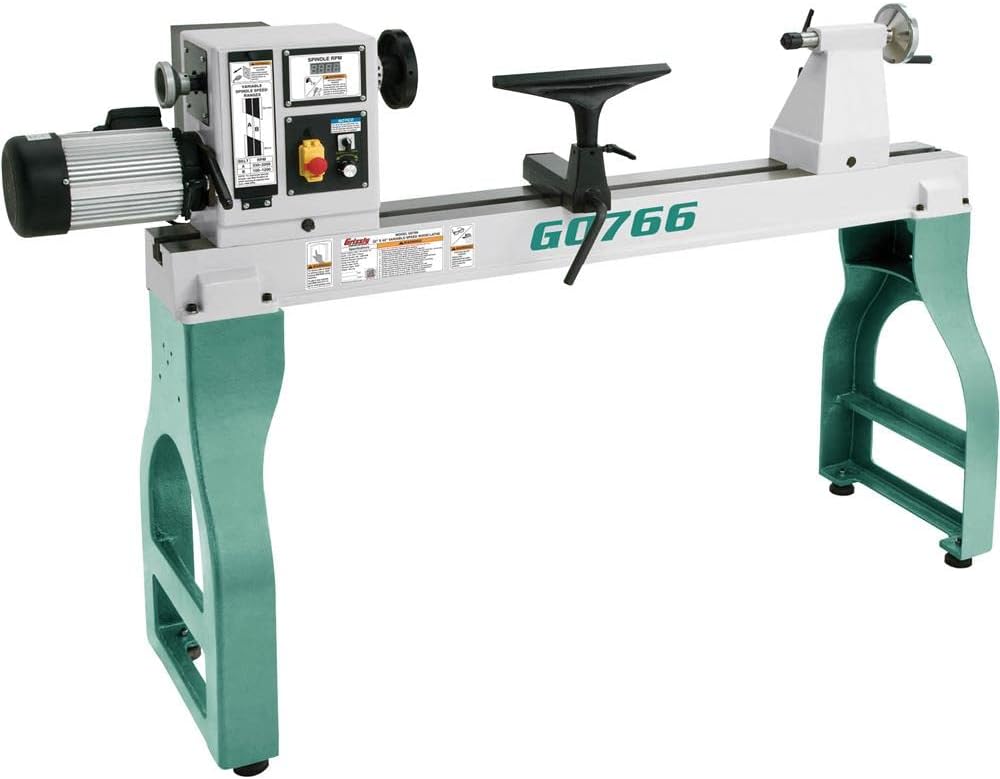
Best for: turners going big - large platters and bowls - who want maximum capacity per dollar.
When you want the most lathe for the money, the G0766 is hard to argue with: a 22" swing, a genuine 3 HP motor, and a quality inverter driving smooth electronic variable speed, at a price well below what that capacity costs from premium brands. The 22" swing turns platters most lathes here simply can't fit, the sliding headstock supports big outboard work, and it has the mass to stay planted under a heavy blank. Fit and finish are good-not-luxury, and it's a big, heavy machine you need space and a 220V circuit for - but for a turner whose ambitions run large, it delivers the most raw capability on this list.
| Pros | Cons |
|---|---|
| ✅ 22" swing + 3 HP - most capacity here | ❌ Needs 220V and floor space |
| ✅ Best capability per dollar | ❌ Fit is good, not luxury |
| ✅ Smooth EVS via quality inverter | |
| ✅ Sliding headstock for outboard work |
4. Grizzly G0838 - Best Value Full-Size
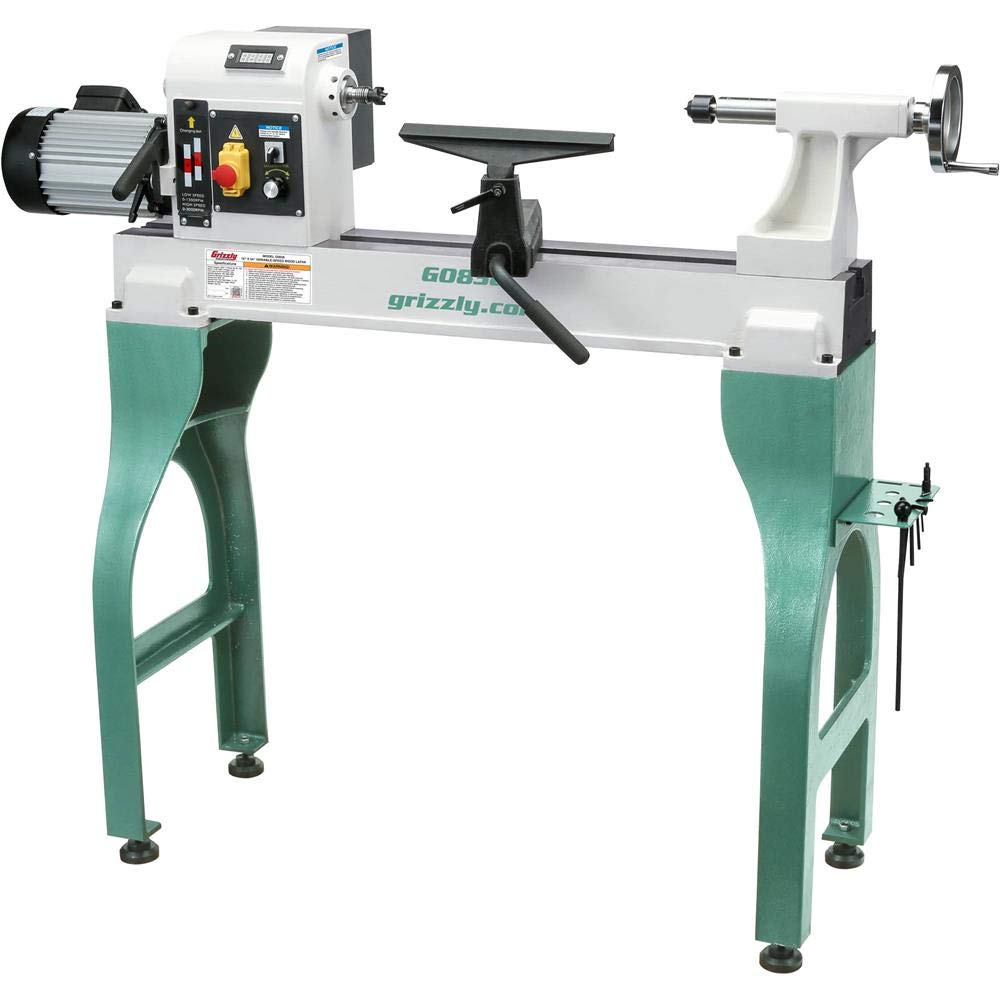
Best for: getting into a true floor lathe with low-speed torque without a premium price.
The G0838 is the value entry to real full-size turning: a 16" swing, 2 HP delivered through a VFD (so it runs on single-phase 220V with strong low-end torque), and a sliding headstock that locks for outboard work - the features that matter, at a friendlier price than the JET or NOVA. The VFD's low-speed torque is genuinely useful for starting big, dense, off-balance blanks. You give up some of the refinement and the digital polish of the premium machines, and it wants a 220V circuit, but as a first serious floor lathe that won't bog on hard maple, it's a lot of capability for the money.
| Pros | Cons |
|---|---|
| ✅ 2 HP VFD - strong low-speed torque | ❌ Needs a 220V circuit |
| ✅ 16" swing, sliding headstock | ❌ Less refined than premium lathes |
| ✅ Best value in a floor lathe |
5. JET JWL-1440VS - Entry Full-Size
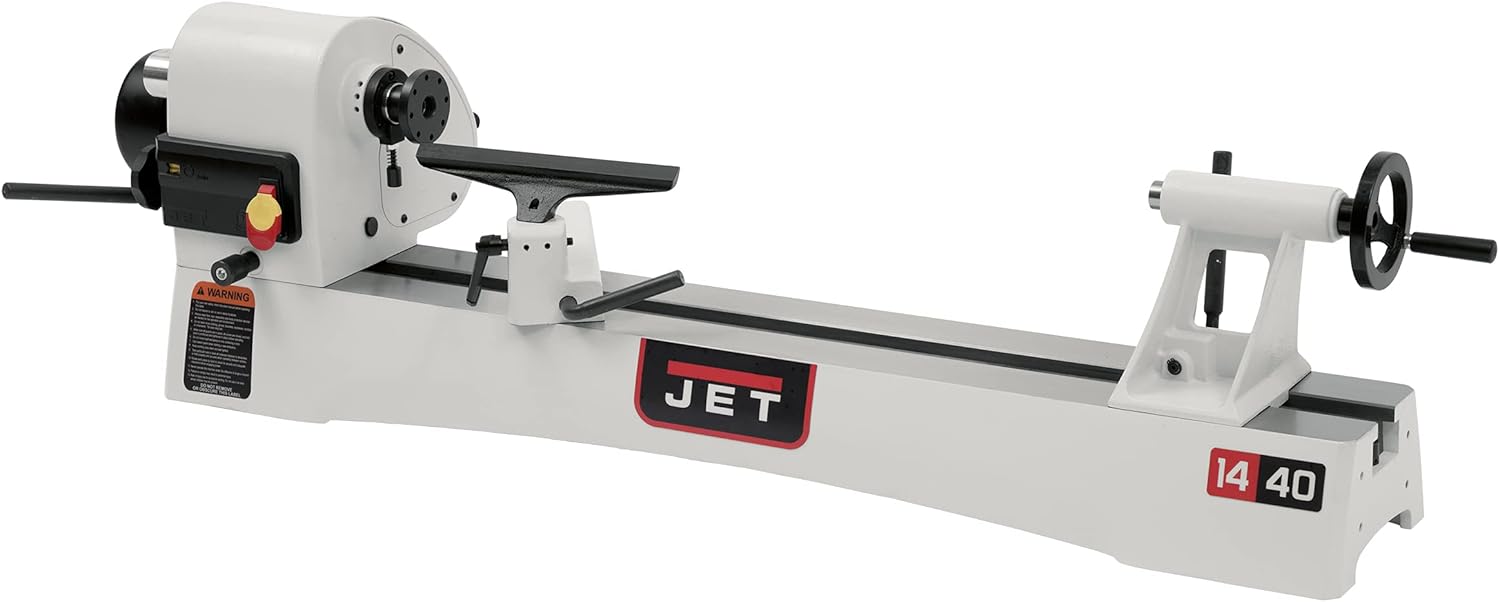
Best for: stepping up from a midi to a floor lathe on a tighter budget, with standard household power.
The 1440VS is the gentlest, most affordable step into a full-size JET. A 14" swing and 40" between centers cover most bowls and long spindles, the 1 HP motor runs on standard 115V (or 230V) so you may not need to wire a new circuit, and mechanical variable speed keeps it simple and reliable. It's smaller in swing and power than the others here - it's the "full-size for the rest of us" - and speed changes involve the mechanical VS system rather than a smooth electronic dial. But it brings JET's build quality to a first floor lathe at the lowest entry point, and it plugs into the wall you already have.
| Pros | Cons |
|---|---|
| ✅ Runs on standard 115V | ❌ Smallest swing/power here |
| ✅ JET build at the lowest entry price | ❌ Mechanical VS, not electronic |
| ✅ 14" swing, 40" centers - versatile |
How to choose a full-size wood lathe
Buy the swing (and length) you'll actually use
Swing sets your max diameter; distance between centers sets your max spindle length. A 16" swing suits most turners; step to 20-22" only if you're committed to big platters. Don't overpay for capacity you won't fill - but do buy a little more than you think, because turners rarely wish for less.
Horsepower and drive type
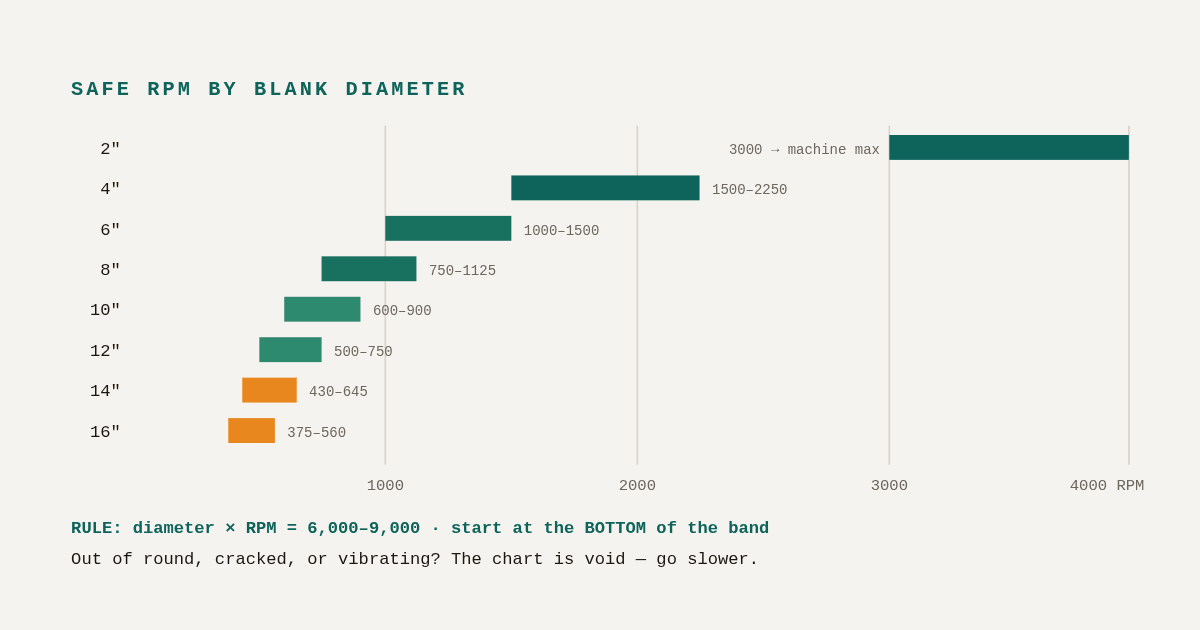
1 HP is fine for a 14" lathe and moderate work; 2-3 HP matters when you turn big, dense blanks at low speed without bogging. For the drive: mechanical VS is simple and cheap; EVS gives smooth, dial-in speed; DVR direct-drive (NOVA) is the smoothest, quietest, lowest-maintenance option.
Power at the wall
Many full-size lathes need 220/240V (the Grizzlys here do). Confirm you have - or can add - the right circuit before buying. The JET 1440VS running on 115V is the exception if rewiring isn't an option.
Weight is a feature
Cast-iron mass absorbs the vibration of an unbalanced blank. Heavier lathes turn big work more safely and smoothly - just plan the floor space and the moving-day logistics, because these don't lift onto a bench.
Frequently Asked Questions
What counts as a "full-size" wood lathe?
Generally a floor-standing lathe with a swing of about 14" or more, substantial cast-iron weight, and the power (1-3 HP) and rigidity for big bowls and long spindles - as opposed to a benchtop midi or mini lathe.
How much horsepower do I need?
For a 14-16" lathe doing typical bowls and spindles, 1-2 HP is plenty. If you turn large-diameter platters or dense hardwoods at low speed, 2-3 HP keeps the lathe from bogging under a heavy cut. The Grizzly G0766's 3 HP is aimed squarely at big work.
EVS, DVR, or mechanical variable speed - what's the difference?
Mechanical VS changes speed via belts/pulleys (simple, cheap). EVS (electronic variable speed) gives a smooth speed dial with a readout. DVR is a direct-drive smart motor with no belts - the quietest, lowest-vibration, most controllable option, and it senses load to hold speed. Refinement rises (and so does price) in that order.
Do I need a full-size lathe, or will a midi do?
If you turn bowls up to ~12" and spindles of moderate length, a heavy midi like the JET 1221VS handles it - see best wood lathes for turning bowls. Step up to full-size when you consistently exceed a midi's swing, need more low-speed torque, or turn long/heavy work.
More in the turning cluster
Start at the wood lathes hub for the whole picture, compare bowl-turning lathes and budget / mini options, add the right 4-jaw chuck, and learn the cuts in the art of bowl turning.