Best Wood Lathes for Turning Bowls: 5 Picks by Swing Capacity
Affiliate disclosure: As an Amazon Associate, WoodyMan Reviews earns from qualifying purchases. If you buy through links on this page, we may earn a commission at no extra cost to you. How this works.
Bowl turning asks different things of a lathe than spindle work does, and two numbers decide almost everything:
- Swing - twice the distance from the spindle center to the bed - is the largest diameter you can turn. A 14" swing turns a 14" bowl; a 12" swing caps you at 12". This is the single spec that sets your bowl size, so buy the swing you actually want.
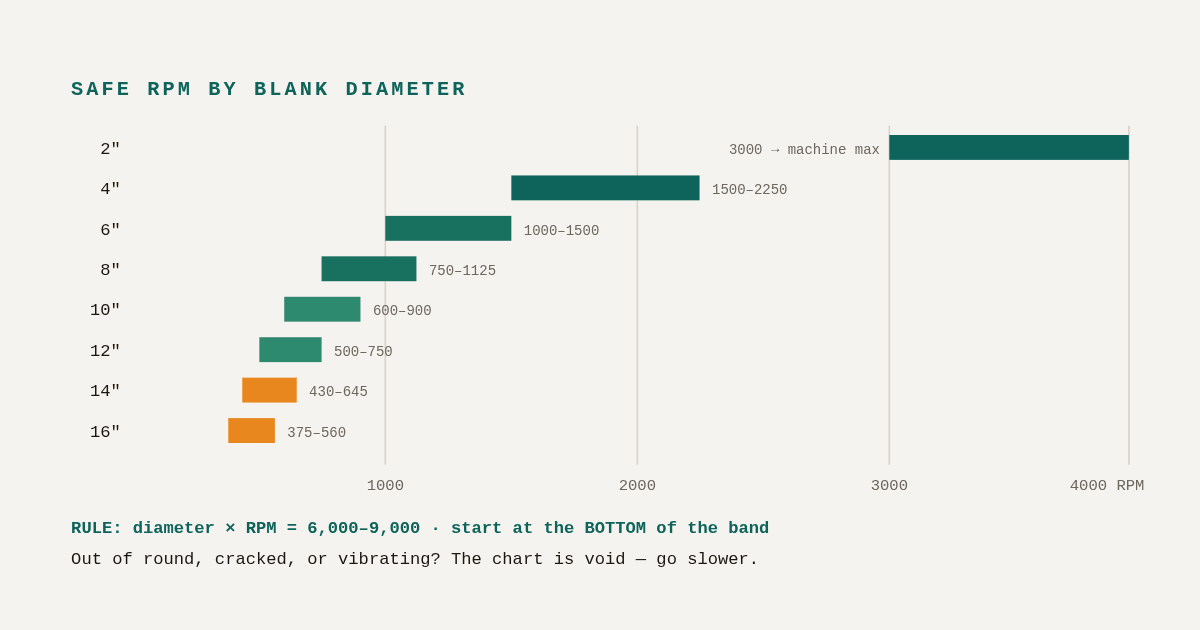
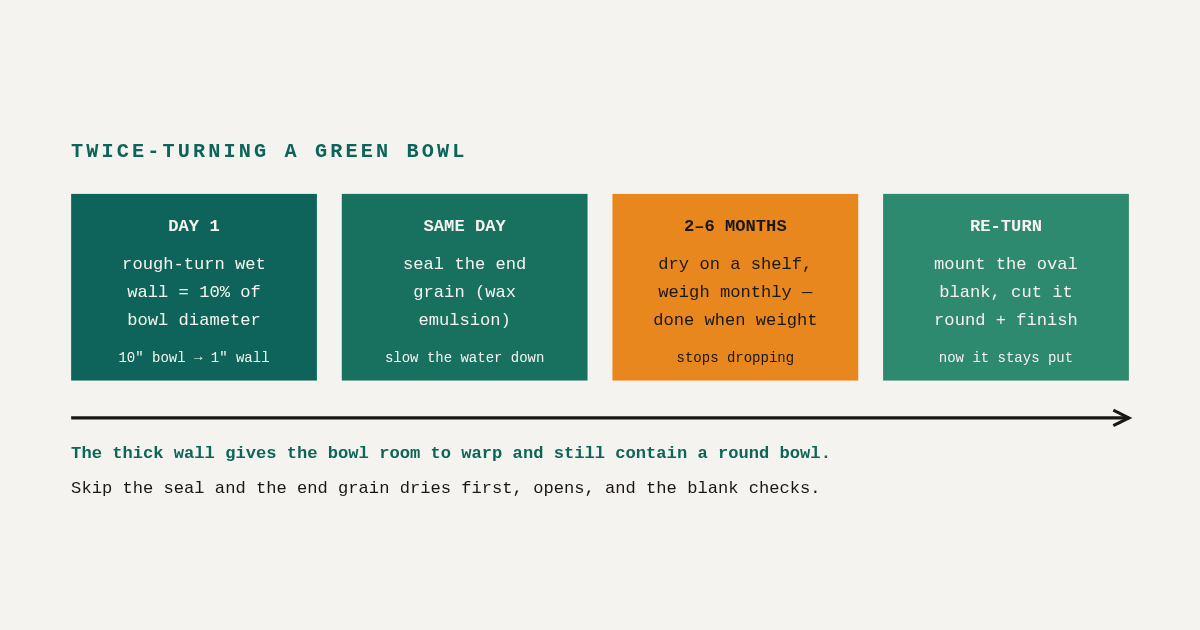
- Low-speed torque. A big, out-of-round blank has to start slow (often 250-500 RPM) without bogging or shaking the machine off the bench. That takes real motor torque and mass - a heavy cast-iron lathe stays put where a light one walks.
Everything else - variable speed, tool rest, indexing - is comfort. Below are five lathes ranked by how much bowl they'll actually swing, from a true 14" machine down to a compact starter.
We earn a small commission from the Amazon links below, at no extra cost to you - see our affiliate disclosure.
The 5 best wood lathes for turning bowls
| Lathe | Swing × Length | Woody Rating | |
|---|---|---|---|
| 1. Grizzly G0844 | 14" × 20" | 9.1/10 [Editor's Choice] | Check price |
| 2. JET JWL-1221VS | 12" × 21" | 9.0/10 | Check price |
| 3. RIKON 70-220VSR | 12.5" × 20" | 8.7/10 | Check price |
| 4. WEN LA3424 | 12" × 18" | 8.3/10 | Check price |
| 5. Shop Fox W1704 | 8" × 13" | 7.6/10 | Check price |
1. Grizzly G0844 14" × 20" - Editor's Choice
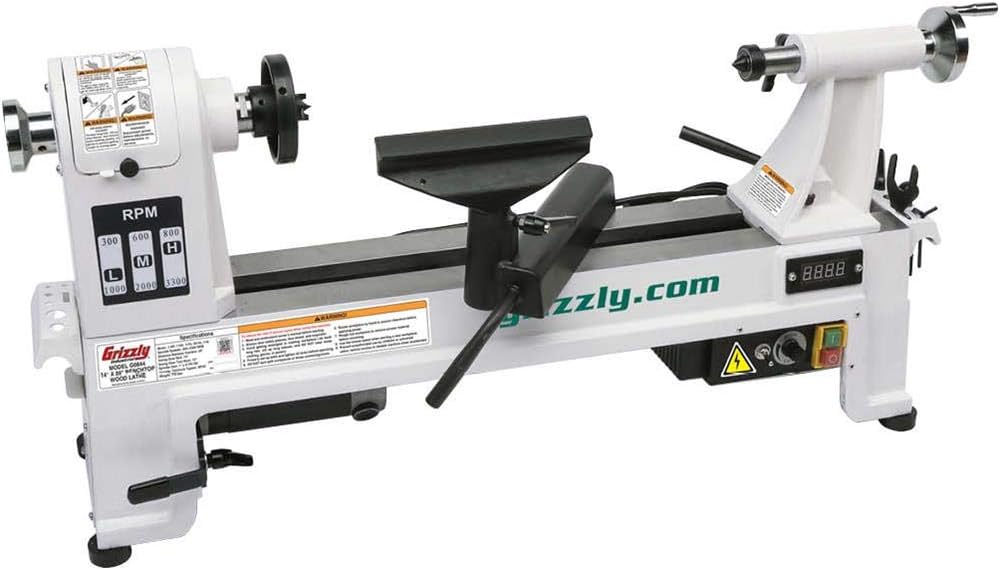
Best for: turners who specifically want to make large bowls and platters without stepping up to a floor-standing lathe.
Most benchtop lathes stop at a 12" swing; the G0844's 14" swing is what puts it on top of a bowl list - that's two extra inches of diameter, and at bowl sizes that's a lot. It's all cast iron with adjustable vibration-damping feet, so despite being a benchtop machine it has the mass to start a chunky blank without dancing. The variable-speed motor drops low enough to true up an off-balance rough-out safely, and a generous 8" tool rest plus 15° indexing round it out. It's heavier and pricier than a midi, and you'll want a solid bench under it - but no other machine here swings a bigger bowl for the money. Pair it with a proper 4-jaw chuck and you're turning platters.
| Pros | Cons |
|---|---|
| ✅ 14" swing - biggest bowls here | ❌ Heavy; needs a sturdy bench |
| ✅ All cast iron, damped feet - very stable | ❌ Priciest benchtop on the list |
| ✅ Variable speed with low bottom end | |
| ✅ 8" tool rest + 15° indexing |
2. JET JWL-1221VS 12" × 21" - Best Midi for Bowls
Best for: the turner who wants the best-built, smoothest-running midi and is happy with bowls up to 12".
The 1221VS is the midi lathe most serious hobbyists land on, and for bowls its trick is low-speed control: the electronic variable speed dips down to around 60 RPM, so you can inch a wildly out-of-round blank up to speed instead of fighting it. Build quality is a clear step above the budget machines - tight tolerances, a solid banjo and tailstock, and the ratchet-style tool rest that makes repositioning quick. The 12" swing means 12" bowls, not 14", and it's a midi so it likes to be bolted down for heavy work. But for finish, refinement, and everyday bowl turning, it's the class benchmark. See where it sits in the wider lathe lineup.
| Pros | Cons |
|---|---|
| ✅ Class-leading build and fit | ❌ 12" swing caps bowl size |
| ✅ VS down to ~60 RPM for rough blanks | ❌ Bolt it down for big out-of-round work |
| ✅ Excellent tool rest and tailstock | |
| ✅ Quiet, smooth, holds speed under load |
3. RIKON 70-220VSR 12.5" × 20" - Best Value Step-Up
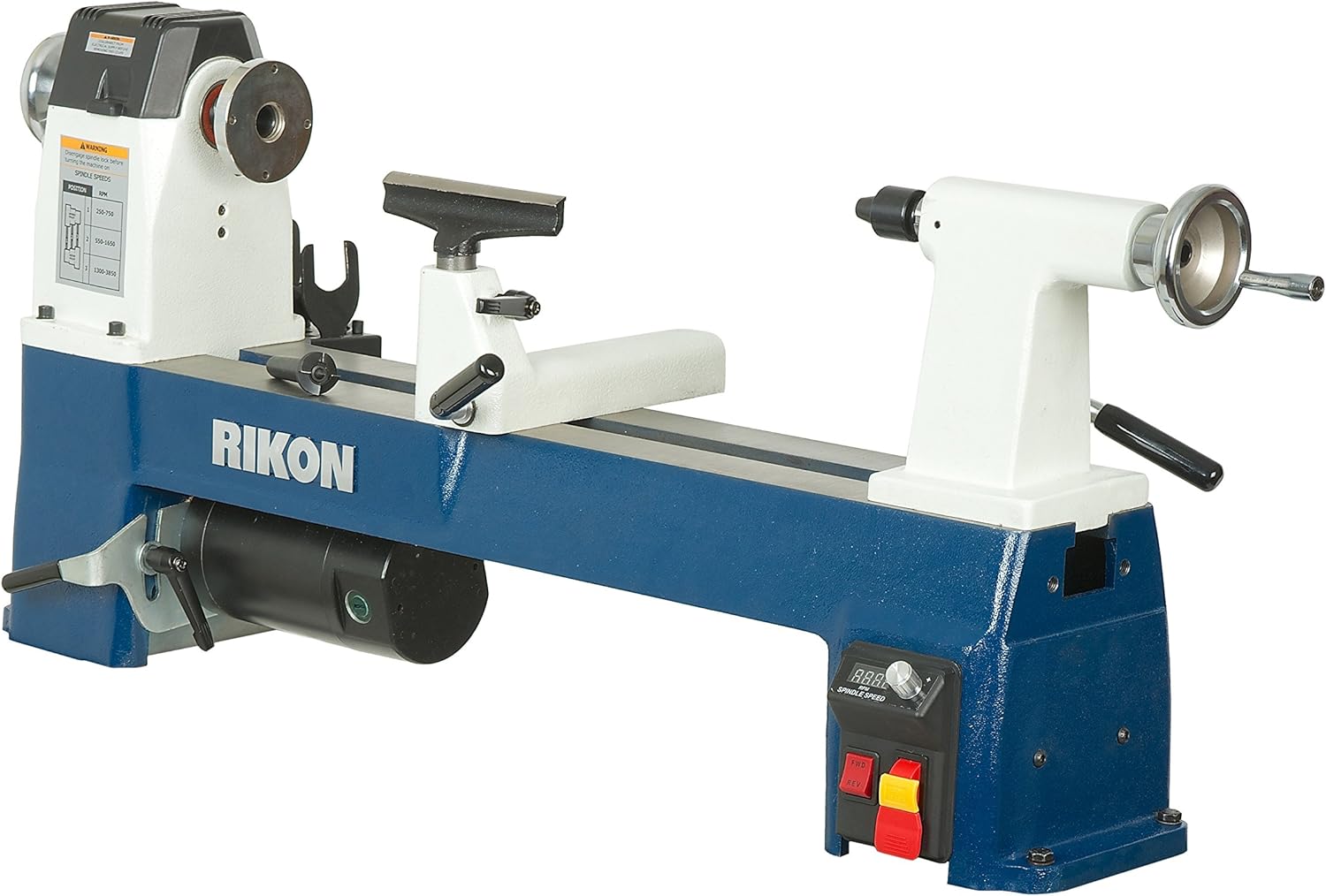
Best for: buyers who want near-JET capability and a little more swing for less money.
The 70-220VSR splits the difference between the budget midis and the JET: a 12.5" swing, a full 1 HP motor, and RIKON's reversible variable speed (the "R" - handy for sanding). The castings are substantial enough to keep vibration down on medium bowl blanks, and a 24-position index head helps if you add fluting or veining later. It's not quite as buttery as the JET and the speed changes involve a belt move at the extremes, but you get more diameter and more motor per dollar, which for bowl work is exactly the right place to spend. A strong middle choice for someone growing past a first mini.
| Pros | Cons |
|---|---|
| ✅ 12.5" swing + full 1 HP motor | ❌ Belt move for the full speed range |
| ✅ Reversible VS for sanding | ❌ Fit not quite JET-level |
| ✅ 24-position indexing | |
| ✅ Strong value for the capacity |
4. WEN LA3424 12" × 18" - Best Budget 12" Swing
Best for: getting a genuine 12" bowl capacity for the least money.
The LA3424 is the value play - a 12" swing and variable speed at a price well under the JET and RIKON. For a turner who wants to make real bowls without a big outlay, that's a lot of capacity per dollar. The trade-offs are what you'd expect at the price: lighter castings mean you feel more vibration on a heavy out-of-round blank (start slow, take light cuts), and the fit and finish are workmanlike rather than refined. But it turns 12" bowls, the variable speed works, and it's a proven entry into bowl work. It anchors our budget lathe guide for good reason.
| Pros | Cons |
|---|---|
| ✅ 12" swing at a budget price | ❌ Lighter - more vibration on big blanks |
| ✅ Variable speed included | ❌ Workmanlike fit and finish |
| ✅ Best capacity-per-dollar here |
5. Shop Fox W1704 8" × 13" - Small Bowls, Tight Budget
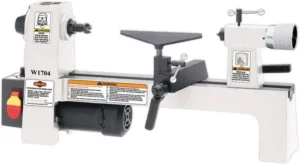
Best for: small bowls, boxes, and learning the cuts before you commit to a bigger machine.
Let's be honest about swing: at 8", the W1704 is not a large-bowl lathe - it's for small bowls, lidded boxes, and practice. What it has going for it is a cast-iron body that's unusually solid for its size and price, so it runs steadier than you'd expect on the small blanks it's meant for. Speed changes are manual (belt on a step pulley), and you'll outgrow the swing if bowls become your thing. But as a cheap, sturdy way to learn bowl-turning fundamentals - or as a dedicated small-work second lathe - it earns its spot. Just don't expect it to swing a 12" platter.
| Pros | Cons |
|---|---|
| ✅ Heavy cast iron for its size - stable | ❌ 8" swing - small bowls only |
| ✅ Cheapest way to start turning | ❌ Manual belt-change speeds |
| ✅ Great small-work second lathe |
How to choose a bowl-turning lathe
Swing sets the bowl size - buy for the bowl you want
Swing is the maximum diameter over the bed; the bowl you can turn is essentially that number. A 12" swing means 12" bowls. Turners routinely wish they'd bought more swing, rarely less - so if large bowls are the goal, start at 12" and stretch to 14" if you can.
Weight beats horsepower for stability
An unbalanced blank shakes the machine, not the wood. Cast-iron mass absorbs that vibration; a light lathe walks across the bench. Between two similar lathes, the heavier one will turn a big blank more safely. Bolt lighter midis to a solid bench.
Variable speed with a low bottom end
Rough bowl blanks must start slow. Look for variable speed that reaches down to a few hundred RPM (the JET's ~60 RPM floor is exceptional), so you can true an off-balance blank before bringing it up to a cutting speed.
Budget for the chuck too
A bowl lathe needs a four-jaw scroll chuck to hold the blank by a tenon - factor that into the cost. Our best wood lathe chucks guide covers matching a chuck to your spindle thread.
Frequently Asked Questions
What size lathe do I need to turn large bowls?
Match the swing to your target bowl diameter: a 12" swing turns bowls up to ~12", a 14" swing up to ~14". For platters and big bowls, prioritize swing and machine weight over everything else - the Grizzly G0844's 14" swing is the largest here.
What's the best speed for turning a bowl?
Start slow - often 250-500 RPM - until an out-of-round blank is trued and balanced, then bring it up to roughly 500-1,000+ RPM for cutting, depending on diameter (bigger blanks stay slower). A lathe with a low variable-speed floor makes this safe and easy.
Do I need a full-size floor lathe for bowls?
Not to start. A heavy benchtop like the Grizzly G0844 or a solid midi such as the JET 1221VS handles bowls most hobbyists make. Step up to a full-size lathe only when you consistently turn blanks beyond their swing.
Midi vs. mini lathe for bowls - which is better?
Midi. A mini lathe's small swing (often 8-10") and light weight limit bowl size and stability. Midi lathes give you 12"+ swing and more mass. If budget forces a mini, our mini lathe guide covers the best of them for small work.
More in the turning cluster
Choosing the machine is step one. Browse the full wood lathes hub, compare full-size lathes if you're going big, add the right 4-jaw chuck, then learn the cuts in the art of bowl turning.