6 Best Mini Wood Lathes for the Money: Small Beds, Serious Turning
Affiliate disclosure: As an Amazon Associate, WoodyMan Reviews earns from qualifying purchases. If you buy through links on this page, we may earn a commission at no extra cost to you. How this works.
Short answer: the best mini wood lathe is the JET JWL-1221VS - electronic variable speed, a 12" swing that turns real bowls, and the build quality that makes it the category benchmark. On a tighter budget, the RIKON 70-105 is the quality pick and the WEN LA3424 the capacity-per-dollar pick.
"Mini" lathes are where most turners start and where a surprising number happily stay - pens, bottle stoppers, small bowls and ornaments don't need floor-standing iron, they need a compact machine that runs true. The spread below runs from genuinely cheap to "small but professional," and the honest advice is the same as with budget lathes generally: buy weight and brand support, skip the featherweight no-names. (We removed several from this list's old version - they've since disappeared from Amazon entirely, along with their spare parts.)
We earn a small commission from the Amazon links below, at no extra cost to you - see our affiliate disclosure. Rankings come from spec-sheet comparison (taper, speed floor, cast weight), accessory-ecosystem checks, and owner-review patterns - not our own turning bench; how we review.
The 6 best mini wood lathes
| Mini Lathe | Best for | Woody Rating | |
|---|---|---|---|
| 1. JET JWL-1221VS | The gold standard - buy once, turn forever | 9.5/10 [Editor's Choice] | Check price |
| 2. RIKON 70-105 | Best mid-price build quality | 9.0/10 | Check price |
| 3. PSI Excelsior 5-Speed | Cast-iron value classic | 8.7/10 | Check price |
| 4. Shop Fox W1704 | Best variable-speed pen lathe | 8.6/10 | Check price |
| 5. WEN LA3421 | Cheapest way in | 8.3/10 | Check price |
| 6. WEN LA3424 | The stretch pick - 12" swing for bowls | 8.5/10 | Check price |
1. JET JWL-1221VS - Editor's Choice
Best for: anyone who can afford it - the 1221VS is the mini/midi lathe every other one on this list is measured against.
A full 1HP motor, electronic variable speed from 60 to 3,600 RPM (that 60-RPM crawl is a finishing superpower), forward/reverse for better sanding, and 12"×21" capacity in a package machined to tolerances the budget brands don't attempt. The ratchet-style belt tension and 24-position indexing are the kind of details you appreciate a year in. It costs three or four times the WEN - and holds its value so well that used ones barely discount. If turning is going to be your thing, this is the last mini lathe you'll buy.
| Pros | Cons |
|---|---|
| ✅ 1HP + electronic VS down to 60 RPM | ❌ Costs 3-4× the budget picks |
| ✅ Forward/reverse; 24-position indexing | ❌ Overkill if you just want to try turning |
| ✅ Benchmark build quality; superb resale |
2. RIKON 70-105 - Best Mid-Price Build
Best for: the serious pen and small-work turner - the quality pick under $500, covered in depth in our budget lathe guide.
75 pounds of cast iron, pen-turner-driven design, and alignment accuracy a class above its price. Between the WEN tier and the JET tier, this is the machine that makes the middle ground worth it.
| Pros | Cons |
|---|---|
| ✅ Outstanding fit & alignment for the money | ❌ Belt-change speeds |
| ✅ Real brand, decade-long parts support |
3. PSI Excelsior 5-Speed - Cast-Iron Value Classic
Best for: the traditionalist's budget pick - Penn State Industries' long-running mini with proper cast-iron bones.
PSI is a turning-specialist company (their pen kits are everywhere), and the Excelsior is their honest entry lathe: cast-iron bed and headstock, five belt speeds, and MT2 tapers - the accessory standard that matters, because MT2 opens the whole world of chucks and centers (see our chuck guide). It's the classic "first real lathe" that outlasts its owner's beginner phase.
| Pros | Cons |
|---|---|
| ✅ Cast iron + MT2 tapers at a low price | ❌ Belt-change speeds, no dial |
| ✅ Turning-specialist brand with real support |
4. Shop Fox W1704 - Best VS Pen Lathe
Best for: small-work turners who want a speed dial - the nicest-handling sub-$350 machine for pens and finials.
Variable speed on a dial (700-3,200 RPM), cast-iron construction, Grizzly's parts network behind it. The 1/3HP motor keeps it honest - light cuts - but for its intended small-work diet it's a delight. Full write-up in the budget lathe guide.
| Pros | Cons |
|---|---|
| ✅ True variable-speed dial | ❌ 1/3 HP - small work only |
| ✅ Cast iron; Grizzly support |
5. WEN LA3421 - Cheapest Way In
Best for: finding out whether turning is your hobby, for the least possible money that isn't a mistake.
Variable speed, 8"×13", tune-it-up-on-arrival fit and finish, and WEN's surprisingly good spares supply. Its older twin (the 3421) is often on deeper discount - buy whichever is cheaper on the day.
| Pros | Cons |
|---|---|
| ✅ Real VS lathe at entry price | ❌ Needs a shakedown/tune on arrival |
| ✅ Good spare parts for the class | ❌ MT1 tapers limit accessories |
6. WEN LA3424 - The Stretch Pick
Best for: anyone whispering the word "bowls" - for a little more than the minis, its 12" swing changes what you can make.
Technically edging out of "mini" territory, and that's the point: if there's any chance you'll want to turn bowls, the LA3424's 12"×18" capacity and 520-RPM low end make it a smarter buy than any 8"-swing machine. It's our overall budget Editor's Choice - details in the budget lathe guide.
| Pros | Cons |
|---|---|
| ✅ 12" swing - real bowl capacity | ❌ Bigger bench footprint than true minis |
| ✅ Barely costs more than the 8" machines |
Mini lathe buying notes
A word on the missing names. Delta's beloved 46-460 is long discontinued, and the flood of lightweight no-name "12x18" and "14x40" lathes that once filled lists like this has mostly vanished from Amazon - taking their spare parts with them. A lathe is a long-term tool; buy from a brand that will still answer the phone.
MT2 beats MT1 if you can get it. The taper standard decides which chucks, centers and accessories fit. The Excelsior, RIKON and JET run MT2 (the standard); the WEN minis run MT1 - workable, but the accessory aisle is narrower.
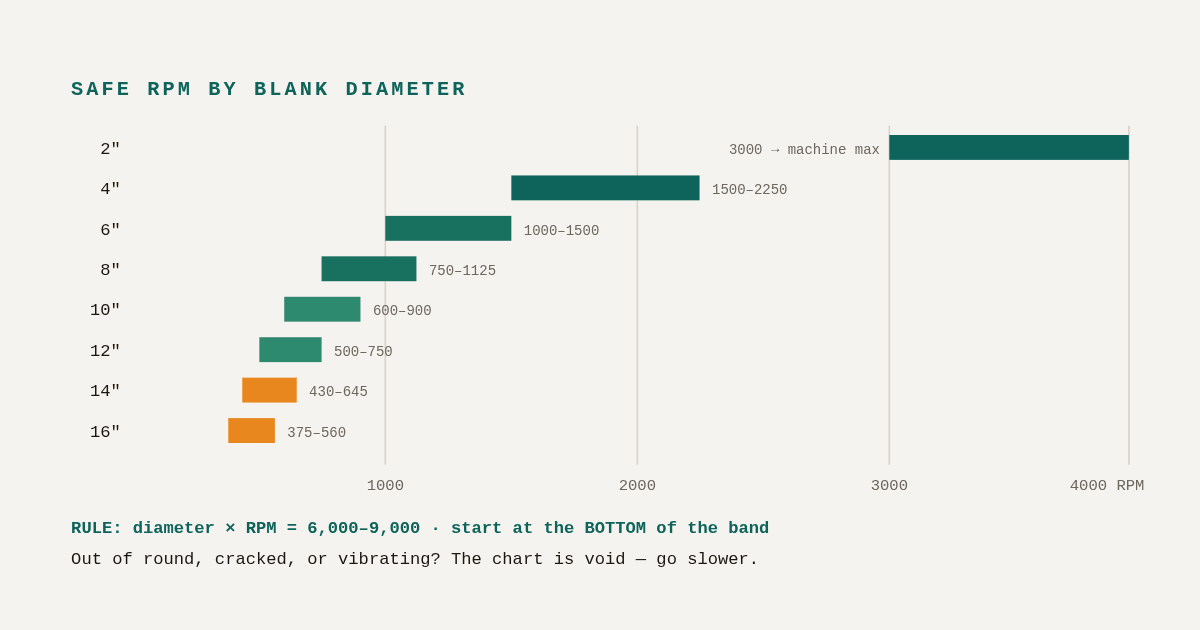
Speed floor matters more than ceiling. Rough blanks want 500-800 RPM; only the JET goes meaningfully lower. Nothing you'll turn on a mini needs more than ~3,200 on top.
Budget for the kit. Chisels, a 4-jaw chuck, face shield: ~$150 beyond the lathe. Then start with our wood lathes guide and bowl turning walkthrough.
Frequently asked questions
What can you actually make on a mini lathe? Pens (the classic), bottle stoppers, handles, spindles, ornaments, small boxes and - within the swing limit - bowls roughly an inch smaller than the machine's swing. An 8" mini turns 6-7" bowls; the 12" machines turn proper salad bowls.
Are mini lathes worth it, or should I buy full-size? For most hobbyists a mini/midi is the right amount of lathe: cheaper, bench-mounted, and capable of 90% of projects. Full-size machines earn their space for large bowls, table legs and green-wood work - see our full-size lathe guide.
What's the difference between mini and midi lathes? Marketing, mostly - "midi" generally means the 12"-swing machines like the JET and LA3424 that keep a benchtop footprint but add bowl capacity. Nobody polices the terms.
Is variable speed worth paying for? On small work, yes - you change speeds constantly between roughing, detailing and finishing. Electronic VS (JET) > dial VS (Shop Fox/WEN) > belt changes (Excelsior/RIKON), in both convenience and price.
Verdict
If the budget reaches the JET JWL-1221VS, stop deliberating - it's the category benchmark. Otherwise: RIKON 70-105 for quality, Excelsior for cast-iron value, Shop Fox for the speed dial, and the WEN LA3421 to test the waters. And if bowls are anywhere in your future, skip straight to the LA3424.