Spindle Turning vs Bowl Turning: What's the Difference?
Affiliate disclosure: As an Amazon Associate, WoodyMan Reviews earns from qualifying purchases. If you buy through links on this page, we may earn a commission at no extra cost to you. How this works.
Short answer: the difference is grain direction. In spindle turning the wood's grain runs along the lathe bed and the work is pinched between both centers - table legs, pens, handles. In bowl turning the grain runs across the lathe's axis and the blank hangs off the headstock alone - bowls, platters. That one change flips the tools, the cuts, the forces, and the risk level, which is why every good teacher starts students on spindles.
The two modes look like the same activity - spinning wood, sharp steel, ribbons everywhere - but they're closer to two related crafts. Here's what actually changes.
Grain direction: the real difference
Wood only cuts cleanly along its fibers. A spindle presents long grain to the tool all the way around, so the edge slices continuously - it's the friendlier physics. A bowl blank presents side grain, then end grain, then side grain, then end grain, twice per revolution, hundreds of times a minute. The tool takes a rhythmic hammering, the surface tears where fibers are unsupported, and your technique has to account for a cut that changes character mid-rotation.
How the work is held
- Spindles are captive. Pinched between the drive center in the headstock and the live center in the tailstock, the worst a catch usually does is stall the piece or spin it off the drive spurs. It's the reason beginners start here - mistakes are cheap.
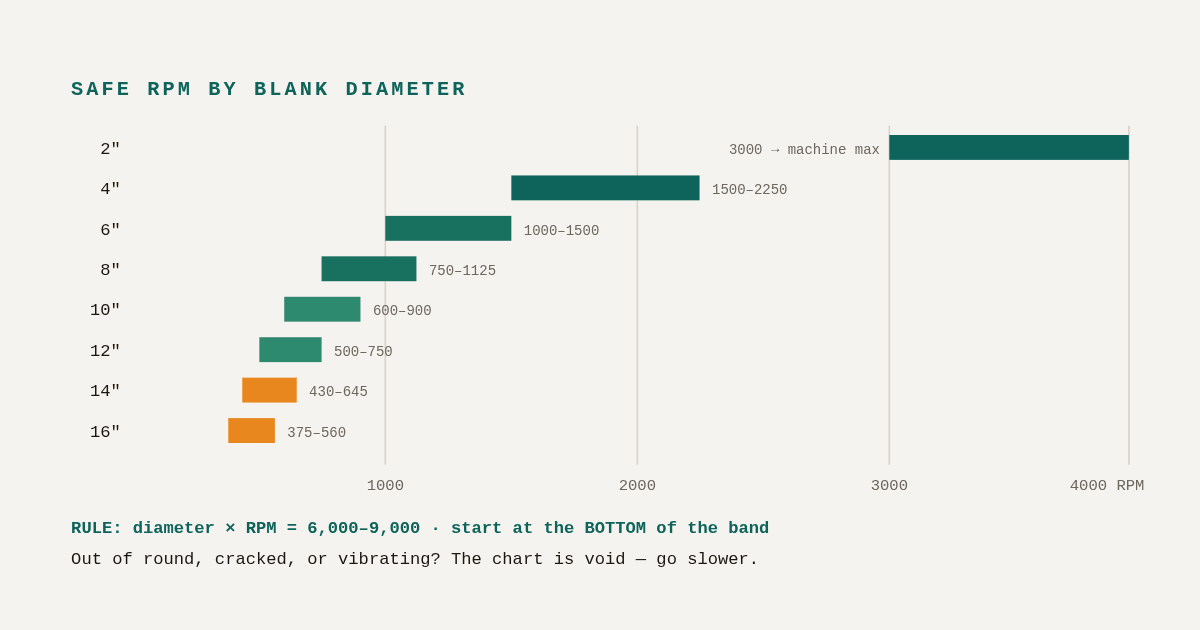
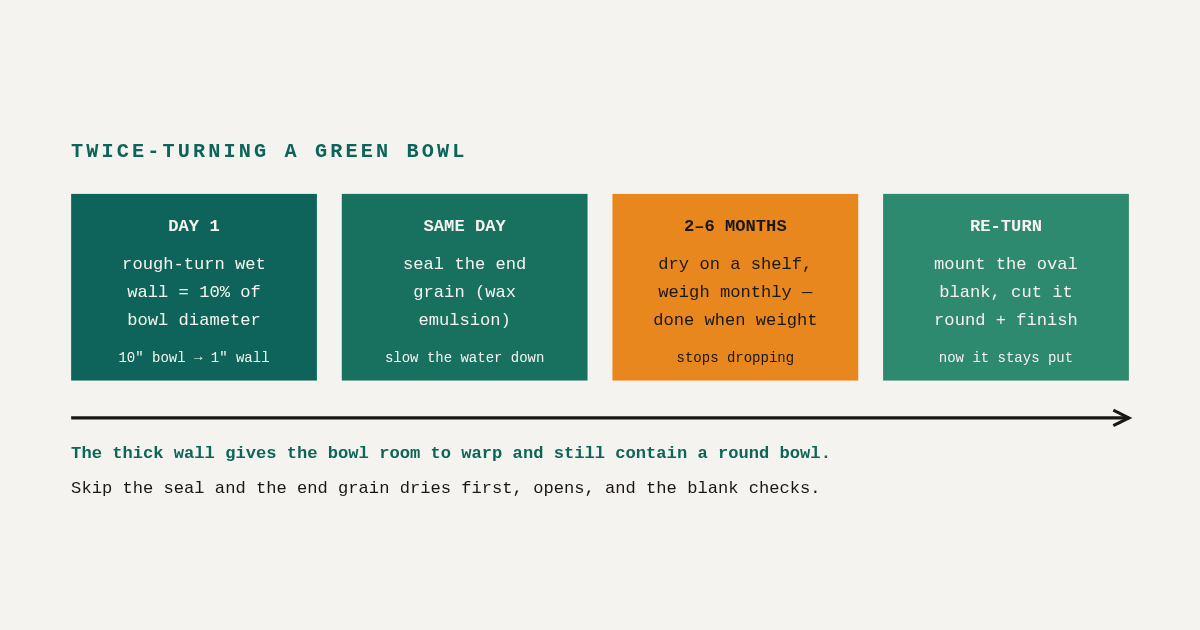
- Bowls are cantilevered. The blank hangs off the headstock, gripped by a 4-jaw chuck or screwed to a faceplate, with nothing on the other side once hollowing starts. Side loads are huge, a catch can rip the blank off its tenon, and a heavy out-of-round blank at the wrong speed will shake a light lathe across the bench. Respect scales with diameter.
Different tools, and one hard rule
Spindle work runs on the spindle roughing gouge, spindle gouge, skew, and parting tool. Bowl work runs on the bowl gouge - a deep flute on a thick round bar built for cantilevered side loads - plus scrapers for refining curves. We covered every profile in lathe chisels explained, but the rule worth repeating: a spindle roughing gouge never touches a bowl blank. Its slim tang isn't built for interrupted end-grain loads and can snap. If a piece has grain across the axis, it gets a bowl gouge - something like Hurricane's HSS bowl gouge set covers the sizes.
We earn a small commission from the Amazon link above, at no extra cost to you - see our affiliate disclosure.
What each mode asks of the lathe
- Spindle turning cares about distance between centers - a chair leg needs an 18"+ bed - and a solid tailstock. Almost any lathe with the length can do it; even the smallest mini lathes turn beautiful pens and handles.
- Bowl turning cares about swing (the diameter cap), low-speed torque (a rough blank must start slow without bogging), and mass (vibration control). That's a different shopping list, which is why we keep a separate guide to bowl-turning lathes - and why the chuck is the first accessory bowl turners buy.
If you're still sorting out sizes and specs generally, the lathe hub guide covers the whole map.
Which should you learn first?
Spindles - and not just for safety. Between-centers work teaches the two skills everything else is built on: riding the bevel and reading grain, with instant feedback and scrap-cheap practice wood. A weekend of beads and coves on 2x2 pine teaches more tool control than a month of nervous bowl scraping. When the spindle gouge stops surprising you, take the step up - our bowl turning guide picks up exactly there, from mounting a first blank to finishing.
There's no rank between the two, though. Production spindle turners are some of the most skilled people in the craft, and plenty of turners happily never make a bowl - or never make anything but bowls. They're just different answers to "which way does the grain point?"
FAQ
Can you turn a bowl on any wood lathe? Within its swing, yes - a 12"-swing midi turns up to a 12" bowl. What matters more than brand is a low speed floor (rough blanks want 500 RPM or less), enough mass to damp vibration, and a chuck or faceplate to hold the blank. Bed length barely matters for bowls.
Is bowl turning harder than spindle turning? Harder to start safely, yes: interrupted end-grain cuts, a cantilevered blank, bigger forces, and tool presentation that punishes guessing. The individual cuts aren't more delicate than good skew work - spindle mastery is its own deep skill - but the cost of an early mistake is higher on a bowl.
What is faceplate turning? The traditional name for bowl-mode work: the blank is fixed to the spindle by a faceplate (a steel disc screwed to the wood) or, more commonly now, a scroll chuck. "Faceplate turning" and "bowl turning" describe the same grain orientation.
Can you make a bowl by spindle turning? You can turn an end-grain bowl or box with the grain along the axis - goblets and lidded boxes are made this way - but it's hollowed with different tools and techniques. The classic salad bowl, with its face-grain figure, is cross-grain work.