Red Oak vs White Oak Flooring: All the Key Differences
Oak is the most popular hardwood flooring in North America - durable, affordable, and available everywhere - but "oak" splits into two very different woods: red oak and white oak. They look similar at a glance, yet they differ in hardness, grain, color, how they take stain, and how they handle water. Pick wrong and you'll fight your floor's undertone every time you try to stain it. Here's every key difference, so you can choose with confidence.
Red oak vs white oak - at a glance
| Property | Red Oak | White Oak |
|---|---|---|
| Hardness (Janka) | ~1,290 | ~1,360 (harder) |
| Grain | Busier, wavy, wider "cathedral" | Tighter, straighter, with ray flecks |
| Color / undertone | Warm, pink-to-reddish | Cooler, brown to grey/olive |
| Takes grey/modern stain | Poorly (pink fights grey) | Well (neutral base) |
| Water / rot resistance | Lower (open pores) | Higher (closed pores/tyloses) |
| Price / availability | Often cheaper, very available | Often pricier, on-trend |
| Best for | Warm looks, busy grain hides wear, budget | Modern/grey looks, moisture areas, hardness |
Hardness
Both are hard, durable flooring woods, but white oak is slightly harder - about 1,360 on the Janka scale versus red oak's ~1,290. In practice the difference is small; both stand up to normal household traffic well. White oak's edge in hardness is a minor plus in very high-traffic areas, but it's rarely the deciding factor on its own.
Grain and appearance
This is where they visibly diverge:
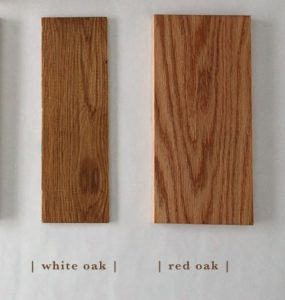
- Red oak has a busier, wavier grain with wider, more dramatic "cathedral" arches. That active pattern is forgiving - it hides dents, scratches, and dust better, which is handy in a busy household.
- White oak has a tighter, straighter, more uniform grain, and (especially when quartersawn) shows distinctive ray flecks - the shimmering figure prized in Arts & Crafts furniture. Its calmer grain reads as more contemporary and minimal.
If you want a floor that looks lively and traditional, red oak; if you want clean and modern, white oak.
Color and staining - the big one
The undertone is the difference that trips people up:
- Red oak has a warm, pinkish-to-reddish undertone. It looks great in warm, traditional stains - but that pink fights cool grey and "greige" stains, often reading muddy or pink-tinged no matter what you put on it.
- White oak has a cooler, more neutral brown-to-grey undertone. That neutral base takes grey, natural, white-wash, and dark modern stains beautifully - which is exactly why white oak dominates today's trend-driven floors.
If you dream of a light, natural, or grey modern floor, choose white oak. If you love warm honey and traditional reddish tones (or you're staining dark enough that undertone won't matter), red oak is perfect - and cheaper. For matching stains to a look, see our wood paint guide, and for updating existing woodwork, how to make wood trim look modern.
Water and rot resistance
Here white oak has a real, structural advantage. Its wood cells are plugged with tyloses - natural growths that seal the pores closed - making white oak water- and rot-resistant (it's the wood of whiskey barrels, boats, and outdoor furniture). Red oak's pores are open (you can literally blow air through a red oak board end-grain), so it absorbs water more readily and is less suited to damp conditions.
For flooring, this means white oak is the safer choice in kitchens, entryways, and anywhere moisture is a risk. Red oak is best kept to drier interior rooms.
Price and availability
Historically red oak is the more available and often slightly cheaper option in North America - it's been the default oak floor for decades, so it's easy to find and match. White oak has surged in popularity for its modern look and stain-friendliness, which can push its price up and, at times, tighten availability. Budget-conscious projects often favor red oak; trend-driven remodels often pay the premium for white oak.
Which should you choose?
- Choose white oak if you want a modern, grey, natural, or light-stained floor; you need better moisture resistance (kitchen, entry); or you want the slightly harder wood - and you're willing to pay a bit more.
- Choose red oak if you love warm, traditional tones; you want a busier grain that hides wear; or you're working to a budget and want easy availability and matching.
There's no bad choice - both make excellent, long-lasting floors. The decision usually comes down to the look you want (especially the stain) and whether moisture resistance matters in the room.
Frequently Asked Questions
Is red oak or white oak better for flooring?
Neither is universally "better." White oak is slightly harder, more water-resistant, and takes grey/modern stains better, making it the trend favorite. Red oak is warmer, has a busier grain that hides wear, and is usually cheaper. Choose by the look you want and the room's moisture level.
Why won't red oak take a grey stain well?
Red oak has a pink/reddish undertone that clashes with cool grey pigments, so grey stains often look muddy or pink-tinged on it. White oak's neutral undertone is why it takes grey, natural, and white-wash finishes cleanly. For a grey floor, choose white oak.
Is white oak more water-resistant than red oak?
Yes. White oak's pores are sealed by natural tyloses, making it water- and rot-resistant (it's used for barrels and boats). Red oak has open pores that absorb water, so it's less suited to damp areas. For kitchens and entryways, white oak is the safer pick.
Is red oak cheaper than white oak?
Usually, yes. Red oak has long been the default North American oak floor, so it's widely available and often a bit cheaper. White oak's popularity for modern looks can make it pricier. Prices vary by region, grade, and market trends, so check locally.
Can you tell red oak and white oak apart?
Often yes: red oak tends toward pink/reddish tones with a busier, wavier grain; white oak is browner/greyer with a tighter, straighter grain and (quartersawn) ray flecks. The surest test is the pores - red oak's open end-grain pores let air pass, white oak's sealed pores don't.
Related reading
Planning the finish? See our wood paint hub and best paint for wooden floors. Modernizing existing woodwork to match a new floor? Read how to make wood trim look modern. Curious how boards like these are cut (and what "quartersawn" means)? See our wood milling guide and the difference between timber and lumber.