Paint or Stain Your Deck? The Honest Decision Guide
Short answer: stain your deck if the wood is sound - it flexes with the boards, never peels, and recoating is an easy afternoon. Paint only when the deck is old and cosmetically rough, and you accept the trade: paint hides everything and lasts longer between coats, but when it fails it peels, and every future coat is paint. Painting a deck is close to a one-way door; staining leaves every option open.
That last sentence is the part the paint-vs-stain listicles bury. Here's the full decision, including the switching costs.
The two philosophies
Stain (transparent → semi-transparent → semi-solid → solid) penetrates or thinly coats the wood, shows some grain, and wears away gradually. Deck paint is an opaque film that sits on top, hides the wood completely, and protects brilliantly - until moisture from below or foot traffic breaks the film, at which point it chips and peels and demands scraping.
On a horizontal deck floor, that difference is everything: boards move, water pools, snow sits, and shoes grind grit into the surface all year. Films get attacked from every direction; penetrating finishes have nothing to peel.
Side by side
| Factor | Stain | Deck paint |
|---|---|---|
| Looks | Wood grain shows (by opacity) | Any color, zero grain |
| Hides damage | Poorly (until solid) | Completely |
| Typical floor lifespan | 2-4 years | 5-10 years when prep is right |
| Failure mode | Fades / wears thin | Peels, chips, blisters |
| Recoat effort | Clean, dry, apply | Scrape, sand, prime bare spots, repaint |
| Slip when wet | Wood texture remains | Films can be slick - use texture additive |
| Reversibility | Easy up the opacity ladder, strippable down it | Practically permanent |
The lifespan line flatters paint. Read it with the failure-mode line: stain's "failure" is a fading you fix casually; paint's failure arrives all at once, and the "5-10 years" assumes flawless prep on well-drained boards. Horizontal surfaces holding snow are where deck paint goes to blister.
When paint genuinely wins
- The deck is structurally fine but ugly - decades of patches, mixed replacement boards, filled checks. Paint (or solid stain) is the only finish that makes it one color again.
- A covered porch floor. Roofed, well-drained boards are film-friendly territory - porch and floor enamels have a century of success there. That's a different product class than general deck paint; our floor paint guide covers the porch-rated enamels.
- You're matching painted house trim and the deck is more architecture than woodwork.
If you're painting, buy a porch & floor enamel (traffic-rated, often with anti-slip texture), not wall paint with ambitions - the how to paint wood guide walks the prep, which on a deck is 80% of the outcome.
When stain wins (most of the time)
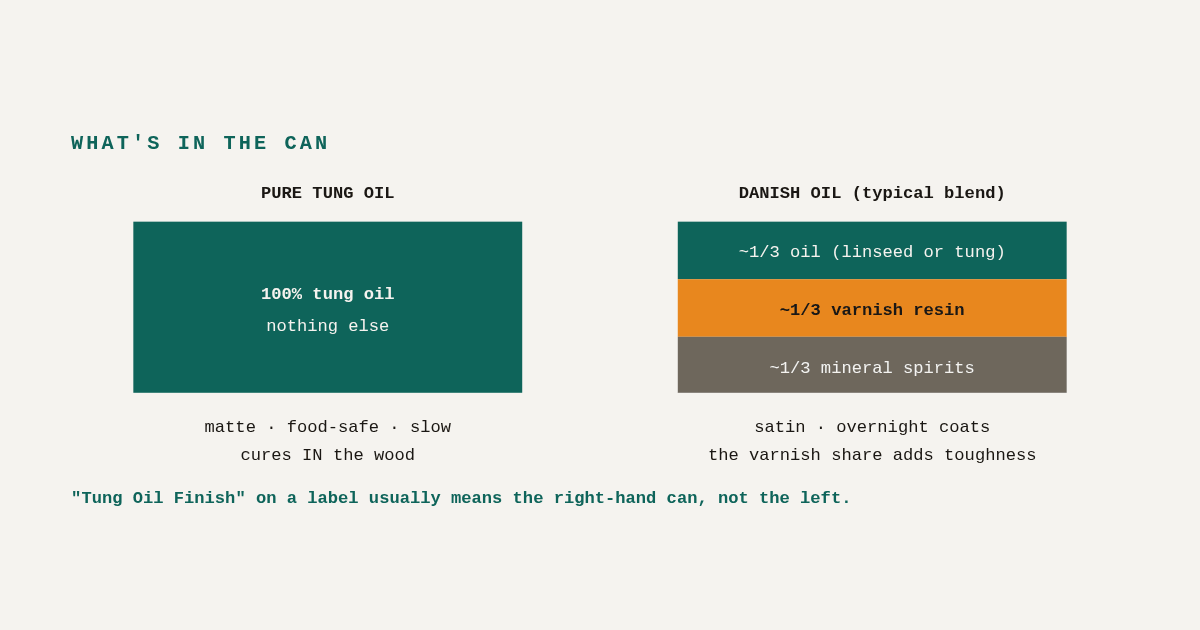
Sound wood, exposed deck, normal use: stain. Then it's just two choices - opacity (as transparent as the wood's looks deserve) and base. That second choice - oil or water-based - depends on the wood's age and your climate, and it has its own trap around switching types later; we covered it in oil vs water-based deck stain. For worn, thirsty boards, the penetrating oils in our oil-based stain guide are the classic answer. (Whichever finish wins, size the order with the deck stain calculator - railings are the square footage everyone forgets.)
Switching camps later
- Stained → painted: doable. Clean thoroughly, let oils weather out, prime with a stain-blocking exterior primer, then enamel. This door swings one way - read on.
- Painted → stained: the expensive direction. Every trace of paint must come off - chemical stripping and sanding, board by board (our deck paint remover guide sorts the strippers that actually work) - because stain can't penetrate through even thin paint residue. This is why "just paint it, we can always change it" is the most costly sentence in deck maintenance.
FAQ
Is it better to paint or stain an old deck? If the boards are sound but weathered grey, a semi-solid or solid stain refreshes it while staying maintainable. Paint earns its place only when the surface is too patched and mismatched for stain to flatter - and solid stain should still get first refusal.
Why not paint a deck floor? Horizontal boards trap standing water, flex underfoot, and get ground by grit - the three things that break paint films. Vertical surfaces (railings, skirting) hold paint fine; floors are where peeling starts.
What lasts longer on a deck, paint or stain? Paint's film lasts longer between recoats (5-10 years vs 2-4) but fails catastrophically and is nearly irreversible. Stain needs more frequent, far easier recoats. Over a decade of ownership the total effort is closer than the headline numbers suggest.
Is solid stain the same as paint? Close cousins - solid stain is essentially a thin, flexible paint that shows wood texture but not grain color. It hides like paint while recoating like stain, which is why it's the default answer for rough-but-sound decks.