8 Best Wood Glues UK: Every Type of Joint Covered
Affiliate disclosure: As an Amazon Associate, WoodyMan Reviews earns from qualifying purchases. If you buy through links on this page, we may earn a commission at no extra cost to you. How this works.
Short answer: for most UK workshops the best wood glue is Titebond II Premium - stronger than the wood itself on a clamped joint, water-resistant, and food-safe once cured. Need full outdoor/waterproof performance, pick a D4-rated glue (Titebond III or Everbuild D4); need gap-filling or damp timber, pick a polyurethane.
Beyond that headline, there is no single "best" wood glue - there's the best glue for the joint in front of you. A kitchen cutting board, a garden gate and a chair repair each want a different bottle. The good news: you can cover practically every job in a UK workshop with two or three of the glues below, and none of them costs more than a decent set of sandpaper.
Here are the 8 wood glues we'd actually keep on the shelf, what each is genuinely best at, and the one-line reason to pick it over the others.
Heads up: we earn a small commission from the Amazon links below, at no extra cost to you - see our affiliate disclosure. We haven't lab-tested these glues ourselves - picks are based on EN 204/ANSI ratings, manufacturer data sheets, and long-run owner reports; how we review.
The 8 best wood glues in the UK
| Wood Glue | Best for | Woody Rating | |
|---|---|---|---|
| 1. Titebond II Premium | The all-rounder - indoor & sheltered outdoor | 9.5/10 [Editor's Choice] | Check price |
| 2. Titebond III Ultimate | Fully waterproof joints & worktops | 9.2/10 | Check price |
| 3. Gorilla Wood Glue 1L | Best big-bottle value | 9.0/10 | Check price |
| 4. Evo-Stik Resin W | The UK joinery classic | 8.8/10 | Check price |
| 5. Everbuild D4 Premium | Exterior D4 without polyurethane mess | 8.6/10 | Check price |
| 6. Everbuild 502 | Best budget trade glue | 8.5/10 | Check price |
| 7. Everbuild Lumberjack 5-Min PU | Gap-filling, damp timber, speed | 8.3/10 | Check price |
| 8. Titebond Liquid Hide | Antiques & reversible repairs | 8.0/10 | Check price |
1. Titebond II Premium - Editor's Choice
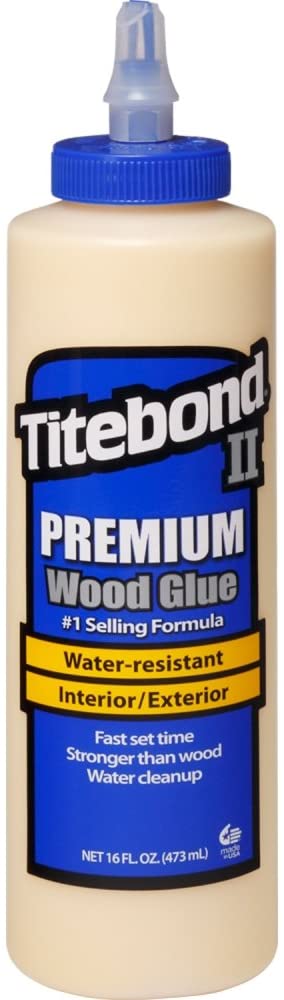
Best for: the one bottle that handles 90% of jobs - furniture, cabinets, chopping boards, and anything outdoors that's under cover.
If you buy one wood glue, buy this. Titebond II is a water-resistant PVA (ANSI Type II) with a strong initial tack, so parts stop sliding around almost as soon as you clamp. It sands cleanly without gumming, takes stain reasonably well at the glue line, and it's FDA-approved for indirect food contact - the standard choice for cutting and cheese boards. The catch: it wants temperatures above about 13°C to cure properly, so an unheated UK garage in January is marginal - warm the workshop or the parts first.
| Pros | Cons |
|---|---|
| ✅ Strong initial tack - parts stay put | ❌ Needs ~13°C+ to cure properly |
| ✅ Water-resistant (Type II) - fine for sheltered outdoor work | ❌ Short open time (~5 min) rushes complex glue-ups |
| ✅ Food-safe for boards (indirect contact) | |
| ✅ Sands cleanly, 24-month shelf life |
2. Titebond III Ultimate - Best Waterproof
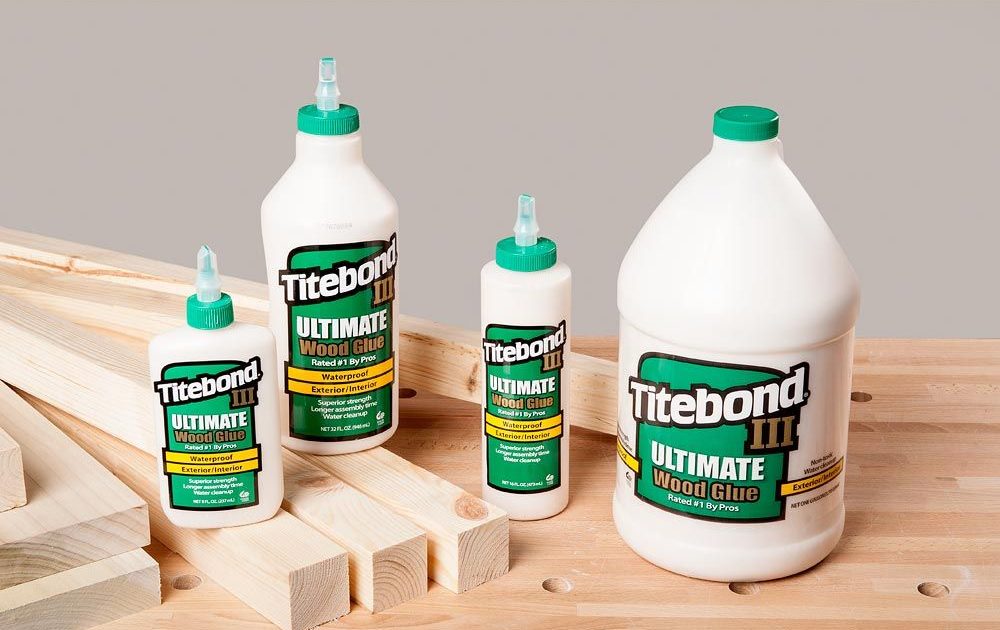
Best for: anything that gets properly wet - garden furniture, exterior doors, boat trim - and complex glue-ups that need more assembly time.
Titebond III is the fully waterproof (ANSI Type I) big brother. Two practical differences matter more than the spec sheet: it gives you roughly double the open time of Titebond II (about 10 minutes - a lifesaver on multi-panel clamp-ups), and it cures at lower temperatures, down to around 8°C, which suits British sheds far better. It dries a darker tan, so on pale timbers like maple the glue line is slightly more visible than II. Slightly dearer, entirely worth it when water is involved.
| Pros | Cons |
|---|---|
| ✅ Fully waterproof (Type I) | ❌ Darker glue line on pale woods |
| ✅ ~10 min open time for complex assemblies | ❌ Costs more than Titebond II |
| ✅ Works down to ~8°C - UK-shed friendly | |
| ✅ Also food-safe for boards |
3. Gorilla Wood Glue 1L - Best Value Big Bottle
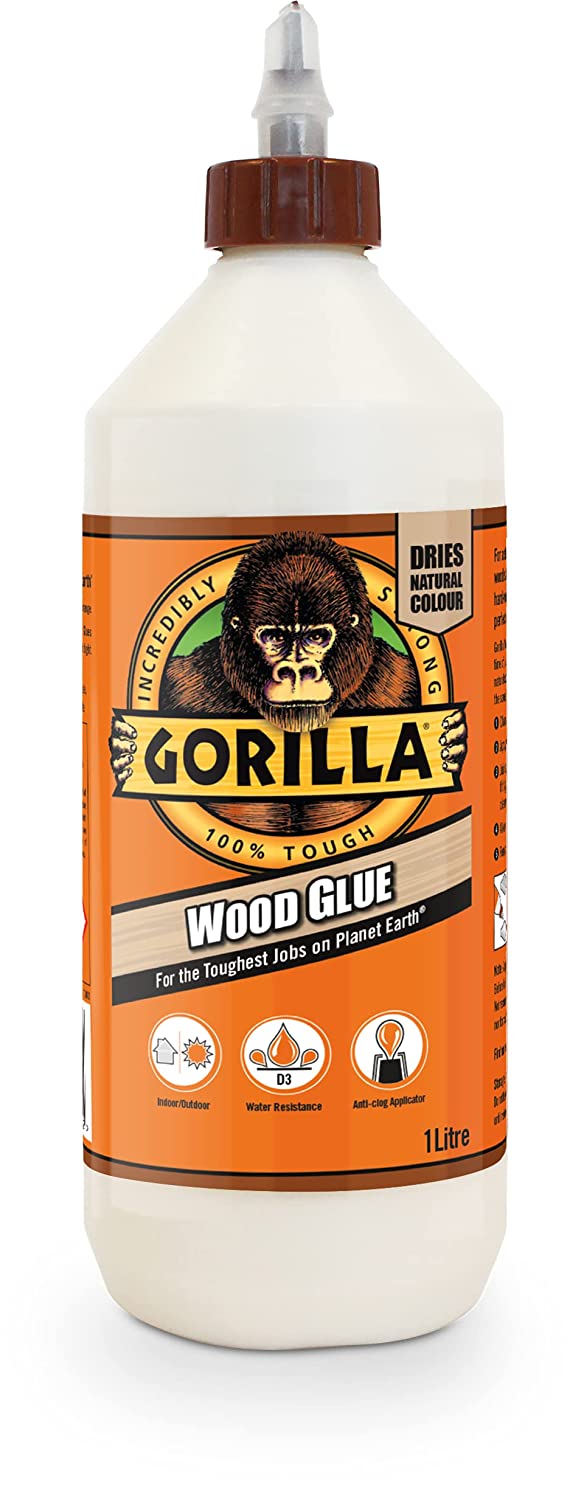
Best for: high-volume users - if you're gluing every week, the price per litre is hard to beat for a name-brand PVA.
Don't confuse this with the original foaming Gorilla Glue: the wood version is a straightforward water-resistant PVA, and a good one. It cures to a natural tan that blends nicely with most timbers, needs only 20-30 minutes of clamp time before you can handle the piece, and the litre bottle works out substantially cheaper per ml than the small Titebond bottles. Bond strength on clean, well-fitted joints is effectively "the wood breaks first" - same as the premium PVAs. It just lacks Titebond's food-contact rating and the fine-tuned open-time options.
| Pros | Cons |
|---|---|
| ✅ Excellent price per litre | ❌ No food-contact rating |
| ✅ Natural tan cure blends with most timbers | ❌ Nozzle clogs if left uncapped |
| ✅ Short 20-30 min clamp time |
4. Evo-Stik Resin W - The UK Joinery Classic
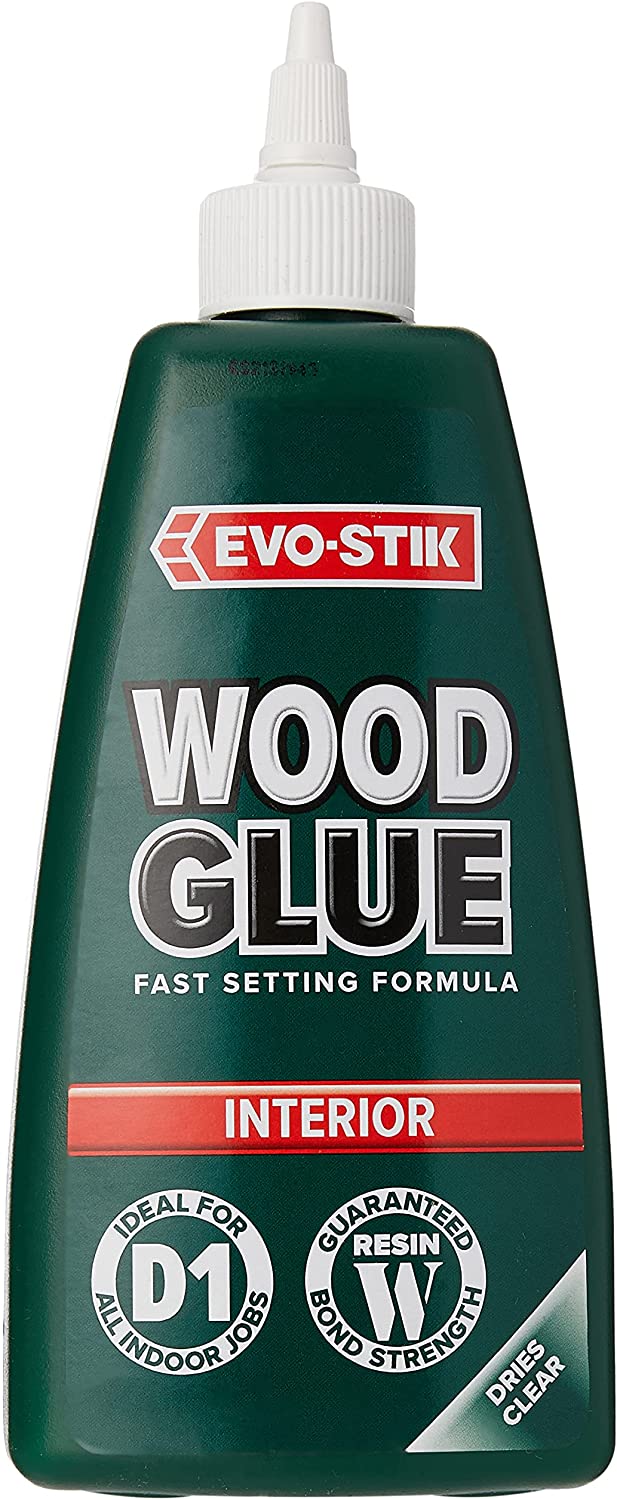
Best for: interior joinery and general DIY - the glue half the joiners in Britain grew up with, now in a sensible twin-pack.
Resin W has been the default white wood glue on UK building sites for decades, and it earns the reputation: fast grab (a workable bond in 5-10 minutes), dries clear, and sands, paints and stains without fuss. The standard version is an interior glue - for outdoor work Evo-Stik's exterior variant or the D4 options below are the right call. The 2x500ml pack keeps one bottle sealed while you work through the first, which matters because an opened bottle slowly thickens.
| Pros | Cons |
|---|---|
| ✅ Very fast initial grab (5-10 min) | ❌ Standard version is interior-only |
| ✅ Dries clear; sandable, paintable, stainable | |
| ✅ Twin pack - second bottle stays fresh |
5. Everbuild D4 Premium - Best Exterior Without the Mess
Best for: joints that live outside or near constant moisture - window frames, gates, planters - when you don't want foaming polyurethane.
D4 is the top water-resistance class in the EN 204 standard (suitable for long-term water exposure), and most D4 glues historically meant polyurethane: effective, but they foam, stain skin, and need gloves. Everbuild's D4 Premium hits the same rating with a hybrid-resin formula - no isocyanates, cleans up with water while wet, and applies like a normal PVA. If "waterproof but civilised" is the brief, this is the bottle.
| Pros | Cons |
|---|---|
| ✅ True D4 rating - survives constant moisture | ❌ Doesn't gap-fill like a PU glue |
| ✅ No isocyanates; water clean-up | ❌ Less widely stocked than the big names |
| ✅ Applies like an ordinary PVA |
6. Everbuild 502 - Best Budget Trade Glue
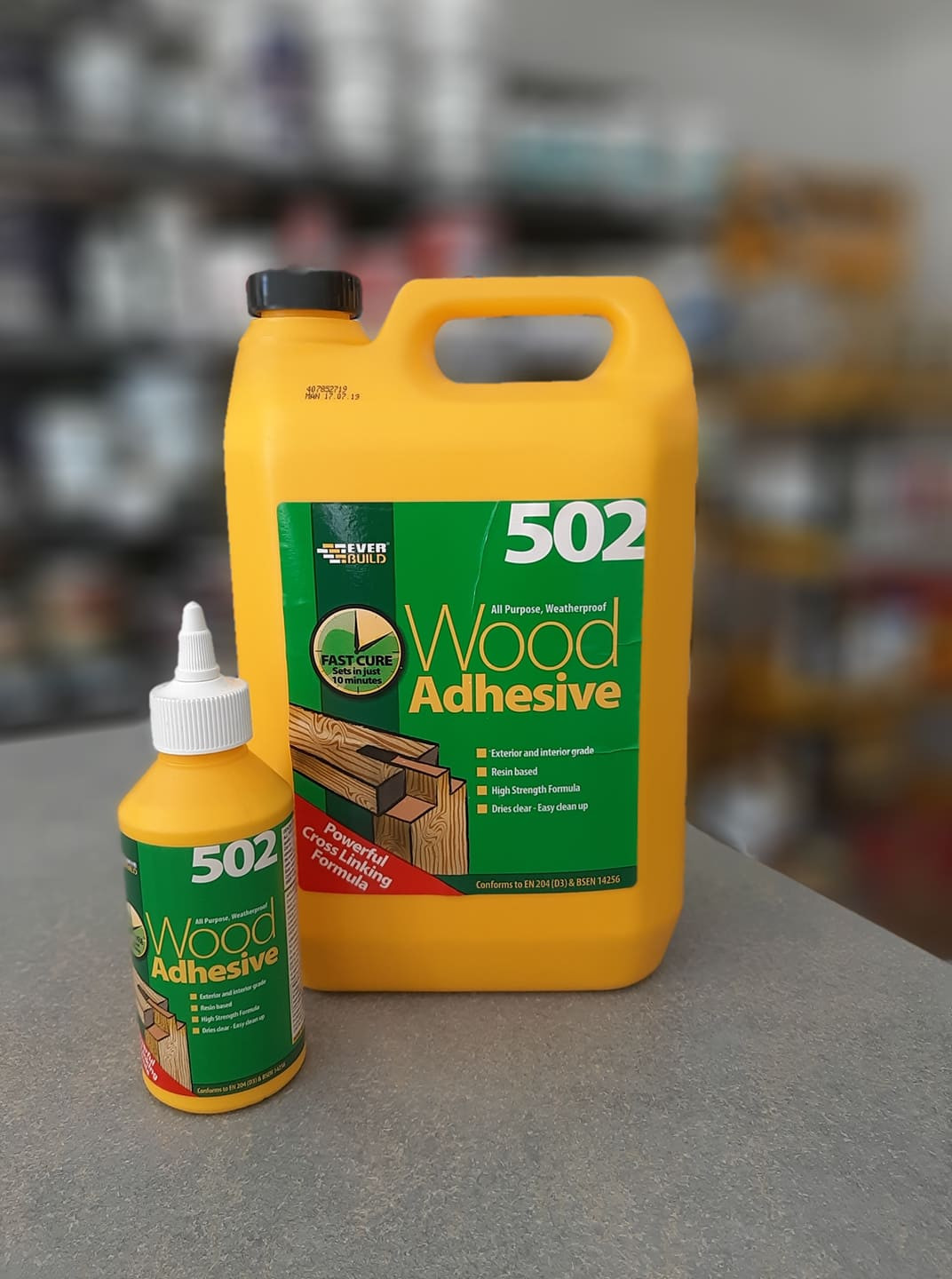
Best for: stocking the workshop cheaply - a D3-rated, dries-clear PVA that tradespeople buy by the 5-litre jug.
502 is what you'll find in a lot of UK site vans: an unglamorous, weatherproof (D3) PVA that bonds stronger than the wood on well-fitted joints and costs noticeably less than the American brands. Initial set in 1-2 hours, full strength in about 8. It won't win the spec-sheet war against Titebond III, but for skirting, architrave, carcassing and everyday repairs, the value is unbeatable - and it scales to 5L when you're ready.
| Pros | Cons |
|---|---|
| ✅ Cheapest per litre of the name brands | ❌ Slower initial set than Resin W / Titebond |
| ✅ D3 weatherproof, dries clear | |
| ✅ Available up to 5L and 25L |
7. Everbuild Lumberjack 5-Minute PU - Best for Gaps, Damp & Speed
Best for: imperfect joints, slightly damp timber, mixed materials, and repairs where you can't clamp for an hour.
Sometimes the joint isn't a clean, tight, dry glue line - that's polyurethane territory. Lumberjack sets hard in about five minutes, expands slightly to fill gaps as it cures, bonds damp wood (PU actually cures with moisture), and sticks wood to brick, stone and metal. It's D4-rated for exterior work. Wear gloves - PU glue on skin outlasts your weekend - and expect to trim the cured foam squeeze-out with a chisel rather than a cloth.
| Pros | Cons |
|---|---|
| ✅ Sets in ~5 minutes; D4 waterproof | ❌ Foam squeeze-out needs trimming after cure |
| ✅ Fills gaps; bonds damp timber | ❌ Gloves required - stains skin |
| ✅ Sticks wood to masonry & metal |
8. Titebond Liquid Hide Glue - Best for Antiques & Instruments
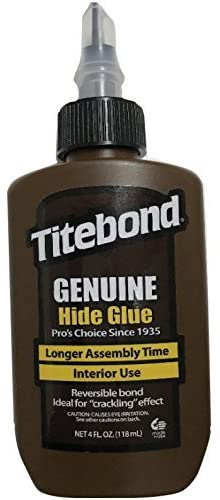
Best for: restoring old furniture and musical instruments - any repair a future restorer might need to take apart again.
Hide glue is the traditional animal glue used in furniture for centuries, and Titebond's version comes ready to use - no glue pot, no heating. Its party trick is reversibility: heat and moisture will release the joint, which is exactly what you want on antiques (and why luthiers still insist on it). Long open time makes fiddly assemblies relaxed, it takes stain better than any PVA, and it produces the crackle finish effect decorators use. Not the glue for your garden bench - it's the specialist's bottle.
| Pros | Cons |
|---|---|
| ✅ Reversible - the correct choice for antiques | ❌ Not water-resistant |
| ✅ Long, forgiving assembly time | ❌ Lower strength than modern PVAs |
| ✅ Stains evenly - nearly invisible repairs |
How to choose: the 2-minute version
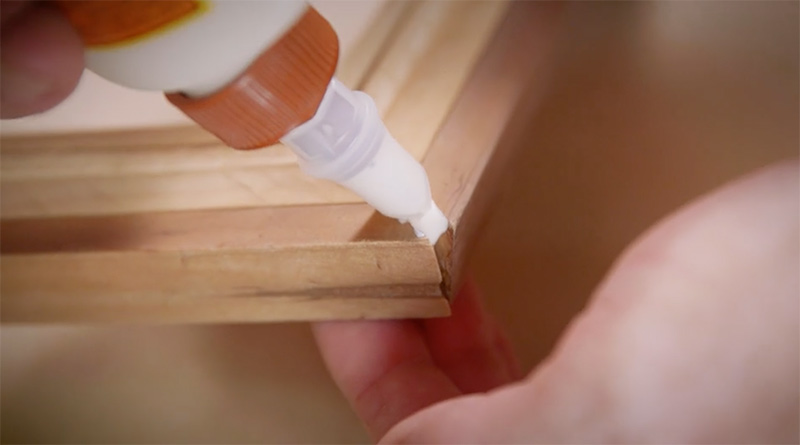
Match the water rating to the job. European glues use EN 204 classes: D1 - D2 interior, D3 kitchens/bathrooms and sheltered exterior, D4 full exterior and long-term moisture. American brands use ANSI: Type II ≈ water-resistant, Type I ≈ waterproof. Don't pay for D4 on bookshelf joints; don't trust D2 on a garden gate.
Match the chemistry to the joint.
- PVA (Titebond, Resin W, 502): tight, clean-fitting wood-to-wood joints. Stronger than the wood itself when clamped well. Zero gap-filling.
- Polyurethane (Lumberjack): gaps, damp timber, wood-to-masonry/metal. Foams as it cures.
- Hide glue (Titebond 5012): anything you may want to disassemble later.
Mind the temperature. Most PVAs won't cure properly below ~10-13°C - a real constraint in a UK winter workshop. Titebond III (~8°C) and PU glues are the cold-shed picks.
Clamping beats glue choice. Any glue on this list will outperform the timber if the joint is tight and clamped - a good woodworking vise and proper clamps matter more than the label. And glue bonds best on freshly cut or freshly milled surfaces.
Frequently asked questions
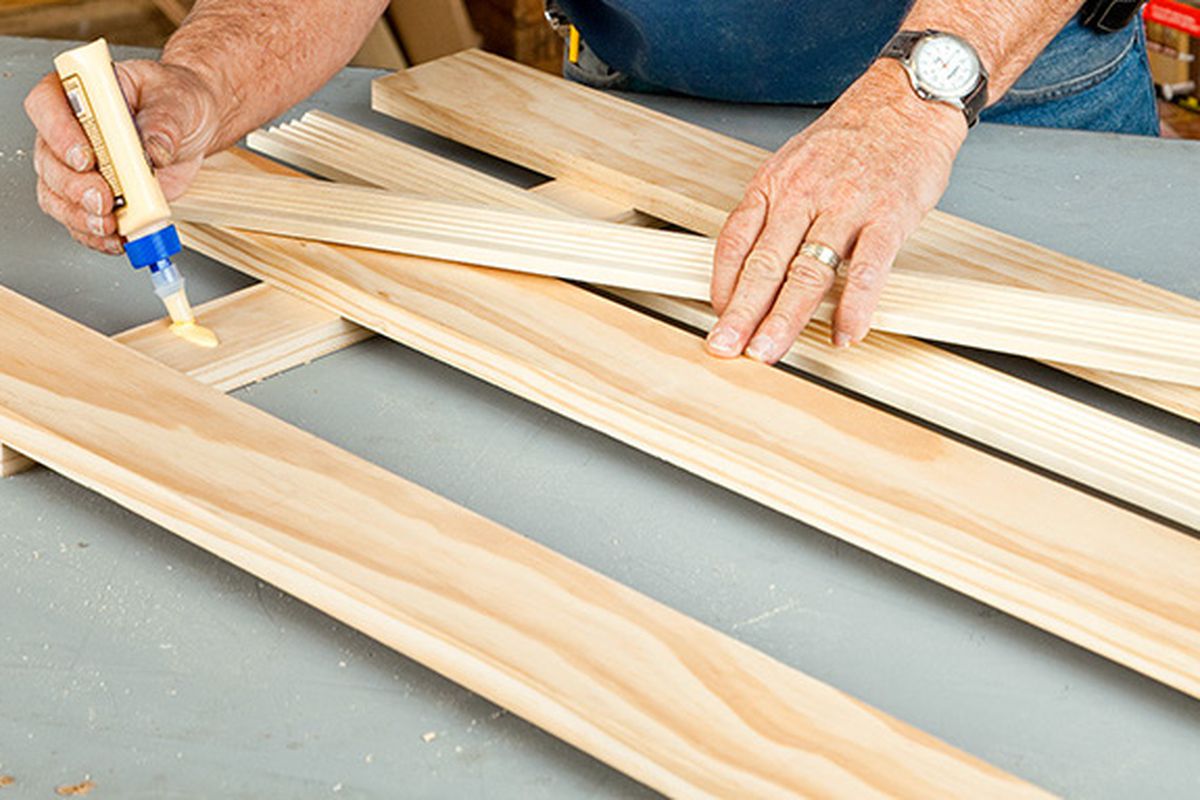
What is the strongest wood glue? On a well-fitted, clamped joint, every quality PVA here creates a bond stronger than the surrounding wood - the timber fails before the glue line does. "Strongest" in practice means strongest for the conditions: Titebond III or a D4 glue for wet, PU for gaps and damp, PVA for everything else.
Is Gorilla Wood Glue better than Titebond? They're closer than the price gap suggests. Gorilla Wood Glue wins on price per litre; Titebond II/III win on food-contact approval, open-time options and cold-weather tolerance. For everyday joinery you won't feel a strength difference.
How long should I clamp a glued joint? For PVAs: 30-60 minutes of clamping for stress-free joints, then leave the joint unstressed for 24 hours to reach full strength. Polyurethanes like the Lumberjack set in minutes but still want a few hours before you load them.
Does wood glue go off? Yes - figure on 1-2 years after opening for PVA (Titebond quotes a 24-month shelf life). If it's gone stringy, lumpy or smells sour, bin it; stale glue makes weak joints. Twin 500ml packs beat one big bottle for occasional users.
Can I glue treated or damp timber? PVA needs dry timber to bond well. For damp or freshly treated wood, use a polyurethane glue - moisture actually helps PU cure.
Verdict
Titebond II Premium is the bottle for most people - strong, food-safe, forgiving. Add Titebond III or Everbuild D4 the day a project lives outdoors, and a small Lumberjack PU for the awkward, gappy, damp repairs that PVA hates. If you're gluing constantly, the Gorilla 1L or a jug of Everbuild 502 keeps the cost sane.
Gluing is only half the joint - see our guide to the best wood adhesives for every material, and once the clamps come off, our wood sanders guide covers getting the glue line invisible.